When Maryland Gobblers Go Quiet in Mid May
It’s a feeling every Maryland turkey hunter knows all too well: the vibrant gobbling of early spring, the woods alive with eager Toms, suddenly fades into an eerie quiet by mid-May. You hit your favorite spots, listen intently, and nothing. It can be incredibly frustrating to go from hot and heavy action to what feels like a ghost town. This comprehensive guide will delve deep into why Maryland gobblers seem to vanish as the season winds down and, more importantly, equip you with the advanced strategies and patient tactics needed to fill your tag when the birds go quiet.
Understanding the Late Season Lull in Maryland
The transition from the frenetic opening weeks of Maryland's spring turkey season to the subdued atmosphere of mid-May can be jarring. Many hunters find themselves scratching their heads, wondering where all the birds went. The truth is, the turkeys haven't vanished; their behavior has simply shifted, driven by biological imperatives, accumulated hunting pressure, and environmental changes.
The Biological Shift: Post-Peak Breeding
As May progresses, the primary breeding phase for wild turkeys in Maryland begins to wind down. Earlier in the season, gobblers are full of testosterone, strutting and vocalizing constantly to attract hens. They're trying to establish dominance and secure breeding rights. That's why you hear so much booming action right after the Maryland spring turkey season opening day. But by mid-May, many hens have been bred and are now diligently sitting on their nests.
When the majority of hens are nesting, a gobbler's motivation to sound off dramatically decreases. He no longer needs to aggressively call to draw in a mate because most available hens are already committed to their nests. You might still encounter a gobbler with one or two "late-breeding" hens, but the widespread chorus of gobbling that characterized early April is largely over. This doesn't mean the birds are entirely silent, but their gobbling often becomes sporadic, softer, and much harder to pinpoint. They might gobble once on the roost, or a few times at fly-down, and then shut down for the day, content to loaf or subtly search for any remaining receptive hens.
Increased Pressure and Wary Toms
Think about it: from the first week of April, these gobblers have been subjected to weeks of human intrusion. They've heard every call in the book, seen countless decoys, and likely had a few close calls themselves. Just like whitetails become nocturnal after heavy deer season pressure, late-season gobblers become incredibly educated and cautious.
This accumulated pressure makes them extremely wary of anything that sounds or looks out of place. They learn quickly that aggressive calling often leads to trouble, and they become adept at circling hunters or slipping away silently. A gobbler that might have charged into an aggressive calling sequence in early April will now likely hang up at a distance, scrutinize his surroundings, or simply walk away without making a sound if he senses anything is amiss. This wariness is a significant factor in why they become so "quiet"—they're actively avoiding detection, and gobbling is a surefire way to announce their presence to predators, including hunters. They've become masters of stealth, making them incredibly challenging to locate and even harder to lure within range.
Environmental Factors: Foliage and Weather
Mid-May in Maryland brings a full canopy of leaves to the trees and thick undergrowth across the landscape. This dense foliage significantly impacts sound travel and visibility. That thunderous gobble that carried for a mile in early spring now might only travel a few hundred yards, muffled by the lush greenery. This makes locating birds by sound alone much more difficult, especially if they're not gobbling frequently.
Furthermore, warmer weather becomes more common. While turkeys are resilient, scorching mid-day temperatures can make them less active, preferring to loaf in the shade or near water sources rather than strutting and gobbling in the open. You'll notice they might still be vocal at first light, during fly-down, but as the sun climbs and temperatures rise, their activity often tapers off significantly. Understanding these shifts in their environment is crucial for adapting your approach; you can't hunt late-season birds the same way you hunted early-season birds.
Adapting Your Tactics for Quiet Gobblers
When Maryland gobblers go quiet, your old reliable tactics might need a serious overhaul. The key to late-season success isn't giving up; it's about shifting your mindset and strategies to match the birds' current behavior. Patience, subtlety, and keen observation become your most valuable assets.
Strategic Scouting and Listening
The days of simply walking into the woods before dawn, letting out a few yelps, and expecting a gobbler to announce himself are largely over in mid-May. Now, your scouting becomes paramount. Instead of just listening for booming gobbles, you need to be tuned into the fainter sounds of the woods. Listen for soft tree yelps at first light, wing beats as birds fly down, or even the distinct "purt" of a feeding hen.
One of the most effective ways to locate silent birds is to try and pinpoint their roosts the evening before your hunt. This is where tools like GoHunt can be incredibly useful. By using their aerial and topographic maps, you can identify potential roosting areas – often tall trees near water or clearings – and then stake them out at dusk. Listen for the subtle clucks, yelps, or even just the sound of a bird flying up to a limb. If you can't hear a gobble, a soft "kee-kee" run or a quiet "tree yelp" might give away their position. The goal is to get as close as possible without being detected, setting you up for a quiet approach the next morning. When you’re trying to Roost Hunting Gobblers on Maryland Farmland, remember that getting too close can spook them, so discretion is key.
Subtle Calling and Decoy Strategies
Forget the aggressive cutting and loud yelps that worked wonders during the peak of the rut. Late-season gobblers have heard it all, and a barrage of loud calls will often send them in the opposite direction. Instead, embrace subtlety. Think soft, drawn-out yelps, purrs, and clucks – the sounds of a contented hen casually moving through the woods. The aim is to pique their curiosity, not demand their attention.
Sometimes, no calling at all is the best calling strategy. Let the woods speak for themselves, and only call sparingly if you suspect a bird is nearby or if you haven't heard anything for an extended period. When you do call, keep it realistic. Consider using a mouth call for hands-free operation, allowing you to maintain your gun position.
Decoys also need a rethink. While an aggressive strutting gobbler decoy might have worked in April, it's often a deterrent for a wary mid-May Tom. He's less interested in fighting and more concerned with avoiding danger. Sometimes a single, submissive hen decoy, or no decoy at all, is the smarter play. If you do use a decoy, position it to appear calm and non-threatening. For insights into strategic placement, refer to Decoy Placement for Pressured Maryland Gobblers. Remember, the goal is to make the scene appear as natural and low-risk as possible.
Patience and Ambush Hunting
If you're not hearing gobblers, you can't run and gun. Late-season turkey hunting demands a level of patience that tests even the most seasoned hunters. Instead of covering miles of ground, focus on setting up in high-probability areas and waiting them out. Identify natural travel corridors, field edges, creek bottoms, or saddlebacks that turkeys are likely to use when moving between roosting areas, feeding grounds, and water sources.
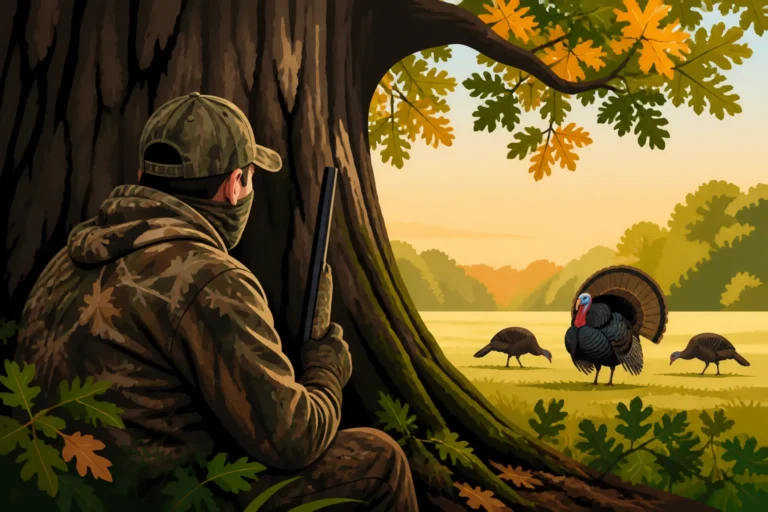
Once you've chosen your spot, commit to it. Get comfortable, disappear into the surroundings, and be prepared to sit for extended periods – sometimes hours – without hearing a peep. A gobbler might slip in silently, giving you little warning. This is where detailed knowledge of your hunting area, perhaps gained from preseason scouting with tools like GoHunt, truly pays off. Knowing exactly where turkeys like to cross a specific ditch or where they enter a field can allow you to set up an effective ambush. For tips on choosing the perfect spot, check out Setting Up Against a Big Oak for Turkeys, which applies just as well to late-season setups as it does to early ones.
Locating Elusive Toms in Mid-May
Finding a gobbler that isn't gobbling is arguably the toughest challenge in turkey hunting. It requires a blend of technology, woodsmanship, and a deep understanding of turkey behavior in the late spring.
Leveraging Technology for Silent Scouting
In the absence of vocal birds, modern hunting apps become invaluable. GoHunt, for example, offers detailed aerial photography, topographic maps, and public/private land boundaries that can help you identify key features on the landscape where turkeys might be holding. Look for:
- Roosting Trees: Tall pines or hardwoods near water or clearings are prime candidates.
- Travel Corridors: Fencerows, creek beds, logging roads, or narrow strips of timber connecting larger woodlots.
- Food Sources: Fields, mast crops (if any are still available), and areas with a high insect population.
- Water Sources: Ponds, streams, or wet areas, especially during hotter parts of the day.
By virtually scouting with such tools, you can pinpoint these high-probability areas and then conduct "boots on the ground" scouting as quietly as possible. Look for fresh tracks, droppings, feather dustings (where they've been strutting), or wing marks in dusty areas. This silent detective work is far more effective than blind calling. You can learn more about this approach by reading Scouting Maryland Public Land With Aerial Photos.
Understanding Late-Season Food and Water Sources
Turkey diets shift as spring progresses. Early in the season, they might be relying on residual acorns or waste grain in agricultural fields. By mid-May, new green growth, insects, and berries start to become more prevalent. Maryland turkeys will often gravitate towards areas rich in these emerging food sources.
Consider clear-cuts, recently burned areas, or open timber with a good insect population. These areas provide excellent foraging opportunities. Likewise, during warmer mid-May days, turkeys will seek out water sources more frequently. Setting up near a secluded pond, a slow-moving stream, or a seepy bottom can be an excellent strategy. They might not be gobbling, but they still need to eat and drink. Understanding What Maryland Turkeys Eat in Spring can help you predict their movements and set up an effective ambush.
Hunting Transition Areas and Field Edges
Quiet gobblers are often seen loafing or cautiously moving between dense cover and more open areas. Transition zones, such as the edge where a mature timber stand meets a clear-cut, or a thick pine plantation borders an open field, are prime locations. These areas offer both security and access to food.
Field edges, particularly those bordering dense woods or creek bottoms, can be goldmines. Turkeys will often use these edges for travel, feeding, and sunning themselves, especially in the early morning or late afternoon when temperatures are cooler. If you've been having trouble luring a gobbler from the roost, these field edges are excellent spots to intercept them after fly-down. You might even find them subtly strutting just inside the timber line, waiting for a hen to appear. This is an ideal scenario for Calling a Gobbler Off a Maryland Farm Roost, even if they aren't gobbling loudly. Setting up along these edges requires extreme stealth, as late-season birds will often survey open areas before committing.
Overcoming Common Late Season Challenges
The late season brings its own set of hurdles beyond just silent gobblers. Successfully navigating these challenges requires a flexible approach and a deep understanding of local conditions.
Dealing with "Henned-Up" Gobblers (Even if Hens are Nesting)
While many hens are nesting by mid-May, it's not a universal phenomenon. Some hens may still be receptive, or a gobbler might have a small harem of late-breeding hens with him. When a gobbler is with hens, he has less incentive to respond to your calls because he already has what he wants. He might gobble only sporadically, if at all, to your calls, merely to announce his presence to his current companions.
Your strategy here needs to be less about calling him in directly and more about disrupting his group or setting up an ambush point where he's likely to lead his hens. If you can pinpoint where he's going, get ahead of him and set up quietly. Sometimes, aggressive cutting or yelping can agitate the hens, drawing them (and consequently the gobbler) closer to investigate the "new hen" in their territory. It's a riskier play, but it can work in situations where the gobbler is completely unresponsive to subtle calls. This is where a more strategic approach to Maryland Turkey Seasons and Permits might factor in, as knowing your tags and season limits allows you to be more patient.
Navigating Maryland's Varied Terrain
Maryland's turkey hunting landscape is incredibly diverse, ranging from the rugged mountains of Western Maryland to the flat, agricultural fields and marshes of the Eastern Shore. This variety means that what works in one region might not work in another.
In Western Maryland, with its steep ridges and dense timber, silent gobblers are even harder to locate due to terrain features and thick cover. Here, focusing on ridgetops, saddles, and creek bottoms as travel corridors becomes crucial. Locator calls (like crow or owl calls) might still elicit shock gobbles from birds that are otherwise quiet, especially in the mornings, but don't expect them to come charging in. Instead, use these sounds to pinpoint their location and then execute a quiet, strategic stalk.
On the Eastern Shore, with its more open farmlands and smaller woodlots, field edges and isolated timber stands are key. Birds here might be more accustomed to human activity, but they are also incredibly visual. Long-distance glassing with binoculars or a spotting scope can help you locate silent strutters in fields. Understanding Why Eastern Shore Turkeys Act Differently due to their habitat and historical hunting pressure can give you a significant advantage. Adapt your approach based on the specific topography and cover you're hunting.
Legalities and License Reminders
Even in the frustration of a quiet late season, it's crucial to always stay within Maryland's hunting regulations. Double-check your Maryland Spring Turkey Season Dates to ensure you're still within the legal timeframe. Pay close attention to legal hunting hours, which often restrict hunting to morning hours for safety and to allow birds to resume natural breeding behavior later in the day.
Also, be mindful of your Maryland Spring Turkey Bag Limit. Maryland hunters are limited to two bearded turkeys per spring season, and only one may be harvested per day. It’s easy to get caught up in the thrill of the hunt, but knowing your limits and ensuring you have all the necessary stamps and licenses through the COMPASS system is non-negotiable. Always carry your license and identification. Staying compliant means you can continue enjoying the challenges and rewards of Maryland turkey hunting for years to come.
Remember that late season birds require more effort, more patience, and a willingness to try unconventional tactics. The satisfaction of calling in or ambushing a wary mid-May gobbler is immense, often more rewarding than an easy early-season bird.
| Late Season Turkey Hunting Strategy Quick Reference | Early Season (Peak Gobbling) | Mid-May (Quiet Gobblers) |
|---|---|---|
| Gobbling Activity | High, frequent, enthusiastic | Low, sporadic, soft |
| Calling Style | Aggressive, loud, demanding | Subtle, soft, conversational |
| Decoy Usage | Strutter, jake/hen combos | Single submissive hen, or none |
| Scouting Focus | Locating vocal birds quickly | Silent observation, sign, mapping |
| Hunter Movement | Aggressive, run-and-gun | Patient, still-hunting, ambush |
| Preferred Setups | Open areas, calling birds in | Travel corridors, field edges, thick cover |
| Time of Day | All morning, especially early | First hour of light, late afternoon |
| Key Mindset | Expect responses, react fast | Extreme patience, observe more, call less |
Disclaimer
Please ensure you are fully aware of and comply with all current Maryland hunting regulations, including licensing requirements, season dates, bag limits, and legal hunting methods. Hunting laws can change, so always consult the Maryland Department of Natural Resources (DNR) official website or guide for the most up-to-date information before heading afield. Safety should always be your top priority.