Coyote Calling Maryland Farm Fields at First Light
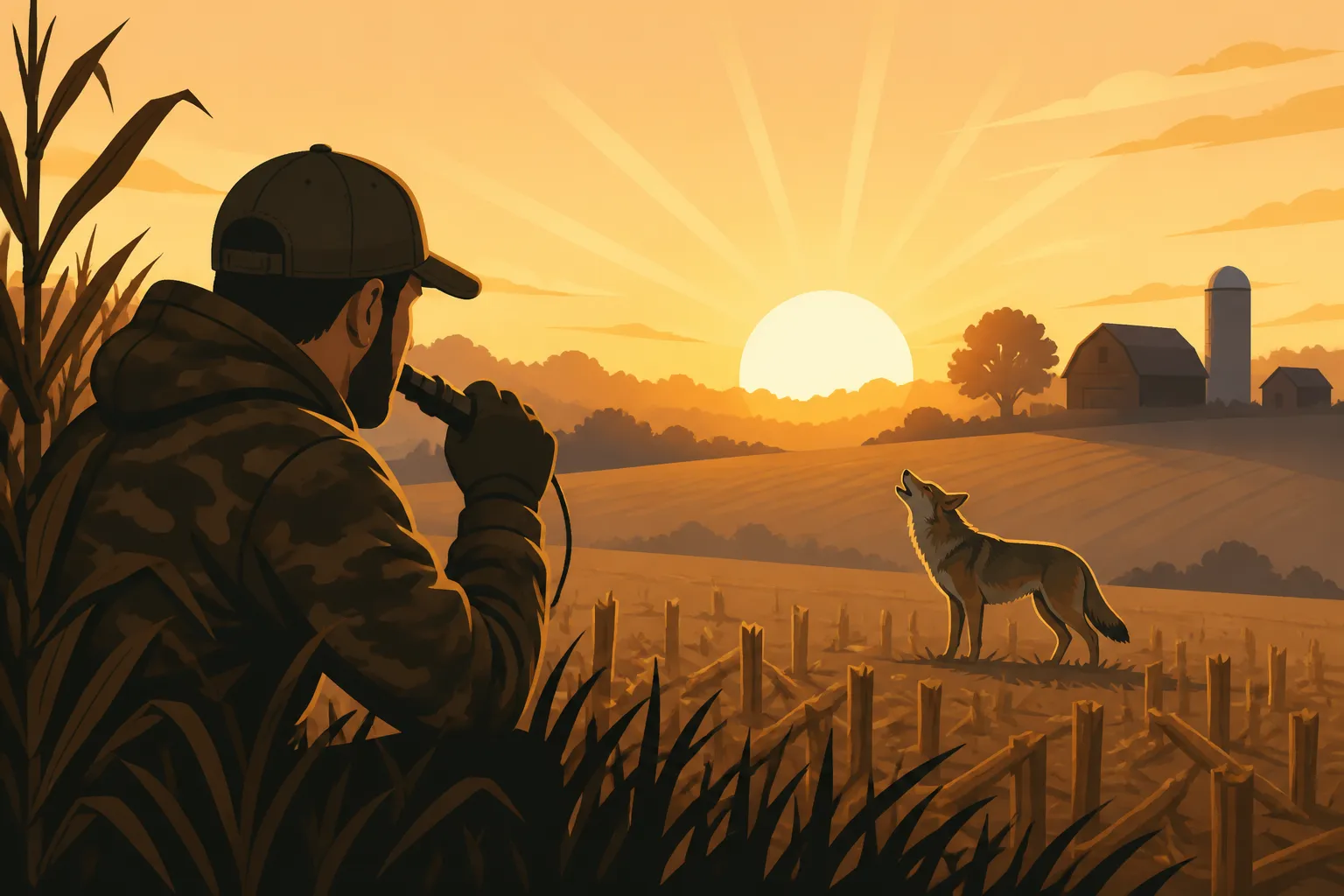
For any predator hunter in Maryland, the frustration of dealing with coyotes is a familiar sting. These intelligent, wary canids are masters of evasion, often turning nocturnal and disappearing into the landscape just as you're gearing up for a hunt. It's especially tough in wide-open farm fields where cover is minimal, making a close encounter feel like a pipe dream. But don't despair; this comprehensive guide is here to unravel the secrets of successfully calling coyotes in Maryland farm fields, particularly during those crucial first moments of daylight, offering actionable strategies to turn those frustrating misses into satisfying successes.
Understanding Maryland Coyotes and Their Habits in Farm Country
Coyotes in Maryland's agricultural landscapes are a different breed, adapting their behaviors to the rhythm of farm life. They're not always the wide-ranging, bold predators you might imagine from western states. Here, they're often more subtle, using the edges of fields, drainage ditches, and small woodlots as their highways and hideouts. Knowing their daily patterns and preferences is the first step to outsmarting them.
Why First Light is Prime Time for Farm Field Coyotes
You’ve probably heard it a million times: "The early bird gets the worm." Well, for coyote hunters, the early bird often gets the coyote, especially in farm country. First light is absolutely crucial. Think about it: coyotes have been active all night, potentially hunting, patrolling their territory, or simply moving from one bedding area to another. As the sun begins to creep over the horizon, they're often making their last moves before settling down for the day. This is when they're most vulnerable, most exposed, and sometimes, most willing to investigate a call.
During the pre-dawn hours, the ambient light is low, which plays into your hands for getting into position undetected. Then, as the light increases, their natural caution might be slightly lower as they finish their nocturnal activities. They might be looking for one last meal before daylight forces them into dense cover. The air is often calmer, allowing your calls to carry further and for you to hear their responses better. Moreover, the long shadows of early morning can provide you with much-needed concealment in what would otherwise be a wide-open field. It's a short window, often lasting only an hour or two after legal shooting light, but it’s arguably the most productive time you'll have.
Coyote Behavior Around Maryland Farmland
Maryland's farm fields offer coyotes an incredible buffet, particularly in the fall and winter. They're constantly on the lookout for rodents like voles and mice, which thrive in grain stubble and grassy field edges. Beyond that, they're opportunists. After harvest, leftover corn and soybean fields can attract deer and other small game, bringing coyotes right into the mix. They'll follow deer travel corridors, using drainage ditches, fencerows, and creek bottoms as their hidden pathways through the open landscape. This means that if you're out there scouting for deer, you're inadvertently also scouting for coyotes, as their hunting grounds often overlap significantly.
They are incredibly wary of human activity, which is why hunting public lands in Maryland can be so challenging. On private farm properties, they might be slightly less pressured, but they still learn quickly. They understand the patterns of farming equipment, the presence of livestock, and the movements of people. When targeting them in these areas, you need to think like a ghost. They often bed down in dense cover like multiflora rose thickets, small woodlots, or even standing crops like winter wheat or cover crops, especially when those fields are large enough to offer security. Understanding what Maryland coyotes actually eat will also help you determine where they might be focusing their hunting efforts and, consequently, where you should set up your calling sequence.
Strategic Setup: Mastering the Approach and Ambush in Open Fields
Getting into position without spooking a coyote is half the battle, especially in the exposed environment of a farm field. They have incredible senses of smell, sight, and hearing. Your approach, your stand location, and your concealment are paramount. You're not just setting up; you're orchestrating an ambush against a creature built to avoid detection.
The Importance of Wind and Sun Direction
When hunting coyotes in open farm fields, ignoring the wind is like hanging a "Coyote Buffet" sign on yourself. Their sense of smell is their primary defense, and they will almost always circle downwind to scent-check the source of a call before committing. Therefore, your number one rule is always, always hunt with the wind in your face or quartering. This might mean making a longer, more circuitous approach to your chosen stand, but it's absolutely non-negotiable. If a coyote gets downwind of you, it's game over, and they'll likely vanish without you ever knowing they were there. I've had countless setups ruined because of a slight wind shift I didn't account for, and it's a frustrating lesson to learn repeatedly.
The sun's position at first light also plays a crucial role. Ideally, you want the sun at your back, shining directly into the face of any approaching coyote. This creates a natural glare that hinders their vision, making it harder for them to pick you out of the shadows. Conversely, if the sun is in your eyes, it's in their favor, making you an easy silhouette against the morning sky. Plan your entry route and stand location to ensure both the wind and the sun are working for you, not against you. This careful consideration of nature's elements is what separates a truly strategic hunt from a haphazard one.
Choosing Your Stand Location
Selecting the perfect stand location in a seemingly featureless farm field requires a keen eye for subtle terrain changes and cover. While you might feel exposed, look for any elevated position, even a slight knoll, that gives you a better vantage point without silhouetting yourself. Often, the edge of a woodlot bordering a field, a hedgerow, or a drainage ditch can provide just enough broken ground and cover to hide your approach and setup. You want to be able to see as much of the field as possible, particularly where coyotes might approach from, but also have something at your back to break up your outline.
A common mistake is setting up too close to the field edge, where coyotes often travel. Instead, consider positioning yourself 50-100 yards into the field, using a small rise or even a patch of taller grass for concealment. This creates a wider kill zone and gives you a better angle on coyotes that might try to circle downwind. Always consider natural funnels too – a narrow strip of timber between two fields, a natural dip in the terrain, or even a gap in a fencerow can be prime spots. For those utilizing tools like GoHunt for mapping, spend time before your hunt identifying these subtle terrain features and planning multiple entry and exit routes. This foresight can make all the difference, particularly when you're aiming for a successful ambush. You might even find success along a Creek Crossing at First Light or by Hunting a Funnel Between Two Grain Fields if your scouting is thorough.
Concealment and Decoys for Farm Field Success
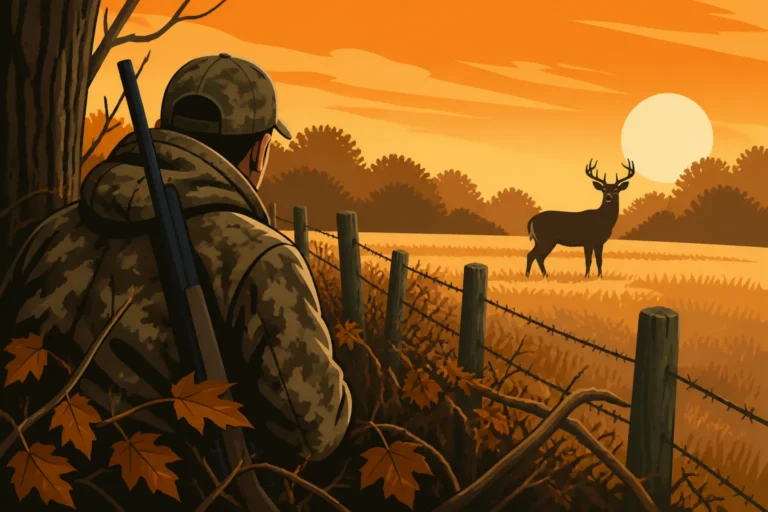
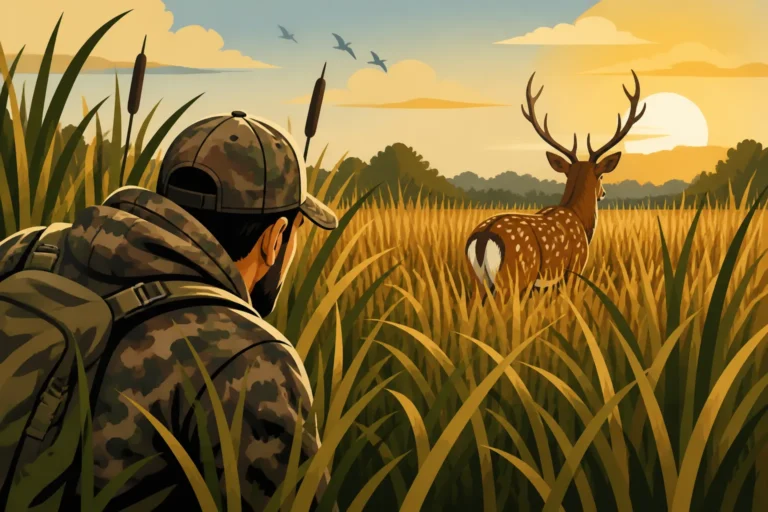
In the open environment of a Maryland farm field, concealment is king. You need to become part of the landscape. Wearing full camouflage, including a face mask and gloves, is non-negotiable. Break up your outline as much as possible. If you're near a hay bale, huddle into its shadow. If you're along a fencerow, position yourself directly against a fence post or a clump of brush. Utilizing a ground blind, especially a low-profile one, can be incredibly effective, but ensure it's set up well before first light and camouflaged naturally. The goal is to blend in so seamlessly that an approaching coyote doesn't register you as a threat until it's too late.
Decoys can be a game-changer in farm fields. A simple rabbit or bird distress decoy, especially one with subtle motion (like a flapping wing), can draw a coyote's attention away from you and focus it on a visual target. Place your decoy 20-50 yards in front of your position, slightly off to the side of where you expect the coyote to approach. This gives the coyote something to look at, allowing you precious seconds to raise your rifle or shotgun for a clean shot. Brands like Mojo Outdoors offer excellent motion decoys that are lightweight and easy to deploy. Remember, a coyote’s eyes are incredible, but they’re often focused on movement and the source of the sound; a well-placed decoy exploits this.
Effective Calling Sequences for Maryland Farm Fields
Calling coyotes is both an art and a science. It's about mimicking their prey, their rivals, and even their own social sounds to pique their curiosity or exploit their hunger. In Maryland's farm fields, subtle often wins over loud, but knowing when to ramp up the intensity is key.
The Art of Distress Calls and How to Use Them
Distress calls are your bread and butter for coyote calling in Maryland. A rabbit in distress, a bird in trouble, or even a fawn bleat can trigger a coyote's predatory instinct. But it's not just about blaring out a sound; it's about making it believable. Start with a relatively soft, pleading sound, then gradually increase the volume and intensity. Think of a rabbit's scream: it starts with a whimper, builds to a frantic cry, and then fades. Mimic this. Use short, sharp bursts followed by pauses, then longer, more sustained cries. Vary your pitch and cadence.
Electronic calls like those from Foxpro or ICOtec are incredibly effective because they offer a wide range of realistic sounds and can be controlled remotely, keeping the coyote’s focus away from your position. Start with a rabbit distress call for 30-60 seconds, then go silent for a few minutes. If nothing shows up, repeat, perhaps increasing the volume slightly. If you get a response, maintain the call until the coyote is committed or in sight, then switch to short, sharp whines or growls to make it feel like another coyote is moving in on its meal. For more advanced strategies, consider mixing in a Coyote Calling in Maryland Farm Country sequence that targets their competitive nature.
Locator Calls and How to Gauge Responses
Before you even start your distress sequence, a locator call can be incredibly useful, especially at first light. A coyote howl, an owl hoot, or even a crow caw can trigger a "shock howl" from a nearby coyote, giving away its position. This is invaluable information because it tells you exactly where to focus your attention and where to expect an approach. Try a single, confident howl just as legal shooting light breaks. Listen intently for a response. If you hear one, you've just dramatically increased your odds.
Once you know their general location, you can fine-tune your setup and calling strategy. If they howl back from across a field, you know to direct your distress calls that way. If they're closer, you might start with softer calls to avoid spooking them. Gauging their response isn't just about hearing a howl; it's about the intensity and direction. A distant, half-hearted howl might mean they're not particularly interested or are already full. A close, aggressive, full-throated howl, especially one followed by multiple coyotes chiming in, indicates they're active, territorial, and potentially very responsive to your distress calls.
Mixing it Up: Pups, Barks, and Howls
While distress calls are your go-to, don't be afraid to diversify your calling repertoire. Coyotes are social animals, and sometimes tapping into their social dynamics can be more effective than simply mimicking prey. Pup distress calls, particularly in the late spring and summer, can draw in protective parents. Intermittent barks and short howls can mimic other coyotes, either challenging them or signaling a discovery. Consider a "challenge howl" if you're trying to draw out a dominant male in an area you suspect is his territory.
A great sequence, especially if you're not getting a response from distress calls, is to start with a lone howl, wait for a response, then transition to a series of pup distress calls, followed by a soft, inquisitive howl, as if an adult coyote is investigating the commotion. This narrative can be incredibly effective. The key is to make it sound natural and tell a story with your calls. GoHunt's advanced mapping features often show known territories or consistent sightings, which can inform your decision on what type of call to use based on the season and the likely social structure of the coyotes in that particular farm field.
Gear and Tactics for Consistent Coyote Calling
Successful coyote calling isn't just about the calls themselves; it's about having the right tools, understanding how to use them effectively, and having a solid plan for after the shot. From optics to shot placement, every detail counts when you're trying to tag one of Maryland's smartest predators.
Essential Calling Equipment and Optics
Beyond your calls, your equipment choices are critical. A good quality rifle or shotgun is a must. For rifles, flat-shooting calibers like .223 Rem, .22-250 Rem, or even a fast .243 Win are popular, especially for longer shots across open fields. Ensure your rifle is zeroed precisely. For shotguns, 12-gauge with heavy lead or tungsten loads (like Hevi-Shot or Winchester Blind Side in BBB or T shot) can be devastating at closer ranges. Always check Maryland Legal Deer Rifles by County for restrictions, as some areas may limit rifle use or require straight-wall cartridges, which could impact your choice of weapon for coyotes if you're hunting the same ground.
Optics are equally important. A high-quality binocular (10×42) is essential for scanning field edges and detecting subtle movement. For your rifle, a variable power scope (e.g., 3-9x, 4-12x) with good low-light performance will serve you well at first light. Don't forget a rangefinder; knowing the exact distance to potential approach lanes or the decoy can be invaluable for making an ethical shot. A sturdy bipod or shooting sticks will provide a stable shooting platform, critical for precision in the field. Lastly, consider carrying a small, powerful flashlight with a red or green lens for getting to your stand in the dark without spooking game.
Here's a quick comparison of popular calling equipment:
| Equipment Type | Pros | Cons | Recommended Use Cases |
|---|---|---|---|
| Mouth Calls | Lightweight, inexpensive, versatile | Requires practice, limited volume control | Close-range, quick setups, silent approaches |
| E-Calls | Realistic sounds, high volume, remote | Battery dependent, more expensive, heavier | Long-range, diverse sound repertoire, hands-free operation |
| Motion Decoys | Visual attractant, distracts coyote | Can be bulky, battery dependent, sometimes ignored | Open fields, wary coyotes, drawing focus away from hunter |
| Binoculars | Essential for scanning and spotting | Can be cumbersome if too large | All hunts, especially spotting subtle movement |
| Rangefinder | Critical for accurate shot placement | Another item to carry, battery dependent | Long-range shots, confirming distances to decoys/obstacles |
Shot Placement and Follow-Up Shots
Coyotes are tough animals, and they don't go down easily. Ethical shot placement is crucial. The primary target area is the chest cavity, aiming for the lung-heart area, just behind the shoulder. This vital zone offers the largest margin for error and typically results in a quick, humane kill. Avoid headshots unless the coyote is extremely close and stationary, as the skull offers a small target and a high risk of wounding. A wounded coyote can travel a long distance, often making recovery difficult or impossible.
Always be prepared for a follow-up shot. Coyotes are often reactive and will bolt at the sound of a shot, even if hit. Stay on target, cycle your action, and be ready to fire again if necessary. In a group scenario, if multiple coyotes respond, prioritize the closest or largest, but be prepared to engage others if they present a clear, ethical shot. Don't just pull the trigger and relax; maintain your vigilance until the animal is confirmed down. This readiness is a hallmark of responsible predator hunting.
Post-Hunt Strategy and Relocation
So, you’ve called one in, made a clean shot, and the coyote is down. Now what? First, secure the animal. If it's your first time, take a moment to admire your success – it's a testament to your patience and skill. Next, decide on your next move. If you've called in and killed a coyote, it's generally a good idea to relocate. That specific stand location is now tainted with your scent, the gunshot, and the alarm of the deceased coyote. The remaining coyotes in the area will be highly aware of the danger.
Move at least a half-mile, preferably a mile or more, to a new location, ideally upwind of a fresh patch of cover or a different field. When Hunting Maryland's Two Deer Management Regions, you might find that coyote pressure also varies, so adjust your relocation distance accordingly. On your way out, keep an eye out for fresh tracks or sign that could point to future stand locations. Make notes in your GoHunt app about wind direction, time of day, calls used, and any responses (or lack thereof). This kind of detailed record-keeping is invaluable for learning and improving your success rate in Maryland’s challenging farm country. Sometimes, even if you don't connect, simply relocating to Hunting a Maryland Powerline Cut at Last Light or Working a Maryland Creek Bottom Late in the Season might put you on fresh sign later in the day.
Disclaimer
Hunting is a challenging and rewarding pursuit, but it always carries inherent risks. This guide provides information for educational purposes only. Always prioritize safety, follow all local, state, and federal hunting regulations, and obtain proper licenses and permits before engaging in any hunting activity. Be respectful of private property and always secure permission before hunting on private land. Wildlife populations and regulations can change, so consult the latest Maryland Department of Natural Resources guidelines before planning your hunt.