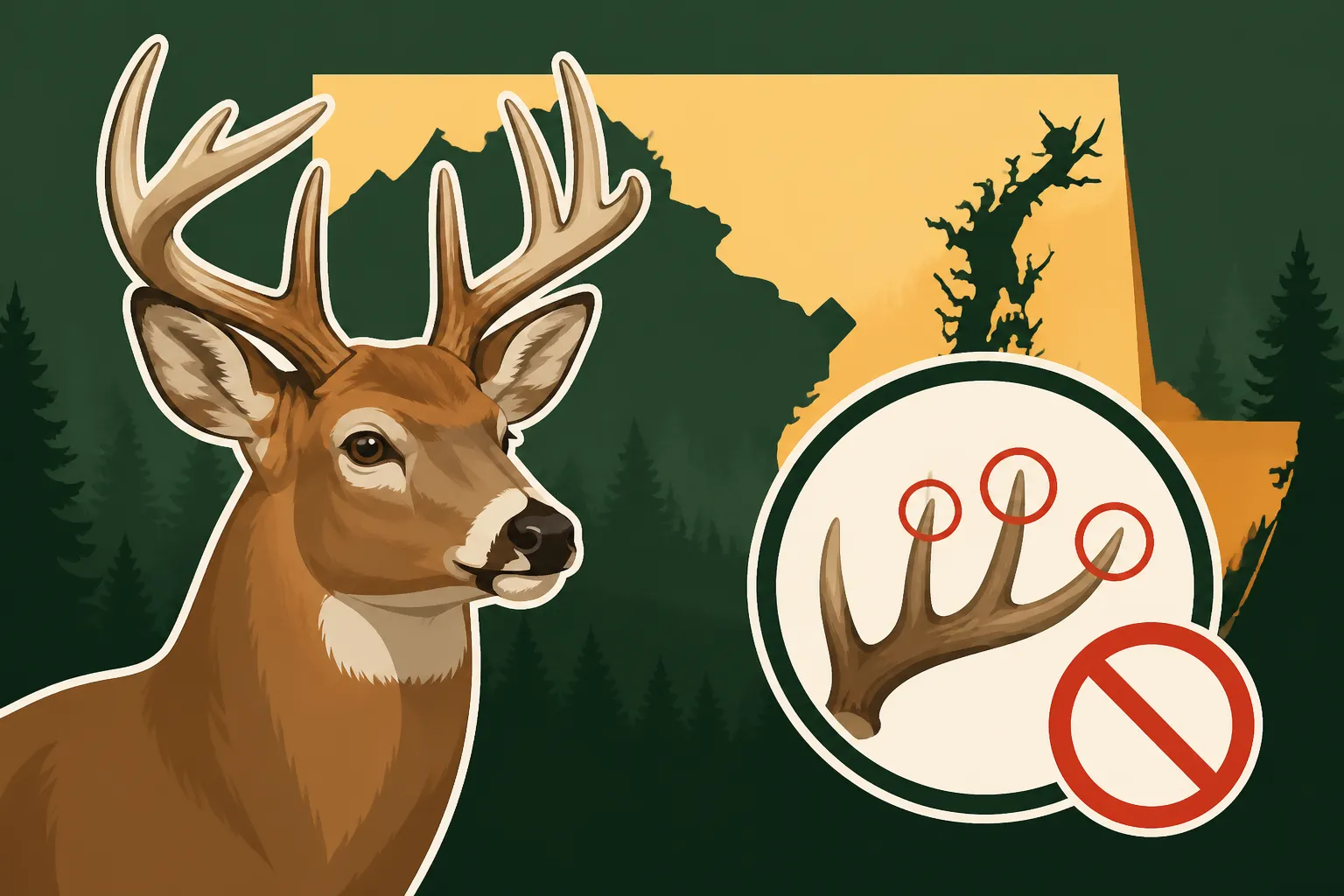
Maryland’s Three-Point Antler Restriction
Trying to make sense of Maryland's deer hunting regulations can sometimes feel like you need a law degree and a magnifying glass just to confirm what you're allowed to shoot. One of the most common head-scratchers for both seasoned hunters and newcomers alike is the state's three-point antler restriction, a rule designed with the best intentions but often causing heart palpitations when a buck steps out in fading light. This guide aims to demystify this critical regulation, helping you understand its nuances, why it exists, and how to confidently hunt within its bounds.
Understanding Maryland's Three-Point Antler Restriction
Maryland's three-point antler restriction is a regulation primarily aimed at managing the state's deer herd, specifically by influencing the age structure of antlered deer. In simple terms, it means that an antlered deer, or buck, must have at least three points on one antler to be legally harvested, with one crucial exception. This rule often creates a moment of intense scrutiny when a buck appears, forcing hunters to make quick, accurate judgments about antler configuration.
The essence of the rule is to protect younger, typically 1.5-year-old bucks, allowing them to mature and contribute to breeding efforts, ultimately leading to a healthier and potentially larger deer population with more mature animals. Without this restriction, many young bucks, often sporting spikes or small forked antlers, would be harvested, reducing the number of deer that can reach older age classes. For hunters, this means shifting focus from "any buck" to a specific class of buck, which can be a significant mental adjustment, especially if you're used to less restrictive regulations in other states. It adds a layer of complexity to an already intense hunting experience.
What Exactly Qualifies as a "Point"?
This is where the rubber meets the road, and misunderstandings often arise. For the purpose of Maryland's antler restriction, a "point" is defined as any projection of antler material that is at least one inch long, measured from the base of the projection to its tip. Crucially, this projection must be longer than it is wide at its base. If it's stubby or just a small bump, it doesn't count. This definition is essential because a buck might appear to have multiple "points" from a distance, but upon closer inspection, some might not meet the minimum length or width-to-length ratio.
Imagine a young buck with a small fork on one side and a single spike on the other. That fork might have two points, but if one of those tines is less than an inch, or if it's wider than it is long, it doesn't contribute to the "three-point" count. This requires a hunter to not only count but also estimate dimensions in the field, often in low light or fleeting moments. It's a skill that takes practice and often leads to the adage, "If there's doubt, let him walk." Many experienced hunters use their binoculars or scopes to count and confirm points before raising their rifle or drawing their bow, a practice that becomes second nature after a few seasons.
The Core Rule: One Antler Exempt from the Restriction
Here's the critical nuance that often trips up new hunters: the three-point restriction applies to one antler. What this means is that if a buck has, for example, two points on its left antler but four points on its right antler, it is a legal buck because the right antler meets the three-point minimum. Conversely, if a buck has two points on one side and only a spike on the other, it would not be a legal buck, as neither side meets the minimum of three points.
The "one antler exempt" language refers to the fact that one antlered deer per license year is exempt from the three-point rule. This means that a hunter, even in Region B (where the restriction primarily applies), is allowed to harvest one buck that does not meet the three-point rule. This is often referred to as a "bonus antlered deer" or "any buck" tag. It's a valuable allowance, particularly for those who might struggle with field judging or simply want the opportunity to harvest a young buck for venison, regardless of antler size. This single exemption can be a lifesaver for hunters who spend considerable time in the woods but rarely encounter a mature, legal buck under the primary rule. Understanding this exemption is just as important as understanding the rule itself, as it provides flexibility for your hunting strategy.
The Rationale Behind the Restriction
Maryland didn't just wake up one morning and decide to impose arbitrary rules on hunters. The three-point antler restriction, like many wildlife management strategies, was implemented after careful consideration and with specific goals in mind. It's part of a broader effort to maintain a healthy, balanced deer population and to provide quality hunting opportunities for residents and non-residents alike.
The journey to implementing the restriction involved biological research, hunter feedback, and a desire to align Maryland's deer management with successful strategies seen in other states. It wasn't without its controversies, of course, as any significant change to hunting regulations will inevitably spark debate among the hunting community. Some hunters initially feared it would make hunting too difficult or reduce harvest opportunities, while others championed it as a progressive step for deer management. Over time, as the benefits have become clearer, the initial resistance has largely waned, and most hunters now accept it as a standard part of hunting in much of the state.
Promoting Buck Age Structure and Herd Health
One of the primary drivers behind the three-point rule is the desire to promote a more natural age structure within the buck population. Prior to such restrictions, it was common for a significant proportion of the annual antlered deer harvest to consist of young bucks, often 1.5 years old. These young bucks, typically with smaller antlers, were easy targets. While harvesting deer is a fundamental part of management, an imbalance can lead to a skewed buck-to-doe ratio and a younger overall buck age structure.
By protecting these younger bucks, the restriction allows them to survive for at least another year, giving them the chance to grow larger bodies and, crucially, larger antlers. This results in more mature bucks (2.5 years and older) in the population, which in turn leads to a more balanced breeding dynamic. A healthier age structure can mean stronger deer, potentially better genetics, and a more robust herd overall. This isn't just about trophy hunting; it's about the ecological well-being of the deer herd and ensuring future hunting opportunities are sustained. Allowing bucks to grow older also means they have more time to spread their genetics, contributing to the overall health and diversity of the herd.
The Desire for More Mature Bucks
Let's be honest, part of the appeal for many hunters is the opportunity to pursue and harvest a mature buck. Before the antler restriction, hunters might go many seasons without seeing a truly large-racked deer, simply because most bucks were harvested before they had a chance to reach their full potential. The three-point rule directly addresses this by letting those younger bucks walk, giving them another year or two to develop.
The result, over time, has been an increase in the number of older, larger-antlered bucks across much of Maryland. This doesn't mean every deer you see will be a Boone & Crockett contender, but it significantly increases the odds of encountering a buck with a more impressive rack. For hunters, this translates to a more challenging and rewarding experience, knowing that the buck they are pursuing has had the chance to mature. It also shifts the focus from simply filling a tag to seeking a specific type of animal, adding an extra layer of strategy and patience to the hunt. This shift has been widely celebrated by many in the hunting community, especially those who appreciate the challenge of pursuing an older animal.
Geographical Application of the Antler Restriction
Understanding where the three-point antler restriction applies in Maryland is just as crucial as understanding the rule itself. Maryland's deer management strategy divides the state into two distinct regions, each with its own set of regulations regarding antlered deer harvest. This regional approach acknowledges the varying deer densities, habitat types, and human population pressures across the state. Failing to recognize which region you're hunting in can lead to costly mistakes.
Before heading into the field, whether you're hunting public land or private property, always check the current Maryland hunting regulations. Resources like the Maryland Department of Natural Resources (DNR) website or mapping tools like GoHunt can provide up-to-date boundary information and specific county rules. It’s always better to be over-informed than to find yourself in a tricky situation with a game warden. This diligent preparation is a hallmark of a responsible hunter.
Region A Versus Region B Explained
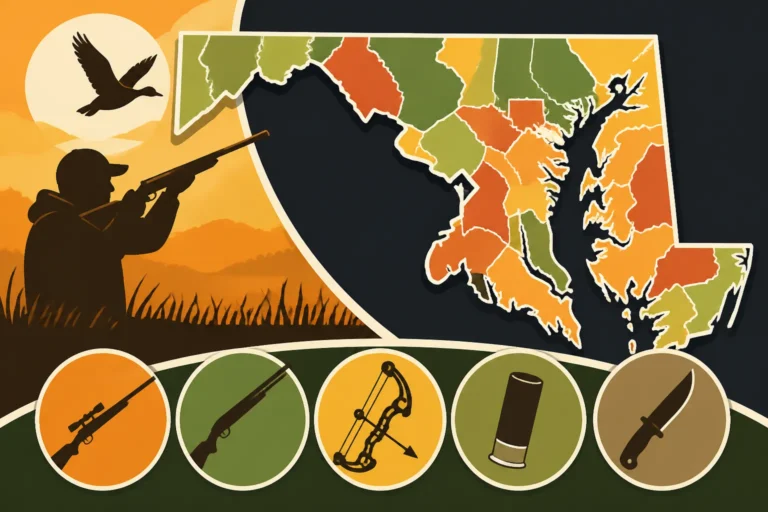
Maryland delineates its deer hunting zones into "Region A" and "Region B." The difference between these two regions is significant, particularly concerning antlered deer harvest regulations.
-
Region A: This region encompasses the westernmost counties of Maryland, primarily Garrett and Allegany. Due to its more mountainous, forested terrain and generally lower deer densities compared to other parts of the state, Region A has traditionally had less restrictive antlered deer regulations. The three-point antler restriction does not apply in Region A. In this region, hunters can harvest any antlered deer, provided it meets the definition of an antlered deer (i.e., having an antler at least three inches long). The thought behind this is that the lower deer density and different habitat might not benefit as much from the selective harvest seen in other areas. This provides a different hunting experience, often focusing more on rugged terrain and still-hunting tactics. If you're hunting Western Maryland Mountain Timber, you'll find different rules apply compared to the Eastern Shore.
-
Region B: This region covers the vast majority of Maryland, including the central, southern, and Eastern Shore counties. This is where the three-point antler restriction does apply. In Region B, hunters must ensure that any antlered deer harvested, beyond their one exemption, has at least three points on one antler. Region B typically has higher deer populations, more agricultural land, and a greater mix of suburban and rural environments, making selective harvest more impactful for herd management goals. The intention here is to actively manage the buck age structure to improve herd health and foster opportunities for harvesting more mature animals.
Understanding this geographical split is paramount. A buck that is perfectly legal in Garrett County (Region A) might be an illegal harvest just a county or two east in Frederick County (Region B), even if it's the same species and looks identical. Always know your county and its corresponding region before you pull the trigger.
Counties Under Specific Regulations
To make things even clearer, let's list some key counties and their respective regions regarding the three-point antler restriction. This is not an exhaustive list but covers major hunting areas.
Counties in Region A (No 3-point restriction):
- Garrett County
- Allegany County
Counties in Region B (3-point restriction applies):
- Washington County
- Frederick County
- Carroll County
- Baltimore County
- Harford County
- Cecil County
- Kent County
- Queen Anne's County
- Caroline County
- Talbot County
- Dorchester County
- Wicomico County
- Somerset County
- Worcester County
- Charles County
- St. Mary's County
- Calvert County
- Anne Arundel County
- Montgomery County
- Howard County
- Prince George's County
It's important to note that while the three-point rule applies in Region B, hunters still have that one "bonus antlered deer" tag per license year that allows them to harvest any antlered deer, regardless of the three-point minimum. This provides flexibility, especially for junior hunters or those focused on venison harvest. For specific boundaries, especially if you're hunting near county lines, consulting an interactive map, like those found on GoHunt, is invaluable. This tool can overlay public and private land boundaries with deer management regions, helping you confirm your location and applicable rules in real-time.
Here's a quick summary table for clarity:
| Region | Counties Included | Three-Point Antler Restriction? | Bonus Antlered Deer (Any Buck) Tag? |
|---|---|---|---|
| A | Garrett, Allegany | No | Yes (Applies to all antlered deer) |
| B | All other Maryland counties | Yes | Yes (One per season, then 3-point rule applies) |
Real-World Implications for Maryland Deer Hunters
The introduction of the three-point antler restriction, while beneficial for herd management, has undeniably altered the hunting experience for many in Maryland. It's no longer just about seeing a buck; it's about seeing a legal buck. This adds a layer of mental challenge and requires hunters to refine their skills beyond just marksmanship. The pressure can be intense, especially when a buck suddenly appears.
Many hunters express the frustration of having a perfect shot opportunity on a beautiful young buck, only to have to watch it walk away because it doesn't meet the antler requirements. This can be particularly tough for new hunters or those who hunt infrequently. It forces a choice between ethical adherence to regulations and the innate desire to harvest an animal. This is where patience, discipline, and a thorough understanding of the rules become paramount.
The Pressure of Field Judging in the Heat of the Moment
One of the biggest real-world challenges imposed by the three-point rule is the need for accurate field judging. Deer, especially bucks, rarely stand perfectly still for extended periods in ideal lighting. More often than not, they are moving, partially obscured by brush, or appearing at dawn or dusk when visibility is poor. In these fleeting moments, a hunter must quickly assess if an antler has at least three points on one side, and if those points meet the one-inch length and width-to-length criteria.
This high-pressure situation often leads to "ground shrinkage," where a buck that looked legal through the scope suddenly appears smaller and perhaps non-compliant once harvested and examined up close. To avoid this, many experienced hunters adopt a conservative approach: "When in doubt, don't shoot." They use their binoculars to scan and count points multiple times before even considering raising their weapon. Some even carry a small, foldable ruler to help visualize the one-inch rule, though this is obviously for post-harvest verification. The mental gymnastics involved in rapidly counting points, judging length, and ensuring legality while dealing with buck fever is a unique aspect of hunting under this specific regulation. This skill is critical when you're Counting Antler Points Before You Shoot.
Ethical Considerations and Passing on Younger Bucks
The three-point rule brings a significant ethical component into play. For many hunters, the goal is to harvest an animal for sustenance, and any buck provides valuable venison. Having to pass on a perfectly healthy, albeit young, buck because its antlers don't meet a specific measurement can be difficult. It forces hunters to prioritize the long-term health and age structure of the herd over immediate harvest opportunity.
This is a shift in mindset for many, especially those coming from areas without such restrictions. It fosters a greater appreciation for the role of wildlife management and the concept of stewardship. Passing on a young buck, knowing it will likely grow into a larger, more mature animal for future seasons (or for another hunter), is a deeply ethical decision. It contributes to the overall conservation effort and reflects a commitment to responsible hunting practices. It also means that hunters might spend more days afield without success, which can be disheartening, but the eventual reward of a mature buck is often considered worth the wait. This practice is central to Passing a Young Buck Under Maryland's Antler Rule.
Strategic Approaches to Hunting Under the Restriction
Hunting effectively under Maryland's three-point antler restriction requires more than just keen eyesight and good marksmanship; it demands a shift in strategy. Hunters need to adapt their scouting, gear choices, and in-the-field decision-making to align with the regulations. It's about being more intentional in your approach and understanding how deer behave in areas where older bucks are more prevalent.
This means you might spend more time analyzing trail camera photos, scrutinizing sign, and understanding deer movement patterns. It’s less about simply encountering deer and more about targeting a specific class of animal. This strategic shift can actually make hunting more engaging and rewarding, as it forces you to become a more skilled and observant woodsman. Tools like GoHunt can be particularly useful here, offering detailed maps and data to help you scout and plan your hunt, especially when trying to identify productive areas.
Scouting and Camera Use for Antler Assessment
Scouting becomes an even more critical component when hunting under antler restrictions. The more you know about the bucks in your hunting area before the season starts, the better prepared you'll be. This is where trail cameras shine. By deploying cameras strategically, especially around food sources, travel corridors, and bedding areas, you can inventory the bucks present and identify those that meet the three-point criteria.
Summer and early fall scouting are ideal for this. Bucks are often in velvet, but you can still count points and get a good idea of their potential. As velvet sheds, their racks will be fully developed. Identifying a "shooter" buck from trail camera photos allows you to mentally tag that animal, making an in-the-field decision much easier. Many hunters will name these bucks or assign them numbers, creating a hit list. This detailed intelligence not only increases your confidence when a legal buck appears but also helps you develop a better understanding of the deer herd's composition. Using aerial photos and other resources can help in Scouting Maryland Public Land With Aerial Photos.
Weapon Choice and Shot Opportunity
The type of weapon you choose can also impact your strategy under the antler restriction. For instance, bowhunters, who are often hunting deer at closer ranges, might have an easier time field judging antlers compared to those hunting with a rifle across a large field. However, bowhunting offers fewer opportunities for deer to hold still for extended periods, demanding quick decisions.
- Archery: Bowhunting Maryland's Long Archery Season provides ample opportunity, and the closer ranges typically allow for more precise antler identification. However, the short window for a shot means you need to be decisive. Practicing quick point counts from various angles and light conditions is crucial.
- Firearms: During Maryland's Split Firearms Deer Season, hunters often have longer-range shot opportunities. While this gives you more time to look through a scope, heat shimmer, distance, and heavy cover can still make point counting difficult. High-quality optics become even more important here.
- Muzzleloader: Muzzleloader Deer Hunting in Maryland also offers unique challenges and opportunities. Often used in specific seasons, these hunts might occur during periods of increased deer movement, but the limitations of a single shot emphasize the need for certainty before taking aim.
Regardless of weapon, the key is to ensure you have a clear, ethical shot on a buck you are confident is legal. If there's any doubt about antler legality, it's best to wait for another opportunity.
Leveraging Exemptions and Special Tags
Don't forget the "one antlered deer exempt" rule. This means that if you're hunting in Region B, you can take one buck that doesn't meet the three-point minimum. This is often used for a first buck of the season or if you specifically want to harvest a younger animal for meat. This tag is often called the "Bonus Antlered Deer Stamp Cost" buck. Knowing you have this option can alleviate some pressure, especially early in the season.
Furthermore, Maryland offers specific programs and tags that might affect how you approach the three-point rule. For instance, junior hunters often have different regulations or additional tags that can be more flexible. Landowners with nuisance permits might also have different harvest allowances. Always consult the Maryland DNR regulations for the most current information regarding all tags and exemptions, as these can change year to year. Strategic use of your tags can allow for both herd management compliance and successful harvest.
Navigating Common Challenges and Misconceptions
Despite its clear intent, Maryland's three-point antler restriction often gives rise to a few common challenges and misconceptions among hunters. These can range from misinterpreting the rules to struggling with practical application in the field. Understanding these pitfalls can help you avoid them and hunt more confidently and legally.
One of the biggest issues is the sheer number of variations in antler growth. Not all young bucks look the same, and not all older bucks have massive, perfectly symmetrical racks. This variability is what makes field judging so difficult and why it's a skill that takes years to hone. It's not just about counting points, but about truly understanding the "one inch" rule and how antler abnormalities play into it.
Differentiating Legal Bucks from Illegal Ones
The most significant challenge is accurately differentiating a legal buck from an illegal one in the field. This is not always straightforward.
- The "Brow Tine" Rule: A common misconception is that brow tines (the points closest to the head) don't count towards the three-point total. This is incorrect. Any point, regardless of its location on the antler, counts as long as it meets the one-inch length and length-to-width ratio. So, a buck with two points on its main beam and a distinct brow tine on one side would be a legal three-point buck on that antler.
- Abnormalities: Sometimes, a buck will have abnormal antler growth – kickers, drop tines, or broken main beams. These can make counting points incredibly difficult. If a deer has an abnormal point that meets the one-inch definition, it counts. However, if a main beam is broken, the missing points obviously cannot be counted. This is where the "one antler" rule becomes important; if one side is clearly legal, even if the other is abnormal, the buck can still be harvested (provided you're not using your bonus tag).
- Small Forks and Bumps: Remember the "longer than wide at its base" rule. Many young bucks will have small bumps or even slight forks that don't quite meet this criterion. From a distance, they might look like points, but up close, they fail the test. It's best to be conservative.
The key to successfully differentiating legal from illegal bucks lies in patience and clear observation. Don't rush the shot. If you have any doubt, let the deer walk. There will always be another opportunity.
The Role of Technology in Decision Making
In today's hunting world, technology can play a significant role in navigating complex regulations like the three-point antler restriction. While it can't make the final decision for you, it can certainly assist.
- Quality Optics: High-magnification binoculars and spotting scopes are invaluable for closely examining antlers before a shot. Investing in good glass that performs well in low light conditions can make all the difference. Rangefinding binoculars can also help you determine if a shot is within your effective range and give you more time to study the antlers.
- Mapping Apps: Apps like GoHunt offer detailed topographical maps, satellite imagery, and often overlays for public land boundaries, game management units, and even specific hunting regulations. Using these tools to confirm you are in Region B (where the restriction applies) versus Region A (where it doesn't) is incredibly important. Knowing your exact location can prevent an illegal harvest due to confusion over regional boundaries.
- Trail Cameras: As mentioned earlier, trail cameras provide critical pre-season intelligence, allowing you to identify legal bucks and even pattern their movements. Some advanced cameras now offer cellular connectivity, sending photos directly to your phone, enabling real-time monitoring of your hunting area.
While technology is a powerful aid, it's crucial to remember that it supplements, not replaces, good judgment and adherence to the rules. Ultimately, the decision to pull the trigger rests solely with the hunter, and understanding Maryland's Statewide Antlered Deer Bag Limit and specific antler rules is your responsibility.
Disclaimer
Please note that hunting regulations, including those pertaining to Maryland's three-point antler restriction, can change. It is always the hunter's responsibility to consult the most current Maryland Department of Natural Resources (DNR) official hunting guide and regulations prior to hunting. This guide provides general information and should not be considered a substitute for official DNR publications.