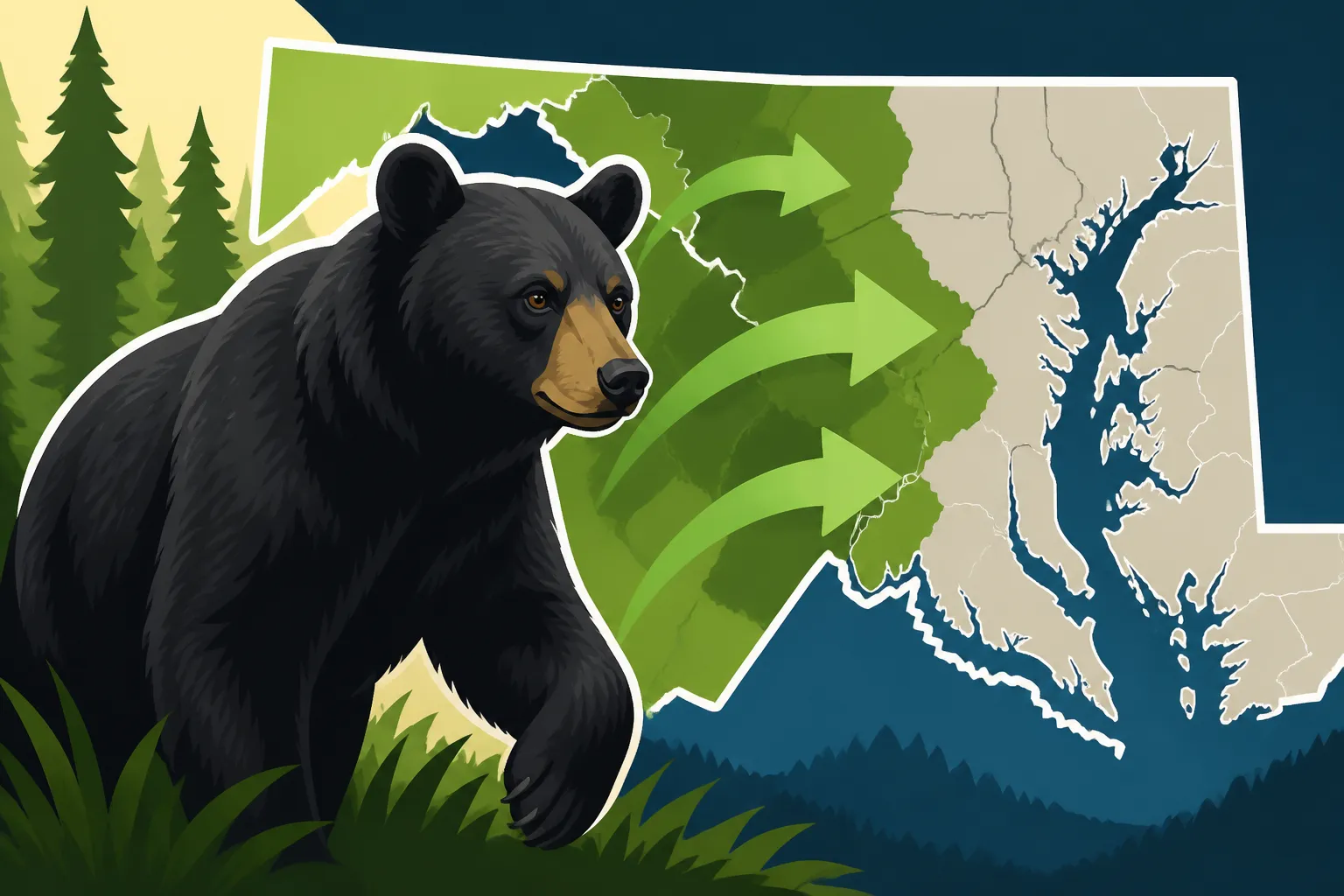
Where Maryland’s Bear Range Is Expanding
For years, mentioning black bears in Maryland almost exclusively conjured images of the rugged mountains and dense forests of Garrett and Allegany counties. Hunters planned their trips to the far western reaches of the state, anticipating encounters with these magnificent animals in their traditional strongholds. But something is shifting. Increasingly, both hunters and rural residents further east are noticing a significant change: bear sightings are becoming more common in places they simply weren't before. This guide will walk you through where Maryland's black bear population is not just thriving, but actively expanding, and what that means for both wildlife enthusiasts and those who live and recreate in these evolving landscapes.
The Traditional Bear Strongholds: Western Maryland's Mountainous Core
To understand where Maryland's black bear population is expanding, it's essential to first acknowledge their historic home. For generations, the vast majority of black bears in Maryland have called the rugged, forested landscapes of Garrett and Allegany counties their primary residence. These counties offer everything a bear needs to thrive: expansive tracts of public and private timber, dense cover, abundant natural food sources like acorns and berries, and relatively low human population density compared to other parts of the state.
These western counties boast an almost continuous canopy of mature hardwoods, interspersed with clear-cuts and riparian zones that provide excellent foraging and denning opportunities. When you think of a Maryland bear, you’re almost certainly picturing one foraging through an oak flat in Savage River State Forest or crossing a timber road in Green Ridge State Forest. This region is truly the heart of Maryland's bear country, where the population has remained robust and healthy for decades. It's no wonder that the primary focus of the annual bear lottery and hunting season has always been centered here, a testament to the thriving populations in these areas. For hunters interested in pursuing these animals, understanding that these core areas remain highly productive is key to success, even as the population spreads.
Historically, black bear populations in many eastern states faced significant declines due to habitat loss and unregulated hunting. However, conservation efforts in Maryland, combined with the resilient nature of black bears, allowed the population in these western counties to not only recover but flourish. This success story in places like Garrett County and Allegany County forms the foundation from which the current expansion is occurring. The abundance of bears in these areas meant that, eventually, younger bears would start looking for new territories, pushing the boundaries of their established range.
Evident Shifts: Tracking the Eastern Creep
The expansion of Maryland's bear range isn't a sudden burst; it's a gradual, persistent creep eastward, marked by increasing sightings and more established presence in counties adjacent to the traditional strongholds. This isn't just anecdotal evidence from local farmers or hikers; wildlife biologists have been tracking this trend for years, noting a steady increase in bear activity further into the central and even northern Piedmont regions. The signs are everywhere, from trail camera photos capturing bears where they weren't seen a decade ago, to increased reports of bears raiding bird feeders or passing through suburban woodlots.
One of the primary drivers of this expansion is simply population growth. As the core populations in Western Maryland continue to thrive and grow, competition for resources and suitable territories intensifies. Younger, dispersing bears, particularly males, are forced to seek out new habitats. They follow river corridors, forested ridges, and utility line easements, acting as natural highways, pushing further and further east in their quest for a home range. These adventurous individuals are the vanguard of the expansion, often traveling considerable distances before settling down, or at least attempting to.
Another significant factor contributing to this eastward movement is the availability of suitable habitat and food sources. While not as wild and expansive as the western mountains, Maryland's central counties still possess significant forested tracts, river bottomlands, and even suburban green spaces that can support bears. These areas often provide abundant soft mast crops like berries and grapes, acorns from oak trees, and even agricultural crops like corn, which are all highly attractive to bears. As development fragments some areas, it also, perhaps counterintuitively, creates new edge habitats that can be appealing for transient bears, offering a mix of cover and foraging opportunities. This blend of factors makes the journey east not just possible, but increasingly appealing for a species constantly seeking new resources.
New Territories: Counties Witnessing Increased Bear Activity
While Garrett and Allegany remain the undisputed heart of Maryland's bear country, several counties immediately to their east, and even beyond, are now regularly hosting black bear populations. These new territories represent the leading edge of the expanding range, challenging long-held notions of where bears belong in Maryland. Hunters and residents in these areas need to be increasingly aware of the presence of bears, as encounters become more commonplace.
Washington County, bordering Allegany, has seen a consistent and significant increase in bear activity for quite some time. Areas like Sideling Hill Wildlife Management Area and along the Potomac River corridor regularly report sightings. It’s no longer a surprise to see a bear in Washington County; it’s becoming an expectation for those who spend time outdoors there. This county acts as a crucial stepping stone for bears moving further east, providing contiguous habitat that allows for relatively unhindered travel. Hunters scouting in Washington County, whether for deer or other game, should be prepared to find bear sign and adjust their expectations accordingly.
Further east, Frederick County is another area where bears are making a noticeable comeback. The Catoctin Mountain range, though smaller than the western mountains, offers excellent habitat, and bears are moving south from Pennsylvania and east from Washington County into these areas. Reports of bear sightings in places like Gambrill State Park and Cunningham Falls State Park are frequent, and bears are also being spotted near agricultural fields and even in more populated rural areas. It's a clear indication that Frederick County is transitioning from a county with occasional transient bears to one with a more resident population.
The expansion isn't stopping at Frederick. While less common, bears have been confirmed in counties like Carroll and even Howard. These sightings often represent individual dispersing males, but the fact that they are reaching these areas speaks volumes about the extent of the range expansion. It suggests that while these counties may not have established breeding populations yet, they are part of the broader dispersal network. For anyone using mapping tools like GoHunt to scout new hunting grounds, especially in counties bordering the known bear areas, it's wise to consider potential bear travel corridors or food sources when analyzing satellite imagery and topographical maps.
Here's a quick overview of how the bear range is evolving across Maryland:
| County Name | Historic Bear Status | Current Bear Status | Notable Characteristics for Expansion |
|---|---|---|---|
| Garrett | Established | Stronghold, High Density | Core breeding population, extensive wild habitat |
| Allegany | Established | Stronghold, High Density | Core breeding population, significant forest cover |
| Washington | Occasional/Expanding | Established/High Activity | Crucial corridor, increasing resident population |
| Frederick | Occasional | Expanding/Establishing Residents | Catoctin Mountains, strong food sources |
| Carroll | Rare | Occasional Sightings | Dispersing individuals, potential future expansion |
| Howard | Very Rare | Rare/Occasional Sightings | Largely transient individuals, close to suburban areas |
| Montgomery | Extremely Rare | Very Rare Sightings | Isolated individuals, mostly urban interface |
| Harford | Extremely Rare | Very Rare Sightings | Transient, possibly moving from Pennsylvania or west |
This table illustrates the progression, from the traditional strongholds to the more recent areas of increased activity. Each eastward step represents a bear that has successfully navigated existing landscapes, bringing the species closer to areas where they haven't been seen in over a century.
Implications for Maryland Hunters and Residents
The eastward expansion of Maryland's bear range has significant implications for both the hunting community and general residents. For hunters, it opens up new possibilities and challenges, while for residents, it means increased awareness and adaptation. Understanding these changes is crucial for harmonious coexistence and effective wildlife management.
For hunters, this expansion could eventually lead to changes in management strategies. As bear populations become more established in counties like Washington and Frederick, there might be discussions about expanding hunting opportunities beyond the traditional Western Maryland zones. This doesn't mean every county will suddenly have a bear season, but it suggests a broader distribution of permits or even the inclusion of new huntable areas. Hunters who typically focus on deer in these expanding counties might increasingly encounter bears, necessitating a greater understanding of bear behavior and safety protocols in the field. Scouting efforts, especially when using tools like GoHunt to analyze habitat and movement patterns, should now include consideration for bear sign in unexpected places. Learning to differentiate bear tracks, scat, and rub marks can become just as important as reading deer sign when you're Scouting Maryland Public Land Before Season.
However, it's not just about hunting opportunities. Increased bear presence means residents, particularly those in rural or exurban areas of these expanding counties, need to be more bear-aware. Securing trash, taking down bird feeders, and managing outdoor food sources become essential steps to prevent conflicts. Bears are opportunistic feeders, and easily accessible food sources like pet food, compost piles, and outdoor grills can quickly habituate them to human presence, leading to nuisance behaviors. Education on living with bears is paramount to minimize negative interactions and ensure that this expansion can continue without undue conflict. Maryland DNR regularly provides guidelines on What Maryland Bears Eat in Fall and how to secure attractants.
Moreover, the expansion highlights the success of conservation efforts and the adaptability of wildlife. The return of bears to areas where they haven't been seen for generations is a testament to habitat recovery and the resilience of these animals. It also underscores the interconnectedness of landscapes; even as Maryland becomes more developed, significant tracts of forest and green corridors remain vital for wildlife movement and dispersal. As the state continues to monitor Maryland's Black Bear Population Growth, it will be important for all stakeholders to work together to manage this expanding range, ensuring both human safety and the continued health of the bear population. This includes adapting hunting regulations, promoting public education, and supporting habitat conservation efforts across a broader geographic area than ever before.
Disclaimer
This article is for general informational purposes only and does not constitute professional advice. Laws, prices and regulations vary by location and change over time. Consult a qualified professional for guidance on your specific situation.