Maryland Groundhogs on Farm Ground
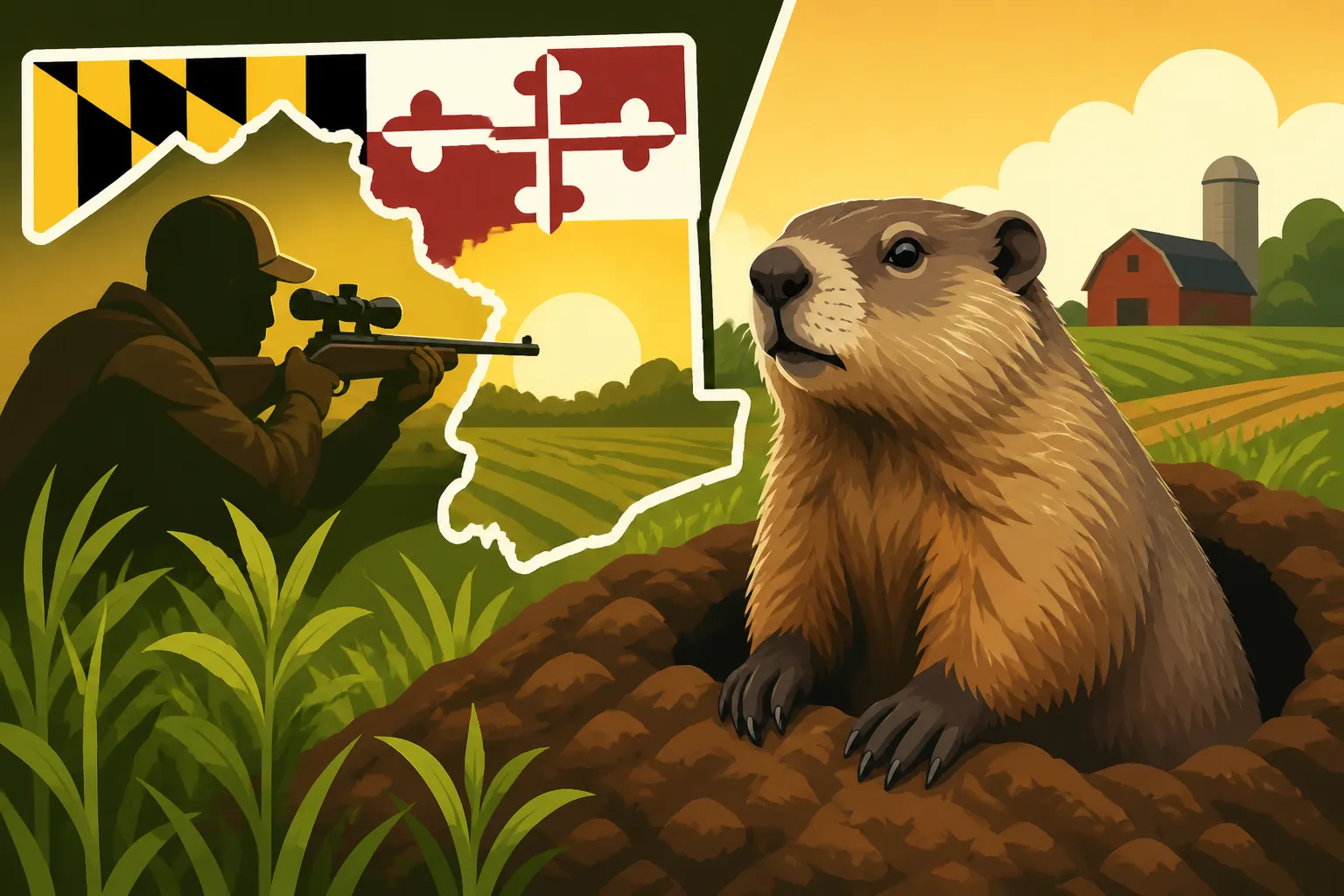
Groundhogs are more than just cute critters; they can be a real nuisance, especially for Maryland farmers. Their incessant burrowing habits can wreak havoc on expensive farm equipment, pose serious threats to livestock, and cause significant damage to valuable crops, creating dangerous trip hazards and costly repairs. This guide will delve into the world of Maryland groundhogs on farm ground, exploring their behavior, the tangible impact they have, effective hunting strategies, and the critical legal and ethical considerations to help you manage these prolific diggers responsibly and effectively.
Understanding Maryland Groundhogs and Their Farm Habitats
When you talk about groundhogs, most folks picture a chunky, furry creature nibbling clover in a field, maybe even standing upright like a tiny bear. And while they are indeed fascinating animals, their presence on agricultural land often comes with a host of challenges for Maryland farmers. To effectively manage them, it's crucial to understand their habits and why they find farm environments so appealing.
The Biology of the "Woodchuck"
Known scientifically as Marmota monax, the groundhog goes by many endearing nicknames like woodchuck, whistle-pig (due to their alarm call), or even land-beaver. These stout, short-legged rodents are the largest members of the squirrel family in Maryland, typically weighing between 5 to 12 pounds, though some can grow larger. Their fur ranges from grizzled gray to reddish-brown, often with a frosted appearance, and they possess powerful claws perfect for their digging prowess.
Groundhogs are primarily herbivores, with a diet that makes farm fields incredibly attractive. They absolutely love fresh clover, alfalfa, various grasses, and a wide array of garden vegetables. Farmers cultivating corn, soybeans, peas, or leafy greens often find their crops becoming an all-you-can-eat buffet for these hungry animals. They are solitary creatures for the most part, except during the breeding season in early spring. Females typically give birth to a litter of 2-6 young, which quickly grow and disperse to establish their own burrows, perpetuating the cycle. They also play a role in the local ecosystem, serving as a food source for predators like foxes, bobcats, coyotes (you might even consider Coyote Calling in Maryland Farm Country as a broader management strategy), and various raptors.
Why Farms Are Groundhog Heaven
It's no mystery why groundhogs gravitate towards agricultural landscapes. For them, a Maryland farm is essentially a five-star resort offering everything they need to thrive. First and foremost, the sheer abundance of food is a massive draw. Large fields of alfalfa, clover, corn, and soybeans provide an almost limitless supply of their favorite forage, far more concentrated and accessible than what they might find in a dense forest. They don't have to work hard to find a meal when it's all laid out for them.
Beyond the buffet, farms often provide ideal habitat conditions. Groundhogs prefer "edge" habitat – where open fields meet woodlots, fencerows, stream banks, or even old building foundations. These areas offer both prime feeding grounds and the crucial cover they need to escape predators and build their extensive burrow systems. A classic example is a fencerow bordering a hayfield, offering a clear line of sight for danger while providing soft earth for digging right at the food source. Hunting a fencerow for late season deer might focus on different game, but the principle of finding animals on these edges remains the same.
The soil conditions on many farms are another significant factor. Cultivated or looser agricultural soils are much easier for groundhogs to dig through compared to dense, rocky forest ground. This ease of excavation allows them to create more elaborate and extensive burrow networks with multiple entrances and chambers. Additionally, the presence of water sources like farm ponds or creeks further enhances the appeal, as groundhogs need access to water, especially during hot summer months.
Identifying Groundhog Sign on Agricultural Land
Learning to spot groundhog activity early is key to effective management. Their burrows are the most obvious sign, typically featuring one main entrance, often 8-12 inches in diameter, accompanied by a fan-shaped mound of excavated dirt. You'll frequently find these main entrances near field edges, under fallen trees, along stream banks, within dense brush piles, or even beneath old farm structures. There are usually several smaller "escape" holes without the tell-tale dirt mound, which they use to quickly vanish when threatened.
Beyond the burrows themselves, look for other indicators of their presence. Chewed crops, particularly in concentric circles radiating out from a burrow system, are a dead giveaway. In hayfields or pastures, you might see noticeable mounds of dirt or damaged areas where they've dug. Tracks can sometimes be found in soft mud or dust near burrow entrances, but these are often less distinct than deer tracks. Fresh droppings, small and pellet-like, might also be present.
Modern mapping tools, such as GoHunt, can be incredibly useful for groundhog management. You can use their satellite imagery to scout potential burrowing locations along fencerows, woodlot edges, or creek banks even before you step foot on the property. Marking active burrows on a GoHunt map allows you to track population hotspots, plan hunting approaches, and even share information with landowners about problem areas, proving invaluable when you're trying to gain access or demonstrate your value as a nuisance wildlife manager. This digital scouting complements traditional observation and helps you stay organized.
The Tangible Impact of Groundhogs on Maryland Agriculture
While a single groundhog might seem harmless, a robust population on a farm can lead to significant and often costly problems. Farmers often experience a profound sense of frustration when their hard work and investment are undermined by these persistent burrowing rodents. It’s not just about a few nibbled plants; the damage runs much deeper, impacting safety, finances, and even the structural integrity of the land.
Equipment Damage and Safety Hazards
One of the most immediate and dangerous impacts of groundhogs on farm ground is the risk they pose to heavy machinery and the safety of those operating it. Imagine driving a tractor or combine through a hayfield at speed, only for a wheel to drop into an unseen groundhog burrow. The sudden jolt can be violent, leading to broken axles, damaged suspension, bent mower blades, or even a complete tire blowout. These repairs aren't just an inconvenience; they can translate into thousands of dollars in costs and crucial downtime during critical planting or harvesting seasons. When the clock is ticking to get crops in or out, equipment failure due to an animal burrow is the last thing a farmer needs.
Beyond mechanical issues, the safety of livestock and humans is seriously compromised. A cow or horse can easily break a leg by stepping into a hidden groundhog hole, leading to expensive veterinary bills or, in severe cases, the loss of the animal. For farm workers, these burrows create treacherous tripping hazards, especially when working in low light or dense vegetation. Many a farmer has recounted tales of near-misses or actual injuries sustained simply from walking across a field pockmarked with groundhog tunnels.
Crop Depredation and Economic Loss
Groundhogs are voracious eaters, and their preferred diet often includes the very crops farmers work so hard to cultivate. Alfalfa fields are particularly susceptible, as groundhogs can quickly decimate large patches, significantly reducing the hay yield. Corn and soybean sprouts are also high on their menu, especially when they are young and tender. While they rarely consume an entire field, their feeding is concentrated around their burrow systems, creating noticeable "dead zones" of destruction that can radiate outwards for yards.
The cumulative effect of this feeding can lead to substantial economic losses. For small-scale farmers or those with high-value specialty crops, even a few groundhogs can wipe out a significant portion of their potential income. Even on large-scale operations, the constant grazing translates directly into reduced yields and, ultimately, less profit. This isn't just about the food they eat; it's about the time, effort, and resources invested in planting and nurturing those crops, only to see them consumed by nuisance wildlife. When a farmer relies on every bushel to make a living, groundhog damage is a punch to the bottom line.
Erosion and Structural Damage
The extensive tunnel systems created by groundhogs can go far deeper than just impacting surface conditions. Their burrows can destabilize stream banks, leading to increased erosion and potential collapse of the bank itself. This not only harms the natural environment but can also impact water quality and riparian habitat. Similarly, if burrows are dug into or near farm pond dams, they can compromise the structural integrity, potentially leading to leaks or even a breach of the dam, a disaster that can cost a fortune to repair and devastate water resources. You might think of it like the kind of vital structural issues that make Hunting a Farm Pond Dam Late in the Season also a different kind of challenge.
Beyond natural features, groundhog tunneling can undermine the foundations of outbuildings, sheds, or even roads and driveways on farm properties. The constant shifting and hollowing out of soil beneath these structures can lead to cracks, sinking, and ultimately, expensive structural damage. Over time, an unchecked groundhog population can truly reshape the landscape in ways that are detrimental to agricultural operations and farm infrastructure, making their effective management not just about saving crops, but about preserving the very land itself.
Effective Strategies for Groundhog Management on Maryland Farms
Dealing with groundhogs on farm ground isn't a one-size-fits-all problem; it requires a combination of thoughtful strategies. As hunters and responsible land stewards, we have several tools at our disposal to help farmers mitigate the damage caused by these burrowing critters. The goal is often not eradication, but rather effective population control and deterrence.
Hunting and Trapping: Direct Control Methods
For many Maryland farmers, direct control methods like hunting and trapping are the most effective ways to reduce groundhog populations quickly. Hunting groundhogs can be a rewarding experience and an excellent way to hone your marksmanship, especially with longer-range shots. The key is to be patient and observant. Optimal times for hunting are typically early morning and late afternoon, particularly on sunny days, when groundhogs are most active outside their burrows.
When it comes to choosing a weapon, many hunters opt for a .22LR rimfire for closer shots (under 75 yards) where permissible and safe, due to its low report and minimal meat damage if a farmer wanted to utilize the animal. For longer ranges common in wide-open farm fields, centerfire rifles chambered in calibers like .17 HMR, .223 Remington, or even 6.5 Creedmoor are popular choices, offering flat trajectories and superior accuracy. Always prioritize a safe backstop; a clear hillside or elevated dirt mound behind your target is crucial to prevent ricochets. Consistency is key here; regular hunting pressure can significantly reduce numbers over time.
Trapping is another highly effective method, especially for specific nuisance animals or in areas where shooting is not feasible. Live traps can be baited with fresh fruit or vegetables and placed near active burrow entrances. Once caught, the animal can be humanely dispatched or, if legal and appropriate, relocated to an unpopulated area away from agricultural land – though relocation is often discouraged as it simply moves the problem. Conibear-style traps, when used correctly and in compliance with all regulations, are very efficient but require extreme caution to prevent injury to non-target animals or humans. Whichever method you choose, always ensure you're employing humane practices and adhering to all local laws.
Habitat Modification and Exclusion
Beyond direct removal, making the farm less appealing to groundhogs in the first place can be a smart long-term strategy. This often involves habitat modification. Groundhogs love dense cover along field edges, as it provides both food and protection. By systematically clearing brush, tall weeds, and overgrown fencerows, you can reduce the amount of suitable burrowing habitat. A clean fencerow, for example, not only deters groundhogs but also helps with general pest control, as it removes harborage for other undesirable species. This proactive approach ensures that new groundhogs moving into the area don't find the perfect place to set up shop.
Exclusion, while often more costly, can be incredibly effective for protecting high-value areas like vegetable gardens, small fruit plots, or critical infrastructure. Installing sturdy fencing around these areas, with the bottom buried at least 12-18 inches deep and bent outwards into an L-shape, will prevent groundhogs from digging underneath. The fence itself should be at least 3 feet high, as groundhogs are surprisingly good climbers, sometimes even adding an outward-angled top section. While this might be impractical for entire crop fields, it's a great solution for smaller, sensitive areas where the economic impact of groundhog damage is highest. Tools like GoHunt can help you map out these critical areas and plan your exclusion zones efficiently.
Working with Landowners and Building Relationships
Perhaps the most crucial, yet often overlooked, aspect of groundhog management on Maryland farm ground is the relationship with the landowner. You absolutely, unequivocally, must obtain permission before hunting or trapping on private property. Maryland has clear Maryland Trespass and Permission Law provisions, and disrespecting them can lead to serious consequences and erode trust within the hunting community. A simple knock on the door, a polite introduction, and an offer to help with a groundhog problem can often open doors that would otherwise remain closed.
When approaching a farmer, be transparent about your methods and intentions. Explain how you plan to manage the groundhogs, discuss safety protocols, and offer to clean up any taken animals. Being a responsible hunter means respecting their property as if it were your own, driving carefully on farm roads, avoiding damage to crops or fences, and always closing gates. Consider offering a small token of appreciation, perhaps some of your processed venison if you also deer hunt on their property (relevant to Hunting a Maryland Farm Lease Your First Season), or simply offering to help with other small tasks. Using tools like GoHunt to identify property boundaries and owner information can facilitate your initial outreach, allowing you to approach the correct individual respectfully. Building this trust not only secures your access for groundhog hunting but can also lead to opportunities for other game, like deer or turkeys, fostering a long-term partnership that benefits everyone involved.
Legal and Ethical Considerations for Groundhog Hunters in Maryland
Before you head out to manage groundhogs on any Maryland farm, it's absolutely vital to understand the rules of the game. Just because they're considered a nuisance doesn't mean it's a free-for-all. Adhering to Maryland's regulations and practicing ethical hunting methods ensures you're operating legally and responsibly, protecting both yourself and the reputation of hunters statewide.
Maryland Regulations for Hunting Groundhogs
One of the great things about groundhog hunting in Maryland is their classification as an unprotected furbearer or nuisance species. This means there's generally no closed season and no daily or seasonal bag limit. You can hunt them year-round, which is fantastic for consistent population control. However, you will still need a valid Maryland hunting license to pursue them, unless you fall under a specific landowner exemption. For new hunters, ensuring you meet the Maryland Hunter Education Requirements is the first step to legally purchasing that license.
While there's no season or bag limit, hunting hours for small game, which groundhogs generally fall under, are typically from one half-hour before sunrise to one half-hour after sunset. Always confirm these hours, though on private land with explicit landowner permission, there can sometimes be flexibility, but it's always best to err on the side of caution and follow the official guidelines. It's also critical to be aware of county-specific regulations, particularly if you're hunting on farm ground located near more suburban or densely populated areas. Some counties may have restrictions on certain types of firearms or special setback rules that are stricter than the statewide standards. For instance, hunting groundhogs in a small woodlot adjacent to a residential area might fall under rules similar to Hunting a Suburban Woodlot in Montgomery County, requiring extra vigilance regarding safety and local ordinances.
Safety First: Backstops and Setback Rules
Safety is paramount, always. When hunting groundhogs, especially on open farm ground, you must be hyper-aware of your surroundings and what lies beyond your target. A groundhog might be a small target, but a bullet can travel a long way, and ricochets off hard, frozen ground or rocks are a very real danger. Always ensure you have a safe and adequate backstop behind your target—a natural berm, a hillside, or a sturdy dirt bank that can safely absorb the bullet's energy. Never shoot towards buildings, roads, livestock, or where people might be present, even if they're far away.
Maryland has specific Setback Rules Near Homes and Roads that dictate how far you must be from occupied dwellings or public roads when discharging a firearm. While these distances vary, they are minimums. As a responsible hunter, you should always aim for a greater distance than legally required to prioritize safety and maintain positive relations with your neighbors and landowners. Even if you're hunting on private land with permission, common sense and courtesy dictate being overly cautious. Knowing your effective range, understanding bullet trajectory, and being absolutely certain of your target and what's behind it are not just rules—they are critical responsibilities that every hunter must uphold to prevent accidents and ensure everyone's safety on and around the farm.
Ethical Hunting Practices and Public Perception
Beyond legal compliance, practicing ethical hunting is crucial. This means striving for clean, humane shots that result in a quick kill, minimizing any suffering for the animal. Taking a shot you're not confident in, especially at longer ranges, is not ethical. If you wound an animal, make every effort to track and recover it, even if it's "just" a groundhog. This shows respect for the animal and ensures you're not leaving injured wildlife to suffer.
The perception of hunters by the non-hunting public, and especially by the farmers you're trying to help, is significantly influenced by your actions in the field. Leave the property cleaner than you found it. Respect any specific requests or rules the landowner has, even if they seem minor. If you're using a vehicle, stick to established farm roads to avoid damaging crops or compacting soil. By acting as a courteous, safe, and ethical hunter, you not only ensure your continued access to hunting opportunities but also contribute positively to the image of hunting as a responsible conservation and management tool. This professional approach fosters trust and ensures that farmers will continue to welcome hunters who are willing to help them manage their property.
Groundhog Control Methods at a Glance
For those balancing various management strategies on Maryland farm ground, here's a quick overview of common groundhog control methods and their key considerations.
| Method | Pros | Cons | Best Use Case |
|---|---|---|---|
| Hunting | Cost-effective for the hunter, targeted, can be enjoyable, reduces numbers | Requires skill & equipment, time-consuming, strict safety needs, dependent on groundhog activity | Regular population control, active reduction, sport |
| Trapping (Live/Lethal) | Highly effective for specific nuisance animals, good for small areas | Requires frequent checks, potential for non-target animals, legal considerations for relocation | Targeted removal of problematic individuals, small areas |
| Exclusion Fencing | Permanent solution for protected areas, no ongoing active management | High upfront cost, maintenance required, only practical for limited, high-value areas like gardens | Protecting specific valuable crops or infrastructure |
| Habitat Modification | Long-term deterrent, eco-friendly, can benefit overall farm aesthetics | Takes time to see results, may not remove existing groundhogs, requires consistent effort | Proactive prevention, reducing future groundhog appeal |
| Fumigation | Can be effective for active burrows | Requires specific products/licenses, potential environmental concerns, not legal everywhere | Eradicating groundhogs in specific, accessible burrows |
Disclaimer
This article is for general informational purposes only and does not constitute professional advice. Laws, prices and regulations vary by location and change over time. Consult a qualified professional for guidance on your specific situation.