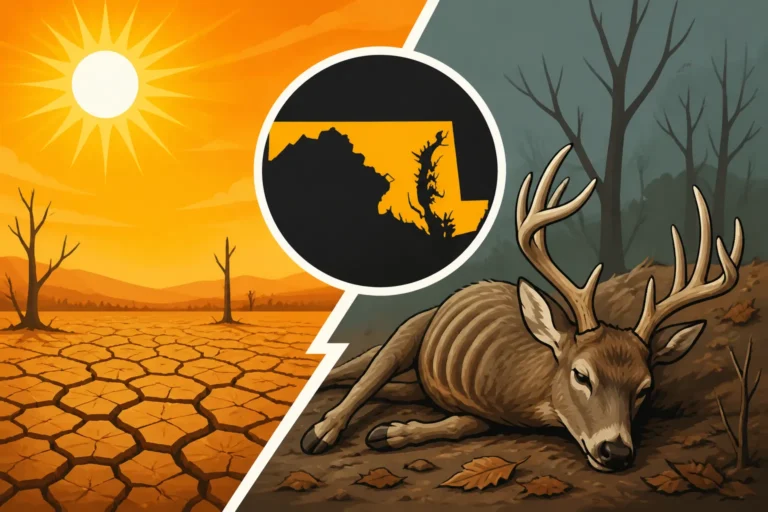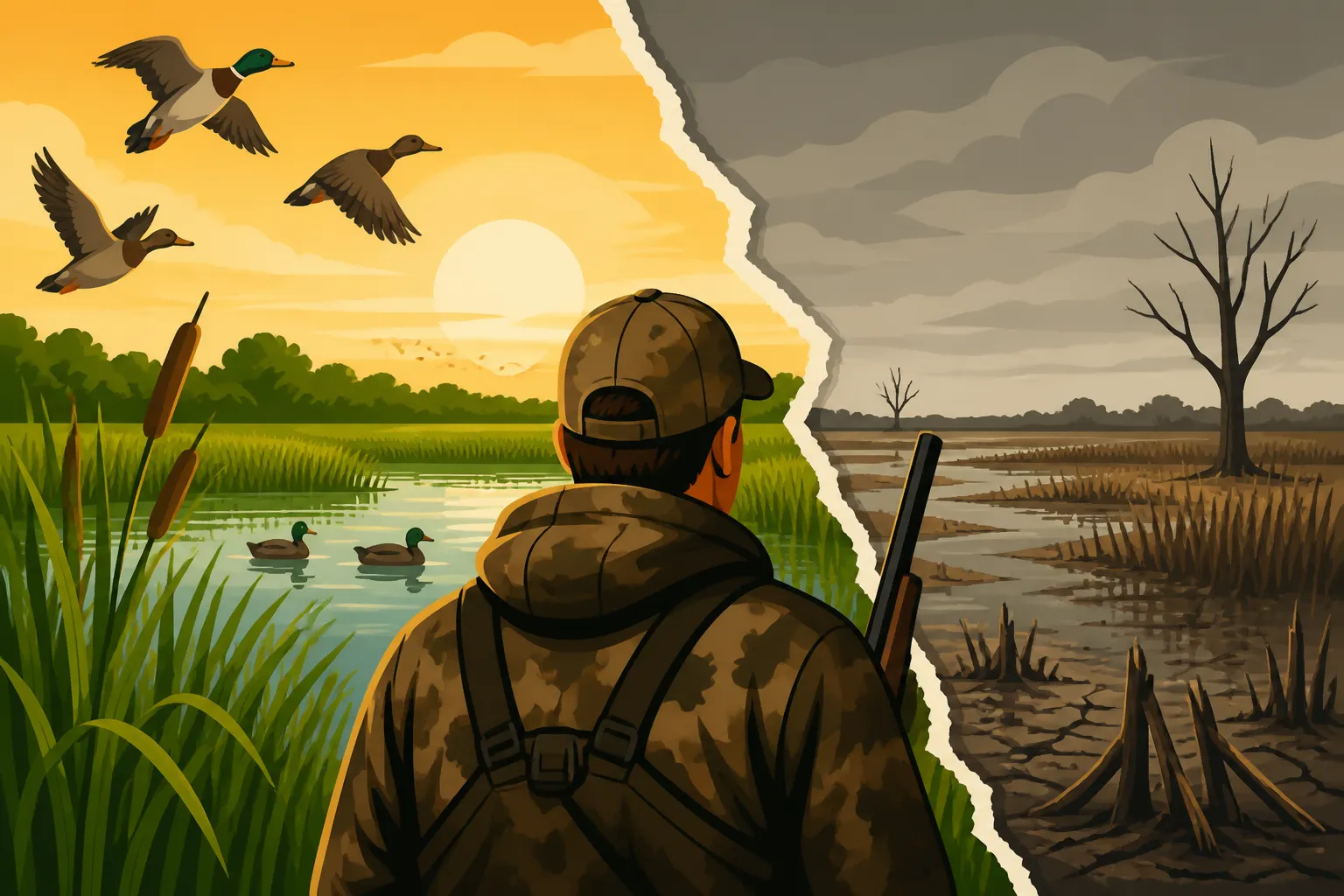
What Blackwater’s Marsh Loss Means for Hunters
For those of us who cherish the unique hunting opportunities in Maryland's Dorchester County, especially around the Blackwater National Wildlife Refuge, the news of marsh loss isn't just an abstract scientific concept; it hits home, right in the heart of our hunting grounds. This guide aims to pull back the curtain on what this ecological shift truly means for hunters, from how it impacts the game we pursue to the changing strategies we need to adopt to keep our traditions alive.
Understanding the Dynamics of Marsh Loss in the Blackwater Region
The disappearing marshes of Blackwater are a stark reality, and it’s not a simple phenomenon with a single cause. It’s a complex interplay of environmental factors that are fundamentally reshaping the landscape, and in turn, our hunting experiences. Understanding these underlying causes is crucial for any hunter who spends time in this iconic region.
The Role of Sea Level Rise and Subsidence
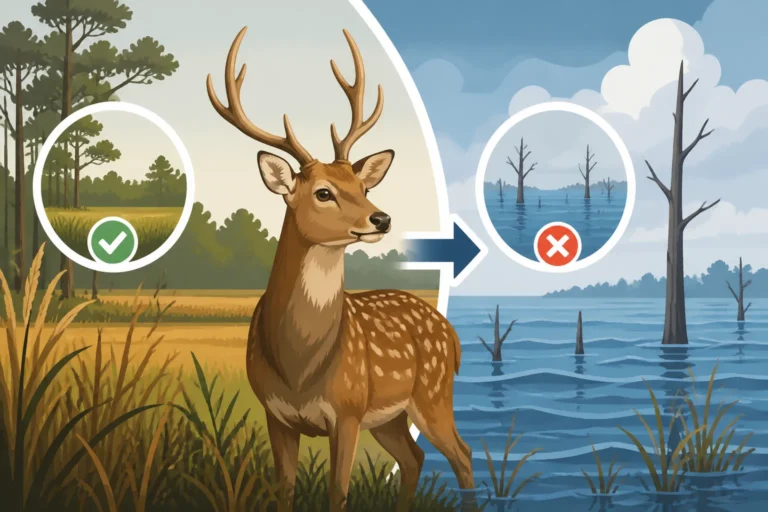
One of the primary drivers behind marsh loss in the Blackwater area is, undoubtedly, sea level rise. The Chesapeake Bay region is experiencing one of the highest rates of relative sea level rise on the Atlantic coast. This isn't just about global oceans expanding; it's also about the land itself slowly sinking, a process known as subsidence. Imagine the marshes as a delicate balance between new sediment deposition and the land's elevation. As sea levels creep up and the land settles, the marshes essentially drown. They can't build up new peat and sediment fast enough to keep pace with the rising water. This persistent inundation stresses the marsh plants, particularly common reeds (Phragmites australis) and cordgrass (Spartina alterniflora), making them more susceptible to erosion and ultimately leading to their collapse.
For hunters, this means familiar marsh edges that once offered solid footing and thick cover for sika deer or ideal setup spots for Marsh Hunting Sika Deer by Boat might now be permanently submerged. What was once firm ground might now be a soft, soupy mess, or simply open water. It forces us to re-evaluate our traditional access points and hunting routes, sometimes even making once-productive areas completely inaccessible or unrecognizable from one season to the next.
Historical Land Use and Altered Hydrology
Beyond natural forces, human activities have also played a significant, albeit often unintentional, role in accelerating marsh loss. Decades, and even centuries, of ditching and draining practices, initially aimed at mosquito control or agricultural expansion, dramatically altered the natural hydrology of these delicate ecosystems. These ditches, while serving a purpose at the time, allowed saltwater to penetrate deeper into the freshwater marshes, stressing vegetation that wasn't adapted to higher salinity levels. They also facilitated the rapid drainage of freshwater, reducing the amount of sediment that would naturally accumulate and help build up marsh elevation.
The construction of impoundments and dikes also changed water flow patterns, sometimes inadvertently starving certain marsh areas of vital freshwater and sediment while over-saturating others. These historical modifications, combined with present-day environmental changes, create a perfect storm for marsh degradation. For hunters, this translates to less robust habitat. Areas that once held dense cover and food sources for Sika Deer Hunting in Maryland's Tidal Marshes might now be fragmented, open-water ponds, or ghost forests of dead trees, drastically reducing the quality of habitat for game. It means we can't just rely on old maps or memories; we need tools like GoHunt to see current satellite imagery and understand how these changes have manifested on the ground.
Direct Impacts on Game Species and Habitat
The disappearing marshes aren't just a scenic change; they represent a fundamental shift in the availability and quality of habitat for the game animals we pursue. Every species that calls Blackwater home is feeling the effects, and understanding these impacts helps us adapt our hunting strategies.
Sika Deer and Their Vanishing Cover
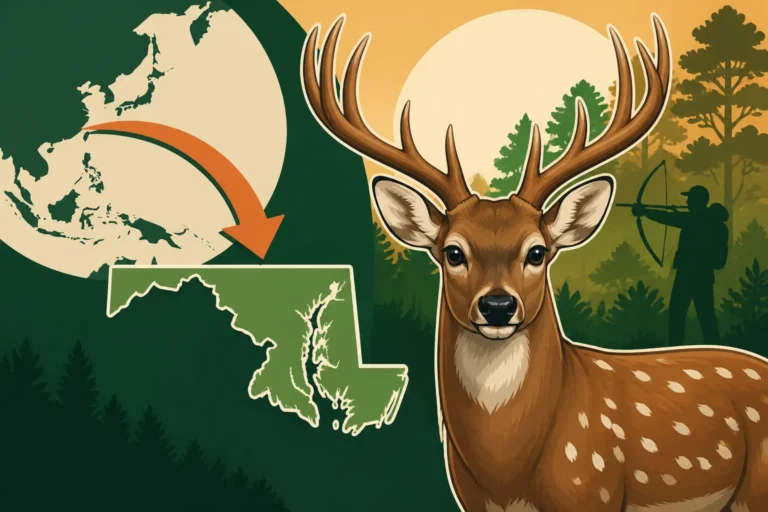
Sika deer, those elusive "Japanese elk," are perhaps the most iconic species directly affected by Blackwater's marsh loss. They thrive in the dense, tangled cover provided by the marsh grasses and the loblolly pine islands scattered throughout the wetlands. The phragmites, in particular, offers them incredible concealment and protection from the elements. As the marsh recedes, these vital bedding and travel corridors literally shrink. Sika are incredibly adept at navigating the watery landscape, but even they need solid ground and thick vegetation for security.
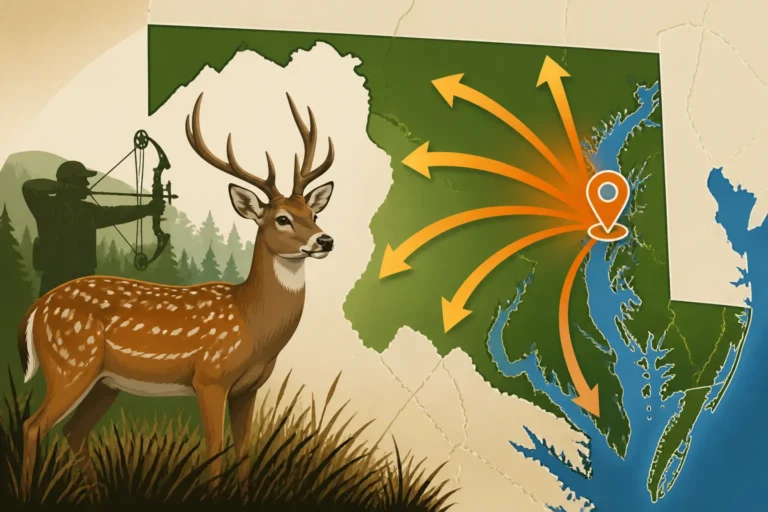
When their traditional bedding areas become permanently flooded or erode into open water, sika deer are forced to abandon them. This pushes them into smaller, more fragmented pockets of remaining high ground, or onto adjacent upland forests and agricultural fields. This concentration can lead to increased competition for resources and make them more vulnerable to predation and hunting pressure. Hunters targeting sika need to adjust their scouting and hunting tactics dramatically. You might find them in areas they historically avoided, like Hunting a Loblolly Pine Island in the Marsh or edges of farming fields rather than deep within the marsh guts. Using GoHunt's mapping features can be instrumental in identifying remaining high ground and tracking these shifts in deer movement as the water encroaches.
Waterfowl and Shifting Foraging Grounds
Blackwater is a renowned destination for Waterfowl Hunting Maryland's Chesapeake Bay, attracting a diverse array of ducks and geese. The healthy marshes provide critical food sources like submerged aquatic vegetation (SAV), seeds from marsh plants, and invertebrates. They also offer essential resting and roosting areas. As marsh habitat disappears, so do some of these vital resources. The balance shifts, impacting the species composition and overall numbers of waterfowl that utilize the area.
Diving ducks, which feed on SAV, might find their traditional feeding grounds replaced by deeper, murkier water or areas with less food production. Puddle ducks, which dabble in shallower water and feed on seeds, might lose access to vast marsh flats. While some new open water might initially seem beneficial for certain species, the overall loss of productive marshland reduces the ecosystem's carrying capacity. Waterfowl patterns become more unpredictable, forcing hunters to constantly scout and adapt. What was once a prime feeding flat might now be devoid of birds, while new, ephemeral ponds might suddenly hold concentrations. Hunters will need to be flexible, perhaps Decoying Divers on Maryland's Open Bay more frequently or adjusting their setup to newly formed shallow areas.
Furbearers and the Disappearing Edge
Many furbearer species, such as muskrats, raccoons, and river otters, rely heavily on the marsh environment for food, shelter, and breeding. Muskrats, for instance, build their lodges in dense marsh vegetation and feed on the roots and stems of plants. Raccoons forage along the marsh edge for crustaceans and other small prey, while otters hunt fish and amphibians in the shallow waters. The ongoing marsh loss directly impacts these populations by eliminating their critical habitat.
As the land-water interface shifts and blurs, the distinct ecological zones that furbearers depend on diminish. This can lead to reduced populations, as their ability to find food and secure dens is compromised. For trappers, this means a significant reduction in viable trapping grounds and a need to seek out new areas where remaining habitat persists. Trapping Muskrat in a Dorchester Marsh becomes a harder proposition when the marsh itself is struggling to survive. It's a stark reminder of the interconnectedness of all species within these ecosystems.
Challenges and Adaptations for Hunters
The changing landscape of Blackwater and other affected marshes presents tangible challenges for hunters, demanding new skills, increased adaptability, and a proactive approach to scouting and planning. The old ways might still work in some spots, but many will find themselves needing to re-think their entire strategy.
Navigating Changed Landscapes and Access Issues
One of the most immediate frustrations for hunters is simply navigating a landscape that is no longer familiar. GPS units and historical knowledge, while still valuable, need constant updating against current conditions. What was once a navigable marsh gut by boat might now be choked with eroded sediment or so wide open it no longer offers cover. Conversely, areas that were once firm ground might now be treacherous, soft mudflats or perpetually flooded. This makes simply getting to your hunting spot a significant challenge.
Access points can change or disappear entirely, requiring longer treks, different boat types, or sometimes, forcing hunters to abandon a spot altogether. The traditional paths through the marsh, whether on foot or by shallow-draft boat, need to be scouted continuously, often right up until the season opener. Wading Into a Dorchester Marsh Before Daylight becomes a whole new adventure, fraught with uncertainty about submerged hazards or deeper water. Using up-to-date aerial imagery, such as that provided by GoHunt's robust mapping features, becomes less of a luxury and more of a necessity for safety and success. You can scout from home, identify potential new channels, and avoid wasted time and effort on areas that no longer exist as you remember them.
Here's a quick look at how marsh loss can impact hunting decisions:
| Hunting Aspect | Pre-Marsh Loss Scenario | Post-Marsh Loss Scenario | Hunter Adaptation Required |
|---|---|---|---|
| Sika Deer Stand Sites | On elevated marsh hummocks, dense phragmites | Near upland edges, isolated pine islands | Scout new transition zones, adapt to fewer options |
| Waterfowl Decoy Spreads | In protected marsh ponds, shallow flats | Larger open water, newly flooded timber | Use larger spreads, focus on specific species, deeper anchor lines |
| Access Routes | Established boat channels, firm wading paths | Eroded guts, deeper water, soft mud, new impasses | Utilize airboats/mud motors, chest waders, GoHunt for updated routes |
| Cover & Concealment | Tall phragmites, marsh shrubs | Reduced, fragmented, reliance on artificial blinds | Use mobile blinds, natural features, low profile setups |
| Game Movement | Predictable along marsh edges, gut crossings | Concentrated in remaining high ground, upland transitions | Focus on funnels between fragmented habitat, scout constantly |
Adapting Hunting Strategies and Equipment
The changes brought by marsh loss demand significant adaptations in hunting strategies and sometimes, even in our equipment. For sika hunters, this might mean shifting from deep-marsh penetration to focusing more on the edges where the marsh meets upland timber or agricultural fields. Hunters might need to invest in more capable boats for navigating shallow, often silted-in waters, or more rugged wading gear like Hip Boots Versus Chest Waders in Sika Country that can handle unpredictable depths and soft bottoms.
Waterfowl hunters might find themselves moving away from traditional marsh blind setups to more mobile options, like layout boats or floating blinds, capable of hunting larger expanses of open water. Calling strategies may need to adjust as birds behave differently in a more open, less vegetated landscape. Understanding new feeding and roosting patterns becomes paramount. This also means being more flexible with your chosen species, as some might adapt better than others to the changing conditions. It’s no longer about finding the spot, but about finding the right spot for that day's conditions.
The Importance of Continuous Scouting and Data
More than ever, successful hunting in these dynamic environments hinges on continuous, year-round scouting and the smart use of modern tools. Relying on old knowledge is a recipe for frustration. Hunters need to become amateur cartographers, constantly observing changes, noting new water patterns, and identifying where game animals are being pushed. This includes looking for subtle shifts in vegetation, new erosion patterns, and fresh game sign.
Modern mapping applications, like GoHunt, become indispensable. They allow you to overlay historical imagery with current satellite views, identifying areas of significant change. You can mark newly created access challenges, pinpoint remaining high ground, and track shifting game corridors. Scouting Maryland Public Land With Aerial Photos is no longer a suggestion; it's a critical part of pre-season preparation, especially in an area undergoing such rapid transformation. Sharing information with trusted hunting partners, while always respecting privacy, can also help paint a more complete picture of the evolving landscape.
Conservation Efforts and the Future of Hunting in Blackwater
Despite the challenges, there is hope. Dedicated conservation efforts are underway to mitigate marsh loss and, in some cases, actively restore habitat. Understanding these initiatives gives hunters a broader perspective and highlights the crucial role we play in advocating for and supporting healthy ecosystems.
Marsh Restoration and Resilience Initiatives
Numerous agencies and conservation groups are working tirelessly on marsh restoration projects in the Blackwater region and across the wider Chesapeake Bay. These efforts often involve a multi-pronged approach:
- Sediment Augmentation: Pumping dredged sediment into degraded marsh areas to raise their elevation and give marsh plants a fighting chance against rising sea levels.
- Strategic Phragmites Control: While Phragmites can be invasive, strategic management can sometimes make way for native marsh grasses that are more resilient to the changing conditions, or create open water for waterfowl.
- Living Shorelines: Using natural materials like oyster shells, native plants, and stone to stabilize eroding shorelines and promote marsh growth, rather than relying solely on hardened structures like bulkheads.
- Native Plantings: Reintroducing native marsh grasses and other vegetation that are well-adapted to the local conditions, helping to stabilize sediment and provide habitat.
These efforts aren't a quick fix, but they represent a long-term commitment to preserving these vital ecosystems. For hunters, success in these initiatives means more stable habitat for sika deer, better foraging and nesting grounds for waterfowl, and a more resilient environment for all game species. Supporting organizations involved in these efforts, whether through direct donations or by volunteering, helps ensure that these landscapes remain viable hunting grounds for future generations. Learning about How Sea Level Rise Affects Sika Habitat helps drive home the urgency of these efforts.
The Hunter's Role in Stewardship
Hunters have always been conservationists, and our role in the face of marsh loss is more critical than ever. Beyond direct financial contributions to conservation, our actions in the field and our advocacy off it make a difference.
- Responsible Hunting Practices: Adhering to bag limits, practicing ethical shooting, and being vigilant about game recovery are always important, but especially so when game populations might be stressed by habitat loss.
- Reporting Changes: Hunters are often the first to notice subtle environmental changes. Reporting significant erosion, unusual water patterns, or changes in game distribution to local wildlife agencies can help inform management decisions.
- Advocacy: Speaking up for conservation funding, supporting policies that address climate change and sea level rise, and educating others about the importance of these ecosystems are crucial. Our voices carry weight as concerned stakeholders.
- Adaptation and Flexibility: Embracing the need to adapt our hunting strategies rather than clinging rigidly to outdated methods is a form of stewardship. It ensures we continue to be effective stewards of the land and its resources, even as they evolve. This proactive mindset, combined with powerful tools like GoHunt, allows us to stay ahead of the curve and remain connected to these special places.
The loss of marsh at Blackwater is a somber reminder of the delicate balance of nature and the profound impact of environmental change. Yet, it also underscores the resilience of both wildlife and the hunting community. By understanding the causes, adapting our approaches, and actively participating in conservation, we can help shape a future where these unique hunting experiences endure. The stories we tell around the campfire will change, but the spirit of the hunt in Maryland’s marshes will remain, even if the marshes themselves look a little different.
Disclaimer
This article is for general informational purposes only and does not constitute professional advice. Laws, prices and regulations vary by location and change over time. Consult a qualified professional for guidance on your specific situation.