How Far Sika Deer Have Spread From Dorchester
It's a question many Maryland hunters, especially those new to the game or those who remember "the good old days," often ask: just how far have those tenacious Sika deer spread from their Dorchester County origins? What began as a relatively confined population in the tidal marshes of the Eastern Shore has slowly, but surely, stretched its hooves and whistles across the landscape, challenging hunters to adapt and presenting new opportunities. This guide will walk you through the fascinating journey of Sika expansion in Maryland, detailing their initial stronghold, the routes they've taken, and where you can expect to encounter them today.
The Initial Foothold: A Dorchester County Legacy
To truly understand how far Sika deer have spread, we first have to rewind a bit and understand their original home turf. Dorchester County, with its labyrinthine network of tidal marshes, loblolly pine islands, and agricultural fields, became the ground zero for Maryland's Sika deer herd.
A Brief History of Sika Introduction
The story of Maryland's Sika deer is quite remarkable, really. These unique cervids aren't native to North America; they were introduced to Dorchester County back in the early 1900s. Originally brought from Asia, a small herd was released on James Island, a private game preserve nestled deep in the marshes. From that initial release, a population took hold and slowly began to expand its territory. For decades, they remained largely confined to Dorchester, a kind of best-kept secret among local hunters who understood the magic and challenge of pursuing these "Japanese elk," as some locals still call them. Understanding Maryland's Sika Deer, an Imported Herd is key to appreciating their journey.
This historical context is crucial because it highlights the starting point for their eventual proliferation. The dense, remote nature of the marshes initially kept them somewhat contained, but also provided them with excellent cover and a rich food source, allowing their numbers to grow steadily. It wasn't an explosion, but rather a slow, deliberate creep outward as the population strengthened its foothold.
The Ideal Habitat of Dorchester
Dorchester County wasn't just a convenient release site; it was, and remains, a Sika deer paradise. The mix of tidal marshes, characterized by vast expanses of Phragmites and spartina grass, interspersed with higher ground covered in loblolly pine, oak hummocks, and agricultural fields, provides everything a Sika needs. They thrive in this transitional zone between land and water, using the thick cover of the marshes for bedding and escape, while venturing into the timber and fields to feed. This rich, diverse habitat allowed the initial population to not only survive but truly flourish.
The marshes themselves offer incredible refuge, making these deer incredibly elusive. Hunters who have spent time Wading Into a Dorchester Marsh Before Daylight know the unique challenges and rewards. This prime habitat meant that as numbers increased, the natural inclination to seek new territories would inevitably lead to them pushing beyond these comfortable boundaries.
The Gradual Expansion: Pushing Beyond the Borders
Once established, it was only a matter of time before Sika deer started looking for new horizons. Their spread wasn't a sudden burst but a more gradual process, driven by natural curiosity, population pressure, and sometimes, a little help from human activities.
Natural Movement and Corridor Use
Sika deer are incredibly adaptable and possess a strong instinct to explore. As their numbers grew within Dorchester County, younger deer, particularly stags, would naturally venture out in search of new breeding grounds and less competitive food sources. They tend to follow natural corridors like river systems, creek bottoms, and contiguous blocks of timber, which often run through multiple counties. It's not uncommon for a young stag to wander many miles from where it was born, especially during the rut when their focus is entirely on finding a mate.
This slow, exploratory movement is how new areas get colonized. Think of those sprawling agricultural fields on the Eastern Shore, often bordered by ditches, small woodlots, and thick fencerows. These seemingly insignificant features become highways for Sika, offering cover and routes of travel between larger tracts of habitat. They are incredibly adept at navigating these landscapes, often going unnoticed until a hunter finds fresh tracks or hears a distant whistle.
Human-Assisted Spread (Unintentional)
While natural dispersion is the primary driver, it's worth acknowledging that human activities can sometimes unintentionally accelerate the spread of wildlife. While outright illegal translocation of Sika deer is a serious concern and strongly discouraged by wildlife officials, incidental factors can also play a role. For instance, the movement of farming equipment or even recreational vehicles between properties can sometimes provide unseen pathways for young Sika to travel, or unknowingly transport fawns.
However, the main story here is the Sika's remarkable ability to colonize new, suitable habitat on their own two feet. They don't need direct human intervention to expand their range. Their stealthy nature and preference for dense cover mean they can establish small, pioneering populations in new areas long before most people even realize they're there. This silent expansion is what makes their current range so interesting to track.
Current Sika Range: Where You Find Them Today
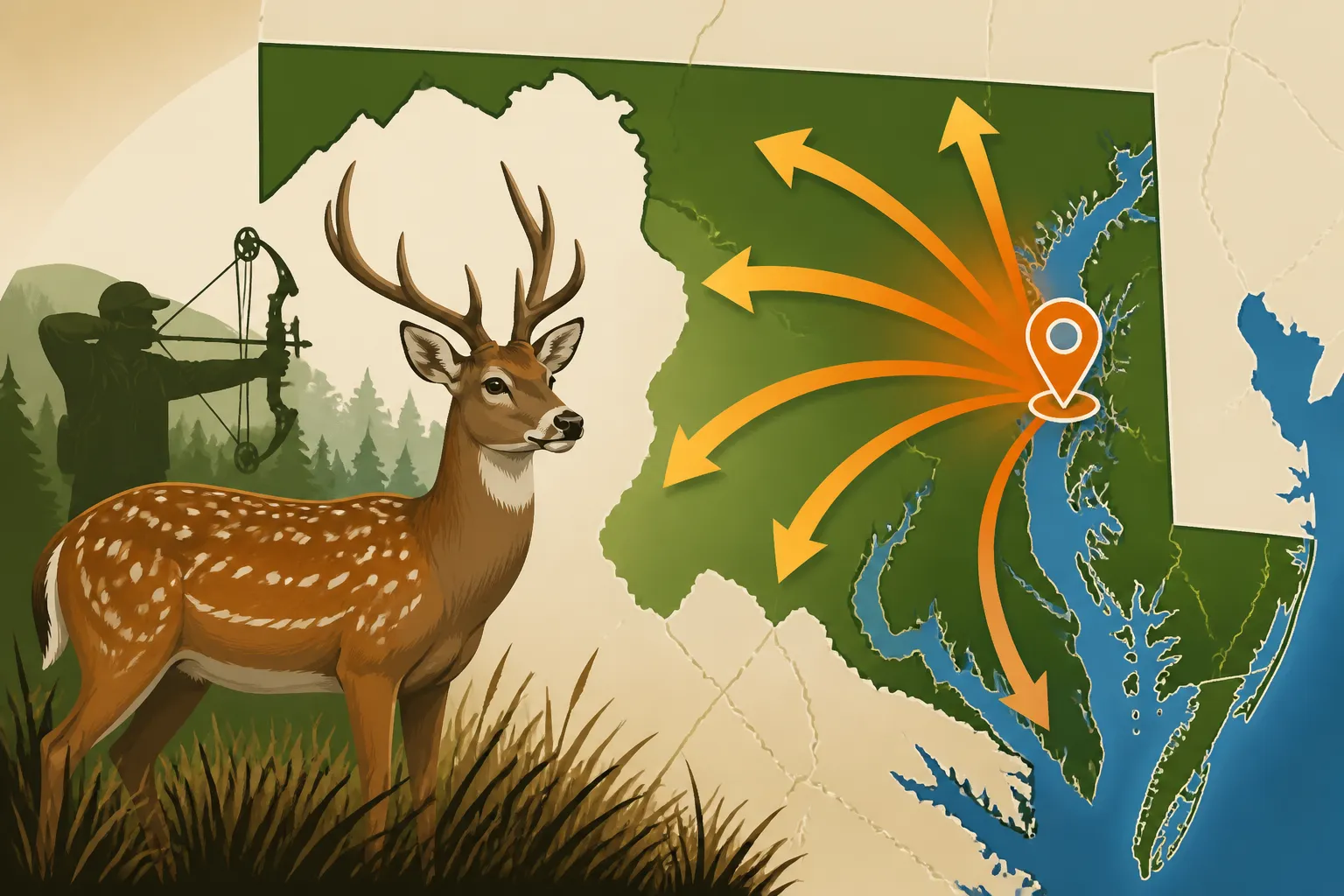
So, after decades of slow and steady expansion, where exactly can you find Sika deer in Maryland now? While their core remains the lower Eastern Shore, their presence is felt in an ever-growing number of counties.
Counties with Established Populations
The heart of Sika country undeniably remains Dorchester and parts of Somerset and Wicomico counties. Here, they are not just present; they are often the dominant deer species in specific marsh and wetland habitats. Many hunters specifically target these areas for their challenging and unique Sika Deer Hunting in Maryland's Tidal Marshes. However, their established range has certainly pushed northward and westward.
You'll find strong, reproducing Sika populations extending into parts of:
- Talbot County: Particularly the southern reaches bordering Dorchester.
- Wicomico County: Especially areas adjacent to their core range.
- Caroline County: Though perhaps less dense than areas further south, they are certainly established in suitable habitats.
- Queen Anne's County: Sightings and harvests are becoming more common, especially in the southern half.
These areas possess the critical mix of wetlands, agricultural fields, and forested cover that Sika deer prefer. They are no longer a novelty but a recognized game species, requiring specific hunting strategies and an understanding of their habits, such as How Sika Deer Use Phragmites for Cover. The GoHunt app or similar mapping tools can be invaluable for identifying potential Sika habitat in these counties, helping hunters pinpoint those marshy edges and loblolly islands.
Fringe Areas and Occasional Sightings
Beyond the established strongholds, Sika deer have also made their presence known in "fringe" counties, where populations might be sparser or still in the early stages of colonization. These are areas where you might not plan an exclusive Sika hunt, but you wouldn't be entirely surprised to encounter one.
Examples include:
- Kent County: While primarily known for its excellent goose hunting, Sika sightings and occasional harvests have been reported, especially in the southern parts.
- Cecil County: Further north, the occasional Sika will turn up, often a testament to how far a young stag can wander.
- Charles County: Even on the Western Shore, isolated sightings have occurred in counties adjacent to the Chesapeake Bay, suggesting they might be following marshy coastlines or river systems.
These sightings in fringe areas are often indicative of individual animals exploring new territory rather than established breeding populations. However, they demonstrate the Sika's continued expansion and adaptability. It's a good reminder for hunters in these areas to be prepared for anything, as you never know what might step out of the thick cover. Using GoHunt to scout for habitat along creeks and bay tributaries can help reveal potential travel corridors for these pioneering deer.
Here's a simplified look at the general spread:
| Region | Initial Sika Presence (Early 1900s) | Current Sika Presence (Widespread/Established) | Fringe Areas (Occasional Sightings) |
|---|---|---|---|
| Lower Eastern Shore | Dorchester County (James Island) | Dorchester, Somerset, Wicomico | |
| Mid-Eastern Shore | Talbot, Caroline, Southern Queen Anne's | Kent | |
| Upper Eastern Shore | Northern Queen Anne's, Cecil | ||
| Western Shore | Charles (isolated) |
Note: This table represents general trends. Individual Sika deer can and do wander, leading to sporadic sightings outside these main areas.
Factors Influencing Sika Spread
The journey of Sika deer from a small island population to a widespread presence across much of the Eastern Shore is a testament to their resilience and the unique characteristics of Maryland's landscape. Several factors contribute to their continued expansion.
Habitat Availability and Preference
Sika deer are highly selective about their habitat, but what they prefer is abundant on the Eastern Shore. They absolutely love wetlands, marshes, and dense, brushy cover. This isn't just for hiding; it's also where they find much of their preferred browse. As we discussed in What Sika Deer Eat in a Tidal Marsh, they're not picky and will consume a wide variety of vegetation found in these damp environments. The vast amount of undeveloped marsh and swamp habitat throughout the Eastern Shore provides an almost continuous pathway for them to travel and colonize.
Furthermore, the interspersion of these dense cover areas with agricultural fields—corn, soybeans, winter wheat—offers incredibly rich food sources that supplement their marsh diet. This mosaic landscape is perfect for Sika deer, allowing them to retreat to thick security cover during the day and emerge into abundant feeding grounds at night. As they move into new areas, they are constantly evaluating for this specific blend of cover and forage. If an area lacks significant marsh or dense, brushy pockets, their colonization will likely be slower or less successful.
Population Dynamics and Hunter Pressure
The natural dynamics of the Sika population also play a significant role. As populations become denser in core areas like Dorchester County, competition for food and breeding opportunities increases. This pressure drives younger, typically subordinate deer to disperse and seek out new territories. Think of it like a ripple effect: as the core expands, the outer edges are pushed further and further out. This is a common phenomenon in wildlife populations and a key reason why we see species expand their range.
Hunter pressure can also indirectly influence this. In areas with high hunter density, especially during firearms season, deer can become more nocturnal and seek out areas with less disturbance. If these undisturbed pockets are further afield, it can encourage them to establish new home ranges away from traditional hunting grounds. The hunting regulations and management strategies, such as those detailed in Maryland's Sika Deer Stamp and Bag Limits, also play a role in shaping the overall population health and, consequently, their expansion rates. Many hunters are now employing tools like GoHunt to find less pressured spots on public and private lands, inadvertently encountering Sika in new locales.
Understanding Why Sika Deer Run Smaller Than Whitetails and their inherent survival instincts helps explain their success in colonizing new, often challenging, habitats. As Maryland's Sika deer continue their quiet march across the landscape, they offer new opportunities and challenges for hunters and a fascinating case study in wildlife adaptation.
Disclaimer
This article is for general informational purposes only and does not constitute professional advice. Laws, prices and regulations vary by location and change over time. Consult a qualified professional for guidance on your specific situation.