When Sika Deer First Arrived on Delmarva
Many hunters across Maryland now consider Sika deer a quintessential part of the Eastern Shore experience, but for those new to the region or just curious, it often begs the question: how did these unique, "Japanese elk" end up thriving in our tidal marshes? If you've ever wondered about the mysterious origins of these diminutive deer, feeling like they've always been here but knowing deep down they haven't, you're not alone. This guide will take a deep dive into the fascinating history of Sika deer on Delmarva, explaining precisely when and how they first arrived and began their remarkable journey into Maryland's wild landscapes.
The Initial Introduction: A Curious Experiment
The story of Sika deer in Maryland isn't one of natural migration across continents; it's a tale rooted in human curiosity and a penchant for exotic wildlife during a bygone era. Imagine a time when wealthy landowners sought to populate their vast estates with interesting animals from around the globe, creating private zoos and game preserves. This was the environment in which Maryland's Sika deer found their unlikely start.
Private Estates and Exotic Wildlife
In the early 20th century, particularly around the 1910s, it wasn't uncommon for affluent estate owners in the United States to import various animal species for display or hunting purposes. These individuals often had sprawling properties with ample space, allowing them to indulge in a hobby that was both a status symbol and a genuine interest in zoology. The concept of ecological impact or invasive species was far less understood than it is today, and the prevailing thought was often simply "wouldn't it be interesting to have these here?"
This period saw a range of exotic ungulates brought to American soil, from European red deer to various Asian species. These private collections served as isolated pockets where non-native animals could live, often temporarily, before the inevitable interaction with the wild world outside their enclosures. Many of these introductions ultimately failed, but some, like the Sika, proved surprisingly resilient, finding a niche they could exploit.
The Year of Arrival and First Release
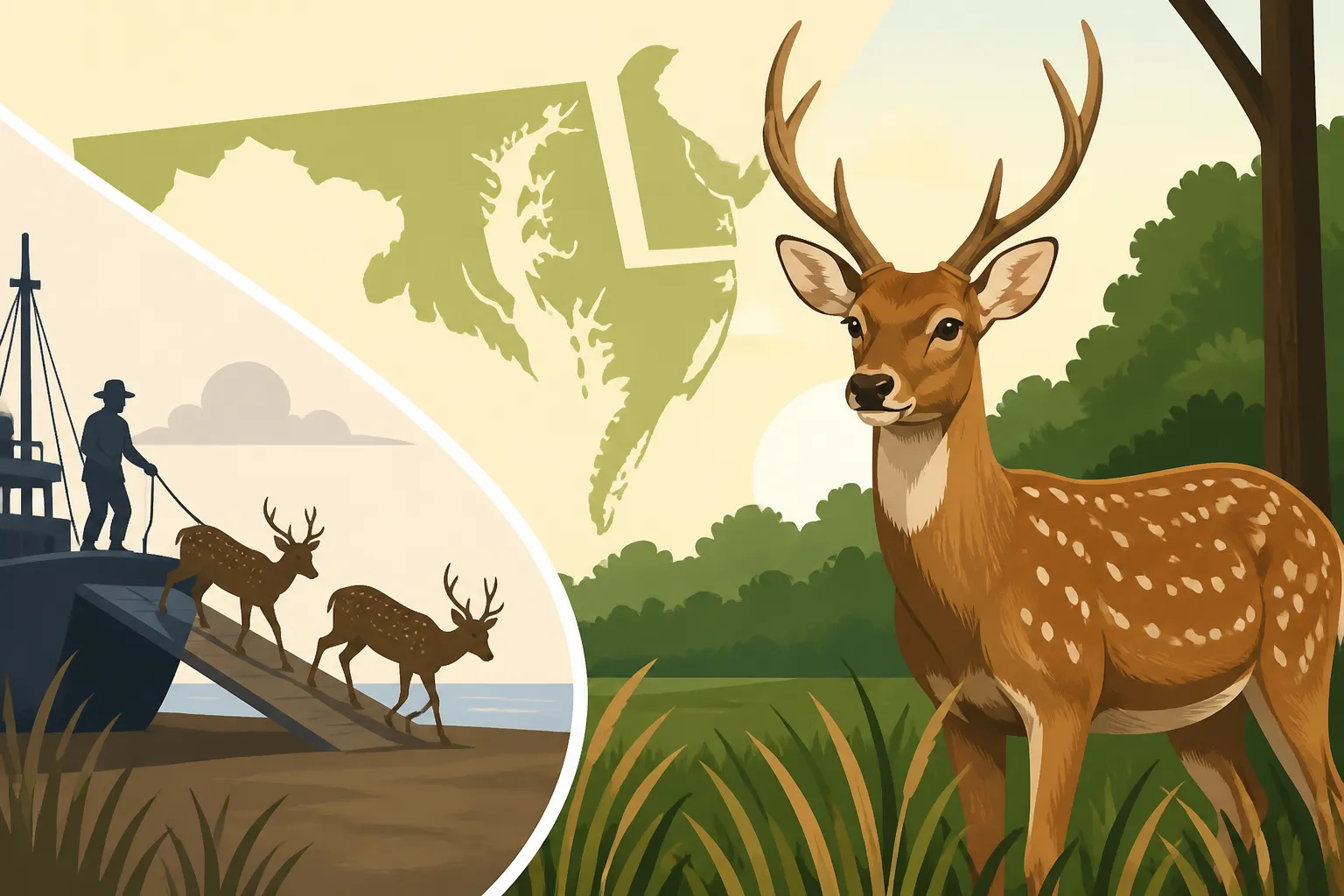
The consensus among wildlife historians and local lore points to the year 1916 as the pivotal moment for Sika deer on Delmarva. A wealthy individual, Clement Henry, imported a small herd of Sika deer from their native range in Asia and released them onto his private island estate, James Island, located in Dorchester County, Maryland. This wasn't a clandestine operation; it was a deliberate introduction by someone who appreciated the unique characteristics of these deer.
James Island, at the time, was a somewhat isolated piece of land, surrounded by the vast tidal marshes that would later become synonymous with Sika habitat. The intent was likely to have a unique game animal for sport hunting on the estate. What Henry probably didn't foresee was just how well these deer would adapt to the unique challenges of the Maryland marsh, nor how they would eventually escape their initial confines. This single act set in motion the entire history of Maryland's Sika Deer, an Imported Herd. For hunters and wildlife enthusiasts using resources like GoHunt, understanding this origin is key to appreciating the current management strategies.
From Island Sanctuary to Marsh Dominance
The story doesn't end with their arrival on James Island. Like many introduced species, the Sika's true journey began when they broke free from their penned existence and started to colonize the surrounding environment. Their success in the challenging Delmarva marshes is a testament to their adaptability.
Escaping the Fences and Into the Wild
It wasn't long after their introduction that the Sika deer made their way off James Island. While the exact circumstances are a bit murky—whether it was high tides, damaged fences, or simply an exploratory spirit that led them across shallow channels—the fact remains that they established a foothold on the mainland of Dorchester County. This wasn't a mass exodus; rather, it was likely a gradual seep of a few adventurous individuals that found new territory to inhabit.
The crucial factor was the immediate availability of vast, seemingly unoccupied habitat: the expansive tidal marshes of the Eastern Shore. Unlike many other areas where introduced species might struggle with competition or unsuitable conditions, the Sika found a landscape that, while harsh, proved to be perfectly suited to their small size and hardy nature. This initial escape from James Island was the true catalyst for How Sika Deer Spread Across Delmarva and became a self-sustaining wild population.
Adapting to the Delmarva Landscape
Once free, the Sika deer quickly demonstrated an incredible ability to adapt to the unique environment of the Delmarva peninsula, particularly the brackish and saltwater marshes. This adaptation set them apart from the native white-tailed deer, which typically prefer upland forests and agricultural fields. Sika, with their smaller stature and preference for dense cover, found the phragmites and Spartina grasses of the marsh to be ideal refuge.
Their diet adapted to the marsh vegetation, including various grasses, sedges, and even submerged aquatic plants, which sustained them through the seasons. They learned to navigate the constantly changing tides, often bedding down in thick clumps of vegetation and moving through intricate networks of guts and channels. This innate hardiness and unique habitat preference allowed them to flourish in areas where other large game animals struggled, laying the groundwork for the distinct hunting experience now synonymous with the region. Understanding how Where Sika Deer Bed in Phragmites is critical for any hunter planning a marsh trip.
The Expanding Footprint and Growing Hunter Interest
Once established, the Sika population began a slow but steady expansion, gradually moving beyond the immediate vicinity of James Island and Dorchester County. This growth eventually caught the attention of local hunters and wildlife managers, leading to their recognition as a viable and unique game species in Maryland.
Gradual Spread and Population Growth
For decades after their initial escape, the Sika deer population remained relatively localized, centered primarily in the vast marshlands of Dorchester County. However, as their numbers slowly increased, individuals began to disperse, pushing the boundaries of their range. This expansion wasn't a rapid explosion but a creeping colonization, driven by the search for new food sources, less crowded bedding areas, and the natural urge to reproduce. They followed the marsh systems, moving along creek banks and through dense thickets of pine and hardwoods that bordered the wetlands.
Today, while Dorchester County remains the epicenter of Sika deer activity, their presence extends into neighboring counties, particularly those with significant marsh habitat like Somerset and parts of Wicomico and Worcester. GoHunt users often track these movements to identify new potential hunting grounds. The gradual increase in their numbers over the years has turned them from a novelty into a substantial game animal, leading to an increasing interest in understanding Maryland's Sika Deer Population Range.
Early Perceptions and Management
When Sika deer first started to become noticeable to the general public and wildlife agencies, they were met with a mix of curiosity and, at times, concern. Initially, they were seen as an exotic oddity, often referred to by locals as "Japanese elk" or "marsh elk" because of their unique vocalizations, especially the piercing whistle of a rutting stag. This distinct sound is one reason Why Locals Call Sika Deer Japanese Elk.
As their population grew, wildlife managers began to assess their impact on the native ecosystem and the white-tailed deer population. Early management efforts were focused on understanding their biology in this new environment and determining appropriate hunting regulations. Hunters, always eager for a new challenge, quickly developed a passion for pursuing these elusive marsh deer, appreciating their cunning and the demanding nature of Sika Deer Hunting in Maryland's Tidal Marshes. The state eventually formalized seasons and bag limits, recognizing them as a valuable, if non-native, component of Maryland's hunting heritage.
Sika's Enduring Legacy on Maryland Hunting
From their humble beginnings on a private island, Sika deer have become an indelible part of the Maryland hunting landscape, offering a truly unique experience found in few other places. Their presence raises questions about ecological balance and the benefits of diverse hunting opportunities.
A Unique Hunting Opportunity
For many hunters, pursuing Sika deer is a truly captivating experience, distinct from any other deer hunting in the state. Their smaller size, often compared to What a Maryland Sika Stag Weighs against a typical whitetail, combined with their marsh habitat, makes for a challenging and often physically demanding hunt. The dense phragmites, deep mud, and constantly changing tides create an environment where stealth and perseverance are key.
The excitement of the Sika rut, with the stags' characteristic "whistle" echoing across the marsh, is something that draws hunters year after year. This unique vocalization is central to strategies like Hunting Sika Stags During Their Fall Whistle. Many hunters use mapping tools like those offered through GoHunt to navigate the intricate marsh landscape, trying to pinpoint these vocal deer. This species has carved out its own niche in the hearts of Maryland hunters, providing an experience that is deeply tied to the unique coastal wetlands of the Eastern Shore.
Coexistence and Ecological Considerations
The presence of a non-native species like the Sika deer inevitably brings questions of ecological impact and coexistence with native wildlife, especially white-tailed deer. While concerns have been raised about potential competition, particularly regarding Do Sika Deer and Whitetails Compete?, research has shown that their distinct habitat preferences often keep the two species largely separated. Sika typically thrive in the deepest parts of the marsh, while whitetails stick to the higher ground and agricultural edges.
However, challenges do exist. For instance, Why Farmers Near Blackwater Worry About Sika is a real concern as these deer can impact crops, much like whitetails. State wildlife agencies continue to monitor the Sika population, balancing the desires of hunters with the broader ecological health of the region. The Sika deer are here to stay, and understanding their history, from that first release in 1916 to their current status, helps ensure responsible management and a sustainable future for this truly unique Maryland game animal.
Here's a brief timeline of the Sika deer's journey on Delmarva:
| Approximate Period | Event | Key Locations (Initial) | Significance |
|---|---|---|---|
| Early 1900s | Interest in exotic game species | Private estates across US | Context for introduction |
| 1916 | Initial introduction of Sika deer | James Island, Dorchester Co. | Founding of Maryland's wild Sika population |
| 1920s-1940s | Escapes from James Island | Dorchester County marshes | Beginnings of naturalized, free-ranging herd |
| Mid-20th Century | Gradual population growth and spread | Central Eastern Shore | Establishment as a distinct game animal |
| Late 20th Century | Recognized as a game species, hunting regs | Eastern Shore | Formal integration into Maryland's hunting landscape |
| Present Day | Established, managed, and popular | Delmarva Peninsula | Unique hunting resource, ongoing management |
Disclaimer
This article is for general informational purposes only and does not constitute professional advice. Laws, prices and regulations vary by location and change over time. Consult a qualified professional for guidance on your specific situation.