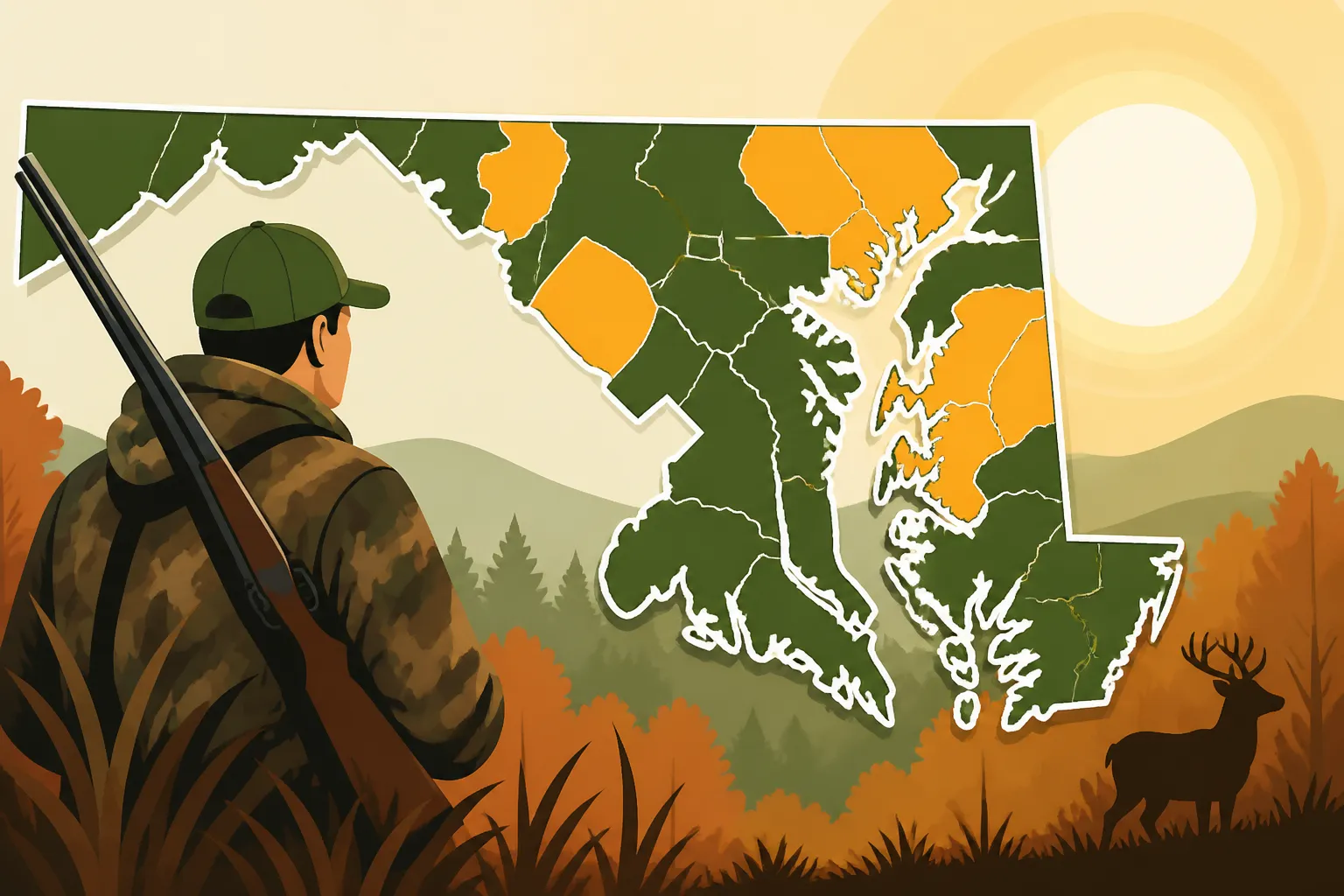
Counties That Allow Sunday Public Land Hunting
For many Maryland hunters, the weekend is their prime time in the woods. But for years, the dreaded "Sunday blues" meant packing up early or being completely shut out, especially if you relied on public land. It's a frustrating reality for folks with busy work weeks, and navigating the ever-changing regulations around Sunday hunting can feel like a maze. This guide aims to clear up that confusion, breaking down exactly which counties currently allow Sunday public land hunting in Maryland and how you can make the most of these precious opportunities.
The Evolving Landscape of Sunday Hunting in Maryland
Sunday hunting in Maryland has a long and somewhat complicated history, rooted in traditions that often clashed with modern demands and the needs of today's hunters. Understanding this evolution helps explain why the rules are so varied and, at times, perplexing.
The Historical Landscape of Sunday Hunting Bans
For generations, Maryland, like many other states, had strict "blue laws" that prohibited hunting on Sundays. These laws were originally enacted for a variety of reasons, including religious observance and the desire to provide a day of rest for both people and wildlife. For hunters in the past, this meant that their weekend pursuits were often cut short, with Saturday being the only option for a full day afield. This created a bottleneck of activity on Saturdays, leading to crowded public lands and limited opportunities for those who couldn't take off work during the week. It was a source of constant frustration for dedicated sportsmen and women who felt their passion was unduly constrained by outdated statutes.
Over time, as societal norms shifted and the economic impact of hunting became more recognized, pressure mounted to relax these restrictions. Conservation groups and hunter advocacy organizations tirelessly campaigned, highlighting how Sunday hunting could increase participation, generate more revenue for conservation efforts through license sales, and provide much-needed flexibility for working families. The argument was simple: if other recreational activities were allowed on Sundays, why not hunting, which contributes significantly to wildlife management and local economies?
Recent Legislative Changes and County Control
The turning point came with legislative changes that gradually chipped away at the statewide ban, shifting the authority to individual counties. This decentralization was a double-edged sword: it opened up opportunities in some areas but also created a complex, often confusing, patchwork of regulations across the state. Instead of one set of rules, hunters now have to navigate a county-by-county maze, with some counties allowing Sunday hunting, others restricting it to specific seasons or times, and a few maintaining outright bans.
This fragmented approach means that the onus is on the individual hunter to verify the rules for their specific county and even the particular public land area they plan to hunt. The Maryland Department of Natural Resources (DNR) plays a crucial role in implementing these county-level decisions, publishing detailed regulations in their annual hunting guide and on their website. However, the sheer volume of information can be overwhelming, leading many hunters to simply avoid Sunday hunting out of fear of misinterpretation. It's a constant challenge to stay informed, and the rules can even change from one season to the next, making continuous education a must.
Counties Where Sunday Public Land Hunting Is Permitted
While the rules can be a bit of a jigsaw puzzle, several Maryland counties have opened their public lands to Sunday hunting, offering diverse opportunities from mountain timber to tidal marshes. Knowing which counties are on board is the first step to planning your weekend adventures.
Western Maryland's Opportunities Region A
In Maryland's western panhandle, particularly in Region A, hunters generally find more flexibility for Sunday hunting. Counties like Garrett, Allegany, and Washington have long been at the forefront of expanding these opportunities, recognizing the economic and recreational benefits for their rural communities. These mountainous regions, characterized by vast tracts of public land, including state forests and wildlife management areas, offer some of the most expansive Sunday hunting grounds in the state.
When you're looking to hunt deer in Western Maryland's mountain timber on a Sunday, you'll often find that the rules are more liberal, frequently allowing full-day hunting during the designated deer seasons. This applies to various methods, including archery, muzzleloader, and even the shotgun/rifle segments of firearms season, though specific dates and weapon types should always be double-checked with the latest DNR guide. Beyond deer, these areas also provide opportunities for black bear hunting (if you have a permit), wild turkey, and various small game species. Public lands such as Savage River State Forest, Green Ridge State Forest, and the various smaller Wildlife Management Areas (WMAs) in these counties are often accessible. If you're planning to spend time in these forests, remember that the rugged terrain requires good physical conditioning and careful preparation. For more on hunting these areas, check out our guide on Still-Hunting Western Maryland Mountain Timber.
Central and Southern Maryland's Access Piedmont & Southern Plain
As you move eastward into the central and southern regions of Maryland, the Sunday hunting landscape on public land becomes a bit more nuanced. Counties such as Frederick, Montgomery, Charles, and St. Mary's often allow Sunday hunting, but frequently with specific time restrictions or weapon limitations. For instance, it's very common to encounter a 10:30 AM cutoff time for Sunday firearms hunting in many of these areas, meaning you need to be out of the woods by mid-morning.
Despite these time constraints, these counties still offer valuable public land access. State parks, specific WMAs, and even some public access areas managed by local governments might permit Sunday hunting. For example, some portions of the C&O Canal corridor allow hunting, and certain areas managed through cooperative agreements often feature in the Sunday allowance lists. These regions are primarily known for their white-tailed deer populations, and many hunters find success bowhunting during the early morning hours on Sundays. For those looking at Hunting a Suburban Woodlot in Montgomery County, these limited Sunday hours can still be effective, especially if you focus on quick, efficient hunts during peak deer movement. While less common, some limited turkey or small game opportunities might also exist.
Eastern Shore's Unique Challenges and Access Region B
Maryland's Eastern Shore, part of Region B, presents another distinct set of Sunday hunting opportunities, heavily influenced by its unique geography and the presence of Sika deer. Counties like Dorchester, Wicomico, Somerset, and Worcester are well-known for their tidal marshes and pine forests, offering iconic Sika deer hunting experiences. Sunday hunting is widely available across many Eastern Shore counties, particularly for deer and often with the standard 10:30 AM firearms restriction in many locales.
Public lands such as Fishing Bay Wildlife Management Area, Deal Island Wildlife Management Area, and sections of the Chesapeake Forest Lands are popular choices for Sunday hunters, especially those pursuing the elusive Sika deer. When Hunting Sika Deer in Maryland's Tidal Marshes, Sunday morning can be a prime time, especially if you get in before daylight. Waterfowl hunting on Sundays, however, is often more restricted or entirely prohibited in some areas due to historical regulations and the close proximity of residential areas or refuges. It’s critical for waterfowl hunters to consult the DNR’s specific migratory bird regulations, which can differ significantly from deer hunting rules. While many Eastern Shore counties allow Sunday hunting for deer, the exact stipulations, especially concerning weapon type and time, vary, making local knowledge and up-to-date information vital.
Deciphering Sunday Hunting Restrictions and Exemptions
The phrase "Sunday hunting allowed" can be misleading if you don't delve into the specifics. Maryland's regulations are rarely a simple "yes" or "no," particularly concerning public lands. There are crucial details about time limits, weapon types, and seasonal allowances that every hunter must understand to stay compliant and maximize their opportunities.
Time Limits and Weapon Specifics on Sundays
Perhaps the most common restriction hunters face on Sundays, especially in the central and eastern parts of the state, is the infamous 10:30 AM cutoff time. For many public lands and counties, this means that while you can hunt, you must cease all hunting activities and be off the property or unloaded by 10:30 AM. This rule is often applied to firearms hunting for deer but can sometimes extend to other species or weapon types, depending on the county. It's a significant factor in planning your hunt, often forcing hunters to focus on early morning activity and quick, decisive strategies.
However, it's not a universal rule. Western Maryland, particularly in Garrett and Allegany counties, generally offers full-day Sunday hunting for various species during their respective seasons. Furthermore, archery hunting in many counties is often permitted for longer hours, sometimes even full-day, on Sundays, even where firearms are restricted to the 10:30 AM cutoff. This creates valuable extra time for bowhunters to pursue deer, particularly during the early and late archery seasons. Similarly, muzzleloader hunting might also have different Sunday stipulations than modern firearms. The key takeaway here is that you absolutely cannot assume one rule applies everywhere. Always consult the current year's Maryland DNR Hunting & Trapping Guide, as these regulations are subject to annual review and can change without much fanfare.
Public Land Permit Requirements for Sunday Hunts
Even if your chosen county and public land allow Sunday hunting, there's another layer of complexity: specific permit requirements for certain areas. Maryland operates a number of public hunting access programs that require hunters to obtain a special permit, often referred to as a "Public Land Permit" or through a reservation system, before stepping foot on the property. These permits are typically site-specific, meaning a permit for one WMA won't cover you for another.
Many of these controlled access areas are popular and can fill up quickly, especially on weekends. Hunters often need to apply online through the DNR's COMPASS portal, sometimes weeks or even months in advance. Some WMAs use a daily check-in/check-out system, either online or via physical kiosks, to manage hunter density and gather harvest data. It's not uncommon for these permit systems to have specific rules regarding Sunday access, sometimes even limiting the number of hunters more stringently on that day. Therefore, just confirming that a county allows Sunday public land hunting isn't enough; you must also verify if your specific WMA or State Forest requires an additional permit or reservation, and ensure that permit explicitly covers Sunday hunting. Overlooking this step could lead to fines or the loss of hunting privileges. Detailed information for Maryland's Wildlife Management Areas will often outline these specific requirements.
Understanding County-Specific Nuances
The phrase "Maryland hunting rules" is almost an oxymoron when it comes to Sunday hunting on public land because the rules are so incredibly localized. What's perfectly legal in Allegany County might land you a citation in Caroline County. These nuances are what make planning a successful Sunday hunt so challenging and why generic advice just won't cut it. For example, some counties might allow Sunday bowhunting all day during the entire Bowhunting Maryland's Long Archery Season, while others in an adjacent region may limit it to just a few specific Sundays in October.
Consider the variations in Maryland's Legal Weapons by County; some counties might allow centerfire rifles on Sundays, while others restrict firearms to shotguns with slugs or even completely prohibit them on certain public lands. Waterfowl hunting, for instance, often has a completely different set of Sunday regulations, with many areas remaining closed to migratory bird hunting on Sundays to provide respite for the birds and reduce conflict with other recreational users. It's not just about the species or the weapon; it's about the specific patch of dirt you're standing on, the date on the calendar, and the time of day. Hunters need to be diligent, using tools like the GoHunt app to quickly verify regulations for specific parcels, but ultimately cross-referencing with the official DNR guides. This meticulous approach is the only way to avoid legal trouble and truly understand when and where you can hunt on a Sunday.
Leveraging Resources for a Successful Sunday Hunt
Given the intricate web of regulations surrounding Sunday public land hunting in Maryland, relying on reliable resources isn't just a good idea—it's absolutely essential. From official government portals to innovative mapping technologies, there are numerous tools available to help you navigate these complexities and make informed decisions.
Official DNR Resources and Online Portals
Your first and most authoritative stop for any hunting regulation in Maryland should always be the Maryland Department of Natural Resources (DNR) website and their official annual Hunting & Trapping Guide. These resources are meticulously updated each year and provide the most accurate and current information on seasons, bag limits, and, critically, specific county-by-county Sunday hunting allowances for both private and public lands.
The DNR's website, particularly the COMPASS portal, is a goldmine for hunters. Here, you can purchase your Maryland Hunting Licenses and What They Cost, apply for special permits, register harvested game, and crucially, access detailed maps and regulations for Maryland's Wildlife Management Areas and state forests. Always download the latest PDF of the hunting guide to your phone or print a copy to carry afield. Additionally, consider signing up for DNR email alerts or following their social media channels. These platforms often provide timely updates on regulation changes, season openings, and even temporary closures or restrictions that might affect your Sunday hunting plans, ensuring you have the most up-to-date information at your fingertips.
Mapping Apps and Scouting Aids
In today's hunting landscape, technology can be a game-changer, especially when trying to pinpoint legal public hunting ground and avoid accidental trespass. Mapping applications like onX Hunt, HuntStand, or the GoHunt app have become indispensable tools for modern hunters. These apps overlay public and private land boundaries onto detailed topographic maps, clearly indicating where you can legally hunt on Sundays. They can show you not only the property lines but also features like gated roads, trails, parking areas, and even historical harvest data in some cases.
Using these apps to plan your Sunday hunt allows you to scout effectively from your couch, identifying access points and potential hunting locations on public land. You can mark waypoints for treestand locations, game trails, and cover. More importantly, these tools can confirm if a specific parcel of public land, even within a county that generally allows Sunday hunting, has any additional, localized restrictions. Before you head out, make sure your maps are downloaded for offline use, as cell service can be spotty in many remote public land areas. This digital reconnaissance, combined with pre-season scouting, can dramatically increase your chances of success and ensure you're hunting legally and ethically. For more on preparing for your hunts, consider our guide on Scouting Maryland Public Land Before Season.
Connecting with Local Hunter Communities
While official resources are paramount, tapping into the collective knowledge of local hunter communities can provide invaluable insights, especially when navigating the nuances of Sunday public land hunting. Online forums, local hunting clubs, and social media groups dedicated to Maryland hunting can be excellent places to ask questions, learn about specific WMA conditions, or even discover less-pressured public land spots. Experienced local hunters often have real-time information on game movement, pressure, and the practical application of regulations in specific areas.
However, a word of caution: always verify information gleaned from these sources with official DNR regulations. While community insights can be helpful for tactical advice, regulations can be misinterpreted or outdated, so double-checking with the official guide is critical. Local sporting goods stores or even smaller, locally owned gun shops can also be fantastic resources. The folks who work there are often avid hunters themselves and can provide hyper-local advice on specific public land tracts, recent changes in Sunday rules, or even point you toward guides or fellow hunters who can offer mentorship. Building these local connections not only enhances your hunting experience but also helps foster a responsible and informed hunting community.
Best Practices for Sunday Public Land Hunters
With the complexities of Sunday public land hunting in Maryland, it's not just about knowing the rules but also about adopting smart strategies and upholding the highest ethical standards. Maximizing your limited time and being a responsible ambassador for hunting are key to ensuring these opportunities continue for future generations.
Strategic Planning for Limited Sunday Hours
If you're hunting in a county with a 10:30 AM Sunday firearms cutoff, strategic planning becomes paramount. You simply don't have the luxury of a full day to let things unfold. The morning hunt, from legal shooting light until the cutoff, is your window of opportunity. This means you need to be in your stand or blind well before daylight, set up and ready to hunt as soon as legal shooting hours begin.
Focus your efforts on areas where deer are likely to be active at first light, such as feeding areas, travel corridors between bedding and feeding, or pinch points and funnels. Consider shorter, more aggressive still-hunts or strategic stand placements that allow for a quick, quiet entry and exit. Since time is of the essence, efficiency is key: pack light, know your route in and out, and have a clear plan for what you'll do if you harvest an animal. This might involve having a game cart or a plan to contact a buddy for help, especially if you're deep in public land. For more on deer behavior, our article on Hunting the Rut in Early to Mid November could offer some insights into morning movement patterns during peak activity.
Targeting Less-Pressured Public Land on Sundays
It's a common observation that many public lands, while open for Sunday hunting, see less pressure than on Saturdays. This can be due to the general confusion surrounding the rules, the 10:30 AM cutoff, or simply other Sunday commitments people have. This phenomenon can work to your advantage, especially if you're willing to walk a little further or explore less obvious access points.
Many hunters stick to easily accessible areas near parking lots. By venturing deeper into the woods, utilizing mapping apps to find obscure corners, or simply walking past the first ridge, you can often find unpressured pockets of public land where game feels safer. Deer, especially mature bucks, quickly learn to avoid areas of high human activity. On a Sunday, these deeper, quieter zones might offer you a chance at a deer that has been pushed around all week. Look for thicker cover, natural barriers, or areas that are simply a longer hike from the nearest road. Our piece on Finding Maryland Ground Others Walk Past dives deeper into how to locate and hunt these overlooked spots. Even within popular WMAs, there are often sections that receive less foot traffic, and Sundays could be the ideal time to explore them.
Ethical Considerations and Respectful Hunting
Hunting on public land, especially on Sundays, means sharing the outdoors with a diverse group of users: hikers, birdwatchers, mountain bikers, and dog walkers. As hunters, it is our responsibility to be the best ambassadors for our sport, demonstrating respect for other outdoor enthusiasts, landowners, and the environment. This means being extra mindful of noise, especially early in the morning, parking respectfully, and always adhering to setback laws from roads and dwellings.
Crucially, "leave no trace" should be your mantra. Pack out everything you pack in, and if possible, leave the area cleaner than you found it. After a harvest, discreetly field dress your animal and ensure any gut piles are off trails and out of sight. Remember that the public's perception of hunting is often shaped by their interactions with hunters or their observations of hunting practices on public land. By being courteous, clean, and safe, we help ensure that Sunday public land hunting opportunities not only continue but also expand. Upholding these ethical standards strengthens our community and fosters a positive image for hunting in Maryland.
Counties That Allow Sunday Public Land Hunting: A Quick Reference
Below is a simplified table outlining key counties and their general Sunday public land hunting status. Always remember to consult the current Maryland DNR Hunting & Trapping Guide for the most up-to-date and precise information for your specific hunting area and season.
| County | Sunday Public Land Hunting Allowed | Typical Restrictions/Notes | Region |
|---|---|---|---|
| Allegany | Yes | Generally full-day for deer/turkey during open seasons. | Western (A) |
| Calvert | Yes | 10:30 AM cutoff for firearms; archery may have extended hours. | Southern |
| Caroline | Yes | 10:30 AM cutoff for firearms; archery may have extended hours. | Eastern Shore (B) |
| Carroll | Yes | 10:30 AM cutoff for firearms; archery may have extended hours. | Central |
| Cecil | Yes | 10:30 AM cutoff for firearms; archery may have extended hours. | Eastern Shore (B) |
| Charles | Yes | 10:30 AM cutoff for firearms; archery may have extended hours. | Southern |
| Dorchester | Yes | 10:30 AM cutoff for firearms; archery may have extended hours. | Eastern Shore (B) |
| Frederick | Yes | 10:30 AM cutoff for firearms; archery may have extended hours. | Central |
| Garrett | Yes | Generally full-day for deer/turkey during open seasons. | Western (A) |
| Harford | Yes | 10:30 AM cutoff for firearms; archery may have extended hours. | Central |
| Kent | Yes | 10:30 AM cutoff for firearms; archery may have extended hours. | Eastern Shore (B) |
| Montgomery | Yes | 10:30 AM cutoff for firearms; archery may have extended hours. | Central |
| Prince George's | Yes | 10:30 AM cutoff for firearms; archery may have extended hours. | Southern |
| Queen Anne's | Yes | 10:30 AM cutoff for firearms; archery may have extended hours. | Eastern Shore (B) |
| St. Mary's | Yes | 10:30 AM cutoff for firearms; archery may have extended hours. | Southern |
| Somerset | Yes | 10:30 AM cutoff for firearms; archery may have extended hours. | Eastern Shore (B) |
| Washington | Yes | Generally full-day for deer/turkey during open seasons. | Western (A) |
| Wicomico | Yes | 10:30 AM cutoff for firearms; archery may have extended hours. | Eastern Shore (B) |
| Worcester | Yes | 10:30 AM cutoff for firearms; archery may have extended hours. | Eastern Shore (B) |
This table is a general guide. Specific WMAs, State Forests, and State Parks may have their own unique rules, check-in requirements, or closures, even within counties that allow Sunday hunting.
Disclaimer
The information provided in this article is for general guidance only and is subject to change. Hunting regulations, including those concerning Sunday hunting on public land, are set by the Maryland Department of Natural Resources (DNR) and can be modified annually or seasonally. It is the individual hunter's responsibility to consult the most current official Maryland Hunting & Trapping Guide and any specific public land regulations before engaging in any hunting activity. Failure to do so may result in fines or other penalties.