Woodcock and Snipe Season Dates
Hunting woodcock and snipe in Maryland can feel a bit like trying to solve a cryptic puzzle for many hunters. These elusive, migratory upland birds often fly under the radar, overshadowed by deer and waterfowl seasons, leaving many unsure about when and where to even begin. But for those willing to embrace the challenge, Maryland offers fantastic opportunities for these unique game birds. This comprehensive guide will break down everything you need to know about the woodcock and snipe season dates, regulations, and how to successfully pursue them across the Old Line State.
Understanding Maryland's Woodcock Season
Woodcock, often called "timberdoodles," are fascinating little birds of the uplands, known for their long bills and erratic flight. Their season in Maryland is specifically designed to coincide with their migration, offering hunters a chance at both resident birds and those passing through from the north.
Key Season Dates and Splits for Woodcock
Maryland’s woodcock season typically operates with distinct splits, a common characteristic for migratory bird hunting to maximize opportunities while respecting federal frameworks that govern these species. Generally, you’ll find an early season, often kicking off in late September or early October, followed by a mid-season break, and then a later segment that usually runs through November or even into early December. This two-part structure is crucial because it allows hunters to target local birds before the major migration push, and then to intercept flights of northern birds as they move south. For instance, the first split might last a couple of weeks, focusing on those birds that have spent the summer breeding in Maryland's younger forests and thickets. After a brief closure, the season reopens, often aligning with the colder weather that pushes birds down from the New England states and Canada, providing a fresh influx of targets. It’s always vital to consult the current Maryland Department of Natural Resources (DNR) hunting guide or use a reliable app like GoHunt to confirm the exact dates each year, as they can shift slightly.
The timing of these splits is no accident; it’s carefully calculated to provide optimal hunting based on historical migration patterns. The early segment often features warmer weather, making it a bit more comfortable for hunters and their dogs, but cover can be very dense. The later segment, as deciduous leaves drop, opens up the woods, making it easier to spot birds and navigate thickets. However, with colder weather comes the challenge of staying warm and keeping your hunting dog comfortable. Hunters who plan to pursue these birds seriously will often try to hit both segments, adapting their tactics to the changing conditions and bird availability.
Daily Bag and Possession Limits for Woodcock
Understanding the daily bag and possession limits is non-negotiable for any migratory bird hunter. For woodcock in Maryland, the daily bag limit is generally 3 birds per hunter, with a possession limit of 9 birds. The daily bag limit refers to the maximum number of woodcock you can legally harvest in a single day of hunting. This number resets each day, allowing you to take up to three birds every time you go afield during the open season.
The possession limit, however, is a bit different. It refers to the maximum number of woodcock you can have in your possession at any given time, whether they are freshly harvested, at your home, or stored in a freezer. This limit is typically three times the daily bag limit, ensuring that hunters don't stockpile large quantities of birds over an extended period. For instance, if you hunt for three consecutive days and harvest three birds each day, you would hit your possession limit of nine birds. At that point, you'd need to consume or otherwise legally dispose of some of your birds before you could legally harvest any more. These limits are set by federal guidelines in coordination with state DNRs to manage migratory bird populations sustainably, and violating them can lead to serious penalties. Always ensure you are well within these limits, both in the field and at home.
Habitat and Hunting Tips for Maryland Woodcock
Finding woodcock is all about understanding their preferred habitat. These birds aren't typically found in open fields or deep, mature forests. Instead, they gravitate towards young, regenerating woodlands, alder thickets, brushy creek bottoms, and moist, rich soil areas. Think about places with dense, low cover that offer both feeding opportunities (primarily earthworms) and protection from predators. On the Eastern Shore, this might mean the edges of agricultural fields that are reverting to brush, or the dense understory of pine plantations where selective cutting has created new growth. In Western Maryland, you might find them along the damp edges of mountain streams and in old clear-cuts that have sprouted up with dense saplings.
When scouting for woodcock, look for "splashes" – their distinctive white-and-black droppings – on the forest floor, which indicate active feeding areas. You might also spot probing holes where their long bills have searched for worms. Hunting with a pointing dog is incredibly effective for woodcock, as these birds hold tight to cover, allowing a dog to lock up on point and a hunter to walk in for the flush. A good internal resource for where to start looking might be Small Game Species in Maryland, which can help you identify these specific habitats. Without a dog, still-hunting slowly through known cover, paying close attention to thick edges and wet spots, can also yield results. Always remember to wear blaze orange during hunting seasons when required, especially if you're hunting during overlap with other seasons.
Navigating Maryland's Snipe Season
Common snipe are another overlooked migratory game bird in Maryland, offering fast-paced, challenging wing-shooting opportunities. Unlike woodcock, snipe are typically found in more open, wet environments.
Official Season Dates for Common Snipe
Maryland's common snipe season is often much longer than the woodcock season, frequently spanning from early September well into January. This extended season provides ample opportunity for hunters, reflecting the snipe's broader migration window and more consistent presence in suitable habitats throughout the fall and early winter. The season generally opens concurrently with other early migratory bird seasons, allowing hunters to target them during the warmer early fall months when wetlands are still lush. As winter approaches, the season continues, with snipe often concentrating in specific areas as other water sources freeze.
The continuous nature of the snipe season, without the distinct splits seen in woodcock, simplifies planning for hunters. It allows for flexibility, letting you choose days based on weather, water levels, and personal availability. However, like woodcock, snipe are migratory birds, and their presence can fluctuate depending on cold fronts pushing them south or warmer spells holding them further north. Using mapping tools like those offered by GoHunt can help you identify potential wetlands and low-lying areas that are likely to hold snipe, allowing you to scout effectively throughout this long season. Remember to always double-check the current year's Maryland DNR hunting guide for the precise opening and closing dates, as minor adjustments can occur annually.
Bag and Possession Limits for Snipe
The bag and possession limits for common snipe in Maryland are more generous than those for woodcock, reflecting their larger population and wider distribution. Typically, the daily bag limit for snipe is 8 birds, and the possession limit is 24 birds. This means you can legally harvest up to eight snipe per hunter per day, and hold up to twenty-four in your freezer or home at any given time.
These limits are also established under federal migratory bird regulations, aiming to ensure sustainable hunting practices. The higher limits for snipe compared to woodcock reflect differences in their respective population dynamics and breeding success across their range. For a diligent hunter, these limits can provide a substantial amount of delicious wild game. It’s important to keep track of your harvest, especially if you’re hunting multiple days in a row, to ensure you don’t inadvertently exceed your possession limit. Always be prepared to identify your birds correctly before shooting, as misidentification can lead to violations.
Where to Find and Hunt Snipe in Maryland
Snipe are true wetland birds, preferring open, wet, muddy areas rather than dense cover. Look for them in flooded agricultural fields, shallow margins of ponds, wet meadows, bogs, and the muddy banks of tidal creeks and rivers, especially on the Eastern Shore. They'll often be found at the edges of cattail marshes or in short, sparse vegetation bordering standing water. If you’re familiar with Maryland's Chesapeake Shoreline Hunting Access, many of these areas can provide excellent snipe habitat.
Hunting snipe is primarily a walk-and-flush game. You'll typically walk through suitable habitat, and the snipe will flush suddenly, often with a distinctive "scaipe" call, flying in a rapid, erratic, zig-zag pattern that makes them notoriously difficult targets. This unpredictable flight is what makes snipe hunting such an exciting challenge for wing-shooters. A good pair of waterproof boots or waders is essential, as you'll be slogging through muddy, wet ground. While dogs can be used, many hunters simply walk them up, relying on quick reflexes. Focusing on areas with good, soft mud where they can easily probe for insects and worms is key. After a good rain, shallow depressions in farm fields that hold standing water can be hotspots.
Essential Regulations and Gear for Upland Bird Hunters
Hunting woodcock and snipe requires more than just knowing the season dates; you need to understand the legal requirements and equip yourself properly for success and safety.
Licensing and Federal Requirements
Before you even step foot in the field, you need the right licenses and stamps. For hunting any migratory bird in Maryland, you'll need a valid Maryland hunting license. For residents, this is usually straightforward, but non-residents should check Maryland Nonresident License Options for specific requirements. Beyond the basic hunting license, migratory bird hunters in the U.S. must also purchase a Federal Migratory Bird Hunting and Conservation Stamp, often called a "Federal Duck Stamp." This stamp is a critical piece of conservation funding, with 98% of the purchase price going directly to protecting and restoring wetland habitat for migratory birds and other wildlife. You’ll also need to register for the Harvest Information Program (HIP). This free registration collects basic information about your intended hunting activities for migratory birds and helps federal and state wildlife agencies gather crucial harvest data to manage populations effectively. You can usually purchase your hunting license and Federal Duck Stamp, and complete your HIP registration through the Maryland DNR's COMPASS portal or via authorized license agents. Many hunters also find online resources or apps beneficial for quick reference, and platforms like GoHunt can sometimes streamline access to regulatory information or provide reminders.
It's also worth noting that if you're hunting on certain public lands, especially federal refuges like Blackwater National Wildlife Refuge (which sometimes offers specific permit hunts), you might need additional permits or comply with specific regulations unique to that area. Always check the rules for the specific piece of land you plan to hunt. A general guide like Scouting Maryland Public Land Before Season can give you a head start on understanding common public land rules.
Recommended Gear and Best Practices
Having the right gear makes a world of difference for a successful and comfortable woodcock and snipe hunt. For shotguns, a light, fast-swinging 20-gauge or 28-gauge is often preferred, though a 12-gauge with lighter loads works perfectly well. Open chokes (Skeet or Improved Cylinder) are excellent for these close-flushing, fast-flying birds. For ammunition, choose light field loads with smaller shot sizes, like 7.5 or 8, as these birds are relatively small and fragile. Biodegradable or steel shot might be required in some wetland areas, so always check local regulations, particularly if hunting near water.
Beyond the firearm, comfort and safety are paramount. Waterproof boots or waders are essential for navigating the wet, muddy habitats of both species. A good upland vest or game bag with plenty of pockets for shells, water, and your harvested birds will be invaluable. If you're hunting with a dog, ensure they are wearing appropriate protective gear, especially if working in briars or dense cover, and bring plenty of water for them. Layered clothing is always a good idea, as fall and winter weather in Maryland can be unpredictable. Finally, blaze orange is a critical safety item, especially during the firearms deer season overlap. Even if not strictly required for migratory bird hunting, it's a smart practice to wear it when hunting in areas frequented by other hunters. Understanding Maryland Blaze Orange Requirements is vital for all seasons.
Identifying Woodcock and Snipe in the Field
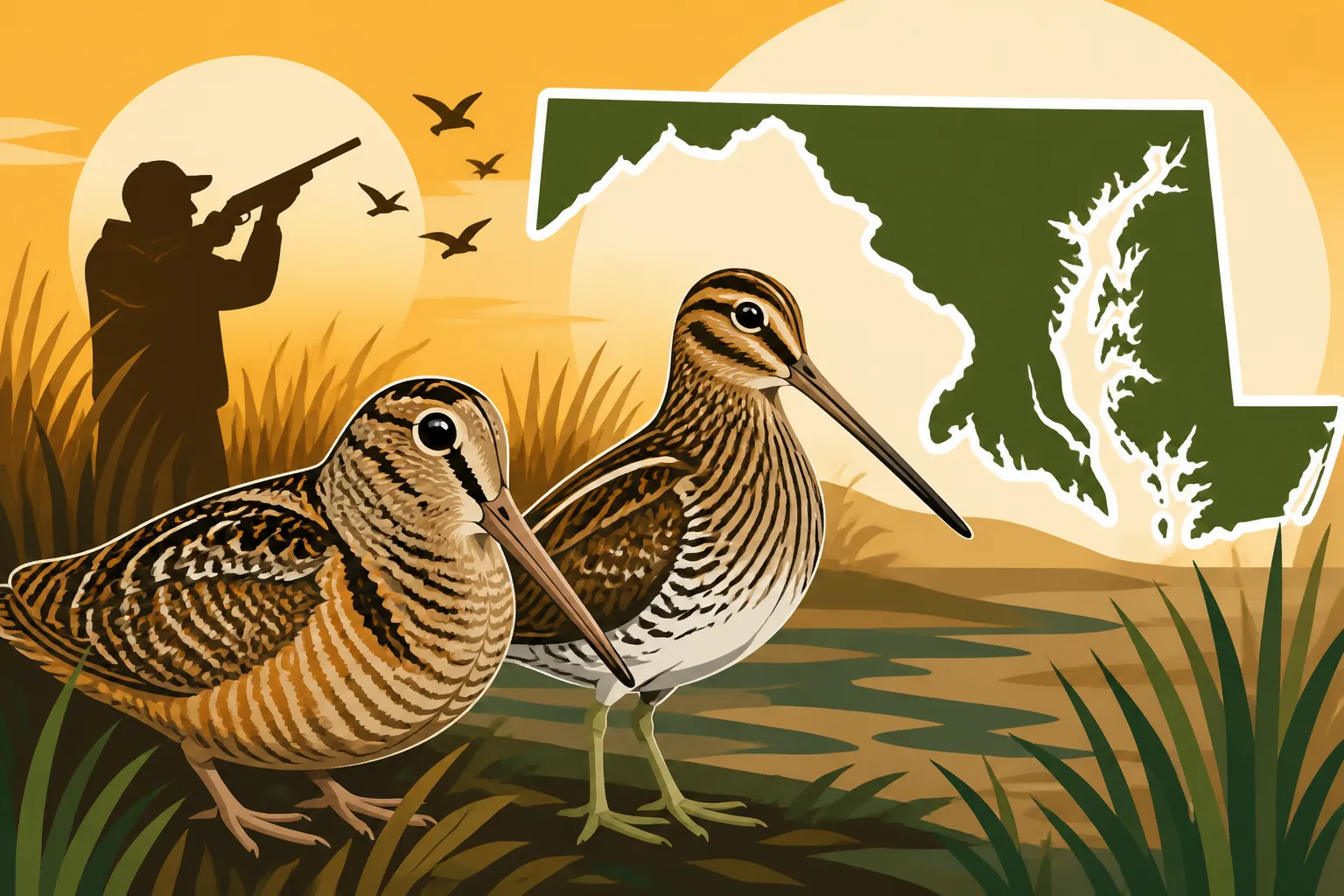
Correctly identifying woodcock and snipe is crucial to ensure you're hunting legally and ethically. While both are small, brown migratory birds with long bills, they have distinct differences in appearance and flight.
Woodcock (American Woodcock):
- Appearance: Plump, mottled brown body with large, dark eyes set high on the back of its head. Its bill is very long (2-3 inches). Short legs. The head has distinct dark bands running across the crown.
- Habitat: Dense, young woods, alder thickets, moist woodlands.
- Flight: When flushed, they typically fly straight up for a few feet, then level off and fly in a relatively straight line, often just above the treetops, for a short distance before dropping back into cover. Their flight can be described as somewhat lumbering but direct.
- Sounds: Often silent on the flush, but can make a soft "peent" sound, especially during their spring courtship flights.
Snipe (Common Snipe):
- Appearance: Slenderer than a woodcock, with a more striped head and body, particularly a prominent striped pattern on the head. Long bill (2-3 inches) and relatively longer legs than a woodcock.
- Habitat: Open, wet environments like flooded fields, wet meadows, muddy pond edges.
- Flight: Their most distinctive feature in flight is their incredibly erratic, zig-zagging pattern upon flushing. They often climb rapidly to a considerable height before leveling off. They are notoriously challenging to hit due to this unpredictable flight.
- Sounds: A sharp, rasping "scaipe" call is almost always heard when a snipe flushes. This sound is a key identifier.
Knowing these differences will prevent misidentification and ensure you target the correct species during their respective open seasons. A quick field guide or a mental checklist can be immensely helpful when these birds flush unexpectedly.
Maryland Woodcock and Snipe Season Overview
To help you keep track, here's a quick comparison of the typical seasons and limits for these two fantastic upland birds in Maryland. Always remember to check the current Maryland DNR hunting guide for the precise dates for the current season.
| Feature | American Woodcock | Common Snipe |
|---|---|---|
| Typical Season Dates | Two-part split season, e.g., Oct – Nov, then Dec | Continuous season, e.g., Sep – Jan |
| Daily Bag Limit | 3 birds | 8 birds |
| Possession Limit | 9 birds | 24 birds |
| Preferred Habitat | Young, regenerating forests, alder thickets, moist woodlands | Flooded fields, wet meadows, muddy pond edges |
| Key ID (Flight) | Straight, direct flight after initial flush | Erratic, zig-zagging flight with "scaipe" call |
| Required Stamps | Federal Duck Stamp, HIP Registration | Federal Duck Stamp, HIP Registration |
Maryland offers a fantastic opportunity to diversify your hunting experiences by pursuing woodcock and snipe. They provide a unique challenge and a chance to explore different types of habitat, from thick, brushy uplands to wide-open wetlands. Don't let these "forgotten" game birds stay forgotten; step out and discover the excitement of wing-shooting for timberdoodles and bog chickens! For more details on other small game, you might find Small Game Season Dates and Daily Limits helpful, or if you're interested in other unique birds, check out Maryland's Mourning Doves and Where They Feed. You can also find valuable insights into Hunting Maryland's Two Deer Management Regions to understand general hunting areas. If you're thinking about hunting specific state land, Hunting Maryland's Chesapeake Forest Lands could be a good starting point, and for public land in general, refer to Public Hunting Land in Maryland.
Disclaimer
All information provided in this guide is for informational purposes only and is subject to change. Hunters are responsible for consulting the most current Maryland Department of Natural Resources (DNR) hunting regulations and federal migratory bird regulations before engaging in any hunting activities. Always prioritize safety, ethical hunting practices, and compliance with all applicable laws and regulations.