Hunting a Maryland Pine and Hardwood Edge
You've probably spent countless hours deep in thick woods, wondering where the deer are, or sat on a wide-open field edge feeling exposed, thinking the same thing. But often, the most overlooked and productive spots for Maryland deer aren't in either of those extremes. Instead, they're right on that elusive seam where two worlds meet: the pine and hardwood edge. This transition zone can be a goldmine of deer activity, offering food, cover, and travel routes, but it's also a place that can be tricky to hunt if you don't know how deer use it. This guide is all about helping you decode the secrets of these productive edges, giving you actionable strategies to turn overlooked spots into prime hunting locations.
Understanding the Pine and Hardwood Edge as a Habitat
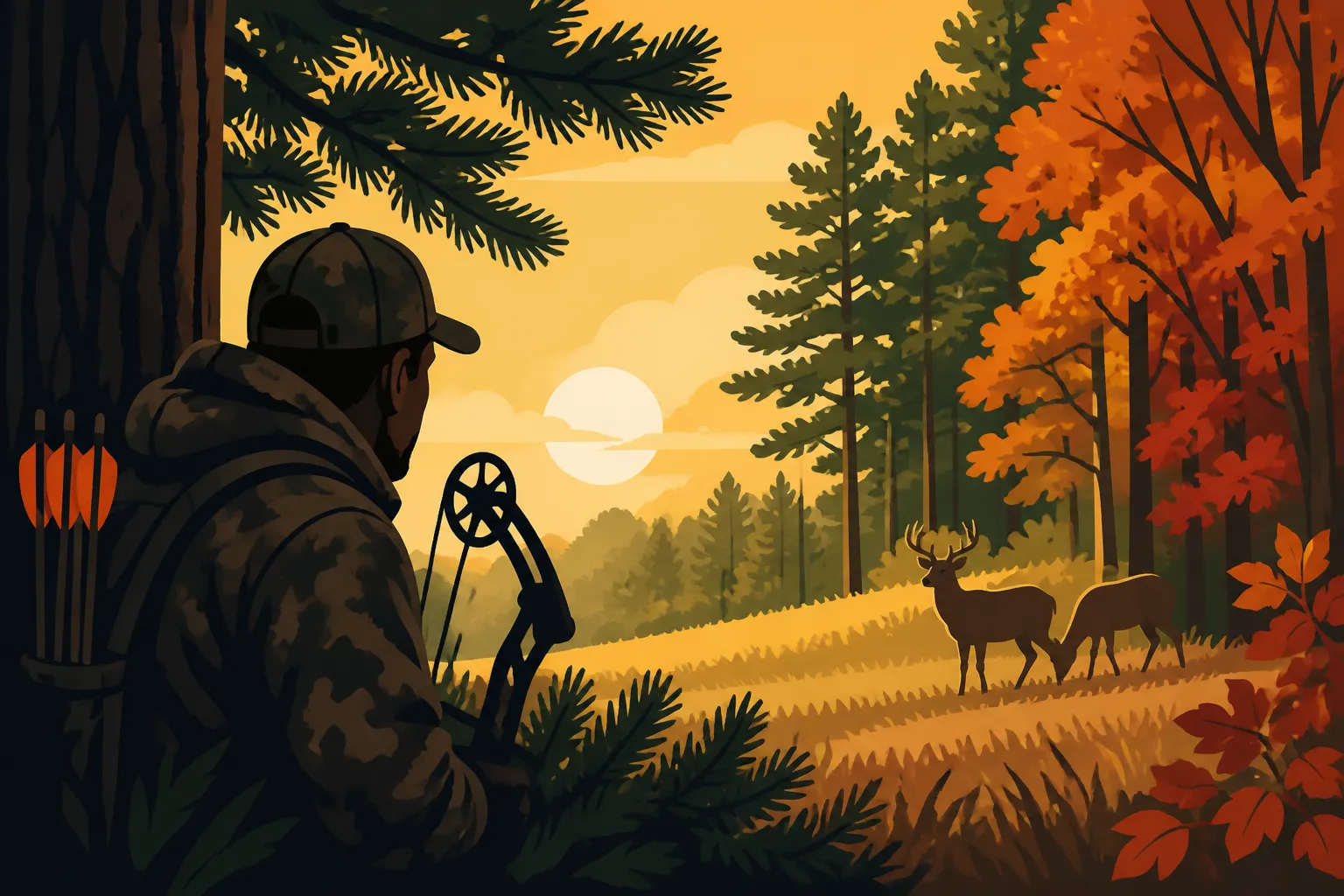
The natural boundary between a stand of pines and a section of hardwoods isn't just a line on a map; it's a vibrant ecosystem that deer absolutely thrive in. Think about it: pines often provide dense, year-round thermal and visual cover, especially the younger, thicker stands. They're like a natural fortress where deer feel safe from predators and the elements. Hardwoods, on the other hand, especially mature oaks, poplars, and maples, are generally all about food, offering acorns, other hard mast, and seasonal browse. The edge between these two distinct environments creates a "best of both worlds" scenario for deer, giving them immediate access to everything they need.
Why Deer Prefer These Edges
Deer, particularly whitetails and even the elusive sika deer in their specific range, are creatures of comfort and efficiency. They want to expend as little energy as possible to meet their needs for food, water, and security. The pine and hardwood edge provides this perfect balance. Imagine a cold, windy December day. A deer might bed down on the leeward side of a dense pine thicket, soaking up the sun and breaking the wind. Just a few steps away, in the adjoining hardwoods, they can find fallen acorns or browse to fuel up. This close proximity means less travel, less exposure, and more time feeling secure. It’s also a fantastic place for bucks to cruise during the rut, scent-checking for does moving between the safety of the pines and the feeding opportunities in the hardwoods. Hunting the Rut in Early to Mid November is often most productive in these transition zones.
Identifying Key Features of the Edge
Not all edges are created equal, and understanding the nuances of different pine and hardwood types can dramatically improve your success. On the Eastern Shore, for instance, you'll often find loblolly pine plantations meeting mature oak hammocks. The loblollies offer incredible screening, while the oaks drop that vital hard mast. In Western Maryland, you might encounter shortleaf pine stands on mountain slopes abutting mixed oak and hickory forests. The specific trees matter because they dictate the available food and the density of the cover. Look for:
- Varying Ages: An older pine stand with a thin understory won't offer the same cover as a young, regenerating one. Similarly, a diverse age class of hardwoods provides a more consistent food source.
- Transition Zones: Sometimes the transition is abrupt, almost a straight line. Other times, it's a more gradual mix of trees, with scattered pines extending into the hardwoods or vice versa. These graduated zones can be even better, offering more diffuse cover and multiple travel corridors.
- Elevation Changes: Even subtle changes in elevation along an edge can create microclimates and affect wind currents, influencing deer movement. A slight ridge along the edge, for example, could be a natural travel route.
Scouting the Edge: Reading Deer Sign
You can't effectively hunt an edge if you haven't thoroughly scouted it. This isn't just about walking a line; it's about interpreting every rub, every trail, and every droppings pile as part of a larger story of deer movement. Scouting these transition zones often requires a different mindset than just cruising a food plot or still-hunting deep timber. You’re looking for patterns where two habitat types influence each other.
Using Technology for Pre-Season Analysis
Before you even step foot in the woods, modern mapping tools can give you a massive advantage. Services like onX Hunt are invaluable for identifying these pine and hardwood edges from your couch. You can zoom in and see the distinct color changes on aerial imagery where conifers (pines) meet deciduous trees (hardwoods). Look for:
- Edge Irregularities: Does the edge have points, fingers, or coves? These irregularities often act as funnels or bedding nooks.
- Access Points: How can you get to and from the edge without spooking deer? Identify potential entry and exit routes that utilize natural cover or topography.
- Proximity to Water/Agriculture: Does this edge run along a creek, a marsh, or an agricultural field? These additional elements can amplify the edge's attractiveness to deer.
By using the mapping layers, you can mark potential stand sites, travel corridors, and even identify private property boundaries to ensure you're always hunting legally and responsibly. Scouting Maryland Public Land Before Season becomes much more efficient with these digital tools in hand.
Boots on the Ground: What to Look For
Once you've done your digital homework, it's time to hit the ground. When walking a pine and hardwood edge, you need to slow down and pay attention to the details.
- Interconnected Trails: Deer often have main trails that run parallel to the edge, but look for smaller, less obvious trails that cut into the pines for bedding or out into the hardwoods for feeding. These intersecting trails are often dynamite spots.
- Rub Lines and Scrapes: Bucks use these edges to travel, but also to mark their territory. Look for rub lines, especially on trees along the hardwood side or at the point where a small finger of hardwoods extends into the pines. Scrapes will also frequently appear in these transition areas, especially during the rut, as bucks check for does. Scrape Lines Along a Maryland Field Edge are one thing, but scrape lines along a diverse habitat edge can be even more potent.
- Bedding Areas: While you might not find a literal "bed," look for areas in the dense pine cover that show signs of repeated use – flattened grass, droppings, and easy escape routes. Often, deer will bed just inside the pines, where they can watch the more open hardwoods.
- Food Sources: What kind of hard mast is available in the hardwoods? Are there any browse lines on saplings indicating heavy feeding? Look for specific oak species like white oaks (dropping acorns earlier) or red oaks (dropping later) that might dictate when deer are present. What Acorn Crops Do to Maryland Deer Movement can heavily influence activity here.
Hunting Strategies for Pine and Hardwood Edges
Hunting these edges effectively means playing the wind, understanding deer behavior, and having a solid entry and exit plan. It's not a one-size-fits-all approach, as every edge is unique, but certain principles apply across the board.
Stand Placement: The Golden Rule
The most critical factor in hunting an edge is your stand placement. You want to be close enough to intercept deer movement but far enough back not to spook them.
- Wind Direction is Paramount: Always hunt with the wind in your favor. Deer will typically approach a feeding area or travel corridor with the wind in their face or across their nose. Position your stand so your scent is blowing away from where you expect deer to approach or cross. This might mean setting up on the hardwood side if deer are bedding in the pines and moving into the hardwoods to feed, or vice-versa.
- The "Double Edge" Principle: Sometimes, you'll find an edge where a field meets hardwoods, and then a short distance beyond, those hardwoods meet pines. This creates a "double edge" effect, a super-highway of deer activity. Consider placing your stand to overlook both transitions, especially if deer are moving between the deepest cover, the hardwoods, and the open field.
- Elevated Stands vs. Ground Blinds:
- Tree Stands: Offer a wider field of view and help get your scent higher, making them ideal for observing the edge. If deer are moving along the edge, a stand provides excellent visibility. Hanging a Stand on a Maryland Farm Edge often applies to these specific habitat edges as well.
- Ground Blinds: Can be highly effective if the pine side of the edge is incredibly dense. A natural ground blind tucked into the thickest cover on the pine side, facing out into the hardwoods, can conceal you completely and offer close-range shots as deer emerge. This is particularly useful in areas where suitable trees for stands are scarce or too small.
| Stand Type | Advantages | Disadvantages | Best Use Case |
|---|---|---|---|
| Tree Stand | Elevated view, helps with scent dispersal, adaptable | Requires suitable tree, can be difficult to set up quietly | Intercepting deer moving along the edge or entering/exiting hardwoods |
| Ground Blind | Excellent concealment, can be set up quickly, mobile | Limited visibility, scent closer to ground, needs natural cover | Ambushing deer emerging from dense pine bedding into hardwoods |
Still-Hunting the Edge
Don't underestimate the power of still-hunting along a pine and hardwood edge, especially if you're exploring new territory or hunting during midday lulls. This method involves moving slowly, taking a few steps, and then stopping for several minutes to scan and listen.
- Use the Cover to Your Advantage: The pine side often offers excellent visual cover for you to sneak through, while the hardwood side provides better visibility into the timber. Walk just inside the pine line, peeking out into the hardwoods, or vice-versa, depending on wind and time of day.
- Wind and Sun: Always still-hunt into the wind. If the sun is low, try to keep it at your back to minimize glare for you and maximize it for deer looking into your position.
- Listen, Listen, Listen: In the quieter pine needles, you might hear a deer crunching leaves in the hardwoods. In the crunchy leaves of the hardwoods, you might hear the soft tread of a deer moving through the pines. Pay attention to the subtle sounds of the forest. Still-Hunting Western Maryland Mountain Timber teaches similar patience and observation skills vital here.
Considerations for the Hunt
Beyond stand placement and movement, there are a few other critical aspects to consider for a successful hunt on the edge:
- Entry and Exit Routes: Plan these meticulously. Use terrain, ditch lines, or the densest pine cover to approach and leave your stand undetected. The last thing you want to do is blow out deer before you even get settled or when you're leaving.
- Scent Control: This is always important in deer hunting, but especially when you're hunting a funnel or transition zone where deer activity is concentrated. Use scent-eliminating sprays, wash your hunting clothes in unscented detergent, and play the wind religiously.
- Shot Opportunities: Be ready for quick shots. Deer moving along these edges, especially in thicker areas, might not give you much time. Practice shooting from various angles and ranges that mimic potential real-world scenarios in a dense environment.
Seasonal Considerations and Gear for Edge Hunting
The way deer use a pine and hardwood edge will change dramatically throughout the hunting season, dictated primarily by food availability and weather. Adapting your strategy to these seasonal shifts is key to consistent success.
Early Season (September/October)
In the early archery season, when temperatures can still be warm, deer are primarily focused on food and cover.
- Food Focus: Look for soft mast in the hardwoods (persimmons, wild grapes, early acorns) and browse. Deer might still be on fairly predictable patterns, moving from a bedding area in the dense pines to a specific food source in the hardwoods. When Maryland's Archery Season Opens in September is a great time to capitalize on these patterns.
- Water: If there's a water source near the edge, it will be even more attractive during warmer weather.
- Cover for Security: The pines provide excellent security cover, especially during daylight hours. Hunt mornings near bedding areas and evenings near preferred food sources, always minding the wind.
Mid-Season (November – The Rut)
This is perhaps the most exciting time to hunt the pine and hardwood edge. Bucks are on the move, actively seeking does, and these edges act as natural travel corridors and staging areas.
- Buck Travel: Bucks will cruise these edges, moving between bedding areas in the pines and traditional doe feeding areas in the hardwoods. They're also scent-checking for does that might be moving between the two habitat types.
- Rubs and Scrapes: Expect to see increased rub and scrape activity right on the edge. These are signposts for rutting bucks and excellent places to set up.
- Calling and Rattling: The visual and thermal cover of the pines, combined with the more open hardwoods, creates ideal scenarios for calling. A grunt call or some light rattling can often draw a curious buck in close, especially if he thinks a rival buck is on his turf near the edge. Grunt Calls in Maryland Hardwoods and Rattling Antlers on an Eastern Shore Farm are tactics that can be super effective here.
Late Season (December/January)
As the temperatures drop and food sources become scarcer, deer priorities shift again.
- Thermal Cover: Dense pines become critically important for thermal cover during cold, windy, or snowy weather. Deer will often bed deep in the pines, only venturing out for short periods to feed.
- Limited Food Sources: Focus on persistent food sources in the hardwoods, like overlooked white oak acorns, red oak acorns that dropped later, or browse. Standing agricultural fields adjacent to the edge, like corn or soybeans, will also be magnets. Late Season Food Sources for Maryland Deer are crucial knowledge.
- Daylight Movement: Deer might be forced to move during daylight hours more frequently to find enough to eat, especially after a cold front. This can be a prime time to catch them moving between the warmth of the pines and a feeding area.
Essential Gear for Edge Hunting
While much of your standard hunting gear will apply, a few items are particularly useful when hunting pine and hardwood edges:
- Good Optics: Binoculars are essential for scanning the more open hardwood side and picking apart details in the denser pine cover.
- Mapping App: As mentioned, an app like onX Hunt is incredibly valuable for identifying boundaries, marking sign, and planning your approach. GoHunt can also be a useful resource for general research and planning, though onX is more directly applicable for in-the-field mapping.
- Weather-Appropriate Clothing: Be prepared for varying conditions, especially if you're sitting for long periods. Layering is key, as movement through dense pines can be warm work, while sitting still on an exposed hardwood edge can get chilly.
- Portable Stand/Climbing Sticks: These offer flexibility if you need to quickly relocate based on fresh sign or changing wind.
- Rangefinder: Critical for confirming distances in environments where depth perception can be tricky, especially with trees obscuring views.
Hunting the pine and hardwood edge is all about understanding the dynamic interplay between two distinct habitats and how deer exploit that blend for survival. It requires patience, keen observation, and the willingness to adapt. But when you unlock the secrets of these edges, you'll find some of the most consistent deer hunting opportunities Maryland has to offer.
Disclaimer
This article is for general informational purposes only and does not constitute professional advice. Laws, prices and regulations vary by location and change over time. Consult a qualified professional for guidance on your specific situation.