Setting a Stand on a Marsh Ditch Bank
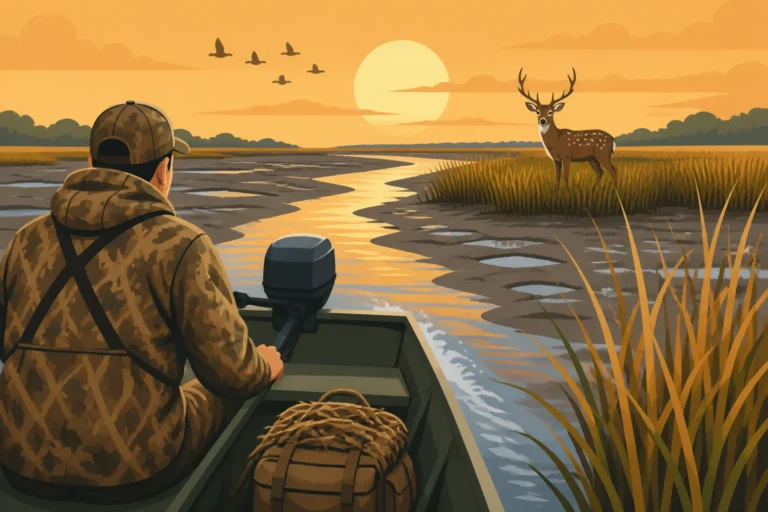
Hunting Maryland's vast tidal marshes presents a truly unique set of challenges, from navigating treacherous footing to understanding the fickle movements of game. For many, finding solid, elevated ground to observe these elusive animals, particularly sika deer, can feel like a fool's errand. This guide is all about overcoming those watery obstacles to strategically place a stand on a marsh ditch bank, unlocking some incredible hunting opportunities in these truly wild landscapes.
Understanding the Unique Marsh Ditch Bank Ecosystem
The Chesapeake Bay region's tidal marshes are a world unto themselves, a dynamic environment constantly shaped by water, wind, and the creatures that call it home. A ditch bank isn't just a bump in the mud; it's often the lifeline for deer trying to navigate an otherwise impassable watery maze. Understanding this intricate relationship is paramount to successful stand placement.
The Dynamics of Tidal Influence on Movement
Tides are the heartbeat of the marsh, dictating everything from water levels to game movement. When the tide is low, more ground becomes exposed, and deer might spread out further, foraging in areas that were recently submerged. Conversely, as the tide rises, it pushes animals onto higher ground, concentrating them onto the very ditch banks and small islands we're looking to hunt. You'll find that deer often use these elevated features as highways through the marsh, especially when the water is high. Learning to read a tide chart isn't just a good idea; it's essential for marsh hunting success. Knowing when the high and low tides occur will help you predict when deer will be forced onto or off these banks, allowing you to plan your entry and exit to coincide with optimal deer movement. For instance, timing your hunt for a rising tide can often push deer right past your carefully placed stand as they seek refuge from the encroaching water, creating some incredible hunting scenarios. It’s a delicate dance, but one that, when mastered, can put you in front of more deer.
Beyond just the basic high and low, consider the strength of the tide. A strong moon tide, for example, might flood areas that are typically dry, creating new bottlenecks or completely cutting off certain travel routes. Deer are incredibly adaptable, but they're also creatures of habit. They'll use the path of least resistance, and in the marsh, that often means the firmest, highest ground available. Pay close attention to how deer trails are impacted by different water levels during your scouting trips. You might discover a particular ditch bank becomes a superhighway during a full moon tide, while it's less active during a slack tide. This understanding is crucial for anticipating movement and setting up your stand in the most productive spots.
Vegetation as Cover, Food, and Travel Corridors
The vegetation of a tidal marsh isn't just scenery; it's an integral part of the ecosystem, providing cover, food, and shaping travel patterns. Dominant species like common reed, or Phragmites australis, create incredibly dense, tall stands that can be nearly impenetrable for humans but offer fantastic bedding and escape cover for sika deer and whitetails. These thickets often grow right up to the edge of the ditch banks, providing immediate cover for deer moving along these elevated paths. You'll notice deer trails forming tunnels through the phragmites, leading directly to and from the ditch banks. Knowing Where Sika Deer Bed in Phragmites can give you a huge advantage in understanding where these animals are coming from and going to.
Other marsh grasses and even small pockets of scattered woody vegetation, like groundsel bush or sapling loblolly pine, provide additional cover and browse. Sika deer are particularly fond of the succulent marsh grasses and sedges. When you're scouting, look for signs of heavy browsing along the ditch banks, which indicates a regular food source. Small loblolly pine islands, which stand out as elevated, drier ground in the marsh, often serve as crucial hubs of activity, attracting both sika and whitetail. These islands can provide bedding areas and slightly different food sources, and the ditch banks leading to them become major travel routes. Considering Hunting a Loblolly Pine Island in the Marsh in conjunction with ditch bank hunting can open up even more opportunities. The edges where phragmites meet more open marsh or where woody vegetation borders a ditch bank are classic transition areas that deer love to utilize, offering both security and access to forage.
Choosing the Right Ditch Bank for Your Stand
Successful marsh hunting hinges on meticulous scouting and thoughtful stand placement. Unlike hunting timber, where a single large oak might be enough, marsh ditch banks require a different eye for detail, focusing on subtle changes in elevation, vegetation, and how water shapes animal movement.
Aerial Recon and Ground Truth
Before you even get your waders muddy, your scouting should begin from the air. High-resolution satellite imagery, available through tools like GoHunt, is an absolute game-changer for marsh hunting. You can identify the intricate network of ditches, the subtle changes in elevation that form banks, and dense patches of phragmites or loblolly pines from the comfort of your home. Look for patterns: where do the ditch banks converge? Are there any distinct bends or "pinch points" that might funnel deer? Can you spot any islands or higher ground that deer might be retreating to during high tide? Scouting Maryland Public Land With Aerial Photos is an essential first step. Mark potential stand locations, entry and exit routes, and points of interest like heavy cover or open feeding areas.
Once you have a few promising spots identified from your aerial maps, it's time to put boots on the ground – or rather, waders in the mud. This ground truthing is critical because satellite imagery, while good, can't show you everything. You need to confirm the solidity of the ditch bank, identify fresh sign like tracks, scat, and rubs, and assess the suitability of any trees or cover for your stand. Walk the proposed entry and exit routes at different tide levels if possible, to understand the challenges you'll face on hunting day. Pay attention to how the deer are actually using the banks. Are there well-worn trails? Do they seem to prefer one side of a ditch over another? This firsthand observation will either validate or refine your aerial findings, ensuring you choose the most active and accessible ditch banks.
Identifying Key Movement Corridors and Pinch Points
Deer, especially sika, are incredibly efficient travelers, even in dense marsh. They will always take the path of least resistance, and in a marsh, that path is often a firm, elevated ditch bank. Your goal is to find the ditch banks that serve as primary travel corridors between bedding areas, feeding grounds, and water sources. Look for well-worn trails along the top or sides of these banks. Reading a Marsh Trail for Sika Sign involves looking for tracks, droppings, and even rubbed vegetation, which can tell you not only that deer are using the trail but also how recently.
Beyond general travel, identify "pinch points" – areas where the marsh narrows, forcing deer into a smaller, more concentrated travel lane. This could be where two ditch banks converge, where a ditch makes a sharp bend, or where a narrow strip of land lies between two expansive, flooded areas. These are ambush points that can be incredibly productive. Deer will often pause or slow down in these areas, offering better shot opportunities. Also, consider water crossings. While deer prefer dry ground, they will cross ditches or smaller water bodies, and a ditch bank leading to or from a frequently used crossing point can be a gold mine. These key corridors and pinch points are where you want your stand, positioned to intercept deer traffic effectively.
Wind, Sun, and Stealth for Optimal Positioning
Even in the most remote marsh, deer have an uncanny ability to detect threats, making wind, sun, and stealth paramount to stand placement. Wind direction is probably the single most critical factor. Always place your stand downwind of where you expect deer to approach or pass. Remember that thermals can be tricky in the marsh, especially around large bodies of water, and can shift throughout the day. A slight breeze might blow your scent directly into a deer's path even if it feels like you're downwind. Use a wind checker frequently.
Sun position is also vital. You want to avoid having the rising or setting sun directly in your eyes, which can obscure your vision and make aiming difficult. Position your stand so the sun is either behind you or to your side. This often means facing north or east for a morning hunt, and south or west for an evening hunt. Finally, stealth extends beyond just the hunt itself; it begins with your entry and exit. Plan routes that minimize disturbance. This might mean using a boat to get close to your ditch bank, or wading in quietly during high tide when your movement might be less noticeable. Avoid creating new trails or disturbing bedding areas on your way in or out. Your approach to the stand should be as silent and scent-free as possible, ensuring you don't alert the keen senses of marsh deer before you even climb up.
Essential Gear and Safety Considerations
Marsh hunting, especially from a stand, demands specific gear and an unwavering commitment to safety. This isn't your typical deer woods hunt; the environment is unforgiving and presents unique challenges. Being prepared can mean the difference between a successful hunt and a dangerous situation.
Choosing the Right Stand for Marsh Conditions
When selecting a stand for a marsh ditch bank, portability, stability, and adaptability are key. Climbing stands are generally not suitable because the trees are often too small, unstable, or simply non-existent on many ditch banks. Hang-on stands, however, can be an excellent option if you have a suitable tree on or near the bank. Look for a sturdy tree with enough cover to break up your silhouette. Make sure the tree is alive and healthy, capable of supporting your weight and the stand. Ladder stands can also work in spots with wider, more stable banks and sufficient tree cover, offering greater comfort and stability for longer sits. If a suitable tree isn't available, some hunters opt for robust tripod stands placed directly on wider, firmer sections of the ditch bank. These offer elevated visibility without needing a tree, but they must be extremely stable and anchored securely to prevent tipping in soft ground or high winds.
Regardless of the type, always prioritize lightweight options that are easy to carry through thick mud and water. The less gear you have to haul, the easier your trek will be. Ensure your stand has a sturdy platform, as you'll likely be dealing with uneven footing and potentially shifting ground around the base of the stand. Always inspect your stand thoroughly before each season, and especially before setting it up in the marsh, checking for any corrosion or wear from the damp environment.
Personal Gear for the Wet and Wild Environment
Your personal gear list for marsh hunting will look different from a typical woodland hunt. Foremost, proper footwear is non-negotiable. Whether you choose Hip Boots Versus Chest Waders in Sika Country depends on the depth of the water you expect to encounter and your comfort level. Chest waders offer more protection and allow you to navigate deeper water, but can be cumbersome. Hip boots are lighter but limit your range. Layering your clothing is also critical, as marsh temperatures can fluctuate dramatically, and you'll be exerting a lot of energy walking through mud and water. Waterproof outer layers are a must, as are waterproof bags for your electronics, licenses, and other essentials.
Beyond clothing, a high-quality safety harness is paramount for any elevated stand hunt, and especially so in a remote marsh where help might be a long way off. A bright, waterproof headlamp with extra batteries is essential for navigating in the dark. Carry a whistle and a fully charged cell phone (in a waterproof case, of course) for emergencies. A GPS device or a reliable mapping app like GoHunt on your phone is vital for navigation, as marsh environments can be disorienting. A sturdy, fixed-blade knife is useful for a multitude of tasks, and a small, lightweight drag rope or even a compact game cart designed for rough terrain can make a world of difference when it comes to Tracking a Sika Stag Into Thick Marsh Grass and recovering your animal. Don't forget bug spray; marsh mosquitoes and biting flies can make a hunt unbearable without it.
| Gear Item | Purpose | Notes |
|---|---|---|
| Chest Waders | Navigating deep water, staying dry & warm | Crucial for most marsh hunts. |
| Safety Harness | Fall protection from elevated stand | Non-negotiable for stand hunting safety. |
| Waterproof Headlamp | Navigation in low light, blood trailing | Essential for early morning/late evening, spare batteries. |
| GPS/Mapping App | Navigation, marking stand locations/game | GoHunt is excellent for detailed terrain. |
| Fixed-Blade Knife | Field dressing, general utility | Strong, reliable, and easily accessible. |
| Dry Bags/Cases | Protecting electronics, licenses, valuables | Essential for anything you can't get wet. |
| Bug Spray | Repelling mosquitoes and biting flies | A strong DEET or picaridin formula is recommended. |
| Drag Rope/Sled | Game recovery in challenging terrain | Makes a tough job much easier. |
| First-Aid Kit | Emergency medical treatment | Basic kit for cuts, scrapes, stings. |
| Whistle | Signaling for help in emergencies | Can travel further than your voice. |
Navigating Tides and Unstable Ground Safely
The marsh environment, while beautiful, is inherently hazardous. Tides can rise quickly and silently, cutting off your path back to your vehicle or boat. Always check detailed tide charts before heading out, and give yourself a generous buffer for your entry and exit. It's often best to Boating Into a Sika Marsh at Low Tide or at least timing your wade when the water is receding, giving you more exposed ground to work with. Never assume the water level will remain static. The ground itself is often a mix of firm earth, soft mud, and hidden holes. You can sink unexpectedly, so move slowly and deliberately, probing the ground ahead with a stick or your foot.
Inform someone of your exact hunting location and your expected return time. This "float plan" is critical in remote areas. Consider carrying a personal locator beacon (PLB) or satellite messenger for true emergencies, especially if you hunt alone in areas without cell service. When placing your stand, ensure the base is on the most stable ground possible and that any climbing sticks or ladder sections are firmly rooted. Always use a safety rope from the moment your feet leave the ground until you are securely in your stand, and again for descent. Marsh hunting can be incredibly rewarding, but it demands respect for its dangers and a strong commitment to self-preservation.
Effective Hunting Tactics from a Ditch Bank Stand
Once you’ve got your stand perfectly positioned on that ditch bank, the real fun begins. But a good setup is only half the battle. How you hunt from that stand, particularly in the unique marsh environment, will ultimately determine your success.
Mastering Scent Control and Entry/Exit
Scent control is always important, but in the humid, often stagnant air of a marsh, it takes on an almost religious significance. Your scent will travel, especially with light, shifting winds. Dress in clean, scent-free clothing, and use scent-eliminating sprays on your gear. While it’s impossible to be 100% scent-free, every little bit helps. More critically, focus on your entry and exit routes. The goal is to get to and from your stand without alerting any deer in the area. This often means going in well before daylight and staying until after dark, using the cover of darkness to your advantage. If possible, plan routes that utilize water for travel, as water typically holds less residual human scent than dry ground. Hunting a Marsh Island by Boat can provide a stealthy approach, letting you anchor downwind and wade the final distance to your stand.
Pay attention to prevailing winds during your approach. If the wind is blowing your scent across a primary deer trail, you're effectively ruining your hunt before it even begins. Sometimes, waiting for the wind to shift to a more favorable direction is the smartest move. When you exit, move slowly and quietly, again using the cover of darkness. Try to avoid pushing deer out of an area on your exit, as this can educate them and make them warier for future hunts. The less the deer know you’re there, the better your chances will be, especially when you are hunting the same ground year after year.
Calling and Patience for Sika Deer
Sika deer are incredibly vocal animals, and their unique "whistle" rut is legendary. Unlike whitetails, which primarily grunt, sika stags emit a high-pitched bugle or whistle, especially during the peak rut in September and October. Learning to mimic this call can be incredibly effective when Hunting Sika Stags During Their Fall Whistle. Often, a short, sharp whistle can pique a stag's curiosity and draw him closer to investigate. Don't overcall, however; sometimes a subtle whistle or two is all it takes. Combine this with traditional whitetail calls like grunts, especially if you're hunting areas where Hunting Maryland Whitetails on the Same Ground as Sika is common, as both species often use the same travel corridors.
Patience is perhaps the greatest virtue of a marsh hunter. The thick cover means deer can be incredibly close without you ever seeing them. You might hear rustling in the phragmites, smell the strong musk of a sika stag, or even hear distant whistles, but not see an animal for long stretches. Resist the urge to fidget or move excessively. Sit still, scan constantly, and listen intently. The marsh tells a story if you're willing to listen. Many times, a sika will materialize silently out of the dense cover as if by magic. Be ready for a quick shot, as opportunities can be fleeting in this environment. Long sits are often rewarded, as deer can be active at various times throughout the day, especially during the rut or on cloudy, mild days.
Shot Placement and Recovery in Thick Cover
The dense cover of a marsh means that clear, long-range shots are rare. Most engagements will be at close quarters, often less than 50 yards, and through small shooting lanes. This necessitates precise shot placement. Practice shooting in similar conditions – standing, with limited visibility, and from an elevated position. Focus on double-lung shots, as a well-placed shot is crucial for a quick, ethical kill and a manageable recovery. Avoid marginal shots, especially shoulder or gut shots, which can lead to extended tracking jobs in an incredibly difficult environment. Even a deer that's hit well can travel a surprising distance into thick cover.
After the shot, resist the immediate urge to climb down. Give the animal time, typically 30 minutes to an hour, to expire. This is especially important in the marsh, where a wounded deer can vanish into the phragmites and be nearly impossible to find. Once you begin tracking, move slowly and methodically. Look for every drop of blood, every broken twig, every turned leaf. In the thick marsh grass, this can be incredibly challenging, even for an experienced tracker. If you lose the trail, back out and come back with help, or even consider waiting until daylight if it's dark and you've lost the trail completely. A well-trained tracking dog can be an invaluable asset here, or consider carrying a specific tracking light. Recovering a deer from a tidal marsh can be one of the most physically demanding parts of the hunt, but proper shot placement and a disciplined approach to tracking will significantly increase your chances of success.
Disclaimer
Hunting is a challenging and potentially dangerous activity. Always prioritize safety, follow all local, state, and federal hunting regulations, and obtain proper licenses and permits. The information provided in this guide is for informational purposes only and should not replace professional guidance or your own due diligence. Conditions in the field can change rapidly, and personal responsibility is paramount.