Entry Routes Through Cut Corn Before Daylight
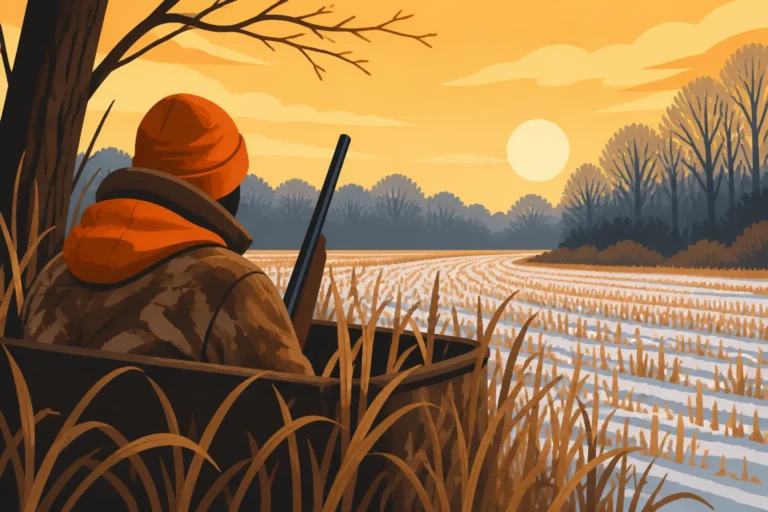
Getting to your stand or blind before daylight is tough enough, but trying to slip across a wide-open, cut cornfield in the pre-dawn darkness without spooking every deer within a quarter-mile? That feels like an impossible mission for many Maryland hunters, especially when the deer are already on high alert. This guide is all about giving you the proven strategies and detailed tips to navigate those challenging cut cornfields stealthily, ensuring you arrive undetected and ready for a successful morning hunt.
The Challenge of Approaching Cut Corn Before Daylight
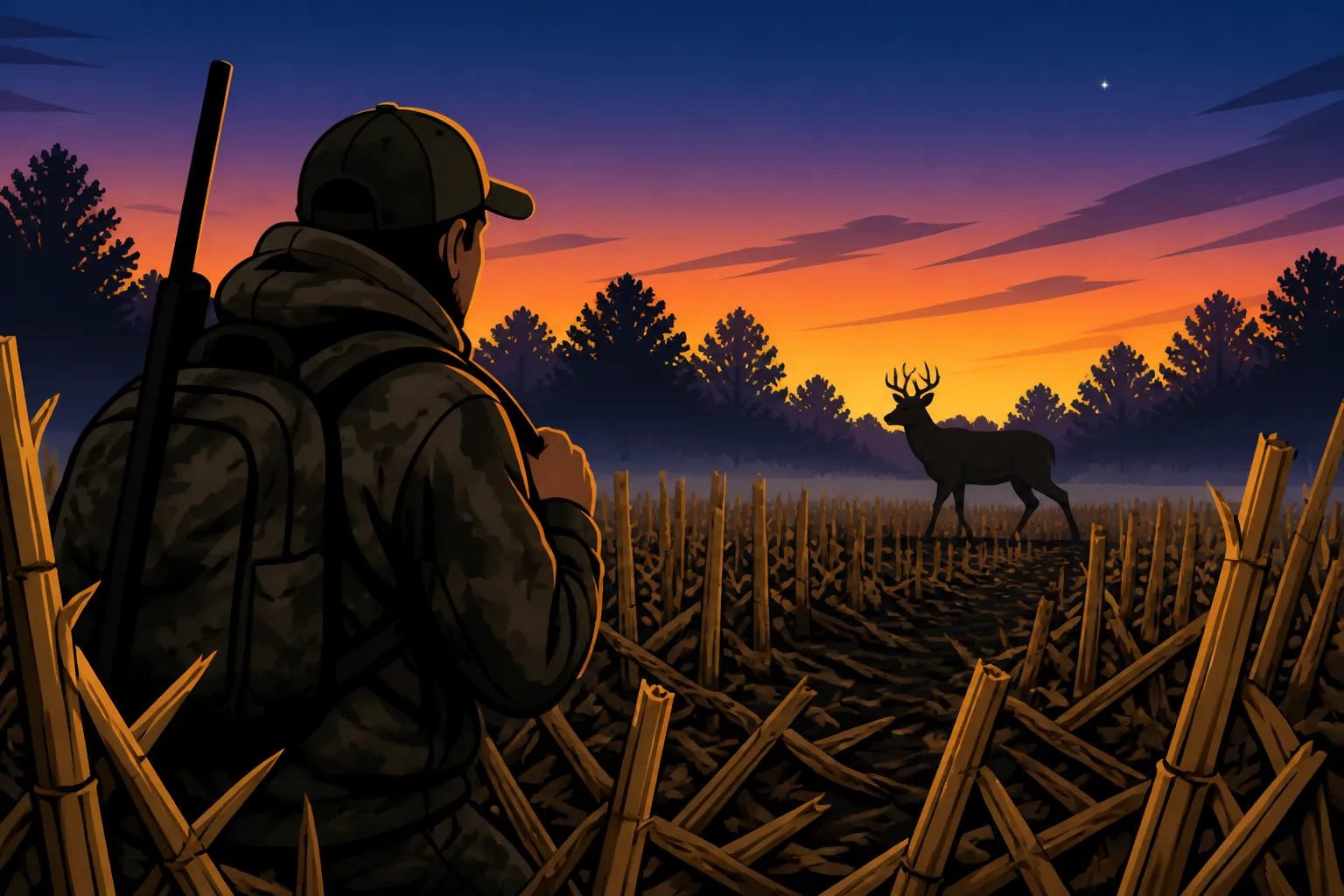
Cut cornfields are magnets for deer, drawing them in with readily available calories, especially as other food sources dwindle later in the season. However, this prime feeding location also presents a significant challenge for hunters trying to get into position unnoticed. The wide-open nature of these fields, combined with the extreme sensitivity of deer, means your approach strategy needs to be meticulously planned and executed.
Why Deer Love Cut Corn and the Hunter's Dilemma
Once the combines roll through, those golden fields transform into a deer buffet. There's usually plenty of waste grain left on the ground, a high-energy food source that deer will gorge on, particularly during the colder months in Maryland. It's a reliable spot, which means deer often linger into the morning, making it a hotbed of activity right at legal shooting light. But herein lies the dilemma: how do you get close enough to capitalize on this without sending every deer scattering back into the timber?
Many hunters feel a real sense of frustration when facing a massive, flat, cut cornfield. You see the deer sign, you know they're there, but the thought of trying to cross that expanse in the dark, knowing any rustle or misstep could alert them, is daunting. It's a classic hunting paradox: the best food source is often the hardest to access without detection. This is especially true when considering Late Season Food Sources for Maryland Deer, where cut corn can be one of the last remaining abundant options, making deer even more concentrated and wary. They know they're exposed in those fields, so they're always on edge.
The Silent Spook: How Noise and Scent Ruin a Hunt
Deer possess incredibly keen senses. Their hearing is far superior to ours, capable of picking up the faintest crunch of frost-covered stubble or the swish of clothing from hundreds of yards away. Their sense of smell is legendary, allowing them to detect human odor long after you've passed through an area. Approaching a cut cornfield before daylight is a high-stakes game where noise and scent are your biggest enemies.
Imagine the crisp, quiet air just before dawn. Every sound carries. A boot scuffing on dry cornstalks, a branch snapping underfoot, even the rustle of your jacket as you move—these are alarms in the deer world. Once a deer hears or smells you, even if they don't see you, they're gone. And they're not just gone for that morning; they'll often pattern away from that area for days, or even weeks. Blowing a hunt due to a sloppy approach is one of the most disheartening experiences, turning potential success into a lesson learned the hard way. This is why a precise and stealthy entry is paramount, much like the careful considerations needed for Setting Up on a Maryland Grain Field Edge regardless of the specific crop.
Strategic Entry Routes for Maryland's Cut Cornfields
Successfully navigating a cut cornfield before daylight requires more than just walking quietly. It demands a strategic approach that leverages the available landscape, understanding the wind, and timing your movements perfectly. It's about thinking like a predator, using every advantage the terrain offers to mask your presence.
Utilizing Natural Cover and Topography
Even in what seems like a wide-open cornfield, there are almost always subtle features you can use for cover. This is where your scouting and mapping tools become absolutely vital. Before you even think about stepping into the dark, you should have identified your exact route.
Look for fencerows, drainages, irrigation ditches, or even subtle rises and dips in the land. A fencerow, especially one overgrown with brush or small trees, can provide excellent visual cover as you walk alongside it. Instead of walking directly on the fenceline where you might be silhouetted against the sky, try to stay just inside the timber edge or along the base of the thicker vegetation. Similarly, a drainage ditch, while potentially muddy and noisy to walk in, can offer a depression that lowers your profile if you walk alongside it, using the banks as a screen. Woodlines bordering the field are another obvious choice. Sticking to the very edge of the timber, or even a few yards inside, gives you visual cover against the field. Always be mindful of the wind when using these edges, as it can swirl unpredictably. Tools like GoHunt, often highlighted when discussing methods for Scouting Maryland Public Land With Aerial Photos, become invaluable here, allowing you to trace potential routes and identify hidden cover before you ever set foot on the ground.
The Wind is Your Ultimate Guide
When hunting deer, the wind is not just a factor; it is the factor. This is even more true when approaching a wide-open cut cornfield. Deer rely heavily on their sense of smell to detect danger, and if your scent is blowing towards them, they will know you're there long before you get within range.
Your entry route must be planned entirely around the prevailing wind direction. You need to ensure that your scent is carried away from any potential bedding areas, travel corridors, or feeding deer. This often means taking a longer, more circuitous route around the field to come in from a downwind or crosswind position relative to where you expect deer to be. Remember that thermals can also play a role, especially in the early morning hours. As the sun begins to rise and warm the ground, thermals can start to lift, carrying your scent upwards. Conversely, in the pre-dawn darkness, cooler air often sinks, carrying scent downwards into low-lying areas. Understanding this, even if you’re not dealing with the dramatic elevation changes of Wind and Thermals in Western Maryland Terrain, is crucial for any field hunter. Always check the forecast carefully, and have a backup plan for shifting winds. Sometimes, if the wind isn't right, the best approach is no approach at all; it's better to wait for another day than to blow a prime spot.
Timing Your Approach with Pre-Dawn Light
Getting into your stand or blind before deer are on the move is paramount, but getting there too early can sometimes lead to prolonged exposure to the elements and potentially more chances for error. The sweet spot is arriving at your setup roughly 30 to 45 minutes before legal shooting light. This gives you enough time to quietly get settled, hang your pack, nock an arrow, or load your firearm, and be completely still as the first hints of dawn appear.
Trying to sneak across a field when it’s still pitch black can lead to tripping, making noise, or getting disoriented. Waiting until there’s just enough ambient light to pick out your landmarks and see the ground directly in front of you can improve stealth and safety. Keep in mind Maryland's official Maryland Shooting Hours and Legal Light to ensure you're in place and ready to hunt legally and safely as the day breaks. Use a very dim headlamp with a red or green light setting to navigate; white light can spook animals from a long distance. Only use it when absolutely necessary, focusing the beam directly at your feet. Move slowly and deliberately, pausing frequently to listen and observe.
Essential Gear and Tactics for a Covert Approach
A successful stealthy entry isn't just about knowing where to walk; it's also about what you wear, what you carry, and how you prepare. Every detail contributes to your ability to remain undetected.
Footwear and Clothing for Stealth
Your choice of footwear and clothing can make or break a quiet approach. Forget stiff, noisy fabrics. You want soft, quiet materials that won't rustle or create static as you move. Fleece, wool, or specialized quiet hunting fabrics are your best friends. Layering is key, allowing you to shed or add clothing as temperatures change, but ensure each layer is quiet.
Footwear is equally critical. You need boots that are comfortable, provide good ankle support for uneven terrain, and most importantly, are quiet. Avoid heavy, clunky boots that amplify every step. Soft-soled boots or even specialized stalking shoes can make a huge difference in your ability to move silently over corn stubble or frozen ground. Moreover, scent control is paramount. Even if you're playing the wind perfectly, any human odor lingering on your clothes or boots can be picked up by curious deer once they move into the area you just left. Employ full scent-control regimens, washing clothes in scent-free detergent, storing them in airtight bags, and using scent-eliminating sprays on yourself and your gear before heading out.
Scouting and Planning Your Route with Technology
Modern technology has revolutionized how we scout and plan our hunts, and this is especially true for navigating challenging terrain like cut cornfields. Before you even pack your truck, you should be using digital mapping applications to meticulously plan your approach.
Applications like GoHunt allow you to view satellite imagery, topo maps, and land ownership boundaries right on your phone or computer. Before you step foot in the field, use GoHunt to zoom in and identify potential entry and exit routes. Look for those subtle fencerows, drainage ditches, woodlines, or even clumps of thicker vegetation that could provide cover. Mark your stand locations, potential bedding areas, and known deer trails. You can even use GoHunt to save routes, so you have a clear path to follow in the dark. This digital reconnaissance phase is crucial for minimizing surprises and making an informed decision about your best path in. Once you've identified potential routes on GoHunt, a physical scout during daylight hours (when no hunting is taking place) is the next step to confirm your chosen path is truly viable and free of unforeseen obstacles. Making notes directly in your GoHunt app about deer trails or bedding areas can be incredibly helpful for future hunts.
Employing Decoys and Calls as a Distraction
While the primary focus of a stealthy entry is to remain completely undetected, sometimes, under very specific circumstances, calls or even a decoy can be used strategically as a distraction. This is a tactic that requires careful consideration and isn't a primary stealth method, but more of a secondary aid.
For instance, if you encounter a deer that appears to be looking your way during your approach, a soft doe bleat or fawn bawl might momentarily divert its attention, making it think another deer is nearby rather than a human. This buys you precious seconds to freeze or drop to a knee. Similarly, in certain setups, a deer decoy placed strategically before your approach, if possible, can sometimes draw attention away from your actual entry point or act as a focal point for incoming deer, allowing you to slip in undetected along an alternate path. However, these are advanced tactics and should be used sparingly and with great caution. Misuse can easily backfire and alert deer rather than distract them. The main goal remains absolute stealth during your approach.
Common Pitfalls and How to Avoid Them
Even with the best intentions and meticulous planning, hunters can fall victim to common mistakes when trying to approach cut cornfields. Being aware of these pitfalls is the first step in avoiding them and ensuring a successful, silent entry.
The "Easy Path" Trap
It's tempting, especially in the dark, to take the most direct and seemingly easiest path to your stand or blind. This is often the "easy path" trap, and it's a surefire way to spook deer. The most direct route is rarely the most covert. It often involves crossing wide-open sections of the field, walking directly into the wind, or cutting through areas where deer are likely to be present.
Instead, resist the urge for convenience. Embrace the longer, more circuitous route that offers the most cover and keeps you downwind. This might mean adding an extra 10-15 minutes to your walk, but those minutes are a small price to pay for reaching your destination undetected. Remember that deer are masters of efficiency; they'll often take the easiest path themselves. By avoiding those obvious routes and instead using subtle terrain features or dense cover, you're Finding Maryland Ground Others Walk Past and increasing your chances of success. Always prioritize stealth and scent control over speed and directness.
Overlooking Entry and Exit Strategy Together
Many hunters spend considerable time planning their entry but completely neglect their exit strategy. This is a critical mistake that can jeopardize not only your current hunt but future hunts in the same area. What good is a perfect entry if your departure spooks every deer in the county, educating them to your presence and making them wary of that spot for days to come?
Your exit strategy needs to be as carefully planned as your entry. Consider what the deer will likely be doing after the morning hunt. Will they be bedding down in nearby timber? Grazing back through the field? Plan an exit route that again uses cover, plays the wind, and minimizes disturbance. Sometimes, this means waiting in your stand longer than you'd like, allowing deer to clear out, or taking a completely different path out than you took in. Never walk straight back across the open field directly towards your vehicle, unless you're absolutely sure the field is clear of deer. A well-executed hunt includes a stealthy departure, preserving the integrity of the hunting spot for another day. This holistic approach is essential when considering any kind of strategic placement, like hunting a Chesapeake farm woodlot point where deer might funnel both in and out.
Comparison of Cut Cornfield Entry Routes
To help visualize the best strategies, here’s a quick comparison of common entry route types when approaching a cut cornfield.
| Entry Route Type | Pros | Cons | Best Use Case |
|---|---|---|---|
| Fencerow / Hedgerow | Excellent visual screen; often provides elevated view; good for scent dispersal with wind. | Can be noisy if overgrown; limited routes; potential for other hunters. | Long, linear approaches parallel to major bedding or feeding areas. |
| Drainage Ditch / Gully | Low profile, good visual and scent cover; unexpected by deer. | Often muddy and very noisy; limited direct routes; can be physically demanding. | Short, direct approaches into small pockets of cover or specific stand locations. |
| Woodline Edge | Good visual screen; quiet if on soft forest floor; often has established deer trails. | Wind can swirl unpredictably; deer may be using the edge heavily. | Approaching parallel to a wood edge where deer are known to feed, especially near funnel points. |
| Standing Crops (adjacent) | Superb visual and scent screen; can be very quiet on soft ground. | Risk of bumping deer bedded in standing crops; limits visibility. | Moving between cut fields and unharvested fields, or using standing crops as a screen to enter a cut area. |
| Swale / Topographic Dip | Uses natural terrain to hide profile; less obvious route. | Often subtle and hard to see in dark; still relies heavily on wind direction. | When crossing a large open field with gentle rolling terrain, especially with a crosswind. |
Disclaimer
Hunting is an inherently dangerous activity. This guide provides informational tips and strategies for legal hunting in Maryland. Always prioritize safety, follow all local, state, and federal hunting regulations, and obtain proper licenses and permits. Be aware of private property boundaries and obtain permission before hunting on private land. The author and publisher are not responsible for any accidents, injuries, or legal issues that may arise from following this advice. Hunt responsibly and ethically.