Blood Trailing in Marsh Grass After Dark
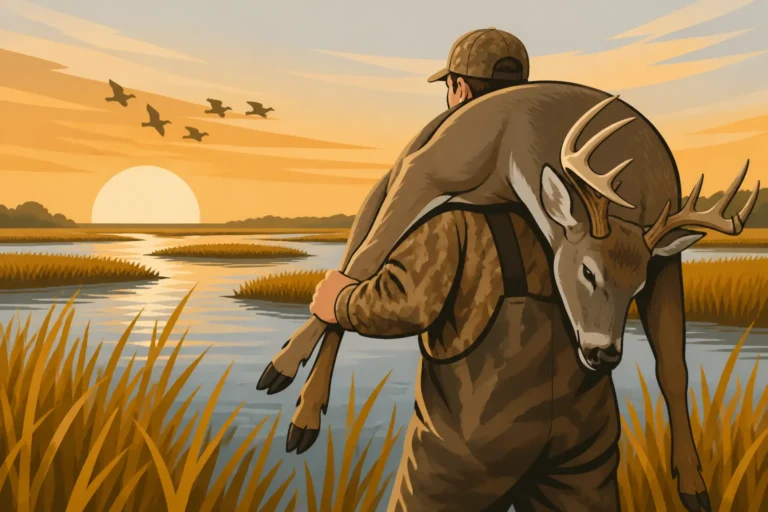
That feeling of making a good shot, seeing the deer run into the thick, seemingly impenetrable marsh grass, and then realizing daylight is fading fast? It's enough to make any hunter's stomach drop. Losing an animal is every hunter's worst nightmare, and in the unique, challenging terrain of a Maryland tidal marsh, that fear is magnified tenfold when darkness descends. This comprehensive guide is here to walk you through the precise, methodical steps and essential gear you’ll need to increase your chances of successfully recovering your deer when blood trailing in marsh grass after dark, turning that gut-wrenching feeling into a hard-earned recovery.
The Critical First Steps After the Shot
When you finally get that shot off on a deer in a Maryland marsh, whether it's a magnificent whitetail or a barking Sika stag, the initial moments are absolutely crucial. What you do right after the shot can make or break your chances of recovery, especially if you anticipate the trail might lead into the dark. Resist the urge to immediately run after the animal. Patience, as agonizing as it may be, is your most powerful tool.
Marking the Shot Location and Last Seen Point
The very first thing you need to do, before even thinking about taking a step, is to precisely mark where you were standing when you took the shot and the exact spot where the deer was standing. This establishes your shooting lane and the initial impact point. Once the deer dashes into the cover, try your absolute best to mark the last place you saw it. Look for a distinctive clump of phragmites, a dead tree, a marsh island, or even a specific ditch line. In a flat, often featureless marsh, this can be incredibly difficult, but do your utmost. Toss your hat, a piece of flagging tape, or even use your GPS to drop a pin.
This might seem obvious, but in the adrenaline rush, it's easy to get disoriented. Without these reference points, you're effectively looking for a needle in a haystack. If you're using a mapping app like GoHunt, immediately drop a pin at your shot location and another where you last saw the deer. These digital markers can be invaluable later, especially if you need to return to the spot in the dark or bring in help. Think of it as creating a forensic scene for your hunt, preserving every piece of initial evidence.
Waiting It Out Before Trailing
Once you've marked your initial points, it's time to wait. How long you wait depends on where you believe you hit the deer. A solid heart or lung shot often means a quick recovery, but even then, giving the animal 30-60 minutes to expire and stiffen up in a marsh can prevent it from jumping up and running further, especially if it's wounded but not dead. For a gut shot or liver shot, you're looking at a minimum of 4-6 hours, sometimes even longer, like 8-12 hours. This means, more often than not, you'll be returning in the dark or the next morning.
The "wait it out" principle is particularly vital in marsh environments. If you push a marginally wounded deer in thick cover, it can disappear into seemingly impenetrable reeds, cross deep guts, or even swim out into open water, making recovery nearly impossible. The deer's natural instinct is to hide, and a dense marsh offers countless hiding spots. Going in too soon means you might bump the deer, pushing it further into the labyrinthine marsh, potentially spoiling an otherwise recoverable animal. While waiting, use the time to gather your gear, inform others of your situation, and mentally prepare for the unique challenges that a night trail in a marsh presents.
Navigating the Unique Challenges of Marsh Trailing in the Dark
Blood trailing in any environment after dark is tough, but a Maryland tidal marsh throws a whole different set of curveballs at you. It’s not just about diminished visibility; it’s about the very nature of the terrain itself that conspires against a clean, easy recovery. Understanding these challenges beforehand can help you prepare mentally and practically.
Disappearing Blood Trails and Tidal Influence
One of the most frustrating aspects of marsh trailing is how quickly a blood trail can vanish. The soft, mucky ground often absorbs blood, making it blend in or disappear entirely. Water is another huge factor. If the deer crosses a tidal gut or if the tide begins to rise, any blood left on the ground will be washed away. This is especially true for Recovering a Deer From a Tidal Marsh. Even a strong blood trail can simply cease to exist with the incoming tide.
Furthermore, the dense vegetation itself can act as a sponge. Thick clumps of phragmites, spartina, or cattails can wipe blood off the deer's body, leaving very little, if any, on the ground beneath. You might find a few drops on the stalks, but nothing resembling the "red carpet" trail you hope for in a typical hardwood forest. Factor in rain or dew, and even fresh blood can become diluted and virtually invisible. This means you often can't rely solely on blood, forcing you to look for other, more subtle signs.
Impenetrable Cover and Disorientation
Maryland's marshes are often defined by vast expanses of tall, dense vegetation like phragmites, which can grow well over head-high. Trying to push through this in daylight is exhausting; doing it in the dark is an exercise in pure disorientation and frustration. You can quickly lose your sense of direction, even with a compass or GPS, because every direction looks the same. Where Sika Deer Bed in Phragmites shows just how thick this cover can get. Without a clear line of sight, you might walk in circles, or worse, lose track of your starting point.
The ground itself adds to the difficulty. It can be a treacherous mix of solid ground, soft mud that can suck your boots off, and hidden water-filled depressions. Stepping into a deep hole in the dark is not only startling but potentially dangerous, risking injury or soaking your gear. The uneven, mucky terrain makes walking silently or even just walking steadily incredibly hard, turning every step into a calculated risk. For hunters who are new to this kind of terrain, it can be a shock compared to hunting a typical woodland.
Wildlife and Safety Concerns
When you're out in the marsh after dark, you're not alone. The marsh is teeming with wildlife, and while most will avoid you, there are always safety considerations. Raccoons, muskrats, and even coyotes become more active at night. The biggest concern, however, often comes from other humans. If you're on public land, another hunter might also be out trailing. On private land, you need to be absolutely sure of your boundaries and communicate with any landowners.
Beyond animals and other people, the very environment poses threats. Hypothermia can become a real risk if you get wet in cold weather. Getting stuck in mud or a hidden ditch, especially if alone, can quickly turn a bad situation into a dangerous one. Insect activity, particularly mosquitoes and biting flies, can be relentless, turning an already difficult task into an unbearable one, as they often come out in force during the calmer evening hours. Always carry a comprehensive first-aid kit and communicate your plans and location to someone trustworthy before heading into the marsh after dark.
Effective Night Trailing Techniques for Marsh Grass
When the sun dips below the horizon and you're still searching for a deer in the marsh, you need to shift gears from daylight trailing. The methods you employ must account for the diminished visibility and the unique characteristics of the marsh. This is where meticulous attention to detail and a systematic approach truly pay off.
Going Slow and Low for Blood Sign
The single most important rule for blood trailing in the dark marsh is to go excruciatingly slow. You can't just stride through; you need to crawl. Get down on your hands and knees, or even on your belly, and scan the ground and the base of the vegetation with your light. What might be an invisible speck from a standing position can become a discernible drop of blood when viewed from a few inches away. This is where a good headlamp, preferably with a red light option to preserve night vision (though white light is better for finding blood), comes into play. You’re looking for any disruption, any change in color or texture.
Don't just look for bright red arterial blood. Look for dark, clotted blood indicating a liver hit, or foamy, pink-tinged blood from a lung shot. Remember that soft mud or standing water can make blood look different. Sometimes, you won't see actual drops of blood, but a smear on a reed, a scraped piece of mud, or even a faint discoloration that hints at the animal's path. Use flagging tape to mark every single sign you find, no matter how small. This creates a breadcrumb trail that helps you stay on track and allows you to re-evaluate if you lose the trail. Think of yourself as a detective, piecing together the smallest clues.
Leveraging Technology and Teamwork
In the vast, disorienting expanse of a marsh, technology can be your best friend. A reliable GPS or a mapping app like GoHunt is non-negotiable. Use it to mark your starting point, every significant blood find, and the direction of travel. This allows you to backtrack efficiently if you lose the trail and helps you maintain a straight line even when visibility is zero. Many hunters find it useful to create a grid search pattern on their GoHunt app, especially if they lose the main blood trail. This systematic approach ensures you cover ground thoroughly rather than just wandering aimlessly.
If possible, bring a team. More eyes and more lights dramatically increase your chances of finding blood and other signs. Assign specific roles: one person on the "blood line" looking for drops, another slightly ahead, sweeping for larger signs like disturbed vegetation or tracks, and another behind, marking the trail. Work in a line, slowly sweeping the area. With multiple people, you can cover a wider swath and maintain better situational awareness. Just be mindful of noise and communication, using low voices or hand signals to avoid spooking any other wildlife or disturbing nearby residences. For hunters venturing into the marsh, remember that Wading Into a Dorchester Marsh Before Daylight is often easier with a companion.
Looking Beyond the Blood Trail
In marsh grass, especially after dark, relying solely on blood is often a recipe for failure. You need to expand your search to other indicators of the deer's passage. Look for disturbed vegetation: broken reeds, bent-over grass, or scuff marks where the deer pushed through. If the ground is muddy, look for tracks. Even faint, smeared tracks can give you a direction of travel. Pay close attention to any changes in the marsh itself—a subtle depression in the grass where a deer might have stopped, or a path that seems just slightly more cleared.
Sometimes, you might not find blood on the ground at all, but rather on the stalks of marsh grass at deer height. This is particularly common if the deer has a high wound. Take your time to methodically scan the side of the vegetation. Also, consider the deer's likely behavior. A wounded deer will often seek the thickest cover available, or try to get to water. If you're on a point or an island, it might try to swim to another section of marsh, which can make Hunting Sika Deer in Maryland's Tidal Marshes even more challenging. Thinking like the deer, anticipating its movements, can help you predict where it might have gone, even without a visible blood trail.
Essential Equipment for Marsh Blood Trailing at Night
Successful night trailing in a Maryland marsh isn't just about technique; it's heavily dependent on having the right gear. Going unprepared can quickly turn a challenging situation into a dangerous one. Investing in quality equipment specifically for this scenario is a wise decision for any serious marsh hunter.
Lighting and Visibility Tools
Your most critical piece of equipment will be your light source. Don't rely on a single, flimsy flashlight. You need a powerful, reliable headlamp with fresh, spare batteries. Many hunters prefer headlamps that offer both white and red light settings. While red light helps preserve your night vision and is less disruptive to wildlife, white light is generally more effective for identifying blood sign. Some specialized blood-trailing lights exist, often using specific wavelengths (though their effectiveness is debated by some, and real blood still appears best under bright white light). Carry a backup handheld flashlight as well, just in case your headlamp fails or you need to illuminate a different angle.
Beyond your primary light, consider carrying a small, high-powered spotlight if you have a team. This can be useful for sweeping larger areas or identifying landmarks. For marking your trail, flagging tape is essential. Use bright, visible colors like orange or pink. Don't be stingy with it; mark every blood spot, every change in direction, every piece of evidence. Some hunters even carry reflective tacks that can be easily seen with a flashlight beam. These tools ensure that even if you lose the trail, you can retrace your steps or guide others to your last known point.
| Item | Primary Use | Key Features | Tips for Marsh Trailing |
|---|---|---|---|
| Headlamp | Hands-free illumination | High lumens, long battery life, red light option | Always carry spare batteries; use red light for navigation, white for blood |
| Backup Flashlight | Secondary light source, focused beam | Durable, waterproof, good beam distance | Keep easily accessible; good for tight spots or deep cover |
| Flagging Tape | Marking trail, blood spots, direction | Bright colors (orange, pink), durable, weather-resistant | Mark every single sign, even small ones; use consistently |
| GPS/Mapping App | Navigation, marking waypoints | Offline maps, customizable pins, track recording | Mark shot location, last seen, blood finds, and grid patterns |
| Chest Waders | Staying dry and safe in water/mud | Puncture-resistant, insulated (if cold), comfortable fit | Essential for crossing guts and soft areas; Hip Boots Versus Chest Waders in Sika Country if wading deep |
| First-Aid Kit | Addressing injuries, insect bites | Waterproof, includes bandages, antiseptic, pain relievers, bug spray | Crucial for unexpected cuts, scrapes, or allergic reactions |
| Backpack | Carrying gear, keeping items dry | Waterproof or water-resistant, comfortable, accessible pockets | Organize items for quick retrieval; use dry bags for sensitive electronics |
| Communication | Staying in touch with partners or outside help | Fully charged phone, two-way radios | Inform someone of your plans; cell service can be spotty in marshes |
Navigation and Personal Safety Gear
Beyond lights, you need reliable navigation tools. A handheld GPS or a fully charged smartphone with a mapping app like GoHunt, downloaded offline maps, and a portable charging bank are crucial. These tools allow you to track your path, mark critical points like the shot location or the last blood, and most importantly, find your way back out of a labyrinthine marsh in the dark. A traditional compass and a physical map of the area are also excellent backups, especially if electronics fail.
Personal safety in the marsh, particularly at night, cannot be overstated. You absolutely need appropriate footwear and clothing. Chest waders are almost a must for anyone venturing into a Maryland marsh. Even if you think you’ll stick to dry ground, the marsh is unpredictable, and you'll likely encounter standing water, soft mud, or deep guts. Boating Into a Sika Marsh at Low Tide might give you some insight into how varied the terrain can be. Layer your clothing to protect against cold, wet conditions. Carry a small, waterproof first-aid kit with essentials for cuts, scrapes, and particularly, insect bites, as mosquitoes and greenheads are relentless after dark in these areas. Don't forget bug spray – lots of it. A knife, fire starter, and a small amount of emergency food and water are also good additions to your pack, just in case you get truly lost or stuck.
Specialized Aids and Communication
Some hunters swear by certain specialized aids for blood trailing. Hydrogen peroxide, when sprayed on faint blood, can cause it to fizz, making it more visible. While not always effective in very dilute or old blood, it can sometimes reveal an otherwise invisible trail. UV lights are also sometimes suggested, but real blood does not typically fluoresce under UV light; rather, it's often cleaning agents or other substances that react. A better bet is usually a powerful, bright white light.
Finally, communication is key. A fully charged cell phone is a given, but be aware that marsh areas often have spotty service. Consider carrying a pair of two-way radios if you’re trailing with a partner or have someone waiting back at camp. Always let someone outside of your hunting party know where you are going, what your plans are, and when you expect to return. This way, if something goes wrong, help knows where to look. This simple step is perhaps the most important safety measure you can take when embarking on a challenging night trail in the marsh.
Disclaimer
Hunting carries inherent risks, and conditions in Maryland's marshes can be particularly challenging and dangerous. This guide offers general advice for blood trailing and is not a substitute for proper training, experience, or professional guidance. Always prioritize safety, adhere to all local and state hunting regulations, and be prepared for emergencies. The author and publisher are not responsible for any accidents, injuries, or losses incurred while following these recommendations.