What to Do After Drawing a Maryland Bear Permit
Drawing a Maryland bear permit is like hitting the jackpot for many hunters – a moment of pure excitement mixed with a healthy dose of "now what?!" It's easy to feel overwhelmed, knowing you've secured a coveted tag for one of the toughest hunts in the state, often in rugged mountain terrain with a very limited season. This comprehensive guide will walk you through the essential steps, strategies, and preparations you need to turn that exciting draw into a successful and memorable Maryland bear hunt.
Understanding Your Permit and the Bear Season
The initial euphoria of drawing a Maryland bear permit can quickly give way to a flurry of questions. It's not just about having the tag; it's about understanding the specific parameters that come with it and how they dictate your hunting approach. Maryland's bear season is unique, limited, and demands a strategic mindset from the get-go.
Deciphering Your Permit Details
First things first, take a close look at that permit. It's more than just a piece of paper; it's your golden ticket and it holds crucial information. You'll have a confirmation number, which is essential for any official inquiries or if you need to register your bear. More importantly, your permit will specify the exact dates for your hunt. Maryland's bear season is notoriously short, typically only running for six days, usually in late October. This tight window means you don't have the luxury of procrastinating; every day counts, and planning needs to be precise.
While the primary bear hunting areas are concentrated in Garrett and Allegany counties, it's worth noting that in years past, secondary lottery permits have sometimes been issued for parts of Washington or Frederick counties if harvest quotas in the primary zone aren't met. However, for most hunters, you'll be focusing on the dense, mountainous regions of Western Maryland. The number of permits issued each year is relatively small, typically around 800-1,000 for a population that, while growing, is still carefully managed. This scarcity makes your permit incredibly valuable and underscores the importance of maximizing your opportunity. Don't just file it away; study it and commit the dates to memory.
Maryland's Bear Season Structure
Maryland’s black bear season is designed to be short, intensive, and highly managed to maintain a healthy and sustainable bear population. Unlike deer seasons that span months, you're looking at a mere six days. This isn't a hunt where you can casually scout a few times and then hit the woods; it requires a focused, almost military-like precision in your planning. The season dates are usually set when bears are actively foraging, often coinciding with peak mast crop production like acorns, making them more predictable in their movements.
This short window means that hunters often face a concentrated effort, and competition for prime spots, especially on public lands, can be intense, though not as overwhelming as opening day of firearms season for deer. You'll encounter other hunters, but the vastness of places like Savage River State Forest or Green Ridge State Forest allows for plenty of space if you're willing to walk a bit deeper. The state's management aims for a specific harvest quota, and once that's met, the season can sometimes close early. This adds another layer of urgency and highlights why your preparation needs to be thorough. You can learn more about Maryland's Black Bear Lottery and the process of securing one of these permits, but once you have it, the real work begins. Understanding that you have a fixed, limited time frame is the first psychological hurdle to clear.
Pre-Season Scouting and Habitat Focus
Once you've got that permit in hand and the dates locked into your calendar, the real fun (and hard work) of preparing for your hunt begins. Maryland's Western Mountains are vast and rugged, and finding a bear isn't about luck; it's about understanding their habitat and behavior. Pre-season scouting, both from your desk and with boots on the ground, is absolutely critical.
Pinpointing Productive Bear Habitat
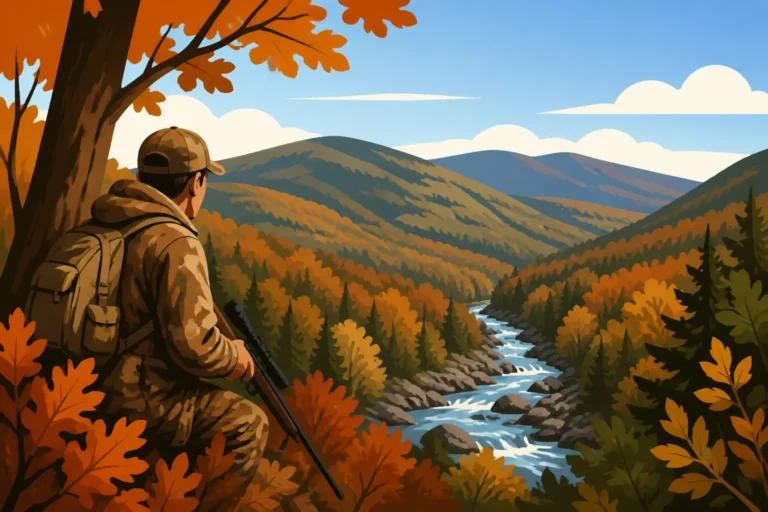
Black bears in Western Maryland are creatures of habit, largely driven by food and security. In the fall, their primary objective is to pack on calories for winter hibernation, making food sources your biggest clue. You'll want to focus heavily on areas rich in hard mast, especially oak flats loaded with acorns. Beech nuts, wild cherries, and various berries, if still available, are also high on their list. Beyond food, bears need thick cover for bedding and escape, as well as reliable water sources. Think dense laurel thickets, rhododendron patches, and expansive evergreen stands, particularly in the deep hollows and along steep ridges.
Western Maryland’s topography is a bear hunter's dream and challenge. Bears use the contours of the land just like deer do, often traveling along benches and saddles that connect feeding areas to bedding cover. Look for drainages, creek bottoms, and north-facing slopes that offer cooler temperatures and denser vegetation. Areas around recent timber cuts can also be productive, as they often create new browse and berry production, attracting bears. Remember that while bears are large, they can be incredibly elusive, moving silently through dense woods. Understanding their typical travel patterns and bedding preferences is key to setting up successfully. For a deeper dive into the environment, consider checking out articles like Hunting Maryland's Western Mountain Forests.
Leveraging Technology for Scouting
In today's hunting world, technology isn't just a convenience; it's an indispensable tool for bear hunting. Before you ever set foot in the woods, spend significant time e-scouting using mapping applications like GoHunt. This is where you can truly gain an advantage, identifying potential hotspots from the comfort of your home.
Start by poring over aerial photos and topographical maps. Look for those dark green patches indicating dense cover, identify oak ridges, and pinpoint potential water sources. Use the terrain analysis features to find saddles, benches, and funnels where bears are likely to travel. GoHunt offers various layers that can help you distinguish between public and private land, identify old logging roads or trails that bears might use, and even highlight different timber types. For instance, finding a stand of mature oaks on a topo map that shows a steep, north-facing slope leading to a laurel thicket is a prime candidate for a bear sign investigation. These tools allow you to develop a strategic plan, marking potential stand locations, escape routes for game, and even challenging retrieval paths long before your season even begins. This pre-visualization is crucial for maximizing your limited time during the actual hunt.
Boots-on-the-Ground Reconnaissance
E-scouting only gets you so far; there's no substitute for getting your boots dirty. Once you've identified promising areas on your maps, it's time for real-world reconnaissance. This is where you'll confirm your e-scouting hunches and find fresh, tangible evidence of bear activity. Look for classic bear sign: overturned rocks and logs where they've dug for grubs, claw marks on trees where they've climbed or rubbed, and, most tellingly, scat.
Learning to differentiate fresh scat from old can be crucial. Fresh scat will often still be moist, dark, and may even contain identifiable food items like berry seeds or insect parts. Old scat will be dry, faded, and crumbly. Also, keep an eye out for tracks in muddy areas near water sources or along old logging roads. A bear's track is distinctive, often showing five toes and a prominent heel pad. When you find these signs, don't just note them; try to piece together the narrative. Where were they coming from? Where were they going? What were they eating? This is also a good time to practice stealth and scent control, even though it's pre-season. You don't want to alert a potential bear to your presence weeks before the hunt. For tips on what to look for, exploring resources on Scouting Bear Sign in Garrett County can provide excellent visual and descriptive aids. This ground-level intel is what truly brings your permit to life and helps you hone in on where to focus your efforts when opening day arrives.
Essential Gear and Preparation
Successfully hunting a black bear in Maryland isn't just about finding the animal; it's about being prepared for the encounter and, perhaps more importantly, for the challenging recovery that often follows. Western Maryland's rugged terrain can be unforgiving, and having the right gear, and knowing how to use it, is paramount.
Weapon Choices and Practice
Maryland offers flexibility in weapon choice for bear season, allowing archery equipment, firearms, and muzzleloaders. Many hunters opt for a firearm due to the dense cover and the potential for longer shots in certain clear-cuts or across hollows. If you choose a rifle, a robust centerfire caliber is highly recommended. Something in the .30-06, .308, .270, or even a .300 Win Mag range is ideal, paired with heavy, well-constructed bullets designed for deep penetration and expansion. Bears are tough animals, and a clean, quick kill is paramount for ethical hunting and easier recovery. For those interested in Maryland's Legal Weapons by County, it's always wise to double-check local regulations.
Regardless of your chosen weapon, practice is non-negotiable. Spend ample time at the range, ensuring you're proficient and confident with your setup. Practice shooting from various positions – standing, kneeling, and even simulating off-hand shots you might encounter in the woods. Pay close attention to shot placement, aiming for the bear's vitals (lungs and heart). This isn't a target practice for small game; it's about putting down a powerful animal quickly and humanely. A bullet that performs well on deer might not be ideal for a bear, so research bullet construction carefully.
Packing for the Backcountry
Bear hunting often means venturing deep into the backcountry, far from easy road access. This means your pack list needs to be comprehensive and carefully considered. A sturdy, comfortable backpack is essential, one capable of carrying not only your day hunt essentials but also potentially a significant portion of a bear's meat if you choose to quarter it in the field.
Bear Hunting Gear Checklist
| Category | Essential Items | Purpose |
|---|---|---|
| Navigation | GPS device with extra batteries, paper map, compass, phone with mapping app (e.g., GoHunt) | Crucial for staying oriented in unfamiliar, dense terrain. GoHunt is fantastic for marking locations. |
| Safety | First-aid kit, bear spray, whistle, fire starter, headlamp/flashlight with extra batteries | For emergencies, signaling, and navigating in low light or after dark tracking. |
| Hunting | Weapon (rifle/bow/muzzleloader), ammunition/arrows, binoculars, rangefinder, game calls (optional) | Essential for the hunt itself and accurately judging distances. |
| Recovery | Game bags, sharp knife (and sharpener), bone saw, rubber gloves, drag rope/game cart (if terrain allows) | For field dressing, keeping meat clean, and difficult extraction. |
| Personal | Water (hydration pack), high-energy snacks, appropriate layers of clothing, sturdy hiking boots, rain gear | Sustenance, protection from elements, comfort for long days on the move. |
| Communication | Satellite messenger/two-way radio (for remote areas), fully charged phone | Critical for communication where cell service is spotty, especially when alone. |
Don't forget a quality set of game bags to protect the meat, a sharp knife for field dressing, and potentially a bone saw. Given the physical demands, water is critical; consider a hydration pack. High-energy snacks, a first-aid kit, and reliable navigation tools (GPS, map, compass, and your GoHunt app) are also non-negotiable. Weather in Western Maryland can change quickly in late October, so waterproof outer layers and appropriate insulation are vital. And remember, a bear often means a difficult, physically taxing recovery, so pack gear that supports that effort. Thinking about how you’ll get a bear out of the woods, especially if you're in an area like Savage River State Forest, should be part of your packing strategy – it's truly a feat of endurance as highlighted in articles like Packing a Bear Out of Savage River State Forest.
Safety Considerations
Hunting bears, especially in rugged terrain, comes with inherent risks. Always prioritize safety. One of the most important rules is to always notify someone of your hunting plan – where you're going, your intended route, and when you expect to return. Cell service can be spotty in the mountains, so a satellite messenger or two-way radio might be a worthwhile investment if you're venturing deep.
In Maryland, blaze orange requirements are critical during firearms seasons. While stalking, you'll need to wear a minimum of 250 square inches of solid fluorescent orange on your head and upper body, visible from all sides. This is for your safety, ensuring other hunters can easily spot you. Check out Maryland Blaze Orange Requirements for specific details. While bear attacks are rare, carrying bear spray, knowing how to use it, and hunting with a partner are sensible precautions, particularly if you're alone or venturing into very remote areas. Be aware of your surroundings, scan for other hunters, and always positively identify your target before taking a shot.
During the Hunt: Strategy and Execution
You’ve drawn the permit, you’ve scouted, you’ve prepared your gear. Now, it's game time. The six-day Maryland bear season is short, intense, and requires a blend of patience, persistence, and strategic thinking. This isn't a casual stroll in the woods; it's a focused effort to locate and ethically harvest a black bear.
Hunting Tactics for Maryland Bears
When the season finally arrives, your pre-season work will pay off. Your hunting tactics will largely depend on the specific area you've chosen and the sign you've found. Still-hunting, a slow and deliberate method of moving through the woods, is a highly effective strategy for bears. You're essentially moving from cover to cover, scanning ahead, and pausing frequently to listen and observe. Bears have incredible senses of smell and hearing, so quiet movement and paying attention to wind direction are paramount. Always hunt into the wind to keep your scent from reaching a bear before you see it.
Another effective tactic is stand hunting over known food sources or travel corridors. If you’ve identified an active oak flat, a well-used trail connecting a bedding area to a feeding area, or even a natural funnel in the topography, setting up an ambush can be productive. Bears are often most active during the early morning and late evening hours, though they can move at any time of day, especially if pressured. Patience is key; a bear might spend hours in a bedding thicket before deciding to move. Understanding general bear behavior, such as their crepuscular activity patterns and their tendency to bed down midday, will help you decide when and where to focus your efforts. Because the season is so limited, the hunting pressure, while present, isn't constant, and bears might stick to their routines more than during, say, a longer deer season. Remember, you might find some great insights on Still-Hunting Western Maryland Mountain Timber as you formulate your approach.
The Ethical Shot and Tracking
The moment of truth can arrive suddenly. When a bear presents itself, take a deep breath and ensure you have an ethical shot. For bears, this typically means a shot to the vitals – the lung-heart area – which offers the best chance for a quick, humane kill. Avoid head-on or rear-end shots. Wait for the bear to present its broadside or quartering-away profile. Pay close attention to shot placement, aiming carefully to avoid hitting the shoulder bone.
After the shot, resist the urge to immediately rush in. Bears are incredibly tough animals, and even a well-placed shot might not drop them instantly. Give the bear time – at least 30 minutes to an hour, sometimes longer – to expire. This reduces the risk of pushing a wounded animal deeper into dense cover, making recovery incredibly difficult and potentially dangerous. Once you begin tracking, look for blood, broken branches, and disturbed leaves. Bear blood can often be dark and sometimes sparse. If you lose the trail, back out and reassess. Having multiple sets of eyes can be invaluable. A good headlamp or flashlight is essential for after-dark tracking, as darkness can fall quickly in the mountains, and recovery efforts often extend past legal shooting hours. It’s a challenging aspect of the hunt that demands respect and thoroughness.
Field Dressing and Recovery
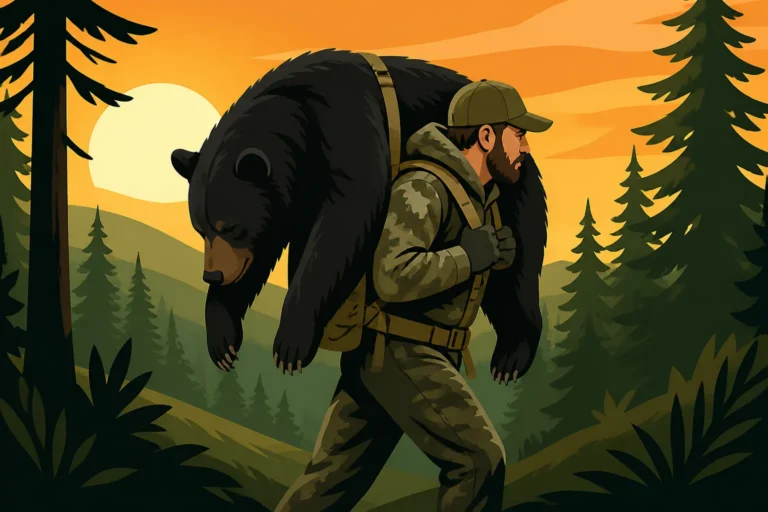
Recovering a black bear, especially a large one in rugged Western Maryland terrain, is arguably the most physically demanding part of the hunt. Bears are heavy, often exceeding 200 pounds, and sometimes much more. Getting one out of a steep hollow or a dense thicket can be a monumental task.
You have a couple of options: you can attempt to drag the entire bear out, or you can field-dress and quarter it in place. Dragging a whole bear, even with multiple partners and a game cart (if the terrain allows), is exhausting work. Often, quartering the bear in the field is the more practical approach, especially in remote areas or steep country. This involves skinning and butchering the animal into manageable pieces (the four quarters, backstraps, tenderloins, and head/hide if you plan to keep them). Game bags are essential for keeping the meat clean and protecting it from flies and debris. As soon as possible, the meat needs to be cooled down to prevent spoilage, which is another reason why quartering is often preferred.
This is where having a team of dedicated hunting partners makes a huge difference. Distributing the weight among several people, even if it means making multiple trips, is far more efficient and safer than trying to muscle a whole bear out alone. Navigating the steep slopes, dense undergrowth, and rocky terrain with heavy loads demands caution and teamwork. Articles like Packing a Bear Out of Savage River State Forest vividly illustrate the sheer effort involved in this final, crucial stage of the hunt. Remember to register your bear within the deadline using the COMPASS portal or phone system once you've successfully recovered it.
Disclaimer
Always consult the Maryland Department of Natural Resources (DNR) official hunting regulations for the most current and accurate information regarding season dates, bag limits, licensing, and any specific rules or restrictions before planning and executing your hunt. Hunting regulations can change annually, and it is the hunter's responsibility to be fully informed and compliant.