Hunting Woodcock in Maryland Alder Bottoms
For many seasoned upland hunters in Maryland, the pursuit of woodcock can feel like chasing a ghost. These quirky, migratory birds inhabit some of the densest, most unforgiving cover, making them notoriously challenging to locate, flush, and harvest. This comprehensive guide aims to peel back the layers of mystery surrounding woodcock hunting in Maryland's iconic alder bottoms, arming you with the knowledge, strategies, and insights needed to confidently and successfully pursue these elusive migratory marvels.
Understanding Maryland's Woodcock and Their Preferred Habitat
Woodcock, often affectionately called "timberdoodles" or "bogsuckers," are truly unique game birds. While they might not be as celebrated as pheasants or grouse, they offer an exciting, fast-paced challenge that can quickly become an addiction for those who embrace the thick stuff.
Woodcock Characteristics and Behavior
American woodcock are fascinating creatures, recognized immediately by their disproportionately long, sensitive bills, large eyes set high on their heads, and a distinct lack of a discernible neck. Their camouflage is exceptional, a mottled tapestry of browns, blacks, and grays that blends seamlessly with the leaf litter of the forest floor. They primarily feed on earthworms, which they extract from soft, moist soil by probing with their flexible bill tips, often leaving tell-tale clusters of tiny holes in the ground.
During the day, woodcock are incredibly secretive, hunkering down in dense cover. It's only at dusk and dawn, or when flushed, that their unique flight patterns become evident. They erupt from cover with a characteristic whistling sound from their wings, flying a quick, erratic, corkscrew pattern before leveling off and disappearing back into the thicket almost as quickly as they appeared. Their spring mating displays, known as the "sky dance," are legendary, involving a distinct "peenting" call on the ground followed by a spiraling ascent into the twilight sky and a rapid, chirping descent. Understanding these behavioral quirks is key to anticipating their movements and how they'll react when you’re on the hunt.
Why Alder Bottoms Are Key Habitat
If you want to find woodcock in Maryland, you need to understand one thing: they are dirt-eaters. More specifically, they are earthworm eaters, and earthworms thrive in moist, rich soil. This is precisely why alder bottoms, as well as young, regenerating timber, shrubby wetlands, and moist sapling stands, are absolutely critical habitats.
Alder bottoms are essentially wet, dense thickets dominated by alder shrubs, often found along stream banks, in low-lying areas, or near beaver ponds. These areas typically have soft, damp soil that's perfect for woodcock to probe for their primary food source. The dense overhead canopy and tangled undergrowth provide excellent protection from avian predators like hawks and owls, as well as ground-based threats. Look for areas with a mix of cover types—some open patches, but primarily dense, young growth. The key is that sweet spot of moist soil and protective cover. Many of Maryland's small game species, including woodcock, find sanctuary and food in these transitional habitats.
Seasonal Movements and Migration Patterns
Woodcock are migratory birds, and understanding their comings and goings is paramount to successful hunting in Maryland. Generally, Maryland serves as both a breeding ground and a critical stopover point for woodcock migrating between their northern breeding grounds and southern wintering areas.
The first flights of woodcock, often referred to as "resident birds," can be found in Maryland as early as the opening of the Maryland Small Game Season Dates and Daily Limits. As autumn progresses and cold fronts sweep down from the north, "flight birds" begin to arrive, pushing through the state in waves. These migratory birds bolster the local populations and can offer some of the best hunting opportunities, especially after a fresh cold snap. The peak of the migration usually occurs from late October through mid-November, making this a prime window for targeting these birds. Some woodcock will even winter in Maryland, particularly in the milder climes of the Eastern Shore and Southern Maryland, if food sources remain accessible and temperatures don't plunge too severely. Keep an eye on weather patterns; a prolonged freeze can push birds further south quickly, while mild spells can keep them around longer. This timing is crucial for When Woodcock Move Through Maryland.
Essential Gear and Preparations for Alder Bottom Hunting
Hunting woodcock in alder bottoms isn't like strolling through an open quail field. It demands specific gear and a mindset ready for a challenge. Being prepared will make your hunt safer, more comfortable, and ultimately, more successful.
Shotgun and Ammunition Choices
When it comes to shotguns for woodcock, fast handling is the name of the game. You'll be presented with quick, close-range shots in extremely dense cover. As such, lighter gauges like a 20-gauge or even a 28-gauge are often preferred over a heavier 12-gauge. Their lighter weight makes them easier to swing through thick brush, and their reduced recoil is appreciated when taking multiple quick shots.
Choke selection is also critical. Forget tight chokes; you'll want something very open. Skeet or Improved Cylinder chokes are ideal, allowing for a wider pattern at the close distances you'll encounter. Some hunters even run two Skeet chokes in a double gun. As for ammunition, smaller shot sizes like 7 ½ or 8 are perfectly adequate for these relatively small birds. They provide a dense pattern that helps ensure a clean kill without over-penetrating. Given the quick flushing nature of woodcock, you'll want shells that cycle reliably and quickly if you're using a semi-automatic or pump.
Clothing and Footwear for Wet Cover
Maryland's alder bottoms, by definition, are wet. You'll be slogging through mud, standing water, and negotiating tangled briars and thorns. Proper clothing isn't just about comfort; it's about protection.
Start with briar-proof pants or chaps. Brands like Filson, Orvis, or even cheaper options with tough facings are non-negotiable. Without them, your legs will be shredded by the end of the day. Layering is important underneath, as you'll be exerting yourself but the weather can be chilly. For footwear, waterproof is key. Hip boots are an excellent choice for navigating shallow ditches and mucky areas, keeping you dry far above the ankle. If you anticipate truly deep water, chest waders might be necessary, though they can be cumbersome in dense brush. Look for options with good traction to prevent slips on slick mud and fallen logs.
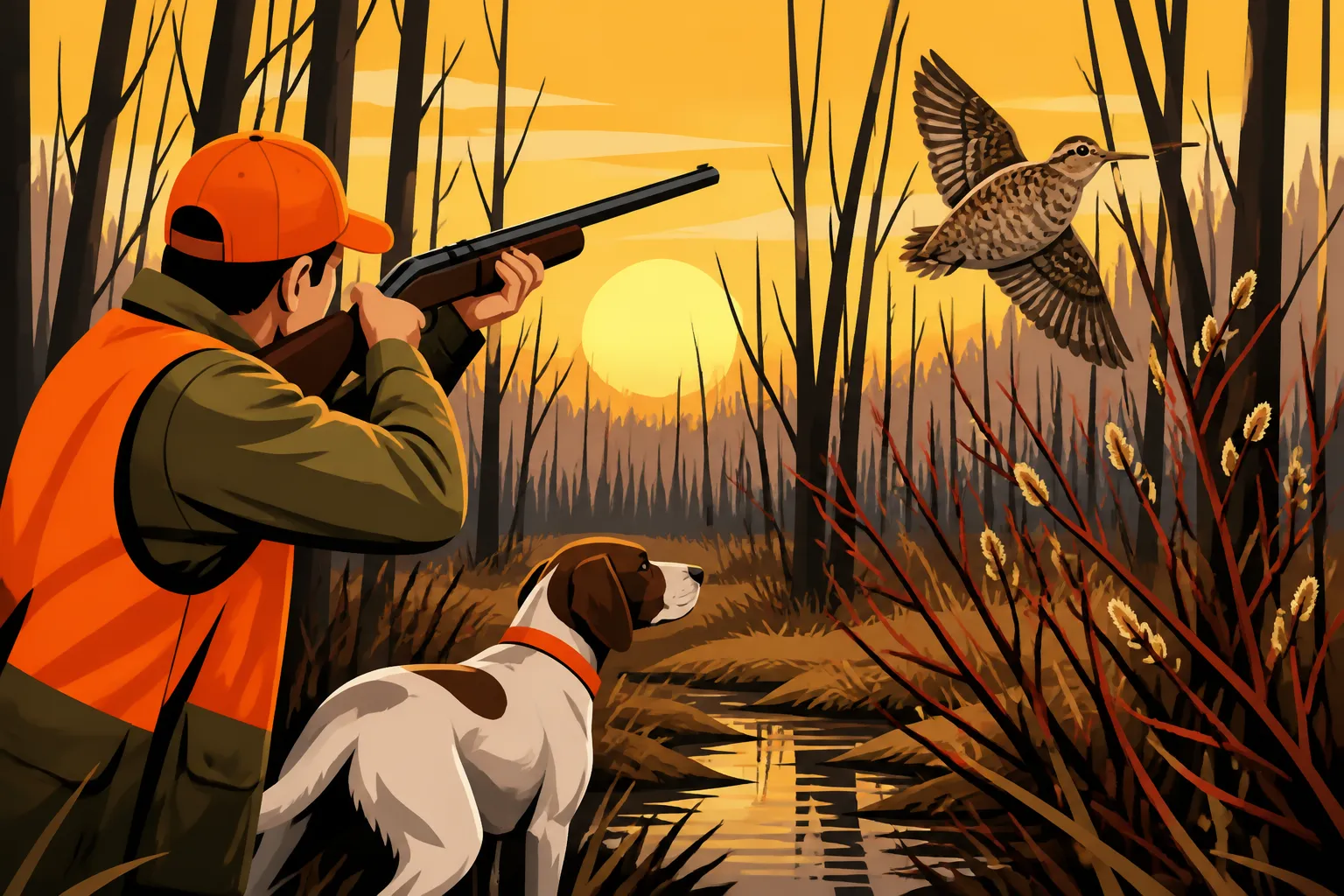
Safety orange is not just a recommendation; it's a requirement in Maryland during many hunting seasons. Ensure you have plenty of blaze orange visible, ideally a vest and a hat. This is especially crucial when hunting with partners or when other hunters might be in the vicinity, which can sometimes be the case on Maryland's Wildlife Management Areas during peak small game season.
Training Your Bird Dog for Woodcock
While you can certainly hunt woodcock without a dog, a well-trained bird dog elevates the experience to another level. Woodcock hold incredibly tight, often letting a hunter walk right past them without flushing. A dog's keen nose can pinpoint these hidden birds and effectively flush them.
Flushers, such as Labrador Retrievers or Springer Spaniels, excel at pushing birds from the dense cover. Pointers like Brittanys, English Setters, or German Shorthaired Pointers can also be fantastic, but they need to be trained to adjust their range for the tight cover and often tight-holding birds. The biggest challenge with woodcock is their relatively light scent, which can be tricky for dogs to detect, especially in wet conditions or when the birds are frozen to the ground. Training for steadiness to flush and retrieve is paramount. You don't want a dog that chases every flushed bird into oblivion, especially in thick cover where a downed bird can be difficult to find. Tools like GPS collars can be invaluable in dense environments, helping you keep tabs on your dog's location. Modern mapping applications, like the ones offered by GoHunt, can integrate with these GPS devices, showing your dog's movements on a detailed map, which is a game-changer when working through acres of tangled alder.
Strategies for Flushing and Shooting Woodcock in Thick Cover
The real art of woodcock hunting lies in your approach to the cover and your readiness for the explosive flush. It's not about covering miles; it's about thoroughly working small, promising areas.
Working the Cover Effectively
Patience and methodical movement are your greatest assets when hunting alder bottoms. Resist the urge to crash through the brush. Instead, move slowly, taking deliberate steps, pausing frequently. Woodcock are masters of camouflage and holding tight; a sudden stop from you can often be enough to make them nervous and flush. If you're hunting with a dog, pay close attention to their body language. A dog working a scent cone will often become more intense, slowing down, or exhibiting a "head-high" search pattern. Follow your dog's lead.
Work areas systematically. Imagine the cover in grids or strips and ensure you cover every promising patch of moist, dense growth. Don't be afraid to circle back through areas, as woodcock often run short distances after an initial disturbance before holding tight again. When traversing a likely spot, move into the wind if possible; this helps carry your scent and your dog's scent into the cover, increasing the chances of a bird holding or a dog picking up a scent. Remember, these birds are not going to be out in the open like a pheasant in a cornfield. You have to go to them.
Reading Woodcock Sign
Before you even step into the cover, or as you work it, keep an eye out for woodcock sign. This is particularly helpful in identifying active feeding areas or migratory stopovers. The most obvious sign is "probing holes." These are clusters of small, pencil-sized holes in the soft, moist soil, left by the woodcock's long bill as it searches for earthworms. If you find a patch of ground riddled with these holes, you're in a productive area.
Another key indicator is "chalk" or "splashes." These are small, white, calcareous droppings that stand out against the dark leaf litter. Woodcock droppings have a distinct appearance, and finding several fresh ones in an area is a strong sign that birds are actively using that spot. You might also find "dusting bowls"—small depressions in dry soil where birds have ruffled their feathers to clean themselves, though these are less common in typically wet alder bottoms. When scouting potential new spots, knowing what to look for on the ground can save you a lot of time and effort. Using tools like GoHunt to mark these areas with custom waypoints can help you remember and return to productive zones.
Handling the Flush and Quick Shots
This is where the adrenaline kicks in. A woodcock flush is typically explosive and close-range. The bird will rocket upwards, often in a corkscrew pattern, before quickly leveling out. The key is to be ready. Keep your gun mounted or nearly mounted, and be prepared to swing quickly.
The temptation might be to try and track the bird's erratic flight, but often the best strategy is to simply swing through the bird and fire as soon as you have a clear sight picture, even if it's only for a split second. Don't overthink it. Trust your instincts. Because of the dense cover, you'll often only get one, maybe two, quick shots before the bird disappears. Make sure your shots are safe—always be aware of your surroundings, your hunting partners, and where your shot is going. In dense cover, follow-through is still important, but a fast, decisive shot is often what's required. It's a challenging shot, but incredibly rewarding when you connect.
Finding and Accessing Maryland's Prime Woodcock Bottoms
Locating the best woodcock habitat in Maryland requires a bit of research, reconnaissance, and often, some good old-fashioned legwork. Both public and private lands offer opportunities, but each comes with its own considerations.
Identifying Promising Public Land Areas
Maryland boasts a decent amount of public hunting land, including state forests and Maryland's Wildlife Management Areas, that can hold woodcock. The trick is identifying the specific habitats within these larger tracts. Start your scouting with detailed topographic maps and aerial photos. Look for low-lying areas, riparian zones along streams and rivers, and sections of young, regenerating timber. Beaver activity is a huge indicator; beaver ponds often create the perfect moist, shrubby habitat that woodcock adore.
Many mapping applications, including those found on GoHunt, allow you to overlay different layers, such as soil types, wetland delineations, and recent timber cuts, all of which can help you pinpoint promising alder bottoms. Specifically, look for areas with poor drainage that tend to stay moist, creating that soft soil woodcock need. Some excellent areas might be found within state forests like Pocomoke State Forest or parts of the Chesapeake Forest Lands on the Eastern Shore, or various WMAs that have active timber management. Remember to always consult the specific regulations for public lands you plan to hunt, as some require permits or have special restrictions. Don't forget to review guides like Scouting Maryland Public Land Before Season for tips on how to effectively use these tools.
Gaining Private Land Access
While public land offers opportunities, some of the best woodcock hunting can be found on private ground, especially those parcels that have been left undisturbed or have recently undergone habitat improvements. Gaining private land access is a nuanced process that relies heavily on respect, communication, and often, a bit of persistence.
Start by identifying potential properties using aerial maps and checking county parcel data. Look for properties with the habitat features described earlier. Then, approach landowners respectfully, ideally in person and well before the season. Introduce yourself, explain what you're looking to hunt (specifically woodcock, not just "deer"), and ask if they would consider allowing access. Offer to share some of your harvest, help with light chores, or simply provide your contact information and assure them you'll be respectful of their property. Some landowners might be more open to small game hunters than deer hunters, as the impact is often perceived as lower. Always get explicit permission, and while not legally required in all cases, written permission is always a good idea in Maryland to avoid any misunderstandings. This topic is covered in detail in Do You Need Written Permission in Maryland?. Showing landowners you're responsible and appreciative can open doors to some fantastic, unpressured hunting spots.
Navigating Challenging Terrain
Once you've found your promising alder bottoms, be prepared for tough going. This isn't manicured pheasant habitat. You'll encounter dense briar thickets, tangled alder stands so thick you can barely push through, muddy ground that sucks at your boots, and potentially hidden ditches or fallen logs.
Always prioritize safety. When moving through exceptionally dense cover, it's wise to communicate constantly with your hunting partners, letting them know your location. Wear your blaze orange, as mentioned, and be mindful of where your muzzle is pointing. Carrying a small pruning saw or heavy-duty clippers can be incredibly useful for clearing shooting lanes or making a path through particularly gnarly spots. Be prepared to get wet, muddy, and scratched. A small, lightweight first-aid kit can also be a lifesaver for minor cuts and scrapes. Learning to read your terrain can help you avoid the absolute worst spots, but understand that to find woodcock, you often have to embrace the challenge of the cover. These are the places where you'll find undisturbed birds, creating truly memorable hunts.
| Key Woodcock Hunting Details in Maryland | Description |
|---|---|
| Season Dates | Generally, woodcock season runs for specific periods in the fall and winter, often split. Always check the current Maryland Hunting and Trapping Guide as dates can vary annually. |
| Daily Bag Limit | Typically 3 birds per day. |
| Possession Limit | Usually 9 birds (three times the daily bag limit). |
| Recommended Shot Size | 7 ½ or 8 shot. |
| Recommended Choke | Skeet, Improved Cylinder (IC), or Cylinder. |
| Habitat Focus | Moist, young, regenerating timber, shrubby wetlands, alder thickets, old field edges with dense cover, and areas near beaver ponds. |
| Blaze Orange Requirement | Required during specified seasons for safety. |
| HIP Registration | Hunters pursuing migratory game birds, including woodcock, must register annually with the Harvest Information Program (HIP) through the COMPASS system. |
Disclaimer
Please remember that hunting regulations, season dates, and bag limits can change annually. It is your responsibility as a hunter to consult the most current Maryland Hunting and Trapping Guide published by the Maryland Department of Natural Resources (DNR) before heading into the field. This guide provides general information and should not be considered a substitute for official regulations. Stay safe and hunt ethically.