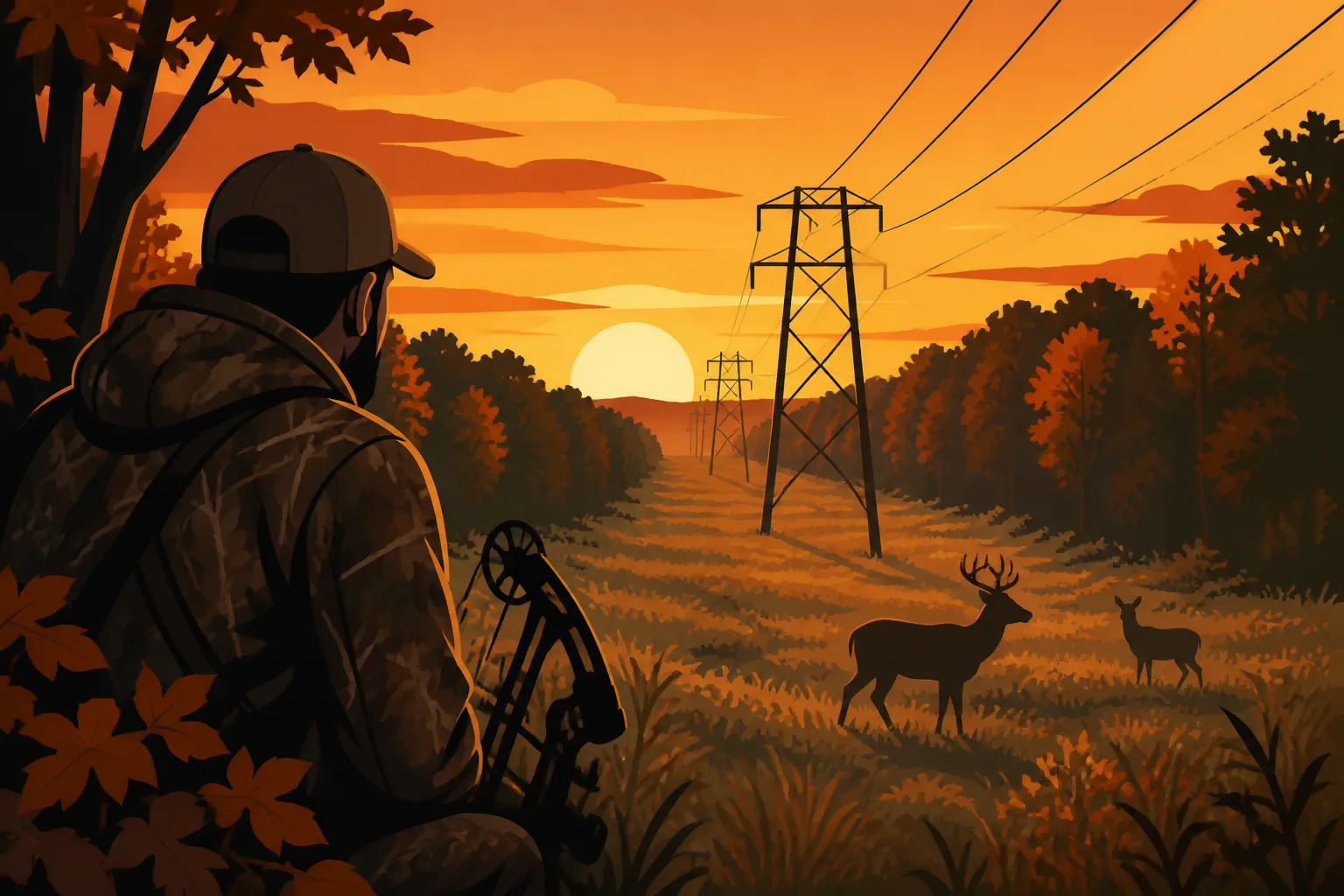
Hunting a Maryland Powerline Cut at Last Light
It’s a scenario every Maryland deer hunter knows well: that frantic rush of adrenaline as the last rays of sun disappear, and you just know deer are starting to move. Hunting powerline cuts at last light can be incredibly productive, offering those fleeting opportunities for mature bucks to step out, but it also presents unique challenges. This comprehensive guide will walk you through why these open corridors are such hotspots, how to set up effectively, and critical tactics to make the most of those final minutes of legal shooting light in Maryland.
The Unseen Appeal of Maryland's Powerline Cuts
Powerline cuts, or rights-of-way, might not look like traditional prime deer habitat at first glance. They often appear as wide, open swaths carved through dense timber, exposing bare ground or low-growing brush. But for a seasoned Maryland deer hunter, these features are goldmines, especially as the day draws to a close. Deer, particularly mature bucks, become more comfortable moving in these exposed areas under the cover of fading light, transitioning from their daytime bedding areas to evening feeding grounds.
Why Deer Gravitate Towards These Open Corridors
Think about it from a deer’s perspective. During daylight hours, they’re often tucked away in thick cover, feeling safe and secure. But as dusk approaches, their biological clock tells them it's time to feed. Powerline cuts often run directly through or along diverse habitats, creating natural highways and travel corridors that connect these bedding areas to food sources like agricultural fields, mast crops, or even suburban gardens. The vegetation within these cuts—young saplings, various bushes, and grasses—can also provide a surprising amount of browse, making them attractive pit stops for a quick bite before hitting the main buffet.
Moreover, these cuts create what we call "edge habitat." This is where two different types of habitat meet, like a dense forest bordering an open field. Edges are inherently attractive to wildlife because they offer the best of both worlds: the security of the timber and the food or visibility of the open area. A deer can browse along the edge of the powerline cut, occasionally stepping out into the open to assess the situation, then quickly melt back into the woods if spooked. This strategic advantage is precisely why you'll see so much activity there in those last moments of light.
Understanding the Unique Microclimates and Cover
The constant clearing of powerline cuts means the vegetation within them is typically younger, softer, and more palatable for deer than the mature canopy forest nearby. You’ll often find a mix of blackberry briars, sumac, honeysuckle, and young oak or pine saplings – all excellent deer forage. This diverse, early successional growth provides a smorgasbord of food sources and bedding cover right in the middle of a travel route. This is particularly true in areas where the cuts run through varied terrain, from the Western Maryland mountains to the flatter Eastern Shore farmlands. A deer might bed down in a thicket just inside the tree line, waiting for that golden hour to begin its evening commute, knowing it can snag a few mouthfuls of preferred browse right there in the cut.
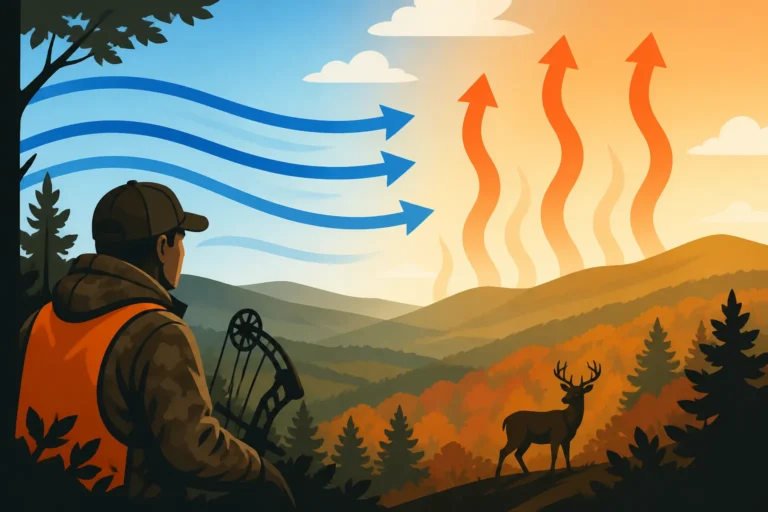
On top of that, the open nature of these corridors can sometimes create unique wind currents, making them tricky but also predictable for deer movement. Understanding how the wind shifts and funnels through these cuts is paramount. A powerline cut cutting across a ridge, for instance, might have thermals pulling scent uphill earlier in the evening, then shifting to pull it downhill as the air cools. This knowledge, combined with careful scouting, is what separates a successful last-light hunter from one who goes home empty-handed.
Mastering Your Setup: Positioning and Gear
Hunting a powerline cut at last light demands meticulous planning. It's not just about showing up; it's about strategic positioning and having the right gear to capitalize on those precious, fleeting minutes. You want to maximize your visibility while minimizing your own signature, ensuring you're ready when a deer finally makes its appearance.
Scouting and Stand Placement Imperatives
Before you even think about hanging a stand or setting up a ground blind, you need to scout, and scout hard. Start by looking at aerial photos on mapping apps like GoHunt or onX Hunt. These tools are invaluable for identifying powerline cuts and understanding the surrounding landscape. Look for cuts that connect dense bedding areas to known food sources. Pay close attention to any bends, dips, or subtle funnels within the cut itself – these are often natural pinch points where deer are more likely to cross or linger.
Once you’re on the ground, look for fresh deer sign. Are there well-worn trails entering and exiting the cut from the timber? Are there rubs or scrapes along the edges? Focus your scouting efforts on the last 50-100 yards of daylight travel for deer. Where are they likely to emerge as shooting light fades? For example, if the cut runs through a section of Maryland's Savage River State Forest, you might find deer moving from a thick oak flat down into the cut. Your stand placement should allow you to cover these primary entry and exit points. I often find myself looking for a tree with a good backdrop, something that breaks up my silhouette against the darkening sky. Remember, even though the cut is open, deer will often stick to the edges or use any available cover like clumps of evergreens or small rises within the right-of-way.
| Factor | Benefit in Powerline Cut | Challenge in Powerline Cut | Mitigation Strategy |
|---|---|---|---|
| Visibility | Long sight lines | Deer feel exposed | Hunt low light, use good cover, elevate |
| Travel Routes | Natural funnel | Predictable movement | Pre-scout, set up on active trails |
| Vegetation | Browse, bedding cover | Can obscure views | Utilize elevated stands, trim shooting lanes |
| Wind | Unpredictable swirls | Scenting deer | Play the wind, use scent control |
| Shot Recovery | Open, but can be dark | Difficult tracking | Wait longer, use good tracking lights |
When it comes to the wind, powerline cuts can be notoriously tricky. The open nature means swirling winds are common, especially on calmer evenings. Always try to set up with the prevailing wind in your favor, but be prepared for it to shift. This is where those mapping apps and a good understanding of topography come into play. Studying the contours can help you predict how air currents will flow. Your entry routes through cut corn before daylight are just as important as your exit routes – you want to get in and out undetected.
Essential Gear for Low-Light Success
Hunting at last light means visibility is at a premium, both for you and for spotting your quarry. Quality optics are non-negotiable. A good pair of binoculars, like an 8×42 or 10×42, with excellent light-gathering capabilities, will be your best friend. Even more crucial is a reliable rangefinder, allowing you to instantly confirm distances in rapidly fading light. Pre-ranging key landmarks within your shooting lanes can save precious seconds and prevent misjudgments when that buck steps out. I’ve seen too many opportunities lost because a hunter couldn't get a range fast enough in the dim light.
Beyond optics, consider your weapon. If you're bowhunting, ensure your pins are brightly lit and practice shooting in low-light conditions. For firearms hunters, a scope with a large objective lens and good light transmission is key. Most importantly, always carry a powerful headlamp or flashlight. Not just any cheap little light, but one with multiple settings and a long battery life. You’ll need it for navigating out of the woods and, crucially, for tracking. A red light option on your headlamp can also preserve your night vision while you're packing up or blood trailing. Also, don't forget your deer drag or game cart – a big buck down in the middle of a powerline cut at dark can be a long, tough haul without the right equipment.
Last-Light Tactics: Patience, Vigilance, and Precision
The final hour of daylight, often called "prime time" by hunters, is a period of heightened senses and anticipation. In a powerline cut, this feeling is amplified because you know deer are likely to move, but you also understand the challenge of making a clean shot and an efficient recovery in rapidly diminishing light.
The Art of the Waiting Game
Patience is not just a virtue in hunting; it's a strategic necessity, especially at last light in a powerline cut. Deer aren't going to march out on cue. They'll often stage just inside the timber, waiting for the shadows to lengthen and for the general commotion of the day to subside. Your job is to be still, quiet, and hyper-observant. Resist the urge to fidget or check your phone. Every subtle movement, every rustle of clothing, can alert a deer. Focus on scanning the edges of the cut, where the timber meets the open space. Often, you'll see an ear flick, a subtle shift in color, or a glimpse of a leg before the entire animal steps into view. This is where those quality binoculars truly shine.
It's also important to understand the typical Maryland shooting hours for deer. You need to know precisely when legal light ends, usually 30 minutes after sunset. Those last few minutes are when the biggest bucks often make their move, but it's also when ethical shot judgment becomes most critical. Don't let buck fever override your common sense. If you can't clearly identify the deer, its vitals, and ensure a safe backdrop, don't take the shot. Missing a deer or making a bad shot at last light significantly complicates recovery.
Maximizing Your Shooting Opportunity
When a deer finally appears, especially a mature buck, the adrenaline will spike. Take a deep breath. Use your rangefinder to confirm the distance if you haven't pre-ranged the spot. In low light, distances can be deceiving. Aim for the vitals, ensuring you have a clear, unobstructed shot. For firearms hunters, steady your rifle on a shooting stick or against your stand. For bowhunters, concentrate on your anchor points and follow through.
Consider the angle of the shot. A broadside shot is always preferred. In powerline cuts, deer might be walking directly towards or away from you, or quartering. Wait for the best ethical shot opportunity. If the deer is quartering away, for example, your aim point will be different. Practice these scenarios during the off-season so they become second nature. If the deer is moving, try to anticipate where it will pause, even for a moment, to present a shot. Sometimes a soft grunt or bleat can stop a deer for a second, but be judicious with calls at last light as you might spook an already cautious animal. You can read more about using calls in specific habitats, like grunt calls in Maryland hardwoods, to understand how deer respond.
Post-Shot Protocol at Dusk
Once you’ve taken a shot, the real work begins. If you’re confident in your shot, the absolute best thing you can do is stay put for at least 30 minutes, if not longer. Mark the exact spot where the deer was standing when you shot, and the direction it fled. This crucial information will be invaluable during tracking. Use a landmark – a distinctive tree, a rock, a power pole – anything you can clearly identify. In the open expanse of a powerline cut, everything can look the same in the dark.
While you're waiting, quietly pack up your gear. Get your powerful headlamp ready. Mentally replay the shot. Did the deer react? Did it kick, stumble, or run hard? Where did you think you hit it? This information will help you strategize your tracking efforts. You might want to grab your backpack, but don't rush to the spot immediately. Give the deer time to bed down. A wounded deer will often run a short distance and then lay down. If pressured too soon, it might get up and run much further, making recovery a nightmare. For deeper insights into tracking, you can check out resources like blood trailing in marsh grass after dark, which offers general advice applicable to any challenging terrain.
Ensuring a Successful Recovery and Safe Exit
The challenges of hunting a powerline cut at last light don't end with the shot. Recovering your game in the dark, often across varied terrain, requires preparation and a clear head. Safety, for both you and anyone assisting, is also paramount.
Planning for the Aftermath
Before you even climb into your stand, you should have a recovery plan. This includes identifying potential routes to retrieve a deer. Is the terrain flat enough for a game cart, or will you need to quarter the animal and pack it out? If you're hunting in a remote area, like parts of Green Ridge State Forest, consider who you can call for help if you need an extra set of hands. Inform someone about your hunting location and estimated return time. This is just good practice for any hunting trip, but especially when hunting alone at dusk.
If you suspect a difficult track, it's often better to back out and return in the morning with fresh eyes and more daylight. This is a tough decision to make when adrenaline is pumping, but it often leads to a higher recovery rate. A deer that is hit well will often expire quickly, but a marginal hit can lead to a long night of tracking. If you decide to track immediately, use your headlamp. Look for blood, broken twigs, or disturbed leaves. Mark the last spot of blood with toilet paper or flagging tape every few yards, especially if you lose the trail. This prevents you from getting disoriented and helps you pick up the trail again. Hunting these areas requires an intimate knowledge of not just deer movement but also how to read sign in Maryland mountain timber or other dense cover that may line the cut.
Navigating the Darkness and Terrain
Powerline cuts, while open, can still be tricky to navigate in the dark. The ground can be uneven, with hidden stumps, fallen branches, and dense thickets. Always watch your step. A powerful headlamp is your primary tool, but consider a secondary light source as a backup. Using a tracking light with a different beam pattern (e.g., a wider floodlight vs. a focused spot) can also help reveal blood trails more effectively. If you're following a faint blood trail, occasionally turn off your light and let your eyes adjust to the ambient moonlight (if any). Sometimes, a faint sheen of blood will reflect moonlight better than direct lamplight.
It's also important to remember the context of where you're hunting. If you're on public land, other hunters might be exiting as well. Wearing blaze orange, even after legal shooting hours, is a wise safety precaution when moving through the woods in the dark, especially if you're not within the legal blaze orange period. If you’re driving into the area, be mindful of where you parked your vehicle and how far you'll need to walk with your retrieved game. Some powerline cuts provide easier vehicle access than others, while others might require a long hike from the nearest forest road or trail. Utilizing the GoHunt app for navigating back to your vehicle can be a lifesaver, as it allows you to mark your parking spot and follow a precise route even without cell service.
Final Thoughts on Powerline Cuts
Hunting a Maryland powerline cut at last light is truly one of the most exciting and challenging scenarios. It demands a hunter who is patient, observant, and meticulously prepared. These open corridors, with their unique blend of cover and travel routes, consistently deliver opportunities for deer, especially those elusive mature bucks, as the day fades into night. By focusing on smart scouting, precise stand placement, the right gear, and a clear head for post-shot recovery, you can turn those final minutes of legal shooting light into unforgettable Maryland hunting memories. Remember, it's not just about the kill, but the entire experience of understanding the deer, the land, and your own capabilities under pressure.
Disclaimer
Please remember that hunting regulations and season dates can change. Always consult the latest Maryland Department of Natural Resources (DNR) hunting guide before heading afield. Safety should be your top priority on every hunt.