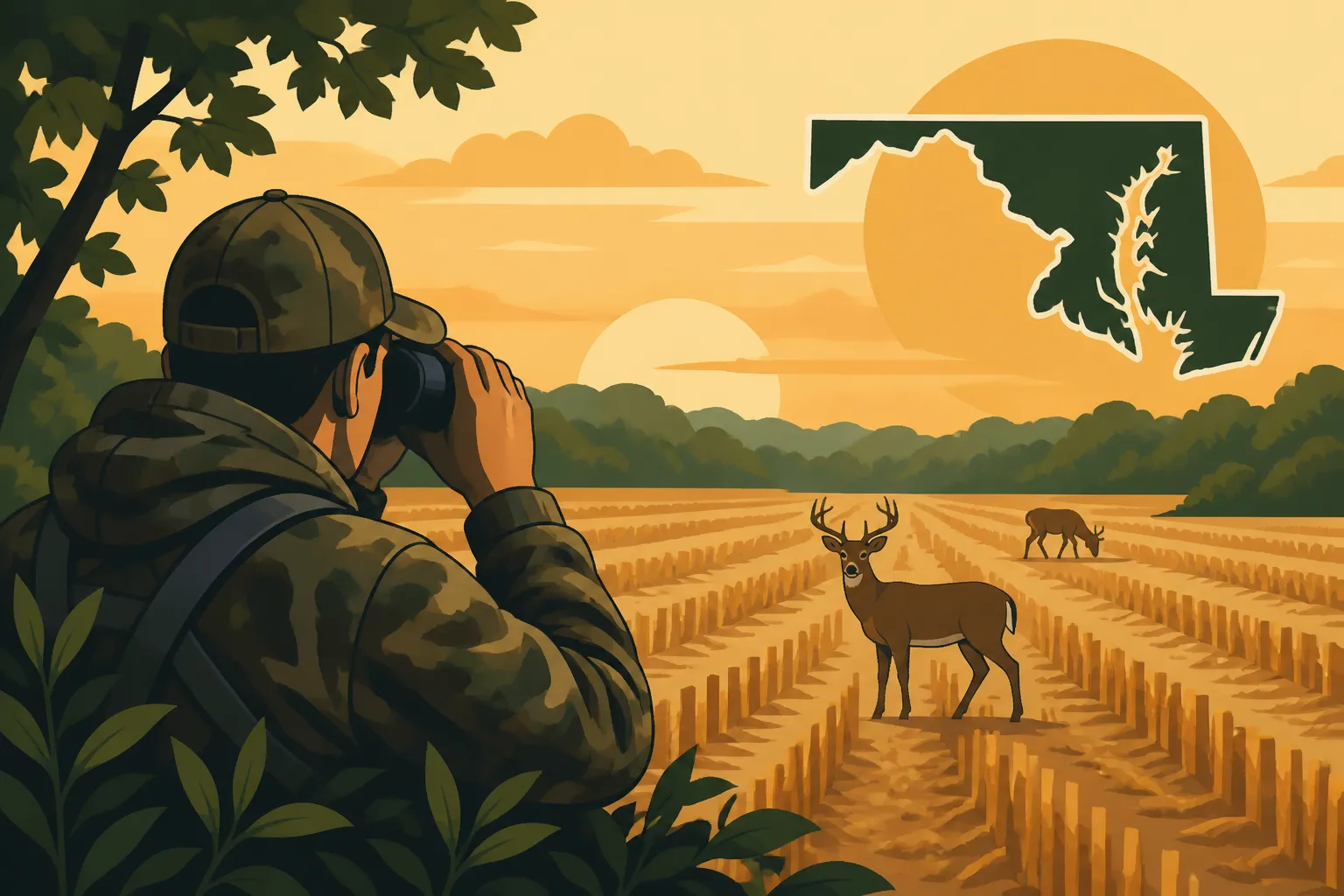
Glassing a Cut Wheat Field for Early Bucks
Few things are more frustrating for a Maryland deer hunter than the transition from summer patterns to early fall. Those big bucks you saw feasting in bean fields all summer seem to vanish overnight once the combines roll, leaving you scratching your head. This comprehensive guide will walk you through the precise art and science of glassing cut wheat fields in Maryland for those elusive early season bucks, helping you unlock their post-harvest secrets and increase your chances of success.
Understanding Early Season Buck Movement in Cut Wheat Fields
When the combines make their pass through a wheat field, it's not just the grain that's gone. The landscape completely changes, and with it, often the deer's predictable patterns. However, these fields aren't completely devoid of opportunity; in fact, they can be hotspots for early season bucks if you know what to look for and how to approach them. The key is understanding why a buck might choose to frequent such an exposed area after weeks of lush, concealing crops.
The Allure of Leftover Grain and Forage
While the primary crop is harvested, cut wheat fields are rarely picked clean. There's almost always a significant amount of residual grain left behind, scattered on the ground, which becomes an easy and attractive food source for deer, especially in the late summer and early fall. Think of it like a buffet that's just closed, but there are still plenty of tasty scraps for those willing to pick through. Bucks are opportunists, and if they can fill their bellies with minimal effort, they will.
Beyond the actual wheat kernels, the regrowth of tender young shoots of wheat or other volunteer plants can sprout up surprisingly quickly after a rain. These fresh, green sprouts offer palatable forage when other primary food sources might be starting to dry out or become less appealing. This subtle "green-up" can be a magnet, particularly during cooler evening hours when deer feel more comfortable moving out into the open. Moreover, these fields often become natural transition zones where deer will graze on whatever new growth emerges before heading into more secluded areas for bedding during the day.
Edge Cover and Security
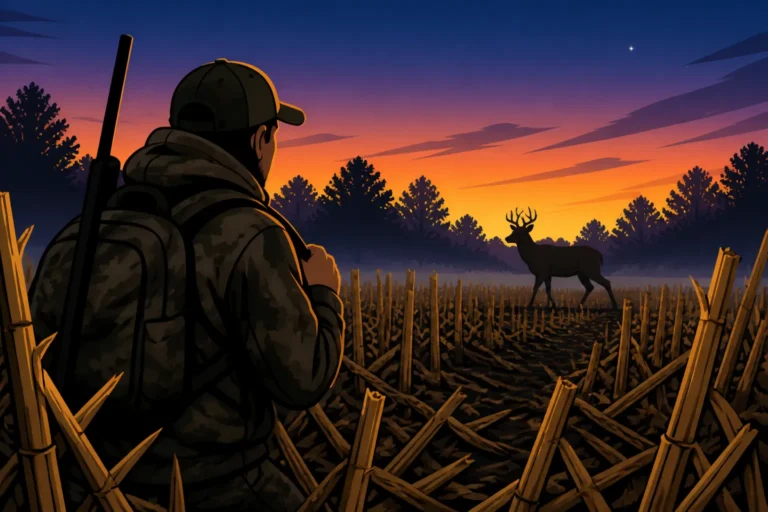
No buck, especially a mature one, is going to spend all his time in the middle of a wide-open field, no matter how good the food. The real draw of a cut wheat field often lies in its immediate surroundings – the adjacent wood lines, thickets, creek bottoms, or brushy fencerows. These areas provide the crucial security cover that bucks need to feel safe. They'll stage in this cover, often just inside the field edge, waiting for low light conditions to venture out for a quick meal.
The edges of these fields act as natural travel corridors, often connecting bedding areas to more distant food plots or water sources. Bucks will use the thick vegetation along these edges as a screen, moving along them to survey the field before committing to enter it fully. Understanding this dynamic is crucial. You're not necessarily looking for a buck in the middle of the field at high noon; you're looking for him to appear from the safety of the adjacent cover, cautiously moving onto the field to feed in the dim light of dawn or dusk. Often, these edges are also where deer will establish Scrape Lines Along a Maryland Field Edge, signaling their presence and intentions during the breeding season.
Proximity to Water Sources
Just like us, deer need water, especially when they're bulking up for the rut or dealing with warmer early season temperatures. Cut wheat fields, particularly in areas like Maryland's Eastern Shore, are often part of larger agricultural landscapes that include creeks, farm ponds, or drainage ditches. A buck that is feeding on dry grain will need to quench his thirst, and if a reliable water source is close to a cut field with leftover food, that area becomes incredibly attractive.
During the late summer and early fall, temperatures can still be quite warm in Maryland. Deer, especially bucks with growing antlers, will seek out both food and water within a relatively compact area to conserve energy. Glassing efforts should always consider the proximity of water to these cut fields. A buck might emerge from a wood line, grab a quick bite of leftover grain, and then head straight for a nearby creek or pond for a drink before retreating to his bedding area. Knowing this behavior helps you predict not just where they might appear, but also their likely travel paths, which is invaluable for setting up an ambush.
The Art of Effective Glassing for Early Season Deer
Glassing isn't just staring through binoculars; it's a systematic approach to breaking down a landscape and identifying deer, often before they even know you're there. For cut wheat fields, where deer might be subtle or only appear for short windows, effective glassing is absolutely essential. It requires patience, the right tools, and a keen understanding of when and where to look.
Timing Your Glassing Efforts Perfectly
When it comes to glassing early season bucks in cut wheat fields, timing is arguably the most critical factor. Deer are creatures of habit, largely crepuscular, meaning they are most active during the twilight hours of dawn and dusk. This holds especially true for mature bucks, who are notoriously cautious and prefer the safety of low light.
Early Morning: Getting out before legal shooting light is paramount. Position yourself well before the sun crests the horizon and begin glassing as the world slowly brightens. This allows you to catch bucks that might still be finishing their feeding from the night before or making their way back to bedding areas. The transition from darkness to light is when deer are most likely to be moving.
Late Evening: Similarly, the last hour or two before dark is prime time. Bucks will often emerge from their daytime bedding cover to feed before settling down for the night. As the sun sets and shadows lengthen, they feel more secure. This is often your best bet for catching a mature buck out in the open. Remember, in Maryland, Maryland Shooting Hours for Deer extend until legal shooting light ends, so you have a decent window.
Weather Considerations: Pay close attention to the weather. Cooler temperatures, especially after a mild front, can stimulate deer movement during the day. Overcast days, particularly with a light drizzle, can also bring deer out earlier or keep them out later, as the reduced visibility and cooler air provide additional comfort and security. Avoid glassing during strong winds or heavy rain, as deer typically hunker down, making sightings unlikely.
Essential Optics and Equipment for Success
You can't effectively glass without the right tools, and investing in quality optics is non-negotiable for serious deer hunters. This isn't just about spotting a deer; it's about identifying if it's a buck, if it's legal, and understanding its behavior from a distance.
Binoculars: Your primary tool will be a good pair of binoculars. For open fields, a magnification of 10×42 or 12×50 is generally ideal. They offer a good balance of magnification, field of view, and light-gathering capability. Brands like Maven, Vortex, and Swarovski are popular choices among hunters for their clarity and durability. A good pair of binos will allow you to systematically scan the field edges, fencerows, and even distant parts of the field without causing eye strain. Remember to use a tripod adapter if possible for extended periods of glassing – it significantly reduces fatigue and improves stability.
Spotting Scope: For truly long-range observation, especially if you're trying to judge antler points on a distant buck to ensure he meets Maryland's Three-Point Antler Restriction, a spotting scope is invaluable. A 15-45x or 20-60x scope on a sturdy tripod allows you to zoom in and assess a buck without disturbing him. This is particularly useful in wide-open agricultural areas where distances can stretch.
Tripod: Whether for binoculars or a spotting scope, a sturdy tripod is a game-changer. It eliminates shake, reduces eye fatigue, and allows you to hold your optics steady for extended periods. This is crucial for picking out subtle movements or parts of a deer obscured by grass or stubble.
Mapping Software: Modern mapping software like GoHunt can be incredibly useful before you even leave the house. You can use it to identify potential glassing points, scout terrain features, locate public versus private land boundaries, and mark potential travel routes or bedding areas adjacent to cut wheat fields. This digital reconnaissance saves valuable time and helps you pinpoint the best vantage points. You can even use GoHunt to drop pins on specific deer observations, helping you track their patterns over several days or weeks.
Selecting Your Vantage Point and Scouting Locations
Choosing the right glassing location is paramount. You need to be far enough away not to spook deer, but close enough to make detailed observations. This often involves a bit of pre-season scouting and smart use of topographic maps.
Elevated Positions: Look for elevated positions that offer a clear, unobstructed view of the entire field and its edges. This could be a distant hill, a ridge overlooking a valley, or even a raised road bed. The goal is to get above the deer's line of sight and minimize your profile. Think about the sun's position – you want the sun at your back in the morning and evening, not in your eyes, to prevent glare and help illuminate the deer.
Concealment: While you need a good view, you also need to be concealed. Use natural cover like brush, large trees, or even the shadows of a fencerow to break up your outline. A simple ground blind or a portable pop-up blind can provide excellent concealment, especially in open country where natural cover is scarce. Remember, deer might not see you, but they can definitely pick up on unnatural shapes.
Access and Wind: Always consider your approach and exit routes. You want to be able to get to your glassing spot undetected and leave without disturbing any deer that might be in the field or its immediate vicinity. Pay close attention to the wind direction. Even if you're a long way off, deer have an incredible sense of smell. Make sure the wind is blowing away from the field and any potential deer travel corridors. GoHunt can assist here, with its wind and weather overlays helping you plan your approach and understand Wind and Thermals in Western Maryland Terrain (a concept applicable even to flat Eastern Shore fields). Knowing your property lines is also critical, and GoHunt's parcel data can prevent accidental trespass, especially when you're focusing on Hunting Maryland's Chesapeake Forest Lands or other public access.
Strategic Approaches to Hunting Glassed Bucks
Spotting a buck from a distance in a cut wheat field is only half the battle. The real challenge, and the true reward, comes from turning that sighting into a successful hunt. This requires patience, calculated movements, and an intimate understanding of deer behavior. It's about not just seeing the deer, but understanding its immediate intentions and how to capitalize on them.
Deciphering Deer Behavior and Patterns
Once you've identified a buck, don't just immediately try to close the distance. Take your time and observe. How is he moving? Is he feeding intently, or constantly looking up, nervous? Where did he come from, and where does he seem to be headed? These observations are crucial for developing a sound hunting strategy.
Entry and Exit Routes: Watch closely to see if you can identify the exact points where the buck enters and exits the field. Deer are creatures of habit, and they often use the same trails repeatedly. These entry and exit points are prime locations for setting up a stand or ground blind for a future hunt. Note specific landmarks that can help you relocate these spots in the dark.
Feeding Patterns: Is the buck browsing along the edge, or is he venturing deeper into the field? Is he moving quickly, or taking his time? This tells you how comfortable he feels and how long he might be in the open. If he's moving quickly, he might be more easily intercepted if you can get ahead of him. If he's relaxed and feeding, you might have more time for a carefully planned stalk. Observing this over several days can reveal consistent Late Season Food Sources for Maryland Deer which can attract them even in the early fall.
Bedding Areas: While you won't see a buck bedded in the middle of a cut wheat field, his behavior on the field can give you clues about his nearby bedding location. If he emerges from a specific patch of woods and retreats back into it, that's a strong indicator of a bedding area. Knowing this helps you understand his daily routine and allows you to plan an approach that won't bump him from his sanctuary. Identifying potential funnels, like a narrow strip of timber connecting two larger woodlots, can also reveal key travel routes, similar to Hunting a Funnel Between Two Grain Fields.
Mastering Wind and Scent Control
Every seasoned hunter knows that a deer's nose is its most potent defense. All your glassing efforts and strategic planning will be worthless if a buck catches your scent. This is especially true in open environments like cut wheat fields where air currents can carry your odor for long distances.
Playing the Wind: The wind is your absolute best friend or your worst enemy. Always, always, always approach and hunt with the wind in your favor, blowing your scent away from where you expect the deer to be. This might mean taking a longer, more circuitous route to your stand or glassing location, but it's a necessary sacrifice. Check multiple wind forecasts (like those often integrated into mapping apps like GoHunt) and understand how topography can create swirling winds, especially at field edges or near creek bottoms.
Scent Control Regiment: A comprehensive scent control routine is vital. This includes showering with scent-free soap, washing your hunting clothes in scent-free detergent, and storing them in airtight bags or containers. Wearing rubber boots helps eliminate human scent trails to your stand. Using scent-eliminating sprays on your clothes and gear before heading into the field can also provide an extra layer of protection. Don't forget the little things – keep your phone, keys, and other personal items out of your hunting pockets or give them a good spray down too.
Thermals: In addition to wind, thermals play a significant role, especially in hilly or mountainous terrain, but even subtle elevation changes around agricultural fields can create them. In the morning, as the sun warms the ground, thermals rise. In the evening, as the air cools, thermals fall. This means your scent will rise in the morning and fall in the evening. Factor this into your approach and stand placement, using the terrain to your advantage to keep your scent above or below the deer.
The Stalk or Ambush: Making Your Move
Once you have a buck located and have observed his patterns, it's time to decide on your final approach: a stalk or an ambush. Both require immense patience and precision.
The Calculated Stalk: Stalking an early season buck in a cut wheat field is one of the most challenging but rewarding methods. It requires stealth, an understanding of cover, and often, incredible amounts of time. Use any available cover – tall stubble, fencerows, ditches, or even subtle rises in the terrain – to move slowly and deliberately. Only move when the buck's head is down, feeding, or when he's looking away. If he looks up, freeze completely. Often, a stalk will take hours to cover what might seem like a short distance. This method is particularly effective if you're doing Bowhunting Maryland's Long Archery Season and need to get within close range.
The Planned Ambush: More often, the most effective strategy for an early season buck in a cut wheat field is a planned ambush. This means returning to the area later, knowing the buck's likely entry and exit points, and setting up a stand or ground blind. Position yourself downwind, and ideally, where you have a clear shot at the buck as he enters or leaves the field. This might involve Hanging a Stand on a Maryland Farm Edge or strategically placing a ground blind well in advance of your hunt. Consider using calls like a soft grunt or a rattle, particularly later in the early season, to draw a cautious buck closer.
| Optic Type | Magnification | Primary Use Case | Pros | Cons |
|---|---|---|---|---|
| Binoculars | 8x-12x | General scanning, field observation | Wide field of view, portable, quick to use | Less detail at extreme ranges |
| Spotting Scope | 15x-60x | Long-range detail, antler judgment | High magnification, superior detail | Bulky, requires tripod, narrow field of view |
| Monoculars | 8x-10x | Lightweight, compact, quick checks | Very portable, good for quick peeks | Less stable, not ideal for extended use |
No matter your chosen method, remember that Hunting Maryland's September Archery Opener can be challenging, but highly rewarding. Taking an ethical shot is paramount. Ensure you have a clear, unobstructed path to the vital organs before releasing an arrow or pulling the trigger. And always be prepared for Blood Trailing in Marsh Grass After Dark or other challenging recovery scenarios if your shot isn't perfect, especially in the thick cover often found around these fields.
Disclaimer
Please remember that hunting regulations and seasons can change. Always consult the most current Maryland Department of Natural Resources (DNR) hunting guide before planning any hunt. This information is for educational and informational purposes only and does not constitute legal advice. Adherence to all local, state, and federal laws is the hunter's responsibility.