Small Game Species in Maryland
For many hunters in Maryland, the pursuit of big game like deer or turkeys often takes center stage, leaving the exciting and diverse world of small game hunting overlooked. But missing out on these opportunities means missing out on incredible challenges, skill-building, and some truly delicious wild game for the table. This comprehensive guide will pull back the curtain on Maryland's fantastic small game species, exploring their unique habitats, behaviors, and the rewarding strategies you can employ to pursue them, proving that small game offers some of the most engaging hunting experiences the Free State has to offer.
Gray and Fox Squirrels: The Accessible Tree-Dwellers
Hunting squirrels often brings back nostalgic memories for seasoned hunters, and for newcomers, it's an incredibly accessible and rewarding entry point into the woods. Maryland is blessed with healthy populations of both gray squirrels and fox squirrels, offering abundant opportunities across the state. These arboreal acrobats provide fast-paced action and require a keen eye and stealthy approach, making them excellent teachers of woodcraft.
Understanding Maryland's Squirrel Populations
Maryland is home to two primary huntable squirrel species: the ubiquitous gray squirrel and the larger, less common fox squirrel. Gray squirrels are found statewide, thriving in mature hardwood forests, suburban woodlots, and even urban parks where acorns, hickory nuts, and other mast crops are plentiful. They're typically smaller, quick-moving, and often quite vocal. You'll find them chattering away, flicking their tails, and constantly on the move, especially during the early morning and late afternoon hours. Fox squirrels, on the other hand, are generally larger, often with a more reddish-brown hue, and tend to prefer more open woodlands, forest edges, and agricultural areas with scattered timber. They're not as numerous as gray squirrels in many parts of the state but offer a substantial quarry when found. Understanding these subtle differences in habitat preference can greatly influence your scouting efforts and hunting success.
For those eager to distinguish between the two, knowing their typical haunts is key. Gray squirrels are the ones you'll see darting through almost any patch of woods, especially in the eastern and central regions. If you're hunting in the western mountains, you might encounter fox squirrels in areas with more open canopy and larger mature oaks, though they do overlap. It's a good idea to consult your local Maryland Department of Natural Resources (DNR) resources to get a feel for localized populations, particularly if you're targeting the larger fox squirrels. Pay attention to the types of trees and the density of the undergrowth; gray squirrels prefer dense canopies for quick escapes, while fox squirrels are often a bit more comfortable feeding on the ground further from immediate cover.
Effective Hunting Strategies for Squirrels
The beauty of squirrel hunting lies in its simplicity and versatility. You can hunt them effectively with a .22 rifle, a small-gauge shotgun, or even a bow, depending on your preference and the local regulations. Early season hunting often involves still-hunting or spot-and-stalk tactics, moving slowly and quietly through the woods, pausing frequently to listen for their tell-tale rustling in the leaves or the sound of nuts being gnawed. Finding a productive nut tree, such as an oak or hickory, and waiting patiently is another highly effective method. This is especially true during the first few weeks of the season when squirrels are actively feeding on abundant mast. A pair of binoculars can be invaluable for spotting squirrels high in the canopy or tucked away in tree cavities.
As the season progresses and leaves fall, making squirrels more visible, tactics can shift slightly. You might find success simply sitting near a prime feeding area and waiting for them to move. If you're keen on honing your tracking skills, learning to identify fresh nut cuttings or claw marks on trees, as you would when Reading Sign in Maryland Mountain Timber, can lead you to productive areas. Some hunters even use squirrel calls, mimicking their barks and chatters to draw them out. Remember, the key is stealth and patience. Many public lands across Maryland, including state forests and wildlife management areas, offer fantastic squirrel hunting opportunities, especially in the early mornings. A good mapping app like GoHunt can help you identify these public access points and pinpoint potential hardwood ridges.
The Joy of Bushytails and Their Culinary Rewards
Beyond the thrill of the hunt, squirrels offer a delightful culinary reward. Their meat is lean, flavorful, and incredibly versatile, lending itself well to stews, pot pies, and even barbecued preparations. Harvesting a limit of squirrels provides a sustainable and ethical way to put natural, organic meat on your family's table. The pursuit itself is also an excellent way to practice fundamental hunting skills – marksmanship, stealth, patience, and woodsmanship – that translate directly to bigger game.
Many hunters, myself included, find a deep satisfaction in a successful squirrel hunt. It's not just about the harvest; it's about connecting with nature, observing the forest come alive, and enjoying the solitude or camaraderie of a quiet day afield. For those looking to introduce new hunters, especially youth, to the sport, a squirrel hunt is often the perfect initiation. The action is usually steady, the challenges manageable, and the success rate can be quite high, fostering a lifelong love for hunting. It's also a great way to stay sharp and spend time outdoors even when deer or turkey seasons are closed.
Cottontail Rabbits: The Hedgerow Hoppers
Maryland's cottontail rabbits are another staple of the small game world, offering exciting hunts, particularly after the first hard frosts of autumn. These fast, elusive creatures prefer dense cover, making them a challenge to pursue and requiring different tactics than their tree-dwelling counterparts.
Rabbit Habitat and Behavior in Maryland
Eastern cottontail rabbits are found throughout Maryland, favoring areas with a mix of dense cover, open fields, and brushy edges. Think overgrown fence rows, brush piles, briar thickets, abandoned farm fields, power line cuts, and the edges of timber stands. These areas provide both protection from predators and access to various food sources like grasses, clover, and young shoots. Unlike squirrels who are most active in trees, rabbits spend most of their lives on the ground, utilizing tunnels, burrows, and thick vegetation for shelter. Their activity tends to peak during dawn and dusk, though they can be found moving at any time, especially on overcast days.
Identifying good rabbit habitat is crucial for success. Look for areas where fields meet woods, where tangled briars create impenetrable havens, or where old farm equipment has been left to rust and become overgrown. These "edge habitats" are rabbit magnets. They also love areas with a mix of native grasses and wildflowers that offer both food and concealment. You might even find them taking refuge in the dense undergrowth beneath a stand of loblolly pines or along the banks of a small creek. A good pair of waterproof boots is essential, as you'll often be pushing through dew-laden or snow-covered thickets to find them.
Hunting Cottontails with and Without Dogs
There are generally two primary ways to hunt cottontails in Maryland: still-hunting and hunting with dogs. Still-hunting involves moving slowly through prime habitat, carefully scanning ahead for any sign of a rabbit. When a rabbit is "jumped" (flushed from cover), you'll need quick reflexes to get a shot off. This method is often preferred in smaller patches of cover or when hunting solo. Shotguns, usually 12 or 20 gauge, loaded with birdshot are the most common firearms for rabbit hunting due to the close-quarters, fast-flushing nature of the game.
However, for many, the quintessential rabbit hunting experience involves a pack of well-trained beagles. Running Beagles on Maryland Rabbits is a time-honored tradition that offers a truly exhilarating hunt. The dogs work the cover, scenting and flushing rabbits, and then chase them in a circle back towards the hunter. This method allows you to post up in a strategic location, listen to the hounds, and wait for the rabbit to come into view. It's a highly social hunt, often enjoyed with friends and family, and the music of the hounds echoing through the woods is an unforgettable sound. Using GoHunt, you can map out potential "pushes" or routes that rabbits might take when flushed, helping you position yourself optimally.
Seasonal Considerations and Ethical Harvesting
Maryland's rabbit season typically opens in the fall, often coinciding with other small game seasons, and extends through late winter. Early season rabbits can be tougher to spot due to thicker cover, but as leaves fall and vegetation dies back, they become more visible. Winter hunting, especially after a fresh snowfall, is often considered prime time. Snow not only makes rabbits easier to see against the white background but also makes their tracks visible, helping hunters locate their hiding spots. Plus, cold weather often makes the meat firmer and less prone to parasites.
When harvesting rabbits, always ensure you're aware of the daily bag limits and follow all ethical hunting practices. Like squirrels, rabbits provide excellent table fare. Properly field dressing your rabbits quickly after the harvest is important, especially in warmer weather, to ensure the best meat quality. Their meat is lean and mild, excellent for frying, stewing, or slow-cooking. Rabbit hunting is not just about the meal, though. It’s a fantastic way to extend your time afield, stay active during the colder months, and enjoy the companionship of friends and dogs in the beautiful Maryland landscape.
Mourning Doves: Fast-Flying Targets of Early Fall
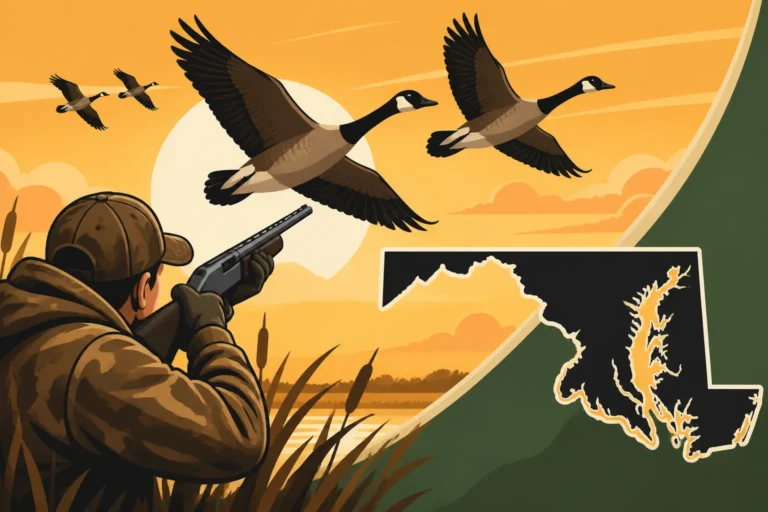
When September arrives in Maryland, many hunters eagerly anticipate the opening of dove season. Mourning doves are one of the most popular game birds in North America, and for good reason: they are abundant, incredibly challenging to shoot, and provide a fantastic social hunting experience. Their lightning-fast flight and erratic movements make them the ultimate wing-shooting test.
Dove Biology and Migration Patterns
Mourning doves are small, slender-tailed birds known for their distinctive "coo" call. They are widespread across Maryland, inhabiting agricultural fields, open woodlands, and suburban areas. Their diet primarily consists of seeds, particularly those from sunflowers, corn, wheat, millet, and various weeds. Maryland's dove population includes both resident birds that stay year-round and migratory birds that pass through the state during spring and fall. The early September season targets these migrating flocks as they move south from their breeding grounds further north. Understanding their feeding habits and flight patterns is paramount to a successful hunt.
Doves are creatures of habit, often flying from roosting sites to feeding areas and then to water sources in predictable patterns. They prefer to feed on bare ground or in short stubble, making harvested agricultural fields their prime attraction. Fields of cut corn, wheat, or especially sunflowers are hotspots. They also need water daily, so ponds, creeks, or even muddy puddles near feeding areas can be excellent places to set up. Their flight is characterized by rapid wing beats and sudden changes in direction, making them notoriously difficult targets even for experienced shooters.
Setting Up for a Successful Dove Hunt
Successful dove hunting often revolves around scouting and proper setup. Look for large agricultural fields, particularly those with sunflowers, wheat, or corn that have recently been harvested. Doves will concentrate on these areas. You’ll want to arrive early to observe their flight patterns – where they enter the field, where they feed, and where they exit. Positioning yourself along these natural flight paths, often near a tree line, a power line, or a field edge, is key. Decoys can be incredibly effective in drawing doves closer to your shooting zone. Spinning-wing dove decoys, like the Mojo Dove, are particularly popular as their movement simulates a landing bird, attracting doves from a distance.
Blinds are typically minimal for dove hunting; many hunters simply hide among the brush or in a small pop-up blind along a field edge. Comfort is important, as you might be sitting for several hours, so a comfortable chair or bucket is a good idea. Shotguns are the weapon of choice, usually 12 or 20 gauge, with lighter loads of small birdshot (e.g., 7 ½ or 8 shot) being most common. Remember to bring plenty of shells; dove hunting is famous for its high shot-to-kill ratio! Many hunters enjoy Dove Hunting a Maryland Sunflower Field not just for the action, but for the beautiful scenery and the social aspect of hunting with friends and family.
Safety and Sporting Clay Practice for Doves
Due to the fast-paced nature of dove hunting and the often close proximity of other hunters, safety is paramount. Always be aware of your muzzle direction, confirm your target, and know what's beyond it. Wearing shooting glasses and ear protection is non-negotiable. Establishing clear shooting lanes and zones with your hunting partners before the hunt begins is crucial to prevent accidents. Maryland requires blaze orange during certain seasons, but for dove hunting, camouflage or drab clothing is usually preferred to blend into the surroundings.
Given the challenge doves present, many hunters spend time practicing their wing-shooting skills at a local sporting clays course before the season opens. This practice helps to sharpen reflexes, improve lead judgment, and build confidence. It’s an excellent way to prepare for the season and ensures you're a safer, more effective shot in the field. The early September dove season offers a fantastic kick-off to the fall hunting calendar, providing an exciting and social way to get back into the rhythm of hunting after the summer months.
Ruffed Grouse: Maryland's Elusive Forest Phantoms
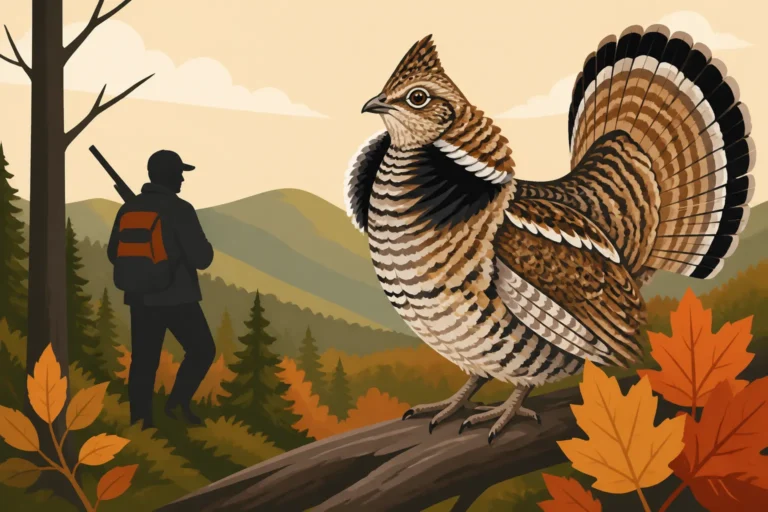
For a small contingent of dedicated upland bird hunters, the ruffed grouse holds a special mystique. Known as the "King of Upland Birds," the ruffed grouse is a challenging quarry that demands persistence, strong legs, and a keen understanding of dense forest habitat. While not as numerous as they once were, a small, dedicated population still exists in Maryland's western mountains.
Grouse Habitat and Distribution Challenges
In Maryland, ruffed grouse are primarily found in the westernmost counties, specifically Garrett and Allegany, which are characterized by rugged Appalachian terrain, mixed hardwood forests, and dense regenerating timber. They prefer early successional forests – areas that have been recently logged or experienced natural disturbances, creating a mosaic of young trees, dense brush, and thick undergrowth. This dense cover provides both food and protection from predators. Unlike species that thrive in open fields, grouse are true forest birds, often found near old logging roads, creek bottoms, and thick laurel or rhododendron thickets.
Unfortunately, Maryland's ruffed grouse population has been in decline for several decades. This decline is largely attributed to habitat loss, specifically the maturation of forests. As forests grow older, they lose the dense understory and early successional growth that grouse depend on. Predation and disease can also play a role. Because of these challenges, finding grouse in Maryland can be incredibly difficult, often requiring extensive hiking through challenging terrain. Hunters must be prepared for long stretches of silence between flushes.
Hunting the King of Upland Birds
Hunting ruffed grouse is often considered the pinnacle of upland bird hunting. It involves slow, deliberate still-hunting through dense cover, always alert for the explosive flush of a bird. Shotguns, typically a 20 or 28 gauge, are favored for their lighter weight and quicker handling in tight woods. Small game loads with 7 ½ or 8 shot are common. Many hunters rely on pointing or flushing dogs, like English setters or Brittany spaniels, to locate and flush birds, making the hunt more efficient and increasing the chances of getting a shot. The dog's nose can pinpoint a bird tucked tightly into cover that a human hunter might walk right past.
When hunting grouse, focus on areas with diverse forest structure: clear-cuts that are 5-15 years old, thick creek bottoms, or areas with a good mix of hardwoods and evergreens. Listen for the distinct drumming sound of a male grouse, especially in spring, which indicates their presence. During the fall hunting season, grouse will often hold tight, only flushing when you're almost on top of them, leading to heart-stopping moments and quick, challenging shots through thick timber. Still-Hunting Western Maryland Mountain Timber is a great skill to develop for grouse, as it teaches you to move quietly and observe the subtle nuances of the forest that might betray a bird's presence.
The Decline and Conservation of Maryland Grouse
The decline of ruffed grouse in Maryland is a significant concern for wildlife managers and conservationists. The state DNR monitors populations closely, but the primary challenge remains habitat creation and maintenance. Unlike species that adapt well to agricultural edges or suburban environments, grouse are highly dependent on specific forest conditions that are becoming increasingly rare. Conservation efforts often involve targeted timber management practices, such as clearcutting or selective logging, to create the necessary early successional habitat.
While the opportunity to harvest a ruffed grouse in Maryland is fleeting and challenging, the experience of pursuing this elusive bird in its wild mountain habitat is a reward in itself. It connects hunters to a more primitive form of hunting and to the rugged beauty of Western Maryland. For those who prioritize the experience over the harvest, chasing grouse offers a deep satisfaction and a chance to witness a truly wild and iconic game bird, even if shots are few and far between.
Bobwhite Quail: The Vanishing Southern Gentleman
The distinctive "bob-white!" call of the bobwhite quail was once a common sound across Maryland's rural landscape. Sadly, this iconic small game bird, often referred to as the "southern gentleman" of the uplands, has experienced a drastic decline in the state, making opportunities to hunt wild coveys exceptionally rare. Nevertheless, the species still captures the imagination of dedicated bird hunters and conservationists.
Quail Habitat Loss and Population Status
The primary reason for the precipitous decline of bobwhite quail in Maryland, and indeed across much of their historic range, is widespread habitat loss and degradation. Quail thrive in a mosaic of early successional habitats: overgrown fields, brushy hedgerows, open woodlands with dense understory, and diverse native grasses and forbs. They require specific types of cover for nesting, brooding, feeding, and protection from predators. Modern agricultural practices, which favor large monoculture fields and clean farming, have eliminated many of the brushy edges, fencerows, and small, diverse fields that quail need to survive.
Suburban sprawl and forest maturation have also contributed to the problem. As fields convert to housing developments or forests grow dense, the patchwork of habitats essential for quail disappears. Climate change and increased predation can also play a role. Today, wild bobwhite quail populations in Maryland are extremely low and largely confined to isolated pockets, primarily in the southern and eastern parts of the state where some suitable habitat might still exist. It's truly a heartbreaking situation for those who remember the days of abundant coveys.
Seeking Out Maryland's Remnant Quail Coveys
Given the drastic decline, hunting wild bobwhite quail in Maryland is an experience reserved for a very few dedicated individuals who have access to highly specific, well-managed private lands. Most public lands simply do not support viable populations. For those lucky enough to pursue them, quail hunting traditionally involves working with well-trained pointing dogs, usually English setters or pointers, to locate coveys. The dog freezes on point, indicating the birds' location, allowing the hunter to walk in and flush the covey. The explosive flush of an entire covey of quail is an exhilarating moment, followed by rapid, challenging wing-shooting.
If you are fortunate enough to find an area with remnant wild quail, focus your efforts on transitional zones: where pine stands meet overgrown fields, along mature hedgerows, or in brushy stream bottoms. These areas provide the diverse cover and food sources quail require. Shotguns, typically 20 or 28 gauge with light loads, are the preferred firearm. The challenge is immense, and success is often measured not just by the number of birds harvested, but by the sheer thrill of finding a wild covey and experiencing a piece of Maryland's vanishing natural heritage.
Conservation Efforts for Bobwhite Quail
Despite the dire situation, there are dedicated efforts underway to restore bobwhite quail populations in Maryland. The Maryland DNR, along with various conservation organizations like Quail Forever, are working to implement habitat management practices on public and private lands. These efforts include prescribed burning, disking, native warm-season grass plantings, and creating brush piles – all designed to mimic the early successional habitats that quail thrive in. Landowners interested in habitat restoration can find resources and assistance through these programs.
While a full-scale return to historic quail numbers may be a long way off, these conservation initiatives are critical for preserving this beloved species. Hunters play a vital role in supporting these efforts through license fees and participation in conservation groups. For many, the focus is less on hunting these rare wild birds and more on the satisfaction of contributing to their recovery. Hunting preserves, which stock pheasants and often quail, offer an alternative for those wanting a quail hunting experience, but it's not the same as the thrill of a wild bird flush.
Woodcock and Snipe: Migratory Marsh and Bottomland Birds
While often overlooked, American woodcock and common snipe offer unique and incredibly rewarding hunting opportunities in Maryland. These migratory shorebirds are found in very specific habitats, requiring hunters to seek them out in damp, often muddy, bottomlands and marshy areas. They provide challenging wing-shooting and a chance to explore parts of the landscape often ignored by other hunters.
Woodcock Migration and Preferred Cover
American woodcock, affectionately known as "timberdoodles," are plump, long-billed migratory birds that belong to the sandpiper family. They feed primarily on earthworms, probing soft soil with their sensitive bills. In Maryland, woodcock are typically found in moist, young deciduous forests, alder thickets, wet bottomlands, and shrubby creek edges. They prefer dense cover with soft, moist soils where earthworms are abundant. Maryland sees both resident woodcock that breed in the state and, more significantly, migratory birds that pass through during their fall migration from northern breeding grounds to southern wintering areas. The peak of the fall migration usually occurs in October and November.
Identifying prime woodcock habitat requires a keen eye for specific environmental conditions. Look for areas with a dense, brushy understory, often along river or creek bottoms, or in areas with recent timber cuts that are regenerating with saplings and shrubs. Alder and willow thickets are classic woodcock haunts. They often associate with aspen, birch, and young maple stands. The key is moist, loamy soil, which is where they can easily probe for their food. Don't be afraid to get your boots muddy, as these birds thrive in places where many other upland birds won't. Hunting Woodcock in Maryland Alder Bottoms is a specific, highly rewarding pursuit for those who appreciate these unique birds.
Hunting Woodcock in Maryland's Alder Bottoms
Hunting woodcock is a wonderfully intimate and challenging experience. It's typically a slow-paced hunt, often with a pointing dog, working through thick cover. The dogs are invaluable for locating these well-camouflaged birds that often hold incredibly tight, flushing only at the last moment. When a woodcock flushes, its flight is often erratic and twisting through the trees, making for a difficult shot. They are relatively slow flyers once airborne, but their evasive maneuvers in dense cover test a hunter's reflexes and wing-shooting ability.
Shotguns, usually a 20 or 28 gauge with light upland loads of 7 ½ or 8 shot, are ideal due to the dense cover and close-range shots. The woodcock's mottled brown plumage blends perfectly with fallen leaves, making them incredibly hard to spot until they take flight. Hunting woodcock also offers a chance to explore some of Maryland's beautiful, albeit often overlooked, natural areas. These hunts are as much about the experience of working a dog and appreciating the unique beauty of these birds as they are about the harvest. It's a true test of woodsmanship and patience.
Snipe Habits and Opportunities in Wet Fields
Common snipe are another migratory shorebird that provides unique hunting opportunities. While they resemble woodcock in some ways, snipe are smaller and prefer more open, wet environments like flooded agricultural fields, wet meadows, marsh edges, and the muddy margins of ponds and rivers. They feed by probing soft mud for invertebrates, just like woodcock, but their habitat preferences are distinct. Snipe are incredibly fast and erratically flying birds, often flushing with a distinctive "scaipe" call and zigzagging away at high speed, presenting one of the toughest wing-shooting challenges.
Hunting snipe typically involves walking through wet fields or marshy areas, flushing birds as you go. A good pair of waterproof boots or waders is essential. Unlike woodcock, snipe rarely hold for a dog, so it's more of a walk-and-flush proposition. When they jump, they're gone in a flash, making quick target acquisition and follow-through critical. Like doves, snipe hunting requires a good supply of shells and a high degree of shooting skill. Maryland's Woodcock and Snipe Season Dates usually coincide in the fall, allowing hunters to potentially target both species in suitable overlapping habitats. Finding them often involves scouting large, low-lying fields after heavy rains or near permanent wet spots.
Pheasants: Maryland's Released Upland Challenge
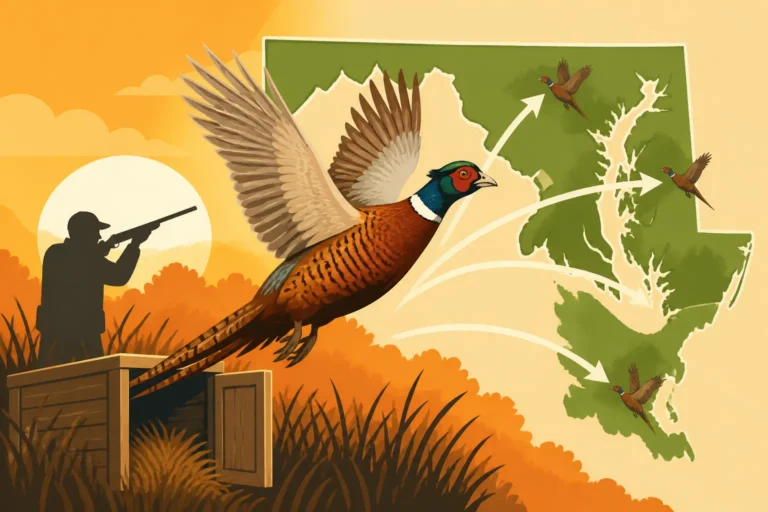
While wild pheasant populations are not present in Maryland, the state offers excellent opportunities to hunt these vibrant, challenging birds through its pheasant stocking program on public lands and at numerous private shooting preserves. For many hunters, especially those without access to traditional wild bird habitat, these released pheasants provide a thrilling upland hunting experience.
Maryland's Pheasant Stocking Program
The Maryland Department of Natural Resources (DNR) maintains a pheasant stocking program designed to provide public hunting opportunities. Each fall, the DNR releases thousands of pheasants on various public hunting areas, primarily Wildlife Management Areas (WMAs) across the state. These programs aim to offer an accessible and exciting upland bird hunting experience, particularly for hunters who enjoy working with dogs. The release sites are carefully selected to provide suitable habitat – usually a mix of open fields, brushy cover, and some timber edges – that allows the pheasants to spread out and offer a challenging hunt.
Details about specific release dates, locations, and any special regulations for these hunts are typically published by the DNR annually. Hunters interested in participating should check the Maryland DNR website or publications for the most up-to-date information. These opportunities are particularly popular on opening days and weekends, often drawing a crowd, so being aware of other hunters and maintaining safety is crucial. GoHunt can be a useful tool for identifying these WMAs and understanding the topography of the release sites.
Hunting Released Pheasants on Public Lands
Hunting released pheasants on public lands requires a combination of strategy and patience. While these birds are released, they are still wild enough to offer a significant challenge. Many will fly, run, and hide effectively, especially after the initial release. Working with a good flushing or pointing dog is highly recommended, as pheasants are notorious for running rather than flying, and a dog can help locate and flush them from thick cover. Without a dog, hunters often work in a line, systematically pushing through cover to flush birds.
Focus your efforts on dense grass fields, brushy draws, and thickets within the designated release areas. Pheasants, especially after a few days in the wild, will often gravitate towards the densest cover available. Shotguns, typically 12 or 20 gauge, with heavier loads of 5 or 6 shot, are common for pheasants, as they are tough birds and can fly strongly. Be prepared for explosive flushes and powerful flight. Hunting Released Pheasants on Maryland Public Land is a great way to experience upland hunting without needing access to private ground, but expect competition and birds that may have been pressured.
Maximizing Your Preserve Hunt Experience
For those seeking a more consistent and controlled pheasant hunting experience, Maryland boasts several private shooting preserves. These preserves actively manage habitat and release birds throughout the season, providing excellent opportunities for guaranteed action. Hunting preserves are ideal for:
- Hunters without access to public release sites or who prefer a less crowded experience.
- Training new hunting dogs or sharpening the skills of experienced ones.
- Introducing new hunters, including youth, to upland bird hunting in a supportive environment.
- Enjoying a social hunt with friends or family.
Preserves often offer various packages, from guided hunts with dogs and guides provided to self-guided options. They typically have longer seasons than public lands and allow hunters to tailor their experience. While the experience differs from hunting truly wild birds, preserve hunting offers high-quality birds, well-maintained habitat, and the thrill of the flush, making it a valuable option for Maryland's upland bird enthusiasts.
Other Opportunities: Crow, Groundhogs, and More
Beyond the traditionally recognized small game species, Maryland offers additional opportunities for hunters seeking unique challenges, pest control, or simply more time afield. These include the intelligent crow, the agricultural nuisance groundhog, and other furbearers that can be pursued through hunting or trapping.
Hunting Crows: A Challenging Pursuit
Crows are perhaps one of the most intelligent and wary birds a hunter can pursue. Found statewide, often in large flocks, they can be hunted year-round in Maryland without a license during their designated crow hunting season, which typically has generous dates and limits. This makes them an accessible target and a great way to hone your calling and camouflage skills. Crow hunting is often considered a form of pest control, as large flocks can cause significant damage to agricultural crops and impact other bird populations.
Effective crow hunting usually involves calling, camouflage, and decoys. Hunters typically set up in a concealed position, often at the edge of a field or woodlot, and use electronic or mouth calls to mimic crow distress calls or fight calls. This can draw in curious or aggressive crows, sometimes in large numbers. Decoys, often plastic crow silhouettes or full-bodied decoys, enhance the illusion. Shotguns are the most common weapon, though some dedicated crow hunters use rifles for longer shots. The challenge lies in outsmarting these incredibly smart birds, who quickly learn to avoid danger. It’s a hunt that demands sharp observation, quick thinking, and adaptability.
Groundhog Hunting for Pest Control and Practice
Groundhogs, also known as woodchucks, are prevalent in Maryland's agricultural areas, pastures, and open fields. While often considered pests due to the damage their burrowing can cause to farm equipment and crops, they also provide excellent hunting opportunities, particularly for rifle enthusiasts looking to practice their marksmanship. Groundhog season in Maryland is typically open year-round, with no bag limit, allowing for ample time afield.
Hunting groundhogs primarily involves spot-and-stalk or long-range shooting. Hunters will often glass open fields from a distance, looking for groundhogs sunning themselves or feeding near their burrows. A scoped rifle, typically a .223 Remington, .22-250, or even a .22LR for closer shots, is the weapon of choice. Precision shooting is key, as groundhogs offer small targets. This type of hunting is fantastic for developing shooting fundamentals, estimating range, and practicing ethical shot placement. It's also a great way to build relationships with landowners by offering a valuable pest control service. Just be sure to get permission before hunting on private land.
Furbearer Hunting and Trapping as Small Game Alternatives
Maryland also offers opportunities to hunt or trap various furbearer species, which can provide additional small game challenges and economic opportunities. Coyotes, red and gray foxes, raccoons, and opossums are common throughout the state. While often categorized separately from "small game," hunting these species offers similar skills-building and requires a deep understanding of animal behavior and habitat.
Coyote hunting has grown significantly in popularity in Maryland. These intelligent predators offer an exciting challenge, often pursued with predator calls, either electronic or mouth calls, to mimic distressed prey or other coyotes. Coyote Calling in Maryland Farm Country can be highly effective, especially during low light conditions or at night (where legal with permits). Foxes can also be called, offering a beautiful pelt as a reward. Raccoons and opossums are often hunted at night with dogs, a traditional pursuit for many Maryland hunters. Trapping, while distinct from hunting, also provides opportunities to harvest furbearers and requires a different but equally rewarding set of outdoor skills. Always ensure you're fully aware of and comply with all specific regulations, season dates, and licensing requirements for hunting or trapping any furbearer species in Maryland.
Maryland Small Game Species Overview
Here's a quick look at some of Maryland's key small game species and common hunting methods:
| Species | Preferred Habitat | Primary Hunting Method (Typical) | Season (General) | Required Gear (Common) |
|---|---|---|---|---|
| Gray Squirrel | Mature Hardwood Forests, Woodlots, Oak Ridges | Still-hunting, Spot-and-stalk, Sitting | Fall-Winter | .22 Rifle, Shotgun, Binoculars |
| Fox Squirrel | Open Woodlands, Forest Edges, Mixed Timber | Still-hunting, Spot-and-stalk | Fall-Winter | .22 Rifle, Shotgun, Binoculars |
| Cottontail Rabbit | Dense Cover, Hedgerows, Brush Piles, Field Edges | Dogs (Beagles), Pushing Cover, Still-hunting | Fall-Winter | Shotgun, Beagles (optional), Heavy Boots |
| Mourning Dove | Agricultural Fields (cut corn, sunflower, wheat), Water Sources | Field edges, Decoys, Stationary blinds | Early Fall, Split | Shotgun, Decoys, Comfortable Chair |
| Ruffed Grouse | Early Successional Forests, Alder Thickets, Mountain Laurel | Still-hunting (slow), Pointing dogs | Fall | Shotgun, Strong Legs, Pointing Dog (ideal) |
| American Woodcock | Wet Bottomlands, Alder/Willow Thickets, Moist Woods | Pointing dogs, Pushing Cover | Fall | Shotgun, Waterproof Boots, Pointing Dog |
| Common Snipe | Flooded Fields, Wet Meadows, Marsh Edges | Walking & Flushing, Quick Shots | Fall | Shotgun, Waders/Waterproof Boots |
| Ring-necked Pheasant | Released on WMAs and Preserves (grass, brushy cover) | Dogs (flushing/pointing), Walking lines | Fall-Winter | Shotgun, Dogs (ideal) |
| Crow | Agricultural Fields, Roosts, Open Country | Calling, Decoys, Concealed setup | Year-round | Shotgun/Rifle, Calls, Decoys |
| Groundhog | Pastures, Hay Fields, Field Edges | Spot-and-stalk, Long-range shooting | Year-round | Scoped Rifle, Binoculars/Spotting Scope |
Note: Specific season dates, bag limits, and regulations for all species can vary annually and by region. Always consult the current Maryland DNR hunting guide. You can use a platform like GoHunt to get a quick overview of season dates for different species when planning your hunts. Remember, acquiring your Maryland Hunting Licenses and What They Cost is the first step to pursuing any of these fantastic small game opportunities.
Disclaimer
Hunting is an inherently risky activity. This guide provides general information and should not be considered a substitute for personal research, professional instruction, or adherence to all applicable laws and regulations. Always prioritize safety, respect wildlife, and obtain all necessary licenses and permits before engaging in any hunting activities. Consult the Maryland Department of Natural Resources (DNR) for the most current regulations, season dates, and public land access rules.