Puddle Ducks of the Maryland Marshes
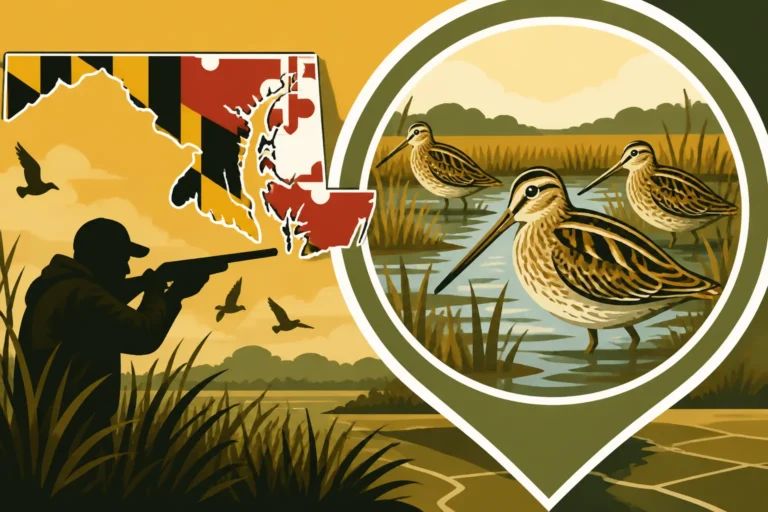
Standing in a chilly Maryland marsh before dawn, listening to the world slowly wake up, it can sometimes feel like a whirlwind of wings and splashes. You hear the calls, you see the silhouettes against the first light, but distinguishing between the various types of ducks can be a real challenge, especially when they're zipping by or hunkered down in the reeds. This guide is all about helping you understand and identify the amazing puddle ducks that call Maryland's diverse marshes home, giving you the knowledge to appreciate them more, whether you're hunting or just observing.
Understanding Maryland's Puddle Duck Habitat
Maryland is blessed with an incredible network of wetlands, and the marshes along the Chesapeake Bay and its tributaries are particularly vital for a wide array of waterfowl. Puddle ducks, true to their name, prefer shallower waters, often no deeper than they can stand in, allowing them to "tip up" to feed on submerged vegetation and invertebrates. This preference shapes where you'll find them and what they eat, making the health of these specific marsh environments absolutely critical.
The Dynamic Nature of Tidal Marshes
The marshes of Maryland, particularly on the Eastern Shore, are incredibly dynamic ecosystems, constantly influenced by the ebb and flow of the tides. This daily cycle dictates not just water levels but also nutrient distribution, the availability of food, and even how ducks move and rest. A marsh that's bustling with activity at high tide might be nearly empty at low tide, or vice versa, depending on the specific feeding habits of the birds. Understanding this rhythm is paramount for anyone spending time in these environments. It's not just about knowing the local tide chart; it's about observing how different areas of the marsh respond to those tides. Some smaller guts and impoundments might hold water even at low tide, becoming prime feeding grounds when larger, more exposed flats are dry.
The salinity of these marshes also plays a huge role. While some areas are brackish, a mix of fresh and saltwater, others are nearly fresh, especially further up tidal rivers. This variation in salinity dictates the types of aquatic plants and invertebrates that thrive, which in turn influences the specific puddle duck species you'll encounter. For instance, a rich freshwater impoundment might hold more wood ducks and mallards, while a saltier marsh closer to the bay might be more attractive to black ducks. Many hunters, myself included, rely on tools like GoHunt to study aerial imagery and topographical maps, helping them understand how these tidal flows and salinity gradients create different types of habitat. It can be the difference between a successful outing and a quiet one.
Key Vegetation and Food Sources
Puddle ducks are primarily vegetarians, and the abundance of specific plants in Maryland's marshes is what truly draws them in. They forage by dabbling, sifting through shallow water and mud for seeds, tubers, and aquatic insects. This isn't just a casual snack; it's about fueling their bodies for migration and survival. Important plants like wild rice, smartweed, sago pondweed, and widgeon grass are absolute magnets for these birds. You'll often find ducks gorging themselves on these vital food sources, especially during the fall migration and into the winter.
Beyond these aquatic plants, agricultural fields bordering marshes, particularly those with leftover corn, soybeans, or winter wheat, become critical food reservoirs. Ducks will often leave the safety of the marsh at dawn or dusk to feed in these fields, offering different hunting opportunities. However, even in the marsh itself, insects, small crustaceans, and even tiny fish can supplement their diet, especially for species like the green-winged teal. When you're scouting, look for signs of feeding – muddy water, disturbed vegetation, and of course, duck droppings. Knowing what they're eating is the first step to knowing where they'll be. It's truly fascinating to see how the ducks adapt their feeding habits to whatever food is most available and nutritious at different times of the year.
Common Puddle Duck Species in Maryland Marshes
Maryland is a crossroads for many migratory birds, and our marshes host an impressive variety of puddle ducks. While some species are common throughout the state, others have more specific preferences that dictate where you'll find them. Learning to identify these birds by sight, and even by their unique calls, will greatly enhance your experience in the field.
Mallards and American Black Ducks: The Mainstays
When you think of a duck, chances are you're picturing a mallard. These are arguably the most recognizable and abundant puddle ducks in Maryland, often seen in both wild marsh settings and even urban parks. The drakes, with their iridescent green heads, white neck ring, chestnut breasts, and curled tail feathers, are unmistakable. Hens are mottled brown but still show that distinctive blue speculum (patch on the wing) bordered by white. Mallards are adaptable and can be found in almost any freshwater or brackish marsh, often feeding in flooded timber or agricultural fields. Their quacking calls are a familiar sound, though the hen's "quack-quack-quack" is much louder and more prolific than the drake's softer, lower-pitched sound.
The American Black Duck, often simply called a "black duck" by hunters, is a truly iconic Chesapeake species. These birds are slightly larger than mallards and, as their name suggests, appear very dark brown or almost black with a lighter brown head and a silvery-white underwing visible in flight. Drakes and hens look very similar, making them a bit harder to distinguish at a glance than mallards. They share a similar blue speculum with the mallard, though it's often more purplish and not as brightly bordered with white. Black ducks tend to prefer the more brackish and saltwater marshes, particularly along the coast and larger tidal rivers, where they are often more wary than their mallard cousins. They have a similar quack to the mallard hen but generally are not as vocal. For many, a limit of black ducks represents a true trophy, given their intelligence and preference for untouched marshland. You might find yourself on a crisp morning, Hunting a Chesapeake Bay Blind at First Light, hoping for a flight of these elusive birds.
Green-winged Teal and Blue-winged Teal: Speedsters of the Marsh
Teal are among the smallest and fastest ducks you'll encounter in Maryland's marshes, and their erratic, twisting flight patterns can be a real challenge for even seasoned wingshooters. Both species are migratory, though their timing and preferred habitats differ slightly.
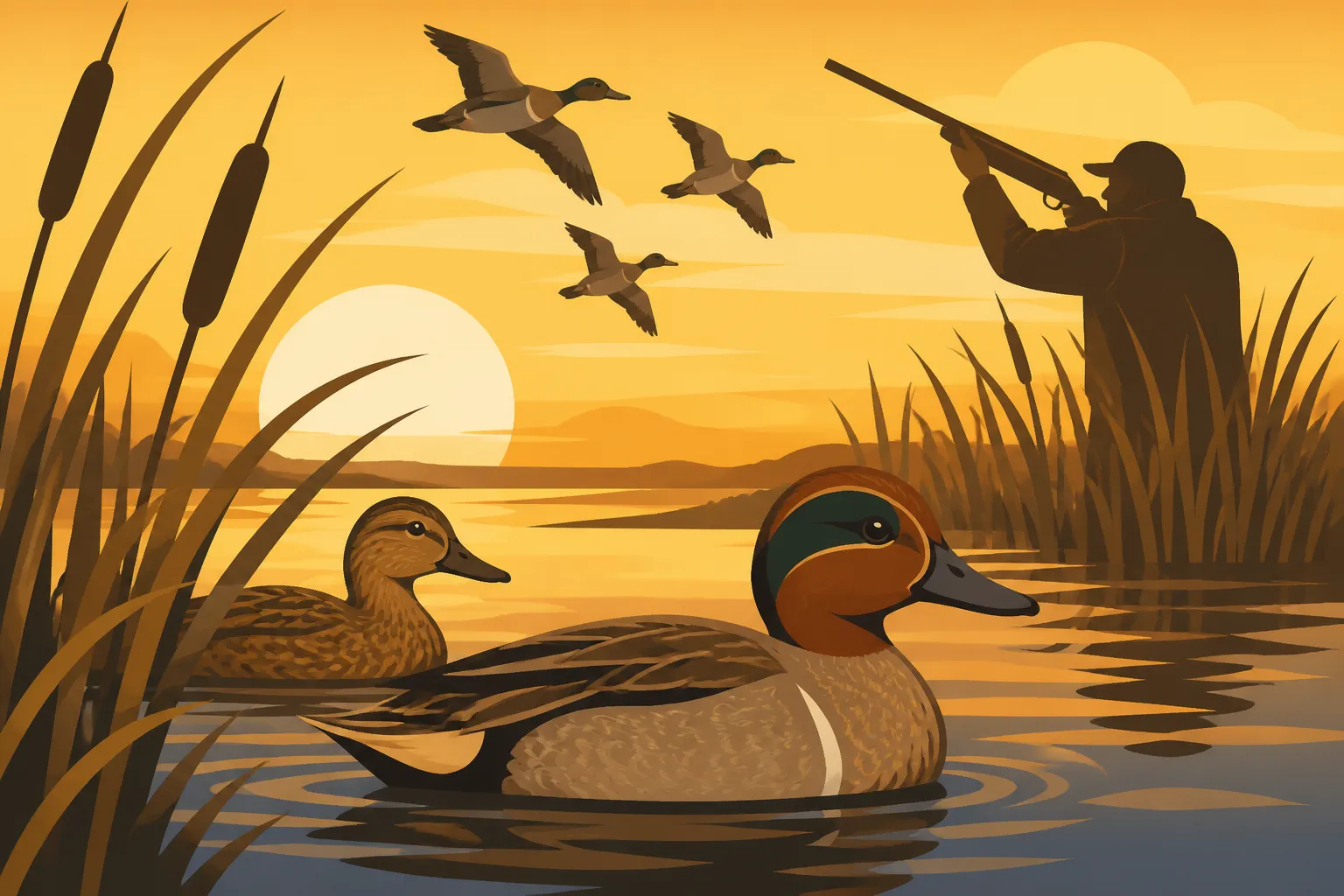
The Green-winged Teal is a late-season visitor, typically arriving in good numbers as the weather cools. The drakes are striking with a chestnut-colored head, a bold iridescent green patch extending from the eye to the back of the head, and a vertical white stripe on their side. Hens are mottled brown but share the distinctive iridescent green speculum that gives them their name. They are often found in tight flocks, zipping through shallow freshwater or slightly brackish marshes, making them a thrilling target. Their call is a high-pitched whistle for the drakes and a soft "quack" for the hens. You might encounter them when Jump-Shooting a Marsh Gut on a Falling Tide, where their quick take-offs can surprise you.
Blue-winged Teal, on the other hand, are early migrants, often arriving in Maryland in late summer and early fall. Many have already pushed further south by the time regular duck seasons open, though early season opportunities can be excellent. The drakes are quite distinctive, sporting a slate-gray head with a prominent white crescent in front of the eye. Both sexes feature a large, sky-blue patch on the forewing, which is highly visible in flight and is their most defining characteristic. Like green-wings, they prefer shallow water but can be found in a wider variety of habitats, including temporary wetlands and flooded fields. Their calls are less pronounced than green-wings, with the drakes making a faint "peep" and hens a soft "quack." The opportunity to pursue these early birds often coincides with the earliest duck seasons, making them a favorite for hunters who can't wait for winter.
Wood Ducks and Gadwalls: Hidden Gems
While not always as numerous as mallards or black ducks in open marshes, wood ducks and gadwalls are vital components of Maryland's puddle duck diversity. They each have distinct characteristics and preferences that make them fascinating to encounter.
Wood Ducks are, without a doubt, one of North America's most beautiful waterfowl, and Maryland is fortunate to host a healthy population. Drakes are absolutely stunning with an iridescent green, purple, and bronze crested head, a striking white eye-ring, and a bold, intricate pattern of white, black, and chestnut feathers. Hens are more subdued mottled brown but also display a distinctive white teardrop-shaped eye-ring. Unlike most puddle ducks, wood ducks are cavity nesters, preferring wooded swamps, beaver ponds, and forested stream corridors where old trees offer nesting sites. They're often seen flying through timber at incredibly fast speeds, darting and weaving through obstacles with unmatched agility. Their calls are a unique, squealing "hoo-wheet" for the hen and a rising "jeeeeee" whistle for the drake. If you're targeting these specific birds, you might focus your efforts on Hunting a Beaver Pond for Wood Ducks, which are prime habitats.
Gadwalls are often overlooked but are increasingly common in Maryland, particularly in freshwater and moderately brackish marshes. They are subtle beauties, with drakes appearing grayish-brown with fine vermiculations (wavy lines) on their flanks, a black rump, and a white speculum that's easily visible in flight. Hens are similar in coloration but lack the black rump. What truly sets them apart is that white speculum, which is unique among dabblers. They are adept at finding food in dense aquatic vegetation and can often be found associating with other puddle duck species. Their call is a distinctive, low-pitched "kack-kack" for the drakes and a series of short, sharp quacks for the hens. While they might not have the flashy colors of a wood duck or the widespread recognition of a mallard, gadwalls are a challenging and rewarding bird to pursue, prized for their delicious meat and often found in marshes where other ducks are present.
Identifying Puddle Ducks in the Field
Being able to quickly and accurately identify puddle ducks in the field is a crucial skill for any hunter or birdwatcher. It's not just about compliance with bag limits; it enhances your overall enjoyment and understanding of these incredible birds. Many species look similar, especially in low light or at a distance, leading to frustration. But with practice, paying attention to key features can make all the difference.
Key Visual Cues in Flight and on Water
When ducks are on the water, you have a bit more time to observe, but they can still be camouflaged by vegetation. Look for their general size and shape. Puddle ducks, by definition, sit higher on the water than divers, and when feeding, they often "tip up," showing their tail feathers while their heads are submerged. This is a dead giveaway you're looking at a dabbler. Pay close attention to head and neck coloration, speculum color (the iridescent patch on the secondary wing feathers), and any distinctive markings on their flanks or bill. For example, the bright green head of a mallard drake or the white crescent of a blue-winged teal drake are quite obvious.
In flight, identification becomes more challenging due to speed and distance, but certain cues become even more pronounced. The wing beat is a significant indicator; teal have incredibly fast wing beats, almost like an insect, while mallards and black ducks have a slower, more deliberate beat. Look for the underwing color – black ducks have a striking white underwing that makes them stand out from their darker bodies, while a mallard's underwing is lighter but not as starkly contrasting. The presence of a white belly or a dark belly can also help differentiate. And don't forget the silhouette! Wood ducks have a distinctive, somewhat blocky head profile and often fly with their heads held high. Understanding these flight characteristics is something that comes with experience, but studying field guides and online resources, perhaps through the detailed maps on GoHunt, can give you a head start by showing you where to expect certain species based on habitat.
Here's a quick reference table for some common puddle duck ID features:
| Species | Drake Head Color | Speculum Color (both sexes) | Distinctive Flight Feature | Drake Body Color | Size (compared to Mallard) |
|---|---|---|---|---|---|
| Mallard | Iridescent Green | Blue, white borders | White underwing, fast flier | Gray/Chestnut | Standard |
| American Black Duck | Lighter Brown | Purplish-blue, faint borders | Striking white underwing | Very Dark Brown | Slightly larger |
| Green-winged Teal | Chestnut w/ Green Patch | Iridescent Green | Very small, incredibly fast | Gray/White stripe | Smallest |
| Blue-winged Teal | Slate Grey w/ White Crescent | Sky Blue forewing | Small, fast, blue wing patch | Mottled Brown | Small |
| Wood Duck | Iridescent Green/Purple | Iridescent Green/Blue | Crested head, white eye-ring hen | Intricate patterns | Smaller |
| Gadwall | Grey | White | Black rump (drake), white speculum | Greyish-brown | Similar |
Distinctive Calls and Behaviors
While visual cues are primary, recognizing duck calls can be incredibly useful, especially in foggy conditions or before legal shooting light. The most famous duck call, the "quack," primarily belongs to the female mallard and black duck. Learning to differentiate the louder, more urgent series of quacks from a hen mallard versus the softer, lower single quacks of a drake can be helpful.
Beyond the quack, other puddle ducks have unique vocalizations. The wood duck's squealing "hoo-wheet" is unmistakable and often given when they're flushed or flying. Green-winged teal drakes produce a high-pitched whistle, while their hens have a soft, low quack. Gadwall drakes often make a distinct "kack-kack" sound, almost like a miniature mallard, while the hens have a short, sharp quack. Paying attention to these sounds, especially in conjunction with observed flight patterns or behavior, can confirm an identification. For example, if you hear that high-pitched whistle and then see a blur of small ducks making incredibly tight turns, you can be pretty confident you've got green-winged teal. Many hunters also use calls to imitate these sounds, aiming to draw birds closer, but understanding their natural vocalizations is the first step to effective calling.
Best Practices for Hunting Puddle Ducks in Maryland
Hunting puddle ducks in Maryland's marshes can be an incredibly rewarding experience, offering fast-paced action and the chance to connect with nature in a truly wild setting. However, it's a game of strategy, patience, and adapting to the specific conditions of the marsh. It’s not just about throwing out a few decoys; it’s about understanding the nuances of the environment and the birds themselves.
Decoy Spreads and Calling Techniques
When it comes to decoying puddle ducks, less can often be more, especially in shallower water or smaller marsh guts. Unlike diving ducks that might respond to massive, open-water spreads, puddle ducks are often looking for small, natural-looking groups. A common mistake is using too many decoys or placing them in unnatural patterns. For mallards and black ducks, a spread of a dozen to two dozen decoys, arranged in loose family groups, often works well. Leaving a landing zone (a pocket of open water) directly in front of your blind or hide is crucial, giving the ducks a clear place to commit. Mixing in a few black duck decoys with mallards can often provide a more realistic look, reflecting the mixed flocks you often see in Maryland's brackish marshes. Motion decoys, like spinning wing decoys or jerk strings, can add invaluable realism, mimicking active feeding birds and drawing attention from a distance.
Calling is another art form. While a mallard hen's "hail call" can get distant birds' attention, the real magic happens with subtle feeding calls and contented quacks once birds are closer. Overcalling can quickly scare wary birds. Understanding the rhythm of a contented feeding mallard, or the soft whistles of teal, and knowing when to use them sparingly, is far more effective than blasting loud calls constantly. If you're hunting black ducks, remember they are often warier than mallards and less vocal, so softer, more subtle quacks and aggressive decoy spreads often work better. For teal, a sharp whistle can sometimes pull them in, but often, just good decoy placement and concealment are enough. For tips on attracting geese, you might want to look into Decoying Canada Geese on the Upper Eastern Shore for broader decoying principles.
Understanding Tides and Weather Patterns
Maryland's tidal marshes are governed by the moon, not just the sun, and understanding the tide charts is absolutely fundamental to a successful puddle duck hunt. A good tide chart can tell you when the water will be high enough to flood feeding flats or low enough to expose mudflats. Puddle ducks feed heavily on exposed mudflats during low tide, picking through the bottom for seeds and invertebrates. Conversely, at high tide, they might retreat to flooded vegetation for resting or seek out new, temporarily inundated feeding grounds. It’s not just about if the tide is high or low, but when it peaks or bottoms out, and how quickly it moves. Checking a detailed local tide chart, perhaps one found via your GoHunt app, before you even leave home can help you plan your entry and exit routes, and determine the best window for hunting a specific spot. You might find this resource helpful: Reading Tide Charts Before a Marsh Hunt.
Weather also plays a massive role. Cold fronts often bring in new flights of migratory ducks, making the days immediately following a front excellent hunting opportunities. Strong winds can make ducks fly lower and be more apt to decoy, but they also make boat travel and decoy setting more challenging. Rain or fog can suppress duck movement or create unpredictable flight patterns. Always keep an eye on the forecast, and don't be afraid to adjust your plans based on what Mother Nature is throwing your way. Calm, sunny days can be tough, as ducks have excellent visibility and are less inclined to move, whereas overcast, windy days often provide the best action. The timing of Maryland Duck Season Dates often aligns with these migration patterns and weather shifts.
Gear and Safety Considerations
Hunting Maryland's marshes requires specialized gear and a strong emphasis on safety. Waders are non-negotiable, and whether you opt for hip boots or chest waders depends on the depth of the water you expect to encounter. For most marsh hunting, chest waders are a safer bet. Waterproof clothing is also essential, as you'll often be exposed to spray, rain, or wet vegetation. Don't forget layers; marsh conditions can change rapidly, from freezing cold mornings to surprisingly warm afternoons.
Beyond personal gear, a reliable boat is often necessary for accessing prime marsh locations. Whether it's a shallow-draft jon boat, an airboat, or even a kayak, ensure it's in good working order and you have all necessary safety equipment, including life jackets, navigation lights, and a reliable motor. When venturing into tidal waters, always remember Boat Safety on the Chesapeake in December, as conditions can become dangerous very quickly. Navigation can be tricky in the vastness of the marsh, so a GPS device or a mapping app like GoHunt on your phone is highly recommended to prevent getting lost, especially in low light or fog. And of course, always inform someone of your hunting plans and expected return time. Finally, remember your Federal Duck Stamp Rules for Bird Hunters and ensure you're compliant with all licensing, including the Maryland Migratory Bird Stamp Requirements.
Conservation and Management of Maryland's Puddle Ducks
The abundance of puddle ducks we enjoy in Maryland today is not by accident; it's the direct result of decades of dedicated conservation efforts, wise management, and the financial contributions of hunters. However, these vital ecosystems and the birds that rely on them face ongoing challenges, necessitating continued vigilance and support.
Habitat Preservation Efforts
The greatest threat to puddle ducks, and indeed all waterfowl, is habitat loss. Maryland's coastal marshes are particularly vulnerable to development, pollution, and the impacts of climate change, including sea-level rise and increased storm intensity. Organizations like Ducks Unlimited, the Chesapeake Bay Foundation, and the Maryland Department of Natural Resources (DNR) work tirelessly to acquire, restore, and enhance wetland habitats across the state. These efforts range from creating new impoundments and restoring natural hydrological flows to planting native vegetation that provides crucial food sources and cover.
As hunters and conservationists, our role extends beyond the hunting season. Purchasing hunting licenses and federal and state duck stamps directly funds these habitat initiatives. The Pittman-Robertson Act, a cornerstone of wildlife conservation, channels excise taxes from firearms and ammunition sales back into state wildlife agencies for conservation projects. Without these dedicated funds, many of the marshes that host our beloved puddle ducks would be lost forever. It's a sobering thought, but one that underscores the profound connection between responsible hunting and effective conservation. Understanding efforts like those outlined in Maryland's Marsh Access by Boat often highlights conservation successes.
Hunter's Role in Sustainable Populations
Hunters are, and always have been, the most significant advocates and funders of waterfowl conservation. Our commitment to ethical hunting, adherence to regulations, and financial contributions are what keep these populations healthy and thriving. Respecting bag limits, identifying birds accurately before shooting, and minimizing disturbance to roosting areas are all crucial aspects of responsible hunting that contribute to sustainable populations.
Beyond direct contributions, hunters often act as citizen scientists, reporting bird observations, banding recoveries, and participating in surveys that provide invaluable data for wildlife managers. This collaborative approach between hunters, conservation organizations, and state agencies ensures that management decisions are based on sound science, aiming to provide both healthy duck populations and sustainable hunting opportunities for future generations. It’s a privilege to pursue these birds in Maryland’s beautiful marshes, and with that privilege comes a profound responsibility to protect them and their habitats. By understanding and supporting conservation efforts, we ensure that the thrilling sight of mallards cupped in the wind or the flash of a green-wing teal will continue to be a part of the Maryland marsh experience for years to come.
Disclaimer
Please remember that hunting regulations and season dates can change. Always consult the official Maryland Department of Natural Resources (DNR) website or their current hunting guide for the most up-to-date and accurate information before planning any hunting trip. This guide is for informational purposes only and does not supersede state regulations.