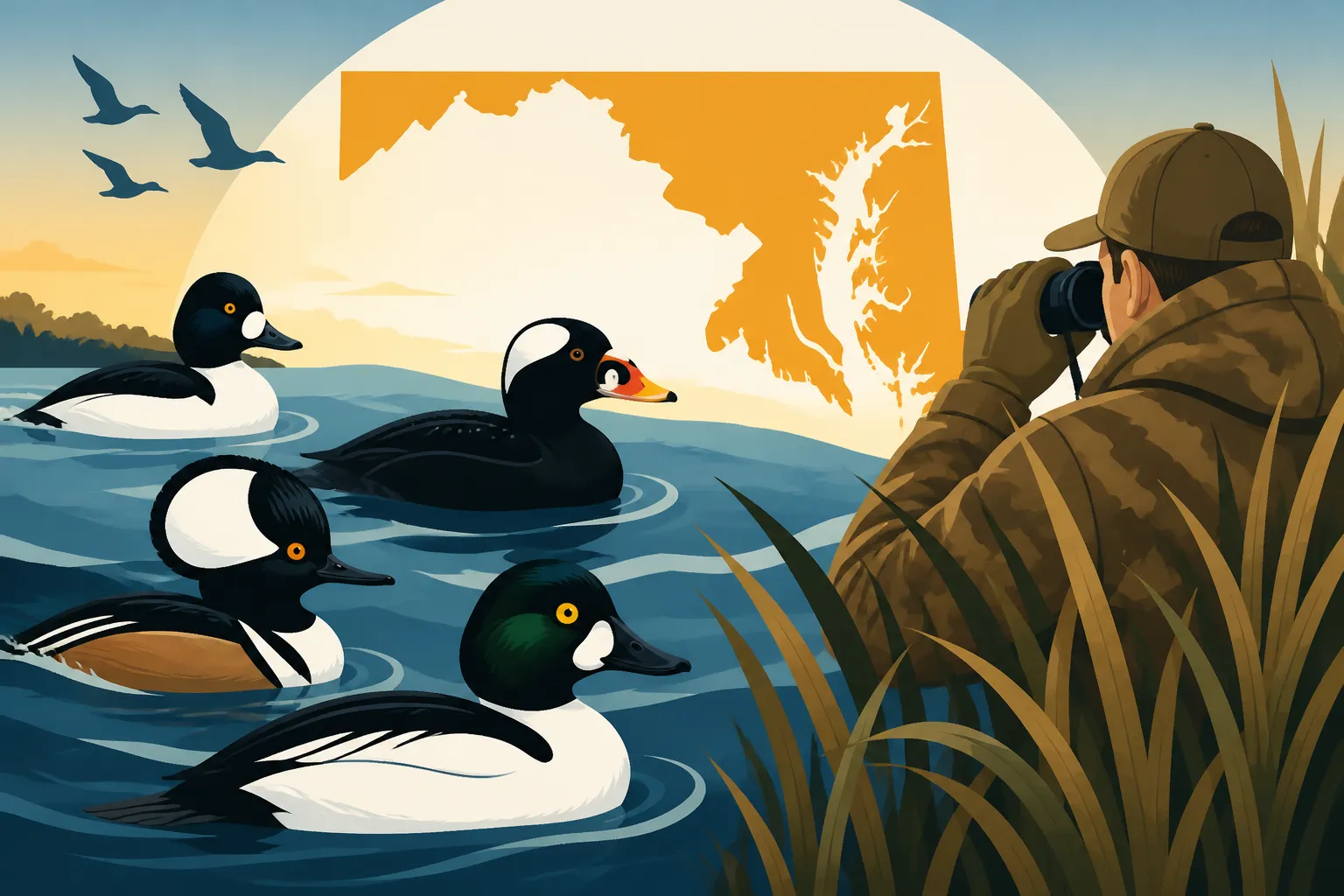
Which Sea Ducks Show Up Off Maryland
For many Maryland hunters, the vast, often turbulent waters off our coast feel like another world entirely. It's a place where the air is colder, the waves are bigger, and the birds you're chasing are built for a life in the harshest marine environments. Figuring out which of these incredibly tough and sometimes strikingly beautiful sea ducks actually show up here can feel like a daunting task, especially when you're used to puddle ducks in a quiet marsh. This guide is here to shed some light on the various sea duck species that call Maryland's offshore waters home, helping you identify them and understand their unique habits.
Maryland's Offshore Waters: A Sea Duck Haven
Maryland's coastline, particularly the open waters of the Chesapeake Bay and the Atlantic Ocean, provides critical wintering grounds and migration corridors for several species of sea ducks. These aren't your typical marsh-dwelling mallards or wood ducks; sea ducks are specialized divers, perfectly adapted to salty environments, often feeding on shellfish, crabs, and small fish found deep beneath the waves. Their robust bodies, dense plumage, and powerful diving capabilities make them resilient inhabitants of these challenging marine habitats.
The Unique Niche of Sea Ducks
Unlike their dabbling cousins, sea ducks primarily feed by diving underwater, sometimes to considerable depths, to forage for their preferred diet. This unique feeding strategy dictates where they live, often in deeper, more open water environments that are rich in marine invertebrates. Identifying these birds can be tricky, especially from a distance or in the choppy conditions of the open bay. Their distinct profiles, flight patterns, and often vibrant plumage, however, become more apparent with practice and a good pair of binoculars. Understanding their specific characteristics is key to appreciating these incredible waterfowl. You can also explore Maryland Duck Season Dates to plan your offshore adventures effectively.
Why Maryland Attracts Sea Ducks
Our state's location along the Atlantic Flyway means we're a prime destination for migratory birds heading south for the winter. For sea ducks, the comparatively milder winters, coupled with abundant food sources in the Chesapeake Bay and along the Atlantic coast, create an ideal stopover or wintering sanctuary. The Bay itself offers a somewhat sheltered environment compared to the full force of the ocean, providing crucial feeding and resting areas. Meanwhile, the offshore zone provides the truly vast, deep-water habitat that some species prefer exclusively. Factors like water salinity, temperature, and the health of shellfish populations all play a role in how many and which species decide to winter here each year. When planning a trip to these areas, resources like GoHunt can be invaluable for understanding conditions and potential bird concentrations.
Surf Scoters: The White-Patched Wonders
Among the most common sea ducks you'll encounter off Maryland's coast is the Surf Scoter. These birds are unmistakable once you get a good look at them, but in the distance, they can be tricky. They are often found in large rafts, floating on the waves, then suddenly disappearing beneath the surface in unison as they dive for food. Their striking appearance, especially the males, makes them a favorite among sea duck enthusiasts.
Identifying the Male and Female Surf Scoter
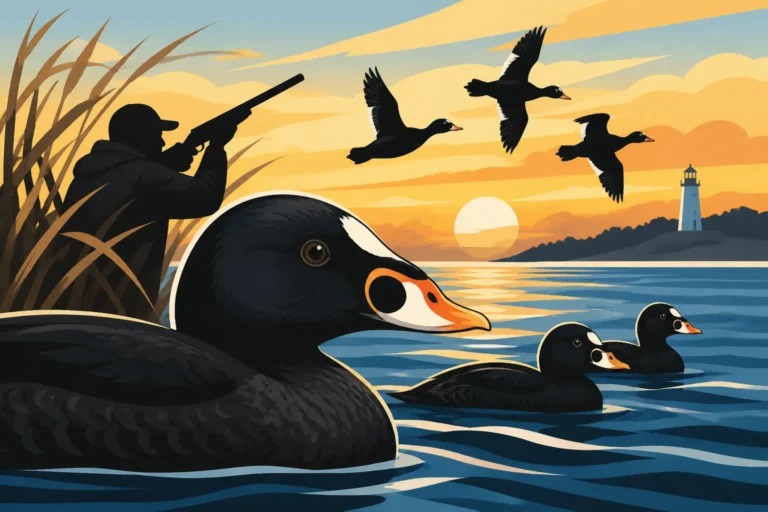
Male Surf Scoters are truly iconic. They sport an all-black body with two distinct white patches: one on the nape of the neck and another on the forehead. But perhaps their most eye-catching feature is their bill – it's a wonderfully large, swollen, and colorful affair, often a mix of orange, yellow, and white, with a black spot near the base. It looks almost comically oversized, yet it's perfectly designed for crushing the shellfish they love to eat.
Females, on the other hand, are a bit more subdued, though still recognizable. They are generally dark, sooty brown all over, often lacking the vibrant bill colors of the males. They typically have two indistinct white patches on the sides of their head, one near the bill and another behind the eye, though these can vary in prominence. Their bill is also dark and lacks the pronounced swelling and coloration of the male. Both sexes share a similar, robust body shape, well-suited for battling the open water. These unique birds often gather in significant numbers, making them a common sight for anyone Hunting a Chesapeake Bay Blind at First Light or cruising the offshore waters.
Habitat and Behavior Along Maryland's Coast
Surf Scoters are true birds of the ocean, preferring coastal waters, bays, and estuaries. In Maryland, you'll find them not just far offshore in the Atlantic, but often closer to shore within the Chesapeake Bay, especially in areas with abundant shellfish beds. They are strong divers, capable of staying submerged for extended periods, using their wings to propel themselves underwater in pursuit of mussels, clams, and other invertebrates.
When observed on the water, they often form dense rafts, sometimes numbering in the hundreds or even thousands. This communal behavior is thought to offer some protection from predators and potentially aid in finding food. Before they take flight, they have a distinctive running-on-water takeoff, kicking up spray as they gain momentum. Their flight is powerful and direct, usually low over the water, with rapid wingbeats. Understanding their movements and preferred feeding grounds is crucial, and tools like GoHunt can help pinpoint areas with historical concentrations of these birds, helping you with Scouting Maryland Public Land With Aerial Photos.
Black Scoters: The Sooty, Yellow-Knobbed Divers
Next up are the Black Scoters, sometimes affectionately called "Coo-Coo" ducks by old-time watermen due to their distinctive call. These birds have a sleeker profile than Surf Scoters and are known for their preference for truly open water, making them a staple of the offshore hunting experience. They bring a different kind of charm to the sea duck lineup with their uniform dark plumage and unique bill structure.
Key Identification Marks
Male Black Scoters are entirely sooty black, lacking any white patches on their body. This uniform darkness is their most striking feature. Their bill, while not as wildly colored as the Surf Scoter's, is quite distinct: it's black with a prominent, bulbous yellow or orange knob at the base of the upper mandible, fading to black towards the tip. This bright knob stands out against their dark plumage, making them relatively easy to identify in good light.
Female Black Scoters are also entirely dark, a sooty brown overall, but they lack the vibrant yellow knob on the bill. Instead, their bills are dark, and their cheeks and throat are typically lighter, often a dusky gray or brownish-white, contrasting slightly with their darker cap. Both sexes have a somewhat streamlined appearance, giving them a sleek look as they ride the waves. Their flight is swift and low, often in long lines or V-formations, a common sight on a chilly morning during Sea Duck Hunting Maryland's Offshore Zone.
Foraging Habits and Preferred Hangouts
Black Scoters are primarily found in marine environments, favoring coastal waters, estuaries, and offshore ocean areas. In Maryland, while you might spot them in deeper parts of the Chesapeake Bay, they are more commonly associated with the Atlantic Ocean, venturing further out than some other sea duck species. They are exceptional divers, feeding mainly on mollusks, crustaceans, and marine worms, which they snatch from the seafloor.
Like Surf Scoters, Black Scoters often gather in rafts on the open water. However, their rafts tend to be less dense and more spread out. Their call, a distinctive, mournful whistle that sounds like "coo-coo," is one of the most evocative sounds of the offshore environment, often heard long before you see the birds themselves. They are highly migratory, breeding in the Arctic and subarctic regions and spending their winters along the Atlantic and Pacific coasts, with Maryland serving as an important wintering ground. They are another prime target for those who enjoy Running a Layout Boat for Sea Ducks, as they are often found in areas requiring specialized equipment to access.
White-Winged Scoters: Maryland's Largest Scoter
The White-winged Scoter is the largest of the three scoter species found in Maryland and, arguably, the most imposing. Their size, combined with a unique white patch on their wings, makes them distinct. These robust birds are built for strength and resilience in the vast open ocean, and encountering a flock of them is always an impressive sight.
Distinguishing Features and Size
Male White-winged Scoters are large, heavy-bodied ducks, predominantly black with a tell-tale white patch on their secondary feathers, visible in flight and sometimes as a streak on the resting bird's wing. Their bill is stout, orange with a black base, and a distinct black knob at its base. They also have a small, crescent-shaped white patch under the eye, which can be hard to spot at a distance but is a key identifier up close.
Female White-winged Scoters are dark brown overall, with a less prominent white wing patch, though it's still usually visible. They also have two whitish patches on the sides of their head, similar to the female Surf Scoter, but their larger size and the subtle wing patch help distinguish them. Their bill is dark and lacks the male's vibrant coloration and knob. These are genuinely impressive birds, and their robust stature helps them endure the sometimes brutal conditions you can encounter when planning Boat Safety on the Chesapeake in December.
Behavior and Offshore Preferences
White-winged Scoters prefer deeper, coastal marine waters, often congregating in large groups further offshore than their Surf Scoted cousins, though they will enter large bays like the Chesapeake. They are powerful divers, capable of descending to significant depths to feed on mollusks, especially mussels and clams, as well as crustaceans and even small fish.
Their flight is strong and direct, characterized by powerful, somewhat slower wingbeats compared to other ducks, due to their larger size. When taking off from the water, they require a long, splashing run, similar to other heavy-bodied diving ducks. They are often seen associating with other sea duck species, but their sheer size and distinctive wing patches usually make them stand out. Finding their feeding grounds can require careful observation and patience, but for those determined to pursue them, services like GoHunt offer detailed mapping and species information that can assist in identifying prime habitat. These are some of the most sought-after birds for anyone considering Scoters Off the Maryland Coast.
Long-Tailed Ducks: The Call of the Open Bay
Perhaps one of the most charismatic and instantly recognizable sea ducks to visit Maryland's waters is the Long-tailed Duck, formerly known as the Oldsquaw. Their playful demeanor, unique calls, and distinctive plumage patterns make them a favorite among birdwatchers and hunters alike. They are truly at home in the rough, open waters.
Unique Plumage and Voice
Male Long-tailed Ducks are absolutely stunning, undergoing dramatic seasonal plumage changes. In their breeding plumage, they are mostly dark with white flanks, while in winter, which is when we see them in Maryland, they are predominantly white with a black chest patch, a black back, and a distinctive black stripe on their long, pointed tail. This tail, which can be quite long, is what gives them their common name and is a key identifier. Their face is white with a dark cheek patch, and they have a short, dark bill with a pink band.
Females are generally duller, with a less pronounced tail and more subdued markings, but they still retain the characteristic dark cheek patch on an otherwise whitish head. They are also known for their incredible vocalizations—a melodic, yodeling call that carries far across the water. This "ow-ow-ow-AAAAH-ow-ow" sound is one of the most distinctive and memorable sounds of the winter bay. You'll hear this haunting melody echoing across the vast expanse, especially in areas where you might find Decoying Divers on Maryland's Open Bay.
Diving Prowess and Maryland Habitat
Long-tailed Ducks are arguably the most accomplished divers among all ducks, capable of descending to astounding depths—sometimes over 200 feet—in search of food. They primarily feed on shellfish, crustaceans, and small fish, using their nimble bodies and powerful webbed feet to navigate the underwater world. Their remarkable diving ability allows them to exploit food sources inaccessible to most other waterfowl.
In Maryland, Long-tailed Ducks are winter visitors, arriving from their Arctic breeding grounds. They prefer open, deep coastal waters, bays, and estuaries. You'll often find them congregating in large, active flocks on the Chesapeake Bay, particularly in its central and lower reaches, and occasionally along the Atlantic coast. They are restless birds, constantly diving, preening, and vocalizing, adding a vibrant energy to the winter seascape. For those pursuing these energetic birds, understanding their deep-water habits is crucial, as highlighted in articles like Long-Tailed Ducks in the Offshore Zone.
Eiders: Rare Gems of the Atlantic Coast
While not as common as the scoters or Long-tailed Ducks in Maryland's general offshore waters, certain eider species do make an appearance, particularly the Common Eider. Seeing an eider in Maryland is a special treat, as they are typically birds of more northerly latitudes. They are large, robust ducks with a distinctive wedge-shaped head and heavy bill, truly built for the most punishing ocean environments.
The Majestic Common Eider
The Common Eider is the most likely eider species you might encounter in Maryland, though even then, sightings are relatively infrequent compared to other sea ducks. Males are strikingly beautiful, with a largely white back, black belly, and a distinctive green patch on the nape of their neck. Their bill is also unique, with a pronounced "wedge" shape that seamlessly extends into their forehead.
Females are mottled brown, providing excellent camouflage against rocky shorelines. They are large, robust birds with the same distinctive bill profile as the males. They lack the bright colors but possess an unmistakable heft and profile. Common Eiders are truly impressive birds, embodying the rugged beauty of the northern seas. Encountering one is a truly special moment for any waterfowler or birdwatcher, as they represent the wilder, colder aspects of the Atlantic Flyway.
Other Eider Species and Their Rarity
Beyond the Common Eider, other eider species like King Eiders and Spectacled Eiders are exceedingly rare visitors to Maryland, typically found much further north in Arctic and sub-Arctic regions. A sighting of either of these in Maryland would be considered a significant event for birders. While the chances are slim, it's always worth being aware of these possibilities, as migratory patterns can sometimes bring unexpected visitors. Their rarity in Maryland makes any confirmed sighting noteworthy, underscoring the dynamic nature of waterfowl migration. When considering the diverse array of species, it's interesting to note that even sea ducks have unique culinary characteristics, as explored in Why Sea Ducks Taste Different.
Understanding Migration and Wintering Habits
Grasping the migratory patterns and wintering behaviors of sea ducks is paramount for anyone hoping to observe or hunt these fascinating birds in Maryland. Their annual journey is a testament to their incredible endurance, and our local waters play a crucial role in their survival.
The Annual Journey to Maryland
Sea ducks typically breed in the Arctic and sub-Arctic regions of North America, from Alaska and northern Canada all the way to Greenland. As the northern latitudes begin to freeze over in late fall and early winter, these birds embark on their southward migration, following the Atlantic Flyway. Maryland's coastal waters and the Chesapeake Bay become vital wintering grounds, offering relatively ice-free waters and abundant food resources.
The first birds typically start arriving in October and November, with peak numbers often observed from December through February. As spring approaches, usually by late March and April, the urge to return to their breeding grounds kicks in, and they begin their northward journey. This annual cycle means that Maryland hunters and birdwatchers have a distinct window of opportunity to interact with these magnificent birds, often during the coldest, most challenging months of the year. For detailed seasonal information, be sure to consult Maryland Waterfowl Zones and Season Dates and Federal Duck Stamp Rules for Bird Hunters for licensing.
Factors Influencing Sea Duck Presence
Several factors dictate where and when sea ducks will be found in Maryland's waters. Water temperature is critical; these birds prefer cold water, and unusually warm winters can sometimes alter their distribution or encourage them to stay further north. Food availability is another major driver. Areas with healthy populations of mussels, clams, and other benthic invertebrates will naturally attract more sea ducks. Sedimentation, water quality, and the overall health of marine ecosystems directly impact their food supply.
Storms and severe weather can also play a significant role. Strong offshore winds can push birds closer to shore or into sheltered bays, offering unique viewing or hunting opportunities. Conversely, prolonged periods of extreme cold can force birds to move to entirely different regions if local waters freeze over or food becomes inaccessible. Understanding these dynamic environmental factors, perhaps even by tracking data on a platform like GoHunt, can provide valuable insights into where to find these elusive birds. Don't forget to complete your HIP Registration for Migratory Bird Hunters before heading out.
Table: Key Identification Features of Maryland's Common Sea Ducks
To help you distinguish between the different species, here's a quick reference table outlining the main sea ducks you're likely to encounter in Maryland's offshore waters:
| Species | Male Plumage (Winter) | Female Plumage (Winter) | Bill Characteristics (Male) | Key Identifying Feature | Common Habitat Preference |
|---|---|---|---|---|---|
| Surf Scoter | All black, white patches on nape & forehead | Sooty brown, two pale face patches | Large, swollen, orange/yellow/white with black spot | White forehead & nape patches | Coastal waters, large bays, estuaries |
| Black Scoter | Entirely sooty black | Sooty brown, pale cheeks/throat | Black with prominent yellow/orange knob at base | Uniform black, yellow bill knob | Open ocean, deeper coastal waters |
| White-winged Scoter | Black, white wing patch, crescent under eye | Dark brown, subtle white wing patch, pale face patches | Stout, orange with black knob & base | White wing patch (in flight/resting) | Deeper coastal waters, offshore |
| Long-tailed Duck | White body, black chest, back, long tail, dark cheek patch | Mottled brown, dark cheek patch, shorter tail | Short, dark with pink band | Very long tail, yodeling call | Open, deep bays, offshore |
| Common Eider | White back, black belly, green nape, black cap | Mottled brown | Wedge-shaped, extends into forehead | Wedge-shaped bill, large size | Northern coasts, rocky shores (rare in MD) |
Disclaimer
Please note that hunting regulations, seasons, and licensing requirements can change. Always consult the official Maryland Department of Natural Resources (DNR) website or guidebooks for the most current and accurate information before planning any hunting trip. Safety should always be your top priority when recreating in Maryland's diverse outdoor environments.