How Sika Deer Use Phragmites for Cover
If you've spent any time hunting Maryland's Eastern Shore marshes, especially down in Dorchester County, you know the frustration of seeing prime Sika deer habitat that looks utterly impenetrable. Those towering stands of phragmites can feel like an endless green wall, swallowing up deer and baffling hunters. This guide is going to peel back the layers of that dense cover, showing you exactly how Sika deer utilize phragmites for survival and, more importantly, how you can use that knowledge to your advantage when you’re out chasing these unique animals.
The Phragmites Fortress: Why Sika Deer Call It Home
Phragmites australis, or common reed, might be an invasive species in Maryland's delicate marsh ecosystems, but to Sika deer, it's a five-star resort. This isn't just a place they pass through; it's their bedroom, their dining room, and their sanctuary all rolled into one. Understanding why they favor this tough plant is the first step to figuring out how to hunt them within it.
Unparalleled Security and Concealment
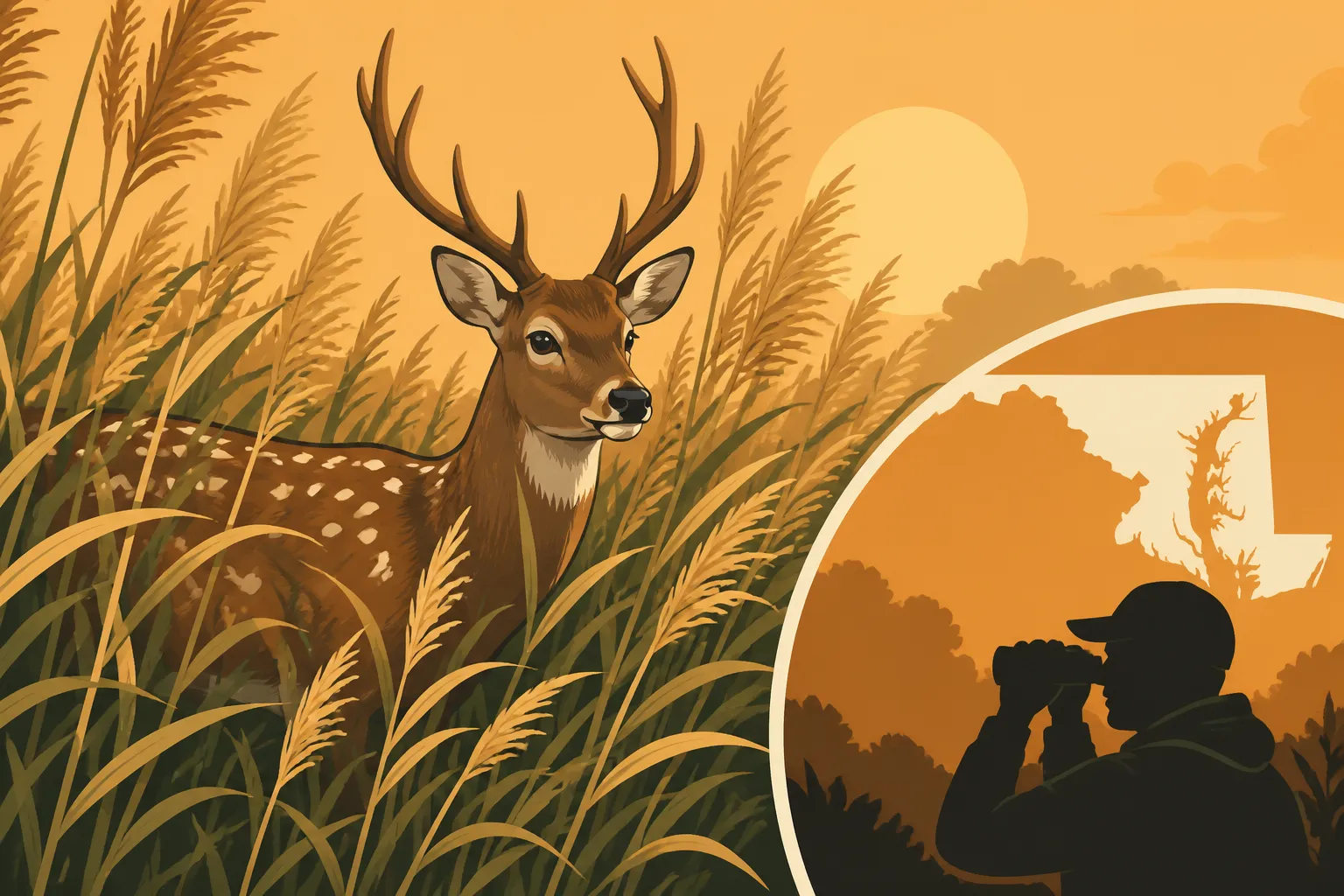
Imagine being a small deer, barely the size of a large dog, living in an area with coyotes and human hunters. Security is paramount. Phragmites offers that security like almost no other vegetation. Growing up to 15 feet tall and forming incredibly dense stands, it creates a visual and physical barrier that's nearly impossible for predators to penetrate unseen. For a Sika, slipping into a thick patch of phragmites is like disappearing into thin air.
The sheer thickness of these stands means that a Sika can be just yards away, and you wouldn't know it. This makes still-hunting incredibly challenging, as visibility is often reduced to mere feet. Deer feel safe in this cover, so they often don't move far from it. They'll bed down deep inside, confident that anything approaching will make enough noise or disturbance for them to hear or sense long before it's a threat. This sense of security is especially important during daylight hours, when Sika often lay up in the dense reeds, only venturing out to feed closer to dawn and dusk. This is especially true for the more mature stags, which are masters of using this cover to avoid detection. For more on their bedding habits, check out our piece on Where Sika Deer Bed in Phragmites.
Food, Water, and Thermal Regulation
It’s not just about hiding; phragmites offers practical benefits for survival too. While Sika deer aren't exclusively eating phragmites, the marsh environment it thrives in provides a diverse buffet. They’ll browse on tender shoots of other marsh grasses, sedges, and forbs that grow alongside or within the phragmites. The marsh floor beneath the reeds often retains moisture, keeping other palatable plants green longer into the season.
Furthermore, access to water is never an issue in a phragmites-dominated marsh. Small guts, ditches, and sloughs crisscross these areas, providing a constant water source for drinking and cooling. This is particularly important during warmer early season hunts or the often muggy peak of the rut. The dense canopy of the phragmites also provides excellent thermal cover. In winter, it can shield them from biting winds and trap some warmth, while in warmer months, it offers shade and can be surprisingly cooler than open areas, thanks to the trapped humidity and the sheer volume of plant matter. This combination of food, water, and thermal comfort makes these areas highly attractive for deer to spend their entire day within, rather than needing to travel far. To understand more about their diet, read our article on What Sika Deer Eat in a Tidal Marsh.
Unlocking the Green Wall: Reading Sika Sign in Phragmites
You can't just blindly crash through phragmites hoping to stumble upon a Sika. It's too vast, too noisy, and too easy to spook game without ever seeing it. The key to hunting these areas effectively is to learn to read the subtle (and sometimes not-so-subtle) signs that tell you Sika deer are using a particular patch.
Trails, Tunnels, and Beds
Unlike a whitetail woods where trails might be faint, Sika trails through dense phragmites are often distinct, almost like tunnels. These aren't just narrow deer paths; they are often deep, worn channels through the thick vegetation, sometimes even with mud or water from frequent use. These "tunnels" are vital arteries for Sika movement within the dense cover. They create them over time, pushing through the reeds, and will reuse them repeatedly. Identifying these main travel corridors is crucial.
Look for areas where multiple trails converge, indicating a central travel hub. These might lead to a more open marsh gut, a small island of loblolly pines, or an edge where they feel comfortable slipping out to feed. You'll often find fresh tracks, droppings, and even shed hair along these trails. Within the densest patches, keep an eye out for flattened areas or depressions – these are Sika beds. They're typically circular or oval, sized for a deer to lie down, and will often have fresh droppings nearby. A useful tool like GoHunt can help you scout these areas from above, allowing you to identify potential high-ground islands or subtle changes in vegetation density where Sika might bed or travel, before you even set foot in the marsh. Our article on Reading a Marsh Trail for Sika Sign delves deeper into deciphering these pathways.
Rubs, Scrapes, and Whistling Posts
Just like whitetails, Sika stags leave behind calling cards during the rut, even within the dense phragmites. Rubs are less common on the sturdy phragmites stalks themselves, but if there's any woody vegetation nearby – a willow, a small pine, or even dead cattail stalks – a stag will rub its antlers. Keep an eye out for smaller diameter saplings that look like they've been sandpapered; these are classic Sika rubs. They tend to make a lot of rubs on smaller diameter trees because their antlers are generally smaller than a mature whitetail buck’s.
Scrapes are also harder to spot in muddy, wet marsh ground, but listen for the distinctive "whistle" of a Sika stag during the rut, especially in September and October. This unique vocalization can cut through the dense phragmites, helping you pinpoint a stag's general location. A stag will often whistle from a slightly elevated position, or a particularly thick patch, announcing his presence. Listening for these calls is often more effective than trying to visually locate a stag in the thick cover. For more on these sounds, check out Why Sika Deer Whistle Instead of Grunting.
Here's a quick guide to common Sika sign in phragmites:
| Sign Type | Description | What It Tells You | Scouting Tip |
|---|---|---|---|
| Tunnels/Trails | Worn paths, often deep and muddy, through dense reeds. | Active travel corridors, potential entry/exit points. | Follow fresh tracks, note direction of travel. |
| Beds | Flattened circular depressions in thickest cover, often with droppings. | Resting areas, indicates deer are bedding here regularly. | Check edges of dense patches, slightly elevated spots. |
| Droppings | Small, dark, pellet-like, often in clusters. Fresh ones are soft/shiny. | Recent deer activity, indicates feeding or resting area. | Look on trails, in beds, and near browse. |
| Rubs | Scraped bark on small woody stems or dead reeds. | Stag activity, especially during the rut; mark their territory. | Focus on small trees or persistent woody structures within reeds. |
| Whistles | High-pitched bugle-like vocalization (stag). | Active stag in the area, often associated with breeding activity. | Listen at dawn/dusk, especially in September/October. |
Navigating the Thicket: Strategies for Hunting Phragmites
Once you've identified areas Sika are using within the phragmites, the real challenge begins: how do you effectively hunt such dense cover? It requires a different approach than hunting open timber or agricultural fields.
Silent Entry and Stand Placement
The absolute golden rule for hunting phragmites is silent entry. Sika deer have excellent hearing, and the rustling of reeds carries a long way. This is not the place for heavy boots or careless steps. Consider wearing soft-soled boots and moving at a snail's pace, or even better, utilizing a boat to access interior marsh points, as detailed in Boating Into a Sika Marsh at Low Tide. When wading through water, hip boots or chest waders are essential. Our article on Hip Boots Versus Chest Waders in Sika Country can help you choose the right gear for the conditions.
Stand placement is critical. Forget seeing deer from a distance; you're looking for close encounters. Your best bet is to set up on the edge of the phragmites where a trail enters or exits, or on a slightly elevated "island" within the marsh where you might have a bit more visibility. A small loblolly pine island in the marsh, for instance, can provide a vantage point that's otherwise impossible to find. We cover this in depth in Hunting a Loblolly Pine Island in the Marsh. Setting a stand on a ditch bank or along a subtle rise can also give you that crucial few feet of elevation. You'll want to place your stand where you expect deer to pass within 15-25 yards for archery, even closer for a tight shotgun shot. This isn’t about glassing; it’s about ambush.
Still-Hunting and Drives
Still-hunting through phragmites is an exercise in extreme patience and stealth. You're not covering ground quickly; you're taking one step at a time, pausing for long periods, listening intently, and scanning every crevice. The wind direction is paramount here. You absolutely must hunt into the wind, as Sika deer rely heavily on their sense of smell. Move slowly enough that you can stop the instant you hear or see anything, and be ready to shoot in tight windows. Remember, Sika are small targets, and you'll likely only get a quick glimpse.
Drives can be effective, especially on private land or with a well-coordinated group on larger public land sections. One or two hunters can slip into the downwind side of a phragmites patch, moving slowly and making some noise, pushing deer towards standers positioned on the upwind exits. This tactic works best when you know where the deer are likely to escape the thick cover. However, it requires careful planning and communication to ensure safety and avoid simply blowing deer out of the country without a shot opportunity. Make sure everyone involved understands the terrain and has a clear plan for movement and shooting lanes.
Gear Up and Stay Safe: Essentials for Phragmites Hunting
Hunting in phragmites is inherently challenging and can be dangerous if you're not prepared. The terrain is often uneven, wet, and disorienting. Proper gear and a strong focus on safety are non-negotiable.
Navigation and Communication
Getting lost in a dense phragmites marsh is surprisingly easy. Every direction can look the same once you're deep inside. A reliable GPS device or a smartphone app with GPS capabilities, like GoHunt's mapping features, is absolutely essential. Mark your entry point, your stand location, and any key features (like a boat ramp or a distinctive tree line) before you start hunting. This will give you confidence and, more importantly, a way to navigate back out, especially in low light or fog. Knowing your exact location can also be critical for safety if you need to communicate your position to others.
Cell service can be spotty in remote marsh areas, so don't rely solely on your phone for communication. Consider carrying a two-way radio if hunting with a partner. Always let someone know where you are going and when you expect to return. This is sound advice for any hunting trip, but it's particularly vital when you're venturing into the labyrinthine environment of a phragmites marsh. Our discussion on Cell Service and Communication in the Marsh further highlights this critical point.
Waders, Tracking, and Recovery
As mentioned, hip boots or chest waders are mandatory for most phragmites hunts, as you'll inevitably encounter muddy, wet conditions or standing water. Choose a pair that is durable and comfortable for walking. You'll likely be pushing through thick, abrasive vegetation, so quality matters.
Tracking a wounded Sika in dense phragmites is one of the toughest challenges in deer hunting. The vegetation quickly closes behind a running deer, and blood trails can be minimal or easily washed away. Even in optimal conditions, it's a grind. Therefore, shot placement is paramount. Aim for lethal hits that anchor the animal quickly. If you do wound a deer, give it plenty of time before you begin tracking, then move methodically, grid-searching the area. Having a good tracking dog can be a game-changer, but ensure they are legally permitted and well-trained for marsh environments. For more detailed advice on this, our article on Tracking a Sika Stag Into Thick Marsh Grass is a must-read.
Recovering a Sika from deep within a marsh can also be a monumental task. These areas are often inaccessible to ATVs or even canoes. You might need to drag the animal a long distance through water, mud, and dense reeds. Plan for this possibility by carrying a strong drag rope and knowing your exit strategy. Some hunters even use specialized marsh sleds or small inflatable boats to help with recovery. Remember, a Sika stag might be smaller than a whitetail, but dragging one through dense phragmites can feel like moving a much larger animal. Our piece on Recovering a Deer From a Tidal Marsh offers practical tips for this challenging scenario.
Disclaimer
This article is for general informational purposes only and does not constitute professional advice. Laws, prices and regulations vary by location and change over time. Consult a qualified professional for guidance on your specific situation.