Where Bobcats Live in Western Maryland
There's a certain magic to the wilder corners of Maryland, especially out in the western mountains. Many folks, when they think of Maryland wildlife, picture whitetail deer, maybe a flock of Canada geese over the fields, or even a sika deer disappearing into a marsh. But for those of us who spend a lot of time in the woods, there's another, far more elusive creature that ignites curiosity: the bobcat. You might hear whispers, see a blurry trail camera photo online, or wonder if they even still exist in our state. This guide is going to pull back the curtain on where these incredible felines truly make their home in Western Maryland, helping you understand their world and perhaps even recognize the subtle signs of their presence.
The Elusive Nature of Maryland's Bobcats
Let's be honest, seeing a bobcat in the wild is like winning the lottery for most hunters and outdoor enthusiasts. They are truly one of Maryland's most secretive residents, and that elusiveness often leads to the mistaken belief that they're incredibly rare or perhaps even extinct in certain areas. But trust me, they're out there, living their wild lives just out of sight.
Why Bobcats Are So Hard to Spot
Bobcats, true to their feline nature, are masters of stealth and camouflage. Their tawny, spotted coats blend seamlessly with the dappled sunlight and shadows of the forest floor, making them practically invisible even when they're relatively close. Unlike deer or turkeys that might linger in open fields, bobcats stick to thick cover and dense undergrowth whenever possible. They're primarily nocturnal or crepuscular, meaning they're most active during the twilight hours of dawn and dusk, or completely under the cloak of night. This schedule alone makes casual encounters extremely unlikely for most people who spend their daylight hours in the woods.
Beyond their natural camouflage and activity patterns, bobcats are inherently wary of humans. They are solitary animals, generally preferring to avoid confrontation and slipping away long before you even realize they were there. Their senses are incredibly keen, especially their hearing, which allows them to detect approaching footsteps or voices well in advance. This combination of factors means that even if you're frequently in prime bobcat country, your chances of a direct sighting are slim. It's a reminder that a healthy ecosystem doesn't always advertise all its residents; sometimes, the most magnificent creatures thrive in secret.
General Range and Population Density
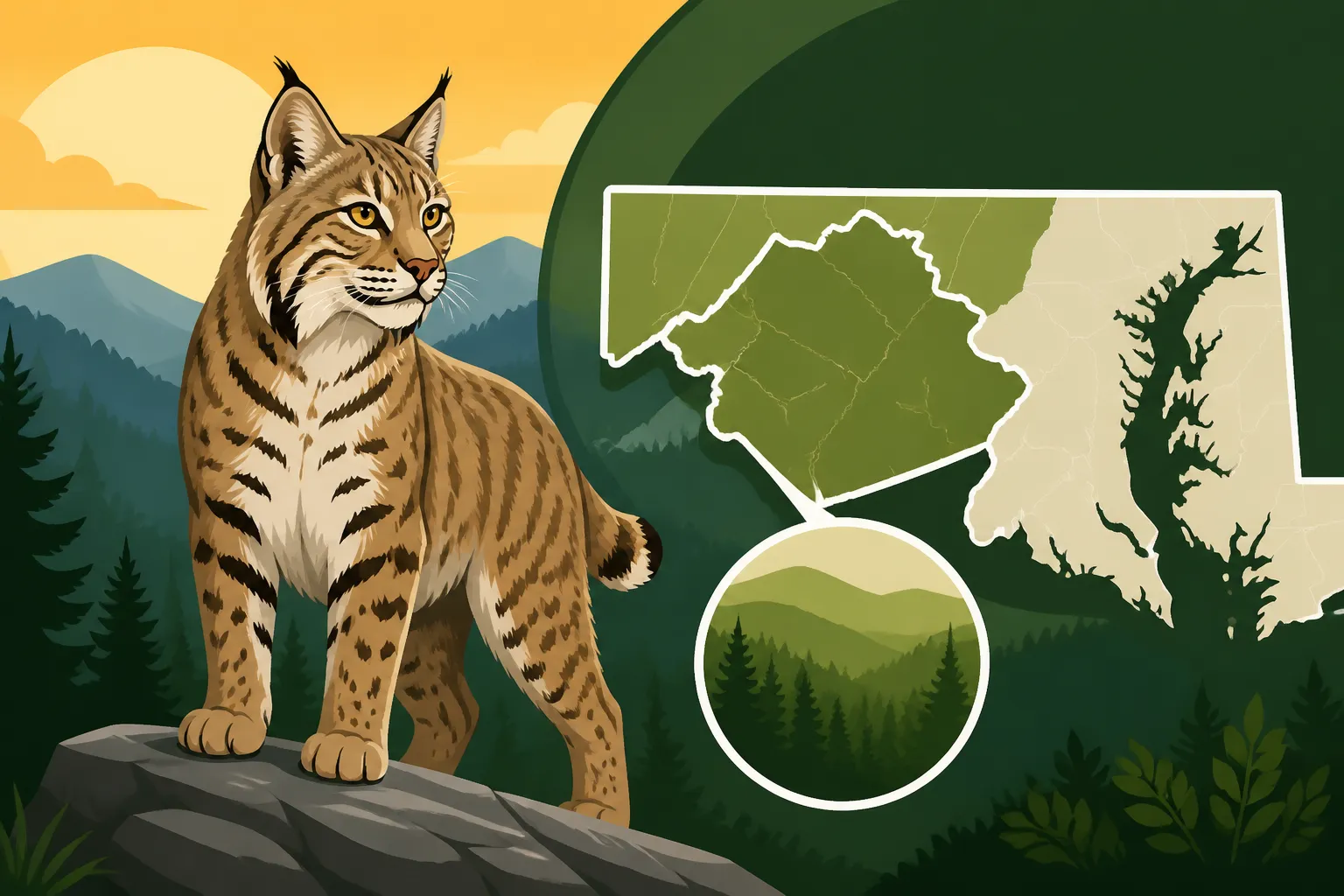
While bobcats are elusive, their presence in Maryland, particularly in the western counties, is a testament to successful conservation and healthy habitats. Historically, bobcats were much more widespread across the state, but habitat loss and unregulated hunting in past centuries severely impacted their numbers. Thanks to protections and a resurgence of forested areas, their population has gradually recovered and stabilized. Today, Maryland’s bobcat population is most concentrated in the mountainous, heavily forested terrain of Western Maryland.
Counties like Garrett, Allegany, and parts of Washington County offer the ideal blend of habitat for these wild cats. You won't find them in the same densities as, say, white-tailed deer. They require large, contiguous tracts of undisturbed forest, which means their population density is naturally lower. They are apex predators in their niche, and their numbers are dictated by the availability of prey and suitable habitat. While they have been sighted in other parts of the state, these are generally transient individuals or populations in less established areas. For a consistent presence, the mountains are where it's at.
Prime Bobcat Habitat in Western Maryland
So, if you're wondering where specifically these magnificent felines live, think wild, rugged, and densely vegetated. Western Maryland provides just that, a stark contrast to the flatter, more agricultural landscapes further east. It's a landscape that speaks to the wild spirit of a bobcat.
Rugged Mountain Forests and River Valleys
The mountainous regions of Western Maryland are a bobcat's paradise. We're talking about the vast expanses of Savage River State Forest, Green Ridge State Forest, and numerous Wildlife Management Areas (WMAs) like Dan's Mountain Wildlife Management Area and Warrior Mountain Wildlife Management Area. These areas are characterized by steep ridges, deep hollows, and dense hardwood and mixed pine forests. Bobcats thrive in this complex topography, using the varied terrain to their advantage for hunting and avoiding detection.
River valleys, such as those carved by the Potomac River and its tributaries, also play a crucial role. These corridors often provide dense riparian zones with thick undergrowth, offering both cover and access to water. The rocky bluffs and ledges found along these waterways are perfect for den sites or lookout points. Imagine a bobcat silently picking its way along a rocky creek bed, using the rushing water to mask its footsteps, or perched on an overlook, scanning the forest below for movement. It's this mosaic of rugged mountains and fertile river bottoms that forms the core of their home range.
Dense Undergrowth and Rocky Cover
If you want to find bobcat country, look for the thickest, nastiest cover you can imagine. Bobcats are not fans of manicured forests or open fields. They gravitate towards areas with an abundance of dense undergrowth, whether it's thick mountain laurel, rhododendron thickets, or areas with significant blowdowns and logging slash. These dense patches provide ideal ambush points for hunting small game and offer unparalleled security from larger predators and, of course, humans.
Rocky outcrops, boulder fields, and even old, disused rock walls are also critical habitat features. These provide natural shelters, den sites for raising kittens, and vantage points. A large rock overhang or a jumble of boulders can offer protection from the elements and a secure place to rest during the day. Think of the remote, less-traveled parts of the forest, the places where the terrain is challenging and the vegetation is thick enough to make you push your way through. That's exactly the kind of environment a bobcat calls home. When you're using a mapping tool like GoHunt, look for those green and brown splotches indicating dense forest and steep contours; those are promising areas.
What Sustains Western Maryland's Bobcat Population
A thriving predator population is always a strong indicator of a healthy ecosystem. For bobcats in Western Maryland, their continued presence is directly linked to two key factors: a robust prey base and sufficient undisturbed habitat.
Abundant Prey Species
Bobcats are obligate carnivores, meaning their diet consists entirely of meat. Their primary food sources are small to medium-sized mammals and birds. In Western Maryland, this means a steady supply of cottontail rabbits, squirrels (both gray and fox), chipmunks, and various ground-nesting birds like grouse and wild turkeys. Rabbit Hunting Maryland Farm Hedgerows or Squirrel Hunting Maryland Hardwood Ridges can put you in areas where bobcats are also looking for a meal. They are opportunistic hunters, and their diet reflects the local abundance of these smaller game animals.
Occasionally, a bobcat might also prey on fawns or sick/injured adult deer, particularly during the harsh winter months when other food sources are scarce. This helps keep the deer population healthy by culling weaker individuals. A healthy population of small game across the region directly translates to a healthy bobcat population. The mosaic of fields, brush, and timber in Western Maryland provides excellent habitat for these prey animals, which in turn supports the bobcats.
Limited Human Disturbance
Bobcats, being naturally shy and solitary creatures, need space away from human activity to thrive. Western Maryland's extensive state forests and WMAs offer significant tracts of land where human presence is relatively low, particularly once you venture off the main trails and roads. These areas provide the quiet, undisturbed environment essential for denning, hunting, and raising young without constant harassment.
While hunting is allowed in many of these areas, the sheer size and ruggedness of the terrain mean that there are always remote pockets that see minimal foot traffic. Areas managed for timber production, which might have old logging roads that become overgrown, or steep, inaccessible hollows, can also become refuges. The less development, the less vehicular traffic, and the fewer people generally roaming, the better for bobcats. Using a digital mapping system like GoHunt to identify roadless areas and deep timber is a great strategy to find these undisturbed zones, which are often prime bobcat habitat.
Signs of Bobcat Presence and Responsible Wildlife Viewing
So, how do you know if a bobcat is living in your hunting area or a patch of woods you frequent, if you never actually see one? You learn to read the signs, just like you would with any other game animal. Looking for these clues adds another layer of intrigue to your time afield.
Scat, Tracks, and Scratches
Finding direct evidence of a bobcat takes a keen eye and a bit of luck, but it’s certainly possible. Their tracks are perhaps the most definitive sign. Bobcat tracks are typically rounder than a coyote's, showing four toes in both the front and hind feet with no claw marks visible (claws are retractable). They also tend to register more clearly defined pads than a dog's track. The stride is usually direct and purposeful, often appearing in a straight line, especially when they're on the prowl. Look for these tracks along muddy creek banks, dusty logging roads, or in fresh snow.
| Feature | Bobcat | Coyote | Domestic Cat |
|---|---|---|---|
| Track Shape | Round, compact | More oval, elongated | Round, smaller than bobcat |
| Claw Marks | Not visible (retractable) | Visible (non-retractable) | Not visible (retractable) |
| Toe Pads | Four, prominent | Four, sometimes splayed | Four, small |
| Heel Pad | Typically one lobe | Often two lobes | Typically one lobe |
| Size (Front) | ~1.5 – 2.5 inches wide | ~2.5 – 3.5 inches wide | ~0.8 – 1.5 inches wide |
| Gait | Direct register, straight | Staggered, often zigzag | Direct register, straight |
Bobcat scat can also be a clue. It's usually segmented, blunt on the ends, and often contains hair, bone fragments, or feathers from their prey. They often deposit scat in prominent locations, like on top of a log or rock, possibly as a territorial marker. Scratch posts, where they sharpen their claws, can sometimes be found on trees or stumps in their territory, similar to a domestic cat but larger and higher up. While none of these signs are guaranteed, finding one or more in suitable habitat points strongly to their presence.
Trail Cameras and Ethical Observation
For many, the most satisfying way to "see" a bobcat is through the lens of a trail camera. Placing cameras in high-probability areas—like game trails that funnel through thick cover, pinch points in terrain, or near known rocky dens—can yield incredible footage. It's a non-invasive way to confirm their presence and learn about their habits without disturbing them. I've had countless trail camera photos of bobcats over the years, and each one feels like a little victory, a glimpse into their secret world. When scouting for ideal camera locations, tools like GoHunt can really help you pinpoint those natural funnels and hidden pockets of cover where a bobcat might pass through.
Remember, bobcats are wild animals, and they should be observed from a distance. While they are generally not aggressive towards humans, disturbing them, especially a mother with kittens, can lead to defensive behavior. Enjoy the mystery, appreciate their role in the ecosystem, and let them continue to thrive in the wild places of Western Maryland. Their survival is a testament to the health of our forests and a reminder of the true wildness that still exists within our state. If you want to learn more about the broader picture of Maryland's wild residents, check out Maryland's Furbearers and Where They Live or Predators and Nuisance Species in Maryland.
Disclaimer
This article is for general informational purposes only and does not constitute professional advice. Laws, prices and regulations vary by location and change over time. Consult a qualified professional for guidance on your specific situation.