Why Chesapeake Marshes Are Sinking
For those of us who cherish Maryland's wild places, especially the unique and vibrant Chesapeake Bay marshes, it's heartbreaking to witness them slowly disappearing. Many hunters feel a deep sense of loss as once-familiar duck blinds are swallowed by water or prime sika deer habitat turns into open bay. This isn't just a natural cycle; our cherished Chesapeake marshes are literally sinking, and understanding why is crucial for anyone who cares about the future of hunting and conservation in our state. This guide will dive deep into the complex factors driving this phenomenon, from global climate shifts to local geological processes, and explore what it means for our hunting traditions.
The Unrelenting Pressure of Sea Level Rise
Let's start with the big picture: global sea level rise. It's not just some abstract concept; it's a very real force reshaping our coastlines, and the Chesapeake Bay, with its low-lying shores and expansive tidal marshes, is particularly vulnerable. When you look at the Bay, you're looking at an area directly feeling the effects of a rising ocean.
Thermal Expansion of Ocean Waters
One of the primary drivers behind global sea level rise is something called thermal expansion. Think of it like this: when water gets warmer, it expands. Our planet's oceans have been absorbing a tremendous amount of heat, largely due to increased greenhouse gases trapping heat in the atmosphere. This warmer water takes up more space, and that expansion contributes significantly to the overall rise in sea level. It’s a slow, steady increase, but over decades, it adds up to a substantial difference, pushing water further inland and making it harder for marshes to keep their heads above water, literally.
Imagine your favorite marsh creek during a high tide. Now, envision that high tide being just a few inches higher, permanently. Over time, those few inches become a foot, then more, constantly inundating the lower marsh plants, stressing them, and eventually killing them off. This isn't just about an occasional flood; it's about a persistent, higher water level that slowly drowns the very vegetation that builds and sustains the marsh. Hunters scouting new areas or trying to navigate their existing spots often notice these subtle, yet profound, changes year after year. Hunting a Marsh Ditch Bank at Sunrise highlights just how critical understanding these water levels can be.
Melting Glaciers and Ice Sheets
Beyond thermal expansion, the melting of glaciers and massive ice sheets in places like Greenland and Antarctica is another monumental contributor to rising sea levels. These aren't just small ice cubes in a drink; they are vast reservoirs of frozen water. As global temperatures climb, this ice melts, and the meltwater flows into the oceans, directly adding to their volume.
It’s easy to feel distant from a melting glacier on another continent, but its impact is felt right here in Maryland. Every bit of meltwater that flows into the ocean ultimately finds its way to our shores, nudging the Bay's water levels higher. For marsh ecosystems, this continuous influx means deeper water, longer periods of inundation, and less dry ground for critical marsh plants to thrive. This constant push-and-pull with rising water makes it incredibly difficult for the marsh to accrete new soil and vegetation fast enough to keep pace. The delicate balance of life in these wetlands, from the smallest invertebrates to the mighty sika deer and migrating waterfowl, depends on this elevation remaining stable, and rising waters fundamentally disrupt it. It’s why you might be wading into a Dorchester County Public Hunting Access area that used to be firm ground.
Local Factors Accelerating Marsh Loss
While global sea level rise sets the overarching trend, there are specific, localized factors in the Chesapeake Bay region that exacerbate the problem, making our marshes sink even faster. These aren't always immediately obvious, but their combined effect is profound.
Land Subsidence in the Chesapeake Region
One of the most significant local culprits is land subsidence, which is essentially the land itself sinking. The Chesapeake Bay region, particularly the Lower Eastern Shore, is experiencing a natural geological process where the land is slowly subsiding. This isn't unique to Maryland; it's a long-term geological phenomenon influenced by the last ice age. The weight of the massive ice sheets that once covered parts of North America pushed down the land to the north. As that ice melted, the land to the north rebounded, but the land to the south, including our beloved Chesapeake Bay, has been slowly sinking in a seesaw effect.
This geological sinking combines with the rising sea levels to create a "double whammy" for our marshes. If the land is dropping by a few millimeters a year while the water is rising by a few millimeters a year, the effective relative sea level rise is much greater than just the ocean rising alone. This makes it incredibly challenging for marsh vegetation to build up peat and sediment fast enough to maintain elevation. The marsh becomes perpetually stressed, more prone to erosion, and eventually converts to open water. It’s why some familiar landmarks you might use for Scouting Maryland Public Land Before Season look noticeably different now than they did a decade ago.
Erosion and Sediment Dynamics
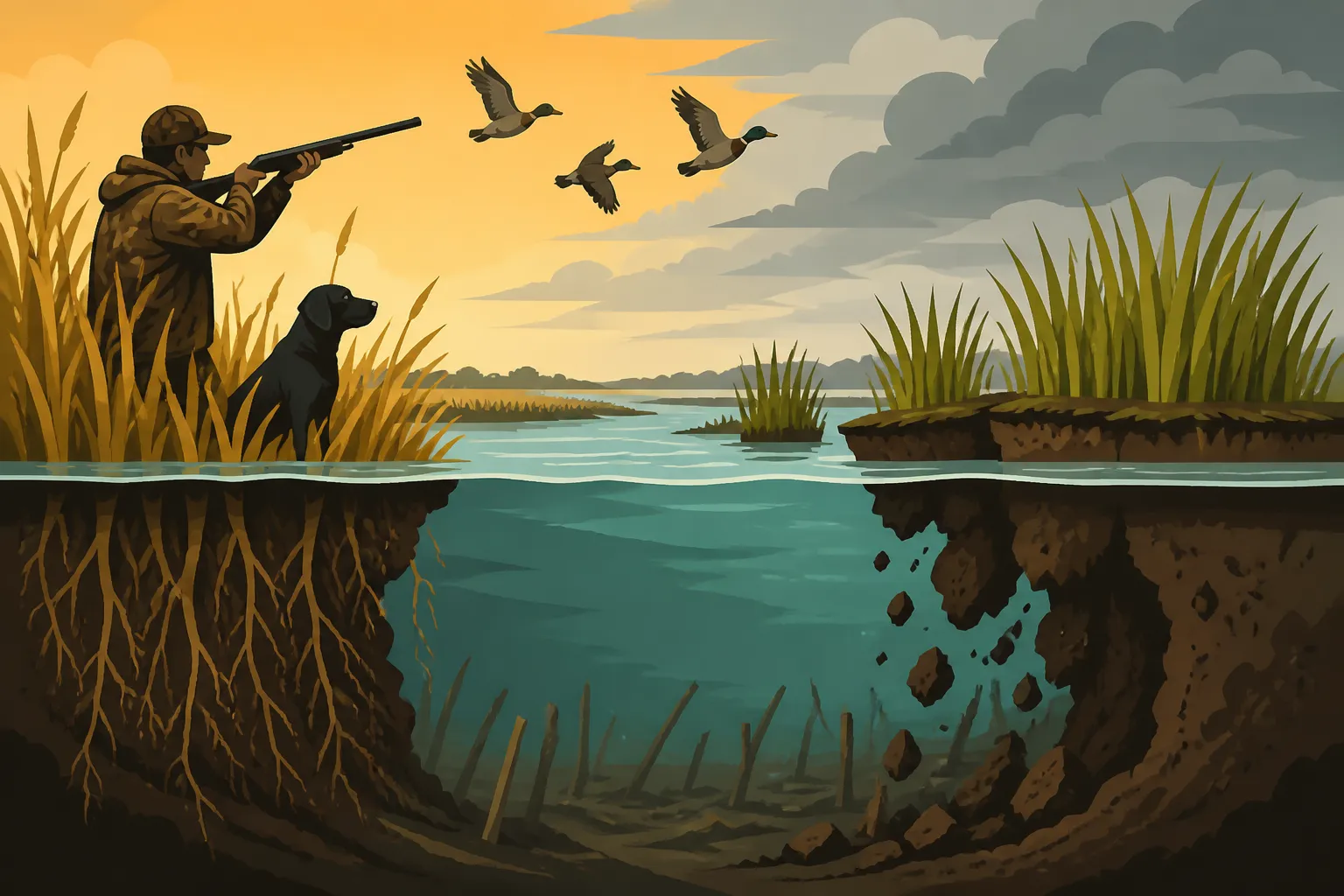
Marshes are naturally dynamic environments, constantly building and eroding. However, the balance has been tipped, and erosion is now winning, partly due to the factors we’ve already discussed, but also due to changes in sediment delivery. Healthy marshes need a constant supply of sediment (like silt, clay, and sand) to build up their elevation and counteract subsidence and sea level rise. Historically, rivers flowing into the Bay carried large amounts of sediment, which helped sustain marsh growth.
However, many factors have reduced this natural sediment supply. Upstream dams trap sediment, agricultural practices can lead to excessive erosion in some areas but altered flow in others, and hardening shorelines with bulkheads and rip-rap prevent natural erosion and sediment deposition within the Bay itself. When a marsh doesn't receive enough fresh sediment, it can't rebuild itself fast enough. Couple this with increased wave energy from stronger storms and wider expanses of open water (due to marsh loss), and you have a recipe for rapid erosion. Tidal currents simply wash away the exposed peat, carving out new guts and ponds where once stood dense marsh vegetation. Reading a Marsh Trail for Sika Sign becomes a different game when the trails you know are eroding or turning into open water.
Human Alterations to the Landscape
Beyond the big natural forces, our own actions have significantly contributed to the vulnerability of the Chesapeake marshes. We, as humans, have altered the landscape in ways that have unintended consequences for these delicate ecosystems.
Historically, ditching and draining were common practices in marshes, often to reduce mosquito populations or create agricultural land. While some of these ditches might now be productive areas for Jump-Shooting Ducks on an Eastern Shore Gut, the widespread network of man-made channels can change the hydrology of a marsh. They can accelerate water flow, leading to increased erosion and preventing the natural sheet flow of water and sediment across the marsh surface. This can essentially dewater parts of the marsh during low tides, stressing vegetation, and then over-inundate other parts during high tides.
Furthermore, coastal development and road construction have often involved filling in wetlands or building structures that impede natural marsh migration. As sea levels rise, marshes naturally try to migrate inland, but if they encounter a road, a housing development, or a hardened shoreline, they have nowhere to go. They get "squeezed" between the rising water and immovable human infrastructure, leading to their eventual disappearance. It's a prime example of how land use decisions, made decades or even a century ago, are having a profound impact on the health and future of our hunting grounds today.
Impacts on Maryland's Hunting Heritage
The sinking of the Chesapeake marshes isn't just an ecological concern; it profoundly impacts the rich hunting heritage of Maryland. For generations, these wetlands have been the backdrop for incredible experiences, and their loss threatens to diminish those opportunities.
Habitat Loss for Waterfowl and Sika Deer
The most immediate and obvious impact of sinking marshes is the outright loss of critical habitat for some of Maryland's most cherished game species. Waterfowl, particularly ducks like black ducks and mallards, rely on the shallow waters, emergent vegetation, and abundant food sources found in healthy marshes. As marshes convert to open water, these shallow, productive areas disappear. Ducks lose their feeding grounds, their resting spots, and their protection from predators. This forces them to concentrate in fewer, smaller areas, increasing hunting pressure and making them more vulnerable. Hunting a Chesapeake Bay Blind at First Light depends entirely on productive marsh around the blind.
Similarly, Maryland's Sika Deer Hunting in Maryland's Tidal Marshes is intrinsically linked to these unique habitats. Sika deer thrive in the dense cover of phragmites and marsh grasses, using the islands and higher ground within the marsh for bedding, feeding, and fawning. As water levels rise and erosion takes hold, these critical islands and dense cover areas diminish. Sika deer are forced onto higher, drier ground, often pushing them closer to human development or making them more concentrated in remaining pockets of suitable habitat. This changes their patterns, their numbers, and the entire challenge and tradition of hunting them. Understanding these habitat shifts is vital for success, and tools like GoHunt can be invaluable for visualizing and adapting to these landscape changes on your scouting app.
Challenges for Access and Navigation
For hunters, shrinking marshes also present significant challenges related to access and navigation. What might have once been a relatively easy wade or boat ride to a favorite hunting spot can quickly become impossible or dangerous. Channels deepen, familiar landmarks disappear, and vast expanses of marsh become soft, impassable mudflats or open water that's too shallow for a boat but too deep to wade.
This forces hunters to adapt, often requiring different equipment, more powerful boats, or simply abandoning traditional spots. Retrieving downed game, whether a duck in a new open water area or a sika stag deep in the now-softer marsh, becomes exponentially harder and more hazardous. The sheer logistics of marsh hunting, already demanding, become even more complex. Boating Into a Sika Marsh at Low Tide is a precise art, and rising water changes the entire canvas. Many hunters face the frustration of looking at a map or their GoHunt app, seeing a historical hunting spot, and realizing the physical reality on the ground has utterly transformed, making their customary approach obsolete.
Here's a quick look at how the changes impact hunting directly:
| Impact Category | Specific Hunting Challenge | Affected Species (Examples) |
|---|---|---|
| Habitat Loss | Reduced food sources and cover; conversion to open water. | Waterfowl, Sika Deer |
| Access Difficulty | Familiar routes become impassable; increased risk of getting stuck. | All marsh hunters |
| Navigation | Lost landmarks; new hazards; difficulty retrieving game. | All marsh hunters |
| Concentration | Game pushed to smaller, remaining areas; increased pressure. | Waterfowl, Sika Deer |
| Ecosystem Shift | Changes in plant life; potential shifts in prey species. | Waterfowl, Furbearers (Muskrat) |
Economic and Cultural Implications
The loss of Maryland's Chesapeake marshes also carries significant economic and cultural implications for our hunting community and beyond. Guided hunts, whether for Chesapeake Bay Sea Duck Charters in Maryland or Booking a Maryland Sika Deer Hunt, contribute to local economies, supporting guides, lodges, restaurants, and other small businesses. As the quality and accessibility of these prime hunting grounds diminish, so too might the appeal for both resident and nonresident hunters, potentially impacting these local economies.
Culturally, marsh hunting is a deeply ingrained tradition for many Marylanders, passed down through generations. The stories, the skills, the camaraderie, and the unique connection to this environment are all tied to the existence of healthy marshes. The thought of losing these places isn't just about losing a place to shoot a duck or a deer; it's about losing a piece of our identity and a living connection to our past. Efforts to combat marsh loss, and to educate hunters through platforms like GoHunt about sustainable practices and adapting to environmental change, are vital for preserving not just the land, but the very spirit of Maryland hunting. Why Chesapeake Marshes Are Sinking is a question that truly hits home for those of us who have spent countless hours immersed in their beauty and challenge.
Disclaimer
This article is for general informational purposes only and does not constitute professional advice. Laws, prices and regulations vary by location and change over time. Consult a qualified professional for guidance on your specific situation.