What Counts for the Maryland Big Game Records
For many hunters, pursuing big game in Maryland is about more than just filling the freezer or spending time in nature – it's about the challenge, the experience, and sometimes, the pursuit of a truly exceptional animal that stands out from the rest. If you've ever wondered what it takes for a deer or bear to make it into the state's official records, or how those impressive racks and heavy bears are actually judged, you're not alone. This guide will walk you through the world of Maryland's big game recordkeeping, helping you understand the criteria, the process, and what truly counts when it comes to a trophy of a lifetime.
The Quest for Maryland's Top Trophy – Beyond the Bragging Rights
There’s a unique thrill that comes with seeing a truly magnificent animal in its natural habitat, whether it’s a towering whitetail buck, a unique Sika stag, or a robust black bear. For some, that thrill culminates in the decision to pursue the animal not just for the harvest, but for its potential to be a record-book trophy. It’s a pursuit driven by respect for the animal and a desire to see its impressive characteristics formally recognized.
Why Hunters Care About Records (and Why You Should Too)
Beyond the obvious satisfaction of harvesting a truly large animal, entering a trophy into the record books serves several important purposes. For starters, it's a testament to the health and vitality of Maryland's game populations. When hunters consistently take animals that meet or exceed record minimums, it signals that habitat is good, management practices are working, and the gene pool is strong. It also inspires future generations of hunters, showing them what's possible with patience, skill, and a deep understanding of the land. Think of it as a living history book, where each entry tells a story of an encounter with nature at its finest. It also fosters a sense of community among hunters, creating friendly competition and encouraging sharing stories of dedication and perseverance. What Counts for the Maryland Big Game Records is about documenting these remarkable animals for posterity.
The Types of "Big Game" Maryland Tracks
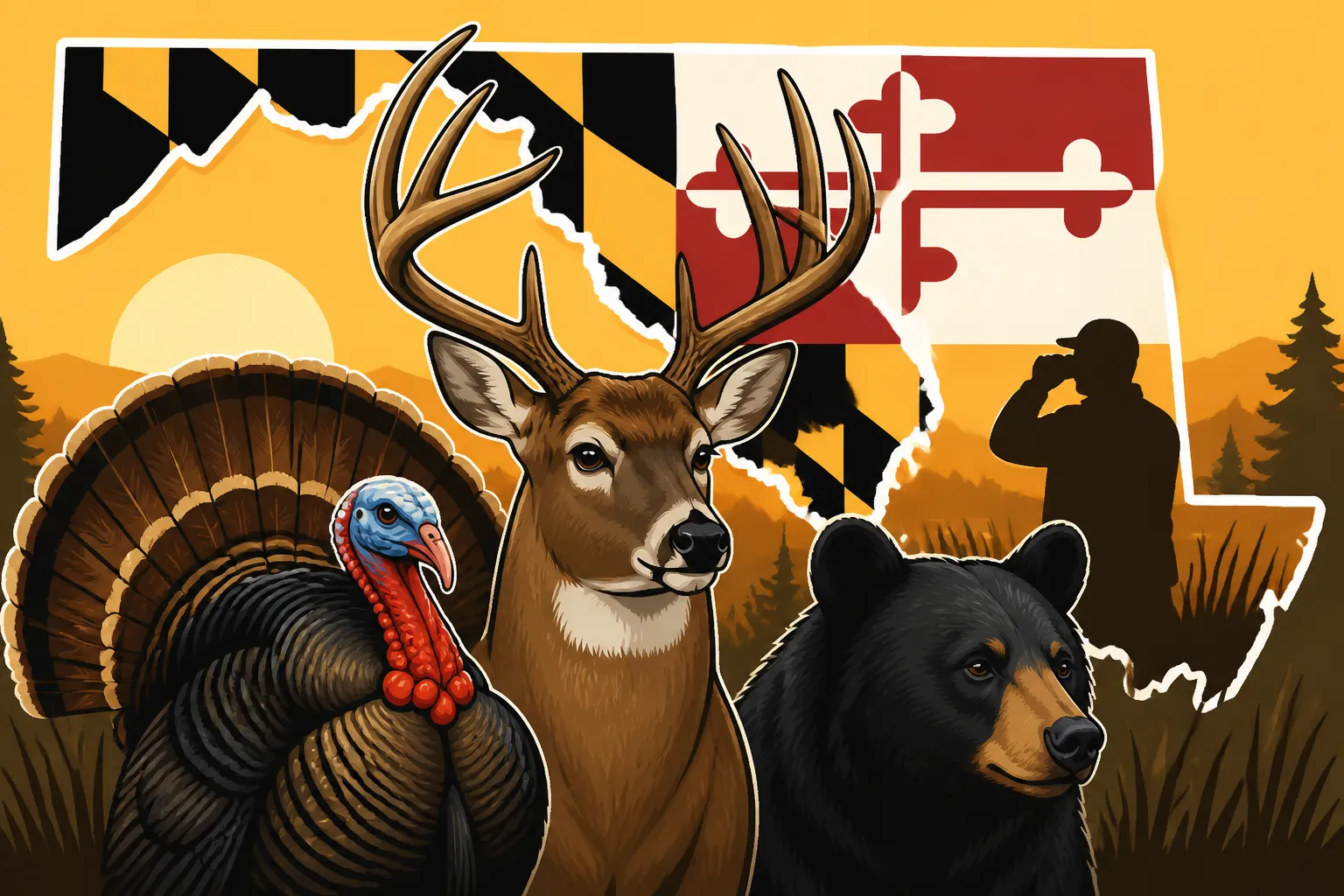
When we talk about "big game records" in Maryland, we're primarily focused on three iconic species that challenge hunters across the state: White-tailed Deer, Sika Deer, and Black Bear. Each of these animals presents its own unique set of challenges and boasts its own distinct characteristics that make them coveted trophies. Whitetails are widespread, offering opportunities from the suburban woodlots to the mountains. Sika deer, Maryland's unique import, provide an exotic hunt in the marshes of the Eastern Shore. And the black bear, a symbol of western Maryland's wildness, represents a truly special achievement. Each species has its own criteria and minimums for entry, reflecting their biological differences and hunting contexts. Many hunters use tools like GoHunt to scout public land or research historical harvest data, providing insights into areas that consistently produce larger animals for these specific species.
Maryland's Official Recordkeeping Bodies and Categories
Understanding which animals qualify for the record books starts with knowing who maintains these records and what systems they employ. Maryland's process is well-established, relying on nationally recognized scoring methods to ensure consistency and fairness.
Who Keeps the Score: Maryland Trophy Deer and Bear Committee
In Maryland, the official recognition of exceptional big game animals falls under the purview of the Maryland Trophy Deer and Bear Committee. This committee works diligently to maintain accurate and consistent records for the state’s top trophies. They oversee the measurement process, ensure adherence to established scoring methods, and ultimately certify entries into the Maryland Big Game Records. This is a volunteer-driven effort by passionate hunters and wildlife enthusiasts who are dedicated to preserving the legacy of Maryland's outstanding game animals. They're the gatekeepers, ensuring that every entry meets the stringent requirements before being officially recognized. It's a system built on integrity and a deep appreciation for the animals.
Understanding the Boone and Crockett and Pope and Young Systems
Maryland's recordkeeping largely mirrors the standards set by two prestigious national organizations: the Boone and Crockett Club for firearms and muzzleloader harvests, and the Pope and Young Club for archery harvests. These organizations developed comprehensive scoring systems that objectively measure antler size and configuration for deer, and skull size for bears.
- Boone and Crockett Club: This club focuses on animals taken with firearms or muzzleloaders. Their scoring system emphasizes antler symmetry for "typical" animals, and rewards non-symmetrical points for "non-typical" animals. It's a meticulous process that accounts for every measurement, from main beam length to tine length and circumference.
- Pope and Young Club: Specifically for animals harvested with archery equipment, Pope and Young uses the exact same scoring system as Boone and Crockett. The only difference is the method of harvest. This ensures that a magnificent buck taken with a bow is recognized on equal footing with one taken with a rifle, within the context of fair chase archery hunting.
These systems are recognized worldwide as the gold standard for big game trophy measurement. Becoming familiar with them, even casually, can help you appreciate the finer points of a potential trophy.
Specific Categories for Whitetail Deer
White-tailed deer are a cornerstone of Maryland hunting, and their antler records are categorized into two main divisions:
- Typical Whitetail: This category rewards symmetry and classic antler structure. The ideal typical rack features long, matching main beams with evenly spaced, proportionate tines (points). Any abnormal points that deviate from the normal symmetrical growth are considered deductions from the overall score. This category celebrates the classic, perfectly formed rack. Many hunters consider a perfectly symmetrical typical rack the ultimate prize.
- Non-Typical Whitetail: This category embraces character and uniqueness. While basic measurements like main beam length and circumference are still taken, the non-typical category specifically adds in the length of all abnormal points. These can be drop tines, kickers, or points growing from other points. For a non-typical, the more unique and massive the antler growth, the better. This category often features some truly wild and impressive antlers that tell a story of unique genetic expression.
When you're out scouting, perhaps using GoHunt to look at historical buck data, you might start to train your eye to distinguish between these two potential paths to the record books. It’s not just about how wide or tall the rack is, but how it’s built.
Specific Categories for Sika Deer
Maryland's Sika deer, often called "Japanese Elk" by locals, offer a distinctive challenge, particularly in the tidal marshes. Their antler characteristics are also recognized in the record books:
- Typical Sika: Similar to whitetails, typical Sika scoring values symmetry. A classic Sika stag will have a main beam with four distinct points on each side (brow tines, bez tines, trez tines, and an inward-pointing main beam tip). Deductions are made for abnormal points or lack of symmetry. A perfectly matched four-point Sika stag is a truly handsome animal, and a challenging one to find in the dense marsh.
- Non-Typical Sika: Just like whitetails, the non-typical Sika category celebrates unique antler growth. Any additional points or unusual formations that don't fit the typical symmetrical pattern are added to the score. While Sika deer typically have less mass than whitetails, a non-typical Sika with extra points or unique formations can still achieve a very respectable score. The sheer difficulty of hunting these animals in their dense habitat makes any record-book Sika an incredible achievement. The Biggest Sika Stag Ever Taken in Maryland entries often showcase these impressive attributes.
Specific Categories for Black Bear
Maryland's black bear population has grown significantly, especially in the western counties, offering a limited but highly sought-after hunting opportunity. For black bears, the record book entry is based on skull measurements, not hide size or weight.
- Skull Measurement: The official scoring method for black bears involves measuring the length and width of the skull. These two measurements are then added together to determine the final score. The skull must be cleaned of all flesh and tissue before it can be measured, and it must have a natural jawbone present. The skull also needs to dry for a minimum period (usually 60 days) to ensure accurate measurements. This emphasis on the skull provides an objective and consistent way to compare the physical size of bears, regardless of their condition when harvested or fluctuations in their body weight. Maryland's Record Black Bear and Who Took It highlights the size of the skulls entered.
The Measurement Process: From the Field to the Score Sheet
So, you've harvested an animal that you believe might be a record. What next? The journey from the field to a potential record book entry involves several critical steps that require patience, careful handling, and adherence to specific rules.
Initial Considerations: Is Your Trophy "Record Worthy"?
Before you even think about finding a measurer, take a moment to assess your animal. Does it truly appear exceptional? For deer, look for significant main beam length, numerous long tines, and good mass. For non-typicals, note any unique abnormal points. For bears, consider the sheer size of the head. It's perfectly okay if it's not a record, of course – every harvested animal is a trophy in its own right. But for record consideration, a visual assessment can save you some time. Many experienced hunters develop an "eye" for what might make the cut, often by looking at photos of past record entries or using resources from organizations like GoHunt to gauge average sizes in certain areas. Don't be shy about reaching out to seasoned hunters or even a potential measurer for an informal opinion based on photos if you're unsure.
The Waiting Period and Antler Drying Process
This is where patience truly becomes a virtue. Before any official measurement can occur, deer antlers and bear skulls must undergo a mandatory drying period.
- Deer Antlers: Antlers need to dry for a minimum of 60 days after harvest before they can be officially measured. This is crucial because antlers can shrink as they dry, and measuring them too soon would result in an inaccurate, often higher, score. During this period, keep the skull plate in a cool, dry place, away from direct sunlight or extreme temperature fluctuations. Many hunters hang them in a garage or shed.
- Bear Skulls: Similarly, bear skulls also require a 60-day drying period after being thoroughly cleaned. Any remaining flesh or tissue could lead to an inaccurate measurement, and the drying helps stabilize the bone. Properly preparing the skull for drying involves meticulous cleaning and often some degreasing.
Rushing this step can invalidate your entry, so resist the urge to get it measured immediately. A well-preserved and properly dried trophy is essential for an accurate and accepted score.
Finding an Official Measurer
Once your trophy has completed its drying period, the next step is to locate an official measurer. Maryland has certified measurers who are trained and authorized by either the Boone and Crockett Club or Pope and Young Club. These individuals are experts in the intricate scoring systems and ensure that every measurement is taken precisely according to the rules. You can usually find a list of certified measurers through the Maryland Trophy Deer and Bear Committee, or by visiting the websites of the Boone and Crockett Club or Pope and Young Club and searching for measurers in Maryland. It's a good idea to contact a measurer in advance to schedule an appointment and understand any specific requirements they might have. They are often seasoned hunters themselves, eager to share in the excitement of a potential record.
The Scoring Session: What to Expect
The actual scoring session is a meticulous and fascinating process. When you bring your dried skull plate (for deer) or cleaned skull (for bear) to the measurer, they will:
- Inspect for Fair Chase: The measurer will confirm that the animal was taken ethically and legally, adhering to fair chase principles. This is a fundamental tenet of big game record keeping.
- Take Precise Measurements: Using specialized tapes and calipers, the measurer will take a series of precise measurements. For deer, this includes main beam length, tine length, circumference measurements at various points, and inside spread. For non-typicals, every abnormal point will be measured. For bears, it’s length and width of the skull.
- Calculate Deductions (for Typical): For typical racks, any differences in symmetry between the left and right antlers are recorded as deductions. Abnormal points are also deducted from the typical score.
- Complete the Score Sheet: All measurements and calculations are recorded on an official score sheet. This sheet is a detailed diagram of the antlers or skull, with every measurement clearly noted.
- Witness and Signatures: Often, a witness (sometimes another measurer or an observer) will be present to verify the measurements. Both the measurer and the hunter will sign the official score sheet.
It's a process that can take a good bit of time, emphasizing the precision involved. Be prepared to sit, watch, and learn as your trophy is systematically evaluated. You’ll leave with a greater appreciation for the complexity and detail involved in official scoring.
Common Misconceptions and Tips for Aspiring Record Holders
Entering an animal into the record books is a significant accomplishment, but there are a few things to keep in mind, and some common misunderstandings that can trip up even experienced hunters.
It's Not Just About Rack Size: Symmetry and Deductions
One of the biggest misconceptions, especially for whitetail and Sika deer, is that a bigger rack automatically means a higher score. While size is certainly a factor, symmetry plays a huge role in the "typical" categories. A very large, impressive rack with significant imbalances between the left and right sides, or many abnormal points, might actually score lower in the typical category due to deductions. Conversely, a slightly smaller but perfectly symmetrical rack could outscore a more massive but less symmetrical one.
Consider two bucks: one with main beams that are an inch different in length and several mismatched tines, and another with perfectly matched beams and tines. The second, more symmetrical buck, even if slightly smaller overall, might have a higher typical score because it has fewer deductions. This is why understanding the distinction between typical and non-typical is so vital. It also means that a deer that looks "huge" to the naked eye might not translate into a top-tier record if it lacks the specific characteristics valued by the scoring system. Judging Three Points on One Antler in the Field is a perfect example of focusing on specific attributes during the hunt itself.
Field Care and Preparation for a Potential Record
The care you take in the field immediately after harvest can greatly impact your trophy's potential for record entry.
- Skull Plate Preservation (Deer): If you suspect a record-worthy deer, protect the skull plate. Don't hack away at it or damage the bases of the antlers. Cape the animal carefully, leaving plenty of hide around the skull to ensure all necessary bone is intact. Proper caping is essential for a clean shoulder mount, and for preserving the antler bases for scoring.
- Skull Preservation (Bear): For a bear, carefully remove the skull from the carcass. Clean off as much flesh as possible in the field or soon after. Boiling is a common method for cleaning, but be very careful not to over-boil, which can damage the bone. Many hunters prefer to macerate or use dermestid beetles for a cleaner, less damaging process, especially for a potential record. Freeze the skull if you can't clean it immediately, to prevent degradation.
- Documentation: Always take clear photos of the animal in the field, especially of the rack or skull, and note the date and county of harvest. This documentation is often requested by the measuring committee.
A well-cared-for trophy reflects the respect you have for the animal and its potential place in Maryland's hunting heritage. It's a tangible link to the experience you had in the woods or marsh. Field Dressing a Deer in Warm September Weather and Registering a Maryland Deer by Phone or App are crucial early steps to ensure a legal harvest is documented properly.
Beyond Official Records: Personal Trophies and Local Recognition
It's important to remember that not every magnificent animal will make the official record books, and that's perfectly fine. A trophy is deeply personal. The memory of the hunt, the beauty of the animal, and the challenge overcome are often far more significant than any number on a score sheet. Many local hunting clubs, county fairs, or even sporting goods stores might have their own informal "big buck" contests or recognition programs that celebrate local successes without the strict adherence to national scoring systems. These can be fantastic ways to share your story and celebrate your harvest within your community.
The quest for a record-book animal is a journey of dedication and respect for wildlife. Whether you achieve an official entry or simply take home a personal best, the pursuit itself deepens your connection to Maryland's natural world and its incredible game species.
Disclaimer
This article is for general informational purposes only and does not constitute professional advice. Laws, prices and regulations vary by location and change over time. Consult a qualified professional for guidance on your specific situation.