Bowhunting Small Parcels Near Baltimore
Bowhunting small parcels near Baltimore requires specific strategies for pressured deer, local legalities, and covert scouting.
Close the distance.
Archery, muzzleloader, and firearm techniques — calling, stand placement, still-hunting, spot-and-stalk, and the weapon rules that change at the state line.
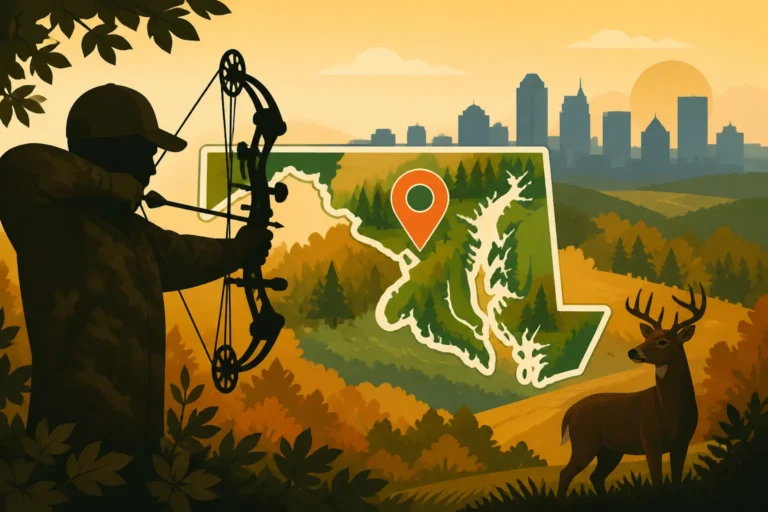
Bowhunting small parcels near Baltimore requires specific strategies for pressured deer, local legalities, and covert scouting.
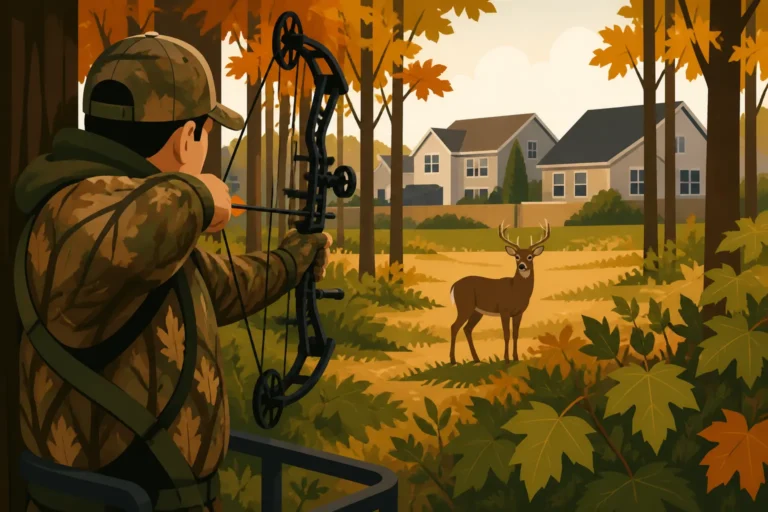
Suburban woodlot deer hunting in Montgomery County involves navigating strict local ordinances, weapon restrictions, and private land access.
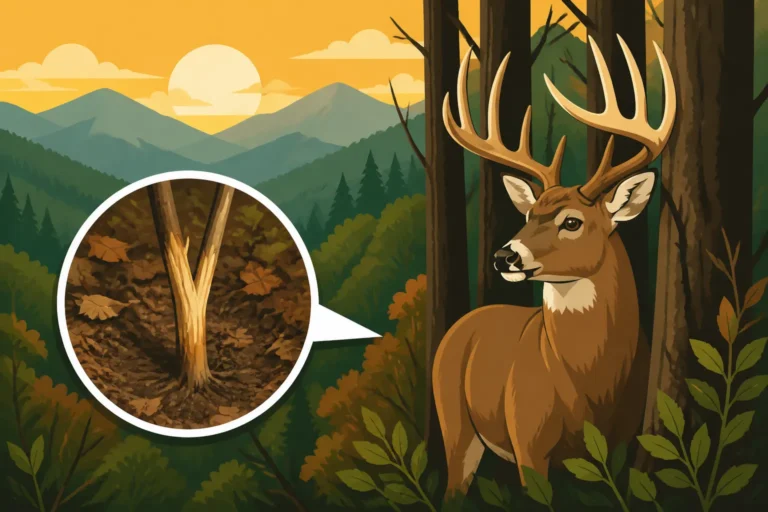
Maryland mountain timber deer sign interpretation helps hunters locate subtle tracks, rubs, and trails in steep terrain.

Ridgetop benches in Green Ridge State Forest provide natural deer travel corridors, bedding zones, and winter food sources.
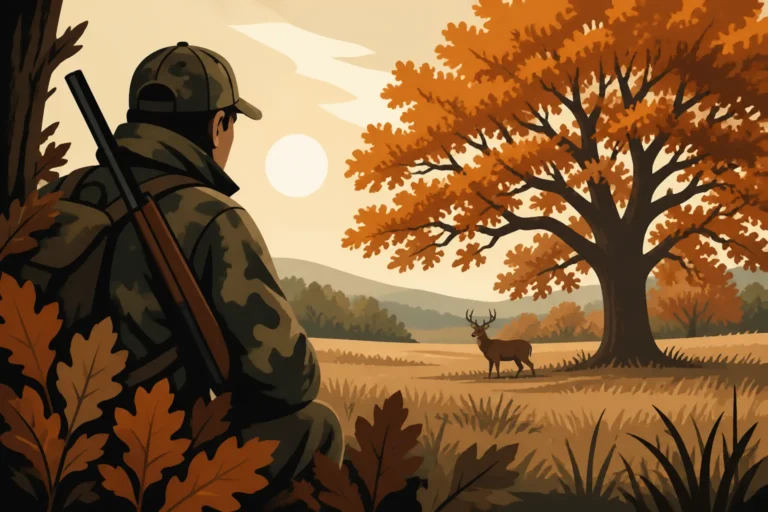
Still-hunting strategies for Savage River oak flats help hunters locate wary deer feeding on white oak acorns in Garrett County.
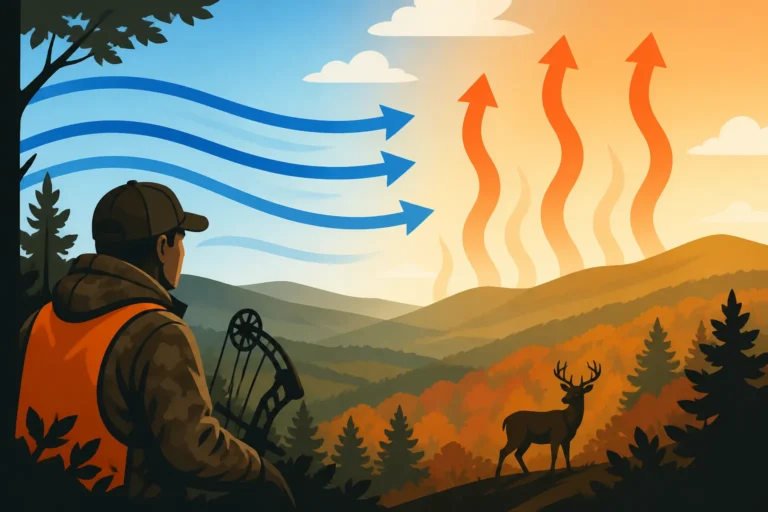
Western Maryland mountain wind and thermal patterns explain how localized air currents affect deer hunting strategies in local forests.
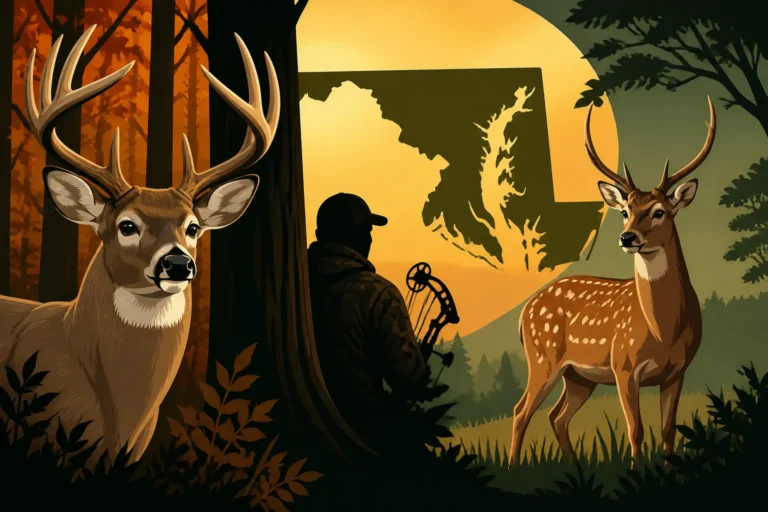
Hunting both white-tailed and sika deer on overlapping Maryland lands requires managing tactics for two species with distinct behaviors.
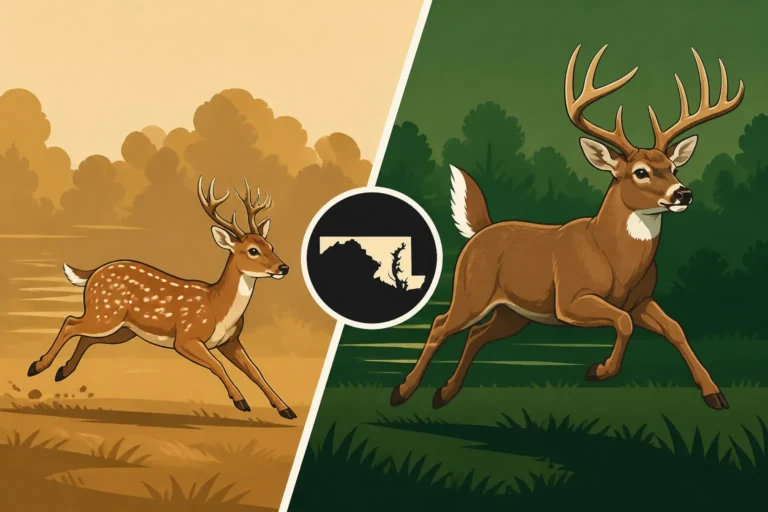
Sika deer genetics, distinct evolutionary backgrounds, and Maryland marsh habitats explain why they are smaller than white-tailed deer.
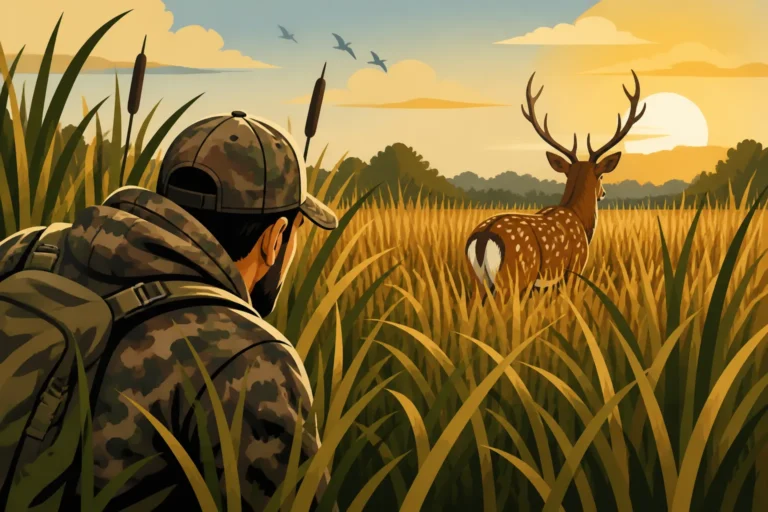
Maryland sika stag tracking in thick marsh grass requires specialized tactics to recover wounded animals hiding in dense Phragmites.
Tides shape deer movement in the marsh, since rising water pushes them onto ditch banks and small islands, so tide charts help time a stand’s entry and exit.