Hunting Maryland’s C&O Canal Corridor
Hunting in Maryland, especially near our more populated areas, can feel like a constant battle against "No Trespassing" signs and crowded public lands. But there's a unique and often overlooked gem that offers surprisingly good opportunities: the historic C&O Canal Corridor. This guide will walk you through the nuances of hunting along this linear park, helping you understand the regulations, navigate the landscape, and develop effective strategies to find success in a truly one-of-a-kind Maryland hunting environment.
Understanding the C&O Canal Corridor for Hunters
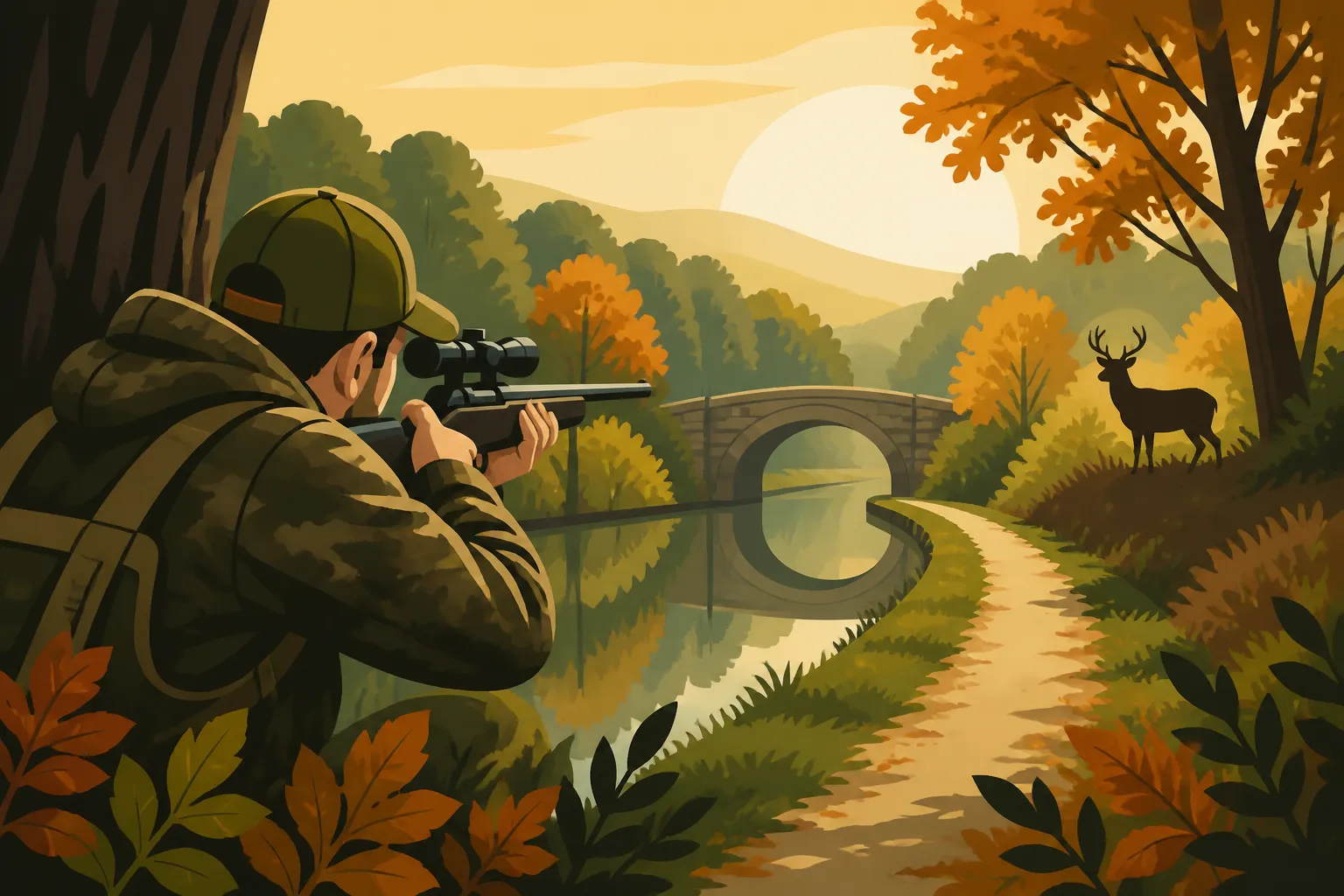
The Chesapeake & Ohio Canal National Historical Park stretches for 184.5 miles along the Potomac River, from Washington D.C. all the way to Cumberland, Maryland. For many, it's a place for hiking, biking, and scenic walks. For the savvy hunter, however, it represents a long, narrow strip of habitat, often bordering private agricultural fields, thick woodlands, and the Potomac River itself, providing an invaluable corridor for deer and other game. It's not your typical expansive forest, but its linear nature creates distinct challenges and opportunities that, once understood, can lead to some incredibly rewarding hunts.
The Unique Linear Landscape
Imagine a ribbon of diverse habitat snaking its way through varying terrain, from suburban fringes near the District to rugged mountain slopes out west. The C&O Canal towpath, the actual path next to the old canal, acts as a spine, with protected lands often extending outwards from it. This means you're frequently hunting long, narrow stretches of woods, thickets, and river bottomland. These strips of cover are often pressured from the private land side, pushing deer and other wildlife into the canal lands for sanctuary. The river on one side and often private ground on the other creates natural funnels, making it easier to predict animal movement once you learn the patterns of a specific section.
Navigating this linear park requires a different mindset than hunting a large block of state forest. Instead of covering vast ground, you're often focused on pinch points, crossings, and small pockets of dense cover. Understanding the flow of the river, the subtle changes in elevation, and where private agricultural fields meet the public corridor will be key to unlocking its potential.
General Park Rules and Hunting Zones
While the C&O Canal is a National Historical Park, which might make some hunters assume it's entirely off-limits, certain sections are indeed open to hunting. This isn't a free-for-all; specific areas are designated as open, often in conjunction with local county regulations. You can't just throw on your blaze orange and head out anywhere along the towpath. It's absolutely crucial to consult the official park maps and regulations, usually found on the National Park Service website for the C&O Canal. These maps will clearly delineate the "No Hunting" zones, which are often near visitor centers, historical structures, and more heavily trafficked recreational areas.
The open hunting zones tend to be in the more rural stretches, particularly in counties like Montgomery, Frederick, Washington, and Allegany. Even within these open sections, specific rules apply regarding weapon types, safety zones around structures or trails, and daily hunting hours. Always assume that the most restrictive rules apply until you've confirmed otherwise. This proactive approach will save you a lot of headache and ensure you're hunting legally and ethically.
Navigating the Regulations Along the Canal
Hunting the C&O Canal Corridor isn't like hunting a single, uniformly regulated state park. It's a patchwork quilt of federal park land, state hunting rules, and sometimes even local county ordinances that can influence what, where, and when you can hunt. This can feel overwhelming, but breaking it down makes it manageable. The most common frustrations arise from not understanding these layered regulations, leading to confusion about access and legal weapon choices.
Federal vs. State vs. Local Laws
The C&O Canal is managed by the National Park Service (NPS), a federal agency. This means that while Maryland state hunting laws generally apply, they do so within the framework of NPS rules. The NPS often designates specific "huntable" sections and outlines general conduct, like prohibiting permanent stands or damage to vegetation. Then, Maryland's Department of Natural Resources (DNR) steps in with the statewide hunting seasons, bag limits, and licensing requirements, which still apply. Finally, local county laws can sometimes add another layer, especially regarding weapon restrictions or even Sunday hunting permissions. For example, Maryland's Legal Weapons by County can vary drastically, with some counties along the canal restricting rifles for deer, even if the state allows them elsewhere.
It's like building a legal hunting sandwich: the federal park rules are the bottom bun, the state regulations are the meat and cheese, and the local county rules are the special sauce. You need all layers to be in agreement. The key here is not to assume. Always check the C&O Canal National Historical Park's official hunting regulations first, then cross-reference with the current Maryland DNR hunting guide for the specific species you're targeting. This multi-layered check is non-negotiable for a legal and stress-free hunt.
Public Access Points and Parking Restrictions
Getting to the C&O Canal Corridor can sometimes be as tricky as figuring out where to hunt. Many access points are well-marked for recreational users, with designated parking areas. However, some of these parking areas might have specific hours or prohibitions against overnight parking, which could impact early morning or late evening hunts. Other access points might be more informal, like small pull-offs along rural roads.
It's vital to scout your intended access points ahead of time, not just on a map, but physically on the ground. Check for "No Parking" signs, understand the hours of operation if any, and note any gates or barriers that might prevent vehicle access, especially during non-peak recreational times. Remember, you're sharing this space with hikers, bikers, and equestrians, so parking considerations often prioritize their access too. A good mapping app like onX Hunt can be invaluable here. It lets you clearly see the C&O Canal boundaries and mark potential parking spots or trails leading into huntable areas, allowing you to pre-plan your entry and exit routes meticulously. This helps avoid that sinking feeling of showing up an hour before daylight only to find your planned parking spot is blocked or illegal.
Deer Hunting Strategies Along the Towpath
The linear nature of the C&O Canal Corridor means deer hunting often requires a slightly different approach than sprawling timber blocks. Deer use this corridor as both travel routes and sanctuary, constantly moving between the river, the canal lands, and adjacent private properties. Your success will hinge on understanding these movements and positioning yourself accordingly in this unique habitat.
Still-Hunting the Edges and Funnels
Still-hunting is perhaps one of the most effective methods along the C&O. Instead of sitting in a static stand all day, you slowly and deliberately move through the habitat, reading sign and anticipating deer movement. The "edges" here are critical: the boundary between the canal land and private fields, the interface between dense river bottom cover and more open woods, or where thick phragmites transition into upland timber. These are natural travel lanes. Look for well-used deer trails running parallel to the canal or the river, as well as those cutting across towards private properties.
The canal itself, and the Potomac River that runs alongside it, creates natural funnels. Deer crossing from one side of the river to another, or moving between pockets of cover, are often forced into predictable pathways. Pay close attention to subtle topographical features or dense thickets that narrow the available travel space. A large downed tree, a washout, or a small tributary crossing the canal lands can create a micro-funnel that concentrates deer movement. Your pace should be painstakingly slow, stopping frequently to glass ahead and listen. Using calls sparingly, like a soft grunt or bleat, can sometimes stop a curious deer in its tracks, giving you an ethical shot opportunity.
Stand Placement Near Travel Corridors
While still-hunting is effective, strategically placed treestands or ground blinds can also be highly productive, especially if you've patterned a specific deer or identified a heavily used corridor. The challenge is that permanent stands are generally prohibited on NPS land, meaning you'll need to use portable climbing stands, hang-on stands, or pop-up ground blinds that you pack in and out daily. This adds a logistical layer, but it's worth it for the right spot.
Focus your stand placement on those aforementioned funnels and pinch points. A classic C&O setup might be a stand overlooking a well-worn trail where deer move from a dense bedding area along the river up into a private cornfield after dark, or vice versa at dawn. Another excellent location would be where two significant blocks of public land along the canal are separated by a narrow choke point, forcing deer traffic through a small window. Consider the prevailing wind patterns and sun angle when choosing your precise location, as deer in these linear habitats are often acutely aware of scent and silhouette. Using a mapping tool like onX Hunt to drop pins on potential stand sites during scouting, factoring in wind direction and access, can save you precious time during the season. Remember, you are often hunting narrow strips of habitat, so being mindful of your backdrop and potential visibility to other users is also important.
Scouting for Success
Scouting the C&O Canal Corridor is paramount. This isn't just a pre-season activity; it's an ongoing process. Because the habitat is linear and deer movements are tied to specific crossings and cover types, fresh sign can quickly indicate where the action is. Look for fresh tracks along the muddy banks of the canal or the river, rub lines along saplings (especially in the rut around Hunting the Rut in Early to Mid November), and scrape lines where bucks are actively communicating. Scrape Lines Along a Maryland Field Edge are particularly telling in the fall.
Beyond just deer sign, pay attention to food sources. Acorn crops in the fall, abandoned apple orchards from old homesteads along the canal, or adjacent private fields growing corn or soybeans will dictate where deer spend their time. Even if you can't hunt the private land, knowing where the food is helps you predict where deer will enter and exit the public corridor. Walk the towpath and side trails, looking for these subtle clues. Using aerial imagery on onX Hunt to identify potential bedding areas (dense thickets, marshy spots near the river), travel corridors, and food sources on private land adjoining the canal is an absolute game-changer. You can virtually scout for hours, identifying promising areas to check out on foot later. Scouting Maryland Public Land With Aerial Photos offers even more tips for maximizing this technology.
Small Game and Other Opportunities
While deer hunting often takes center stage, the C&O Canal Corridor offers a surprising array of opportunities for small game and other species, making it a truly versatile hunting destination. Don't overlook these options, especially if you're looking for a different kind of challenge or to extend your time afield beyond deer season. The varied habitat, from river bottoms to mature hardwoods, supports a diverse wildlife population.
Squirrel and Rabbit Hunting
The dense stands of mature hardwoods that often line sections of the canal and riverbanks are prime habitat for squirrels. Gray squirrels are abundant, and in some of the more western counties, you might even encounter the larger fox squirrel. Squirrel Hunting Maryland Hardwood Ridges is a fantastic way to introduce new hunters to the sport or just enjoy a quiet morning afield. Focus your efforts in areas with abundant oak, hickory, and beech trees, especially during the early fall when mast crops are plentiful. Watching for cutting sign (chewed nut shells) on stumps or logs can tell you where squirrels are actively feeding.
Rabbits, particularly cottontails, thrive in the brushy edges, briar thickets, and overgrown fields that frequently occur along the canal lands. These areas provide excellent cover from predators and offer diverse forage. Rabbit Hunting Maryland Farm Hedgerows teaches you that these linear features are perfect for pushing rabbits out. Hunting with a small game shotgun and working these thickets can provide fast-paced action. The key is to target the densest cover where rabbits feel most secure, as they typically won't venture far from their bolt holes.
Waterfowl and Furbearers
The Potomac River, which parallels the entire C&O Canal Corridor, can provide excellent waterfowl opportunities in specific sections. While you might not be running large decoy spreads, jump-shooting ducks along the riverbanks or pass-shooting geese flying between feeding and roosting areas can be productive. Early morning hunts, especially after a cold front, can see good numbers of wood ducks, mallards, and various diver species moving along the river. Jump-Shooting Ducks on an Eastern Shore Gut applies to many of the smaller tributaries and oxbows along the Potomac as well. Always ensure you are hunting in a legally designated area and are aware of any special federal or state waterfowl regulations, including federal and Maryland migratory bird stamps.
Furbearers like raccoons, opossums, and even coyotes also frequent the canal corridor. Raccoons and opossums are abundant in the river bottom habitat, scavenging along the water's edge and in the dense woods. Coyote populations have grown throughout Maryland, and the linear nature of the canal often serves as a travel corridor for them. Coyote Calling in Maryland Farm Country outlines effective strategies that can be adapted for the canal environment, especially near adjacent farmland where coyotes might be targeting deer or small game. Trapping opportunities for muskrats, beavers, and mink can also exist in the canal itself or its associated wetlands, but this requires specific licenses and a thorough understanding of trapping regulations and local conditions.
Planning Your Hunt: Logistics and Safety
Hunting the C&O Canal Corridor comes with its own set of logistical considerations and safety protocols that are paramount for a successful and ethical experience. Given its public nature and shared-use environment, being prepared and safety-conscious isn't just good practice; it's essential for both your well-being and maintaining a positive image for all hunters.
Access, Parking, and Navigating the Towpath
As discussed, identifying legal access points and parking is your first hurdle. Don't underestimate this. Many sections of the towpath are popular with non-hunters, even in colder weather. Early morning starts are crucial to beat the crowds, especially on weekends. Once you're on the towpath, navigating to your desired hunting area requires careful planning. While the towpath itself is generally flat, walking long distances with hunting gear can be tiring. Consider what gear you truly need versus what you can leave behind.
It's wise to carry a reliable headlamp or flashlight, even during daylight hours, as the wooded sections can be quite dark, and emergencies happen. Since you're often hunting a narrow strip of land, being aware of private property boundaries is critical. This is where onX Hunt shines again. With its detailed property lines and public land overlays, you can literally see where the public land ends and private land begins, helping you avoid accidental trespass, which is a major concern when What Maryland Trespass Law Requires. This precision allows you to hunt confidently, knowing you're within legal boundaries.
Safety Considerations in a Multi-Use Area
Hunting in a multi-use area like the C&O Canal Corridor demands heightened safety awareness. You will encounter hikers, dog walkers, bikers, and equestrians, sometimes unexpectedly. Visibility is absolutely key. Maryland has specific Maryland Blaze Orange Requirements, but in such an environment, wearing more than the minimum isn't a bad idea, especially when moving. Make sure your backpack and any gear you're carrying also have blaze orange panels or covers.
Always assume there are non-hunters nearby, even if you don't see them. This means being extra cautious about shot angles, having a clear understanding of your target and what's beyond it, and absolutely never shooting towards the towpath itself if it means risking hitting someone. Ethical shot placement and target identification are always important, but critically so here. Be prepared to politely answer questions from curious park users, and project a responsible, respectful image of hunters. Carrying a small first-aid kit, a whistle, and having a fully charged phone are also non-negotiables for any outing.
Essential Gear and Supplies
Beyond your weapon and license (don't forget your Maryland Hunting Licenses and What They Cost!), specific gear can make a C&O hunt more comfortable and effective:
- Mapping App: A GPS app like
onX HuntorGoHunton your phone is vital for navigation, boundary identification, and marking sign. Download offline maps, as cell service can be spotty in some remote sections. - Optics: Binoculars are essential for spotting game in dense cover and for positively identifying targets. A rangefinder is also wise, especially if hunting with a bow or muzzleloader where accurate distances are critical.
- Water and Snacks: Even on cooler days, walking long distances means staying hydrated.
- Rain Gear: Weather can change quickly, especially along the river. A lightweight, packable rain jacket is a smart addition.
- Game Cart: If you're successful with a deer, getting it out can be a challenge on the towpath. A compact game cart can be a lifesaver for hauling game back to your vehicle, as vehicle access directly to many spots is impossible. Recovering a Deer From a Tidal Marsh is a different scenario, but the principle of needing extraction assistance holds true.
- Small Backpack: To carry all your essentials comfortably.
- Knife and Field Dressing Kit: Always be prepared for success.
Challenges and Rewards of Canal Hunting
Hunting the C&O Canal Corridor is undeniably different from hunting a sprawling private farm or a remote state forest. It comes with its unique set of challenges, from navigating complex regulations to sharing the landscape with a diverse array of non-hunting users. However, for those willing to adapt and embrace these differences, the rewards can be incredibly fulfilling, offering a truly distinctive Maryland hunting experience.
Overcoming the Hurdles
One of the biggest hurdles is the sheer amount of research required upfront. The "Is this open?" and "What can I use here?" questions can be daunting. You'll need to meticulously pore over park maps, county regulations, and state guides. This often means calling the local DNR office or the park ranger station to confirm specific details for your chosen section. It’s also important to recognize that, due to the linear nature and potential proximity to human activity, some sections might offer less of that "wilderness" feel many hunters seek. Noise from nearby roads or homes can be present, and you'll need to adjust your expectations and tactics accordingly.
The requirement to pack in and out all your gear, including portable treestands or ground blinds, adds another physical demand. There are no ATVs allowed on the towpath, so if you're planning a multi-day trip or anticipate harvesting larger game, consider the logistics of extraction. Finding Maryland Ground Others Walk Past is a concept that truly applies here; success often comes from those willing to go a little further, beyond the easiest access points. Finally, dealing with potential encounters with non-hunters requires patience and good communication skills. Not everyone understands hunting, and a polite, informative demeanor can go a long way in fostering mutual respect.
The Unique Rewards
Despite these challenges, the C&O Canal Corridor offers a multitude of unique rewards. First, it provides accessible hunting opportunities, often much closer to Maryland's major population centers than other large public lands. This proximity can be a huge benefit for those with limited time or who live in urban and suburban areas, offering a chance to hunt without a long drive. Hunting Maryland's Suburban Deer Management Hunts often happens in areas with similar human interaction levels.
Secondly, the C&O Canal can hold surprisingly large deer and offer excellent hunting for various species. Because it acts as a refuge and a travel corridor, deer often use it to avoid pressure from surrounding private land. Learning to hunt these linear funnels and pockets of thick cover can make you a more versatile and adaptable hunter. Every successful hunt along the canal feels like a hard-earned victory, a testament to your scouting, patience, and ability to navigate a complex environment. There's a satisfaction in deciphering the puzzles of this unique landscape and connecting with nature in a truly historical setting. It's a testament to the ingenuity of both the original canal builders and the resilience of Maryland's wildlife.
Disclaimer
This article is for general informational purposes only and does not constitute professional advice. Laws, prices and regulations vary by location and change over time. Consult a qualified professional for guidance on your specific situation.