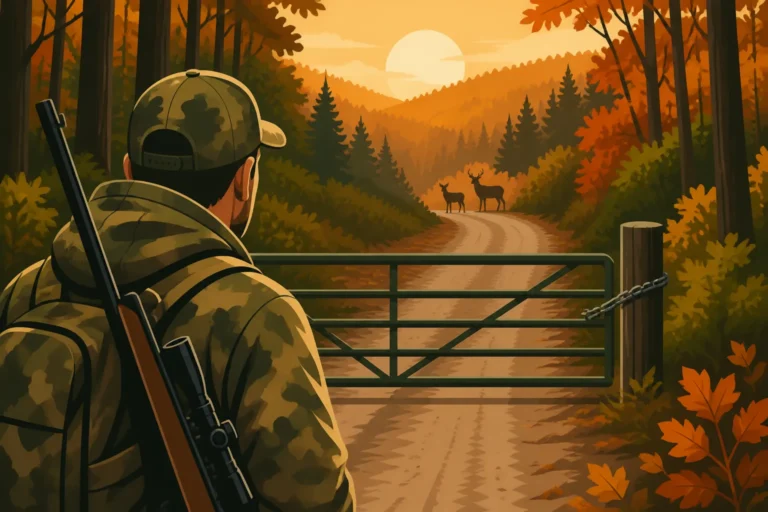
Hunting the Potomac Bottoms Near Hancock
Hunting the Potomac bottoms near Hancock can feel like stepping into a forgotten world, a dense maze of tangled river cane, mature hardwoods, and meandering creek beds that often leaves hunters scratching their heads. It's a challenging environment, but for those willing to put in the work, these areas hold incredible potential for both deer and small game. This guide will dive deep into understanding these unique riverine habitats, navigating their access challenges, and developing effective strategies to fill your tag.
Understanding the Potomac Bottoms: A Hunter's Ecosystem
The Potomac River bottomlands around Hancock, Maryland, are a distinct ecosystem unlike the rolling farmland or rugged mountain timber found elsewhere in the state. This unique environment shapes how game animals live, move, and react to hunting pressure. It’s not just a strip of woods next to the water; it's a complex network of features that offers both sanctuary and sustenance.
The Dynamics of Riverine Habitat
Imagine a ribbon of rich, fertile ground hugging the Potomac River. This isn't your typical dry woods. Here, the soil is often deeper, holding more moisture, which in turn supports an incredible diversity of plant life. You’ll find mature hardwoods like oaks and sycamores towering above, dropping acorns that are crucial food sources for deer and squirrel. Beneath them, though, is where the real complexity lies. Dense undergrowth, thorny thickets of multiflora rose, greenbrier, and heavy stands of river cane create nearly impenetrable cover. This thick vegetation isn't just a nuisance; it's a deer sanctuary, a place where mature bucks can vanish without a trace. For small game like rabbits and grouse, it's a fortress of safety from predators and hunters alike. The river itself acts as a natural boundary, influencing animal movement and often providing a secure edge for deer to travel along. Understanding these layers—the canopy, the understory, and the river influence—is key to unlocking the secrets of this challenging but rewarding habitat.
Deer Movement and Behavior in River Bottoms
Deer in the Potomac bottoms often behave differently than their counterparts in more open country. The abundance of thick cover means they don't have to travel far for security, making them harder to pattern. During daylight hours, bucks will often bed deep within these impenetrable thickets, only emerging at dusk to feed. Water sources, from the main river to smaller creeks and sloughs, are constant draws, offering both hydration and travel corridors. Look for well-worn trails parallel to the river, especially those connecting feeding areas (like acorn flats or nearby agricultural fields) with bedding areas. During the rut, these river bottoms can become hotspots, as bucks cruise the dense cover searching for does. Does, in turn, often seek out these secure areas to fawn and raise their young, making them familiar havens. Don't be surprised to find deer crossing the river itself, especially during periods of low water or if they're pressured on one side. The sheer density of vegetation means your scent cone will dissipate quickly, but it also means deer can be very close before you even realize it. Hunting the Rut in Early to Mid November is a great time to focus on these areas.
Small Game Opportunities
While often overlooked for deer, the Potomac bottoms near Hancock are fantastic for small game. Rabbits thrive in the thorny briar patches and dense undergrowth, finding both food and incredible protection. Look for areas where old fields are transitioning into woods, or where thickets meet more open timber edges. Squirrels, particularly gray squirrels, are abundant in the mature hardwood sections, especially where there's a good mast crop of acorns or hickory nuts. You'll often find them working the tree canopy and dropping down to the forest floor to bury their winter stores. Occasionally, you might even jump a ruffed grouse in the denser, cooler pockets, though they are much less common than squirrels and rabbits. The challenge with small game here is less about finding them and more about getting a clean shot through the thick cover. Persistence, a good dog (if allowed and trained for such cover), and patience are your best tools.
Navigating Access and Terrain Challenges
The Potomac bottoms are not always easy to reach, and once you're in, the terrain itself presents its own set of puzzles. Figuring out who owns the land, where you can legally park, and how to effectively move through dense cover are critical considerations.
Public and Private Land Access
Access to the Potomac bottoms near Hancock is a mix of public and private lands, which can be a real headache if you're not prepared. Parts of the C&O Canal National Historical Park run right along the river, offering some public hunting opportunities, but these areas often have specific rules and regulations that differ from typical state-managed land. Always check the park's hunting guidelines carefully, as certain sections might be off-limits or require special permits. State forest lands, like parts of Green Ridge State Forest, may also border the river, providing more traditional hunting access. Hunting Maryland's Western Mountain Forests offers a broader look at this region.
However, much of the prime river bottom ground is privately owned. Farmers and other landowners often control these fertile strips, making permission paramount. Knocking on doors and building relationships with landowners is often the most effective way to gain access. Be polite, offer to help with chores, and always respect their property and wishes. Tools like onX Hunt or GoHunt can be invaluable here. They allow you to overlay public and private land boundaries on satellite imagery, helping you identify parcels, landowner names, and potential access points before you ever leave home. This can save you countless hours of driving around and guessing.
Dealing with Dense Cover and Water
Once you've secured access, the next challenge is moving through the bottomland. Dense river cane and briar thickets are notorious for snagging clothes, dulling broadheads, and making silent movement nearly impossible. Your gear choice becomes crucial. Durable, tear-resistant clothing is a must, and a good pair of waterproof boots or even chest waders (depending on the water levels and your plans for crossing sloughs) can be a game-changer. Hip boots are sufficient for most shallow crossings, but for truly wet conditions, Hip Boots Versus Chest Waders in Sika Country offers a good comparison, even if it's for Sika habitat, the principles apply.
Water features aren't just obstacles; they're also pathways. Small tributaries, oxbow lakes, and seasonal sloughs can concentrate game. Learning to read these water features—identifying pinch points, crossings, and areas where game might congregate—is a skill that will pay off. Sometimes, the easiest way to get from point A to point B in a river bottom is actually to wade a shallow creek or even use a small canoe or kayak if legal and safe. Always be mindful of changing water levels, especially after heavy rains, as flash floods can turn a manageable creek into a dangerous torrent.
Strategic Approaches for Deer and Small Game
Hunting the Potomac bottoms requires a shift in mindset and tactics. Forget long-range shots and wide-open timber. This is close-quarters hunting, demanding patience, stealth, and an intimate understanding of the cover.
Deer Hunting Tactics: Stealth and Still-Hunting
In these dense river bottoms, aggressive tactics often push deer out before you even know they're there. Stealth and still-hunting are your best friends. Move slowly, taking only a few steps at a time, then stop and observe for several minutes. Use your binoculars constantly, not just for scanning distant fields, but for picking apart the shadows and dense foliage right in front of you. A deer can disappear behind a single patch of briars, so train your eyes to look for horizontal lines (a deer's back), contrasting colors (an ear or antler), or unusual shapes that don't quite fit the natural environment.
When still-hunting, always pay attention to the wind. In river bottoms, thermals can be tricky, often swirling or flowing contrary to the prevailing wind due to the topography and water. Early mornings and late evenings are especially prone to swirling air currents. Try to hunt into the wind, or at least with a crosswind that carries your scent away from where you expect deer to be. Focusing on pinch points where the river, a steep bank, or a dense thicket forces deer into a narrower travel corridor can significantly increase your chances. Consider setting up a ground blind in a key ambush point, especially if you've done your scouting and identified a consistent travel route. Still-Hunting Western Maryland Mountain Timber can offer some similar insights into slow, deliberate movement.
Stand Placement and Scouting in Dense Cover
Hanging a treestand in the Potomac bottoms can be challenging due to the lack of suitable trees in many areas, or the sheer density making shots difficult. If you find a good tree, focus on those overlooking natural funnels, intersections of deer trails, or the edges of feeding areas. A stand placed just inside the thick cover, offering a glimpse into a slightly more open area or a trail, can be more effective than trying to see through a wall of green.
Scouting is absolutely non-negotiable here. You need to spend time in the off-season, without a weapon, just learning the lay of the land. Identify bedding areas, feeding zones, and the intricate network of trails that connect them. Look for old rub lines, recent scrapes, and fresh droppings to confirm deer activity. Don't be afraid to get on your hands and knees to find those subtle clues that tell you where deer are moving. Pay close attention to transition zones—where the river bottom meets a hillside, where a mature timber stand borders a briar patch, or where an agricultural field butts up against the woods. These edges are often high-traffic areas. Scouting Maryland Public Land Before Season is always a wise move.
Tactics for Small Game Success
For rabbits, the key is finding their preferred thick cover. Briar patches, honeysuckle tangles, and dense brush piles are prime locations. Often, the best way to hunt them is with a partner or two, slowly walking through these thickets, kicking brush piles and flushing rabbits. A good shotgun with open choke and smaller shot size (like 6 or 7.5) is ideal for the close, fast shots you'll get. Rabbit Hunting Maryland Farm Hedgerows involves similar principles.
For squirrels, focus on the mature nut-bearing trees in the mornings and late afternoons. Look for freshly cut nut shells or squirrel dens in tree cavities. Still-hunting through these areas, or sitting patiently, can yield good results. A .22 rifle or a shotgun can both be effective, depending on your preferred style and the range of your shots. Moving quietly and scanning the trees for movement or the flick of a tail is crucial.
Gear, Safety, and Seasonal Considerations
Hunting in the Potomac bottoms comes with its own set of practical challenges and safety concerns, from dealing with the elements to ensuring you have the right equipment.
Essential Gear for River Bottom Hunting
Given the often wet, dense, and physically demanding nature of river bottom hunting, your gear choices are critical for comfort and success.
| Gear Item | Why It's Essential in Potomac Bottoms |
|---|---|
| Waterproof Boots/Waders | Essential for crossing wet areas, small creeks, and dealing with mud. |
| Durable, Brush-Resistant Clothing | Protects against thorns, briars, and wear and tear from dense cover. |
| Backpack | To carry water, snacks, first-aid, game bags, and extra layers. |
| Navigation Device (GPS/Phone with onX Hunt) | Crucial for confirming property lines and navigating dense, confusing terrain. |
| Headlamp/Flashlight | For early morning entry, late evening exits, and blood trailing. |
| First-Aid Kit | Small cuts, scrapes, and insect bites are common in thick cover. |
| Water | Staying hydrated is key, especially when pushing through thickets. |
| Game Bags | For packing out deer meat cleanly, preventing contamination. |
| Knife/Saw | For field dressing and clearing small shooting lanes if needed. |
| Orange Safety Vest/Hat | Blaze orange is often required and always a good safety practice. |
Remember, carrying lighter gear is always a benefit when you're pushing through thick cover. Only bring what you truly need. A good set of pruning shears can even be useful for quickly opening up small shooting lanes or clearing a path to a stand site.
Water Safety and Blood Trailing Challenges
Water safety is paramount when hunting along the Potomac. Be aware of currents, especially near rapids or after heavy rains. If you plan to use a boat, ensure it's in good working order, you have all required safety gear (life vests, lights), and you know how to operate it safely in river conditions. Never hunt alone if you plan on extended water crossings or traversing remote, difficult terrain.
Blood trailing in thick river bottom cover is one of the biggest challenges. A deer can run only a short distance and completely vanish. If you take a shot, give the animal plenty of time, especially if it was a marginal hit. Mark your last known blood or sighting carefully. A good headlamp with a strong beam is essential, and even a friend to help grid-search can make a huge difference. Don't rush into tracking. If possible, wait a few hours or even overnight (depending on temperature and hit location) to allow the animal to expire and stiffen up. When you do track, move slowly, looking for even the smallest speck of blood, disturbed leaves, or broken twigs. Blood Trailing in Marsh Grass After Dark provides excellent insights into challenging tracking scenarios.
Seasonal Considerations
The Potomac bottoms offer different hunting experiences throughout the year.
- Early Archery Season (September/October): This can be tough. The vegetation is at its densest, making visibility minimal, and insects are still prevalent. Focus on food sources like early acorns or persimmons, and look for deer moving from thick bedding cover to these feeding areas in the very early morning or late evening. Hunting Maryland's September Archery Opener can help you get started.
- Late Fall (November – Firearms Season): As leaves drop, visibility improves slightly, but the cover is still formidable. This is when the rut activity can really pick up in these bottoms. Bucks are moving, scent checking, and looking for does. The cooler weather also means deer are more active during daylight.
- Late Season (December/January): With colder temperatures, deer will often concentrate around reliable food sources and the thickest thermal cover available. The dense briar patches and river cane provide excellent protection from harsh winter winds and snow. These areas can be fantastic for pushing deer (if legal and safe to do so) or for ambushing deer moving to and from bedding in the cold. Late Season Food Sources for Maryland Deer will give you an idea of what deer are looking for.
Hunting the Potomac bottoms near Hancock is not for the faint of heart, but it offers a unique, rewarding challenge. With the right preparation, a deep understanding of the habitat, and a commitment to stealth and patience, you can unlock the secrets of these productive riverine environments.
Disclaimer
This article is for general informational purposes only and does not constitute professional advice. Laws, prices and regulations vary by location and change over time. Consult a qualified professional for guidance on your specific situation.