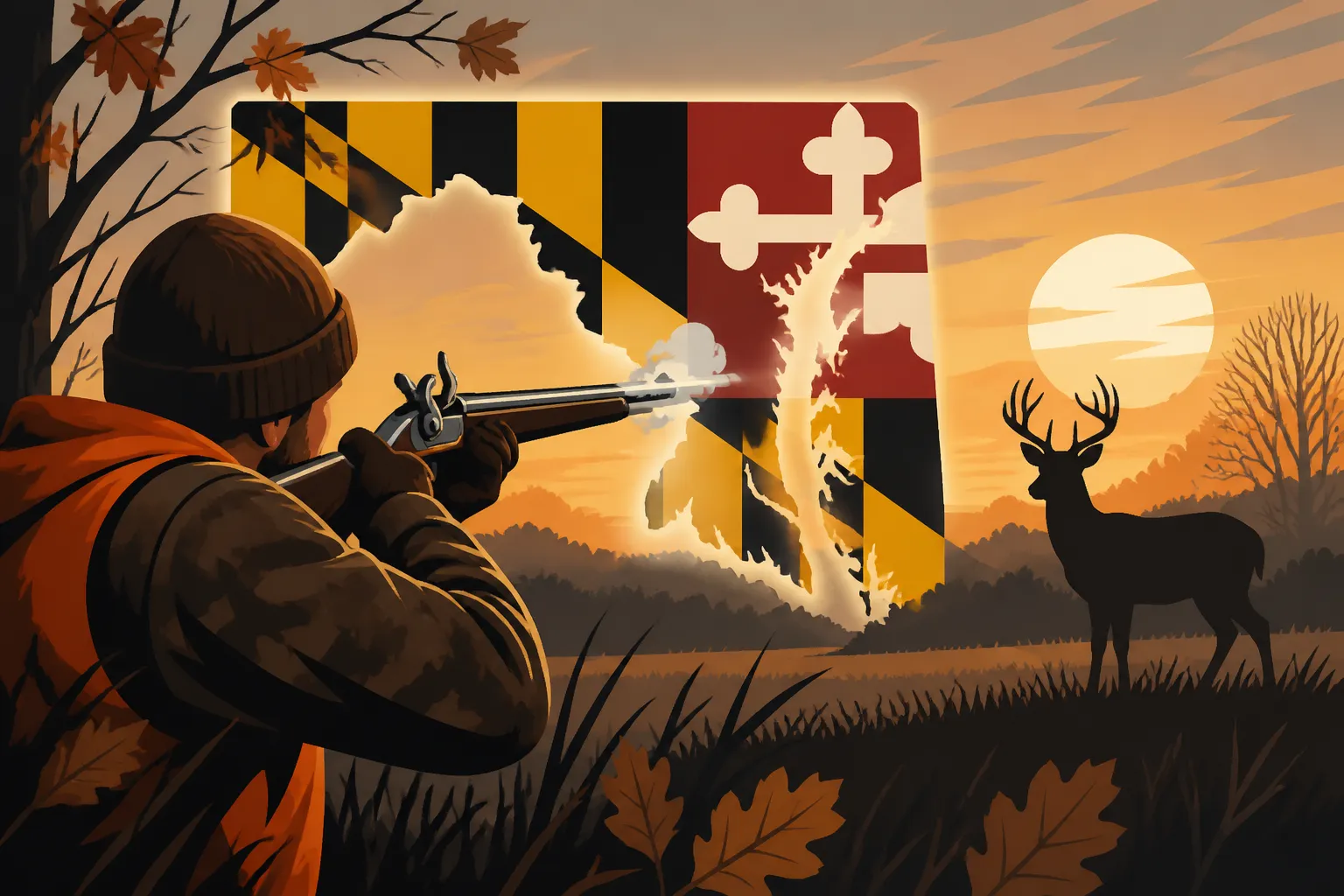
Hunting Maryland’s Late Muzzleloader Season
As the calendar flips past the main firearms season, many hunters feel a pang of regret, thinking the best opportunities for deer have come and gone. The truth is, Maryland's late muzzleloader season offers a unique, challenging, and incredibly rewarding chance to fill your tags and extend your time in the woods. This comprehensive guide will walk you through everything you need to know, from understanding the specific regulations to adapting your tactics for colder weather and warier deer, ensuring you're prepared for success.
Understanding Maryland's Late Muzzleloader Season
Hunting in Maryland's late season often feels like stepping into a different world compared to the early archery days or the frenetic firearms openers. The landscape has changed, the deer have changed, and your approach needs to evolve right along with them. It’s crucial to have a firm grasp of the specific rules and regulations that govern this challenging but rewarding period.
When the Late Muzzleloader Season Runs
Unlike some other states, Maryland offers a well-defined late muzzleloader season, often bridging the gap between the close of the main firearms season and the final stretches of archery. Generally, you'll find this season opening in early to mid-January, providing a precious window of opportunity when many other seasons are closed. It's a fantastic chance to get back into the woods after the holiday hustle. This timing is critical, as it means you're hunting deer that have been through the gauntlet of earlier seasons and are generally much warier. The exact dates can shift slightly each year, so always double-check the Maryland Department of Natural Resources (DNR) hunting guide before making plans. The good news is that this season is typically statewide for deer, meaning hunters in both Region A (Western Maryland's mountain counties) and Region B (the rest of the state, including the Eastern Shore and Central Maryland) can participate.
For many, the frustration comes from trying to keep track of all the overlapping and distinct season dates. It's easy to get confused with the late archery extension, or the brief firearms reopening in January. But the late muzzleloader period is distinct, and often less crowded than the earlier firearms season, which can be a huge benefit for those seeking a more solitary hunt. Knowing these dates precisely allows you to plan your time off work and scout effectively when other hunters have packed it in.
Maryland's Muzzleloader Weapon Rules
Muzzleloading in Maryland comes with its own set of guidelines, and it's essential to be familiar with them to stay legal and safe. Maryland is generally pretty flexible when it comes to muzzleloader types, allowing a variety of firearms. This typically includes traditional flintlock rifles, cap-and-ball percussion rifles, and the more modern in-line muzzleloaders. All of these are valid choices, though each comes with its own quirks and advantages, especially in colder, potentially damp late-season conditions.
When it comes to projectiles, for deer hunting, Maryland typically allows most common muzzleloader bullets and sabots. This isn't like some states where specific counties might have restrictions on sabots; for general deer hunting in Maryland, you're usually good to go with what performs best in your rifle. Powder choices are also open, from traditional black powder to modern substitutes like Pyrodex or Triple Seven. The key is to use what your rifle likes and what you're comfortable shooting accurately. The most common frustrations here often revolve around ensuring your firearm is indeed a legal muzzleloader and not some hybrid that might fall into a gray area. Always make sure your rifle is loaded from the muzzle and uses loose powder or pelletized charges, and a single projectile. For a deeper dive into the specifics of these weapons, you can check out our guide on Muzzleloader Deer Hunting in Maryland.
Deer Bag Limits and Antler Rules in the Late Season
The late muzzleloader season, while brief, often provides additional opportunities to harvest deer, particularly antlerless animals. Maryland's deer bag limits are structured to encourage the harvest of antlerless deer, which is vital for herd health and population control. During the late muzzleloader season, hunters typically have specific allowances for both antlered and antlerless deer, depending on whether you're in Region A or Region B. In Region B, which covers most of the state, antlerless opportunities are generally more generous, and harvesting them is often a priority for many hunters.
It's important to remember Maryland's antler restriction rules, particularly the three-point rule, which generally requires an antlered deer to have at least three points on one antler to be legal. However, during all seasons, including the late muzzleloader, hunters are typically allowed to harvest one antlered deer statewide that does not meet the three-point restriction. This is often referred to as the "one buck exception" and is a critical detail to keep in mind, especially if you encounter a younger buck that doesn't quite make the cut but is still a legal animal under this specific rule. Understanding these rules helps you make quick, confident decisions in the field. To ensure you're fully up to speed on all the specifics, take a look at our comprehensive article on Maryland's Deer Bag Limits and Antler Rule.
Deer Behavior Changes in Late Season
The late season presents a unique challenge because the deer you're hunting are not the same deer you were chasing in October or even early November. Their priorities have shifted dramatically, and understanding these changes is the bedrock of successful late muzzleloader hunting. Forget everything you knew about the rut; these deer are in survival mode.
Adapting to Post-Rut Movement
Once the breeding frenzy of the rut winds down, typically by late November or early December, deer behavior changes fundamentally. Bucks are no longer cruising miles looking for does; they're exhausted, often having lost significant body mass, and their focus shifts entirely to recovery and survival. Does, on the other hand, are recovering from the rut and beginning to deal with the demands of pregnancy. This means you'll see a lot less random movement and a lot more purpose-driven activity. Deer will conserve energy, moving primarily between thick bedding areas and crucial food sources.
This shift can be incredibly frustrating for hunters who are used to seeing deer moving more freely. The sprawling agricultural fields near Salisbury might seem empty, and the familiar oak flats in Green Ridge State Forest might be quiet. Deer become much more nocturnal, or they move only during the safest times of day, often right at first light or last light, and almost exclusively in or very near heavy cover. Your strategy must adapt to this. Instead of looking for wide-ranging travel corridors, you're now seeking tight funnels and hidden trails that connect the deepest cover to the most valuable food. For a stark contrast, you might want to review how deer act during Hunting the Rut in Early to Mid November.
The Critical Role of Late Season Food Sources
With the rut over, food becomes the absolute number one driver of deer movement. Acorns, which were king in the early fall, are largely gone or buried under snow and leaves. Deer need high-energy, digestible forage to rebuild their fat reserves and stay warm in the harsh winter conditions. Identifying these critical late-season food sources is perhaps the most important piece of the puzzle.
You'll want to focus on persistent food sources that remain available even after multiple hard frosts and snowfalls. This often means agricultural fields, especially standing corn or cut soybean fields where deer can glean leftovers. Winter wheat, rye, or brassica food plots become deer magnets, offering green forage when little else is available. In more forested areas, deer will heavily browse on woody stems, honeysuckle, greenbriar, and even young pine shoots. Look for browse lines in thickets – areas where deer have visibly eaten all the reachable vegetation. A patch of unpicked corn in a Dorchester County field or a well-maintained winter food plot in Frederick County could hold the majority of deer in an area. Finding these concentrated food sources can feel like finding a needle in a haystack, especially if you don't do your homework. Our detailed guide on Late Season Food Sources for Maryland Deer can provide even more insights into what deer are seeking out.
Coping with Increased Hunting Pressure
By the time Maryland's late muzzleloader season rolls around in January, deer have been hunted for months. They've dodged archers in September, October, and December, navigated the rifle and shotgun slug seasons in November and January, and possibly even encountered earlier muzzleloader hunters. This cumulative pressure makes them incredibly wary, sensitive to scent, noise, and any perceived threat. They've learned to associate human activity with danger, and they've adapted their routines to avoid it.
This means deer will seek out the thickest, nastiest cover available – places where humans are less likely to tread. They'll bed in dense cedar swamps, impenetrable briar patches, or steep, overlooked ravines. They'll also become more nocturnal, often only venturing into open feeding areas under the cover of darkness. For hunters, this translates to harder tracking, fewer daylight sightings, and a need for extreme stealth. The frustration of seeing a buck on your trail camera only at 2 AM is a common late-season lament. To combat this, you need to think like a pressured deer: Where would I go to feel safe? What remote corner is everyone else overlooking? Understanding how deer react to persistent human presence is critical, and our article on Hunting Pressure on Maryland Public Land offers strategies for finding those less-pressured areas.
Late Muzzleloader Tactics and Strategies
Successfully hunting Maryland's late muzzleloader season requires a significant shift in strategy. You can't just rely on tactics that worked during the rut or early season. It's about precision, patience, and adapting to the colder weather and the hyper-alert nature of the deer.
Focusing on Cover and Thermal Hubs
In the late season, deer's primary concerns are food, safety, and staying warm. This means they spend a great deal of time in heavy cover, not just for security, but also for thermal protection. Look for dense stands of evergreens like cedars or loblolly pines, which offer a buffer from the wind and trap what little warmth the sun provides. South-facing slopes are also prime locations, as they receive more direct sunlight throughout the day, warming up faster and holding heat longer. These areas become "thermal hubs" where deer can conserve precious energy.
When you're out scouting, don't just look for tracks; look for heavy trails leading into and out of these thickets. Often, deer will bed surprisingly close to food sources in these secure areas, only emerging at last light or just before dawn. Still-hunting these dense covers can be incredibly effective, but it requires extreme patience and a keen eye. You'll need to move slowly, almost imperceptibly, scanning every shadow and thicket for a horizontal line or the flick of an ear. Using tools like the GoHunt app to identify dense vegetation patches and south-facing slopes on satellite imagery can give you a significant advantage in locating these crucial areas before you even step foot in the woods. For more on navigating thick timber, consider reading about Still-Hunting Western Maryland Mountain Timber.
Stand Placement for Cold Weather Success
Your stand placement in the late season needs to be surgical. Gone are the days of setting up on a random oak flat and hoping for the best. Now, you need to pinpoint the exact travel routes between a thermal bedding area and a preferred food source. Deer movements are condensed and predictable, but they are also very subtle. You'll often find them moving along edges of cover, ditch lines, or subtle terrain features that offer concealment as they transition.
Wind direction is paramount, even more so than in other seasons. With deer moving less and hunkering down more, your scent will hang in the cold, still air longer. Always approach your stand with the wind in your face, and ensure your stand choice allows for prevailing winds to carry your scent away from where deer are likely to approach. Pay close attention to thermal currents, especially in hilly terrain or marshy areas. As the temperature drops after sunset, cold air sinks, and as the sun rises, warm air rises. These thermals can carry your scent in unexpected directions, so factor them into your setup, especially for evening hunts. For practical advice on effective stand placement, you might find our article on Hanging a Stand on a Maryland Farm Edge quite useful.
Still-Hunting and Drives in Late Season
Beyond sitting in a stand, still-hunting and strategic deer drives can be highly effective late-season tactics, especially if you're dealing with pressured, cover-loving deer. Still-hunting, when done correctly, involves moving through the woods with extreme stealth, taking a few steps, then pausing to observe for several minutes before repeating. This method works best on cold, still days, or when there's a light dusting of snow that muffles your footsteps and allows you to track fresh sign. In the deep woods of Western Maryland, or the loblolly stands of the Eastern Shore, moving slowly through known bedding areas can push deer out just enough for a shot.
For private land hunters, or those with access to smaller, overlooked public parcels, carefully orchestrated deer drives can be a game-changer. This isn't about running and yelling; it's about subtle, controlled movements designed to gently push deer out of thick cover towards waiting standers. Safety is paramount, with clear communication and established shooting lanes. A small group of hunters can often nudge deer out of an otherwise impenetrable briar patch or a dense pine thicket. This can be especially effective on properties that hold deer that rarely move in daylight. To learn more about this approach, read our guide on Deer Drives on Maryland Private Ground. The key to any drive is safety and knowing the land inside and out.
Essential Gear for Late Muzzleloader Hunting
The late muzzleloader season often coincides with some of the coldest weather Maryland throws at us. Being unprepared for the elements can quickly turn a promising hunt into a miserable, short-lived ordeal. Proper gear isn't just about comfort; it's about safety and maintaining your ability to hunt effectively.
Staying Warm and Dry
Staying warm and dry is non-negotiable for a comfortable and safe late-season hunt. A layering system is your best friend. Start with a moisture-wicking base layer (merino wool or synthetic, never cotton) to pull sweat away from your body. Next, add insulating mid-layers, such as a fleece jacket or a puffy vest. Finally, an outer shell that is waterproof and windproof will protect you from the elements. Look for materials like Gore-Tex or similar technologies.
Don't forget your extremities! Insulated, waterproof boots are essential, and you might even consider adding boot blankets or heated socks for static stand hunting. Hands are particularly vulnerable, especially when trying to load a muzzleloader with numb fingers. Multiple glove options, from thin liners to heavy mittens, are a good idea. Hand warmers, placed in pockets or directly on your skin, can make a huge difference. There's nothing more frustrating than having a deer walk in and being unable to properly load or even fire your rifle because your hands are stiff with cold. Brands like Sitka Gear, First Lite, and Kuiu offer excellent layering systems designed for extreme cold, but even more affordable options from Cabela's or Bass Pro Shops can work well if chosen carefully.
Muzzleloader Maintenance and Field Reloading
Your muzzleloader is your tool, and in cold, damp conditions, it needs extra attention. Before heading out, give your rifle a thorough cleaning and inspect all components. Ensure your breech plug is clean and properly seated. Practice your reloading process at home, even in adverse conditions, until it's second nature. Speed loaders, pre-measured powder charges, and quick-loading projectiles are invaluable in the field.
Protecting your powder from moisture is critical. Whether you use loose powder or pellets, store them in waterproof containers. A small, dry pouch for primers or percussion caps is also a must. The last thing you want is a misfire because your powder got damp or your primer failed. Practicing reloading with cold, gloved hands at home will highlight any potential issues before you're faced with a trophy animal in the field. Remember, with a muzzleloader, you often only get one shot, so make it count, and ensure you can get a quick follow-up if needed, even in freezing temperatures.
Optics and Navigation Aids
Quality optics are always important, but they become even more so when deer are moving subtly in low light and heavy cover. A good pair of 10x binoculars will help you pick apart dense thickets and identify deer before they spot you. A rangefinder is absolutely critical for muzzleloader hunting, as trajectory can drop significantly past 100 yards depending on your load. Knowing the exact distance to your target is key for an ethical shot.
For navigation, a reliable GPS device or a smartphone app like GoHunt is invaluable. These apps allow you to scout from home using aerial imagery, mark potential bedding and feeding areas, identify property lines, and navigate through unfamiliar public land with confidence. Losing your way in cold, late-season conditions is not just inconvenient, it can be dangerous. Be sure to download offline maps, as cell service can be spotty in many prime hunting areas, especially in Maryland's Western mountains or remote marshlands. Carry a power bank to keep your devices charged. For more on how these tools can assist, consider our article on Scouting Maryland Public Land With Aerial Photos.
Maximizing Your Chances: Scouting and Preparation
Success in the late muzzleloader season isn't just about showing up; it's about putting in the work before and during the season. Diligent scouting and consistent practice are the cornerstones of punching your tag when most other hunters have given up.
Pre-Season and In-Season Scouting
Scouting is an ongoing process, not just a pre-season ritual. Before the late muzzleloader season opens, focus your scouting efforts on identifying those critical late-season food sources and the thickest cover. Look for overlooked pockets of timber adjacent to standing crops, or dense evergreen stands that offer thermal protection. Use your GoHunt app to pore over satellite maps, identifying potential funnels, pinch points, and secluded bedding areas that might be overlooked by others.
Once the season starts, your scouting evolves. Look for fresh tracks in the snow or mud, especially near food sources. Pay attention to fresh browse lines, indicating where deer are actively feeding. Trail cameras are excellent tools for monitoring deer activity, showing you not only what deer are moving but when they are moving. Set them up on trails leading into food plots or along the edges of known bedding areas. Be mindful of scent when checking cameras, as deer will be extra sensitive. Our guide on Scouting Maryland Public Land Before Season provides a great foundation for year-round scouting efforts.
Practice Makes Perfect with Your Muzzleloader
The late muzzleloader season often comes with high stakes: a single shot opportunity, potentially after hours of enduring bitter cold. This is not the time to second-guess your abilities or your equipment. Consistent range time with your muzzleloader is non-negotiable. Practice shooting from various positions, including those you might encounter in the field (e.g., kneeling, sitting).
Crucially, practice shooting with the heavy clothing and gear you'll be wearing in the field. A bulky jacket can change your cheek weld or interfere with your scope. Practice reloading quickly and smoothly, especially with cold, stiff fingers. Understand your rifle's effective range and stick to it. If your maximum ethical range is 125 yards, don't attempt a 150-yard shot, no matter how big the buck is. Confidence in your marksmanship is key to making ethical, clean kills. Remember, unlike a modern centerfire rifle, each shot with a muzzleloader takes significant time to reload, making your first shot all the more critical.
Legalities and Important Regulations to Remember
Even seasoned hunters can overlook subtle rule changes or forget specific requirements. Before you head out for the late muzzleloader season, take the time to review the current Maryland hunting regulations carefully. Pay attention to specific county restrictions regarding weapon types if any, though muzzleloaders are broadly permitted for deer statewide.
Blaze orange requirements are especially important during late season, as it often overlaps with other firearm seasons. Generally, you'll need to wear at least 250 square inches of solid fluorescent orange or pink on your head, back, and chest, visible from all directions. There are exceptions, of course, but it's always safer to err on the side of caution. For a complete breakdown, refer to How Much Blaze Orange Maryland Requires. Finally, don't forget the critical step of registering your deer. Maryland requires all harvested deer to be registered within 24 hours of harvest, either online through the COMPASS portal or by phone. Failing to register a deer is a violation, so make sure you're aware of The Maryland Deer Registration Deadline After a Kill.
| Aspect | Early Season (Archery/Early Firearms) | Late Muzzleloader Season |
|---|---|---|
| Deer Behavior | Rut-focused, wide-ranging buck movement, active during daylight | Post-rut survival, focused on food/cover, often nocturnal/crepuscular |
| Primary Driver | Breeding activity, seeking does | Food sources, thermal cover, energy conservation |
| Hunting Pressure | Moderate to high, depending on location and season opener | High cumulative pressure, deer are highly wary |
| Food Sources | Acorns, soft mast, early browse, some agricultural crops | Agricultural gleanings (corn, soybeans), winter wheat, brassicas, heavy browse |
| Cover Preference | Varied, often near edges and transition zones | Densest, thickest thermal cover (pines, cedars, briar thickets) |
| Key Tactics | Stand hunting travel corridors, calling, rattling | Still-hunting thickets, stand hunting precise food-to-bedding routes, drives |
| Clothing Needs | Layering for variable temps, rain gear | Extreme cold weather layering, maximum insulation, windproof/waterproof |
| Muzzleloader Focus | Basic proficiency, shot placement | Advanced proficiency, cold-weather reloading, moisture protection |
Disclaimer
Please remember that hunting regulations and season dates can change. Always consult the official Maryland Department of Natural Resources (DNR) hunting guide or website for the most current and accurate information before planning your hunt. Safety should always be your top priority in the field.