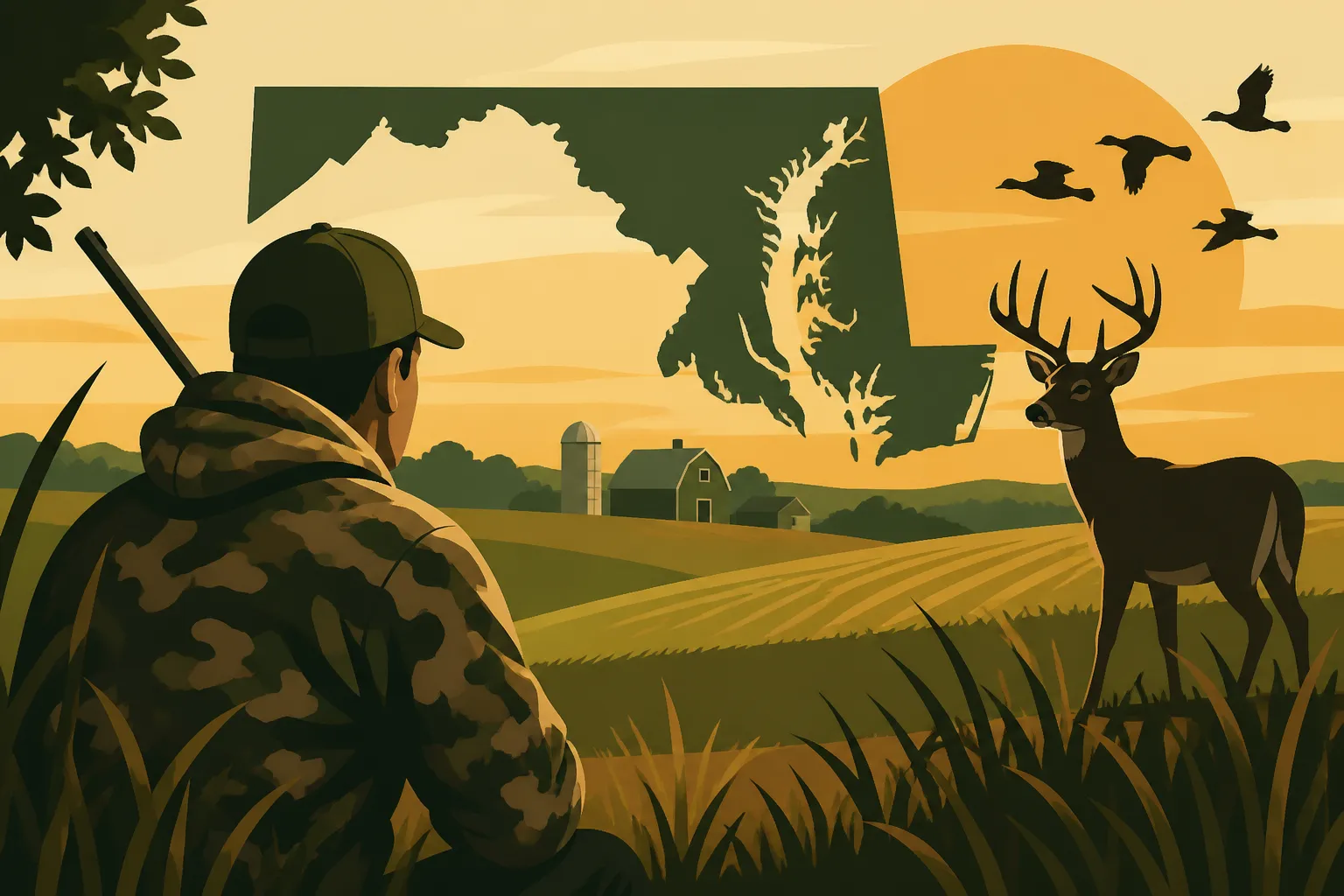
Guided Hunts on Maryland Farm Leases
Finding quality hunting land in Maryland, especially if you don't own property or have a network of friends with private ground, can feel like an impossible puzzle. Public lands are often crowded, and securing consistent access to prime private acreage is a constant struggle. This guide is here to shed light on a fantastic alternative: embarking on a guided hunt on one of Maryland's many productive farm leases, offering a streamlined path to a successful and enjoyable outdoor experience.
The Allure of Guided Hunts on Maryland Farm Leases
There's something uniquely appealing about hunting agricultural land. The combination of dense cover, rich food sources, and often less pressure than public access areas can make for some incredible opportunities. When you add a professional guide to the equation, you unlock even greater potential.
Why Farm Leases are Different
Maryland's landscape is a patchwork of suburban sprawl, dense forests, and expansive farmlands, particularly on the Eastern Shore and in some parts of the Western and Southern regions. Farmers often lease their hunting rights to individuals or outfitters to generate additional income, manage wildlife populations (especially deer, which can cause significant crop damage), or simply because they don't hunt themselves. These leases vary widely in size and quality, from small woodlots tucked behind cornfields to vast tracts of grain and timber. Unlike public land, which is open to anyone with a license, a leased farm means controlled access. This often translates to lower hunting pressure, more consistent game patterns, and a more predictable experience overall. For many, the peace of mind that comes with knowing you're not competing with dozens of other hunters for the same buck or gobbler is worth its weight in gold. It's a structured environment where game movement can be more reliably patterned, especially around specific food sources like corn, soybeans, or winter wheat. Setting Up on a Maryland Grain Field Edge becomes a much more effective strategy when you know you're the only one setting up there.
The Advantages of a Guided Farm Lease Hunt
Opting for a guided hunt on a farm lease takes all the guesswork out of the equation. First and foremost, you're benefiting from an outfitter's established relationships with landowners and their knowledge of specific properties. They've often spent years cultivating these relationships and scouting these exact fields and woodlots. This means they know where the deer are bedding, which creek crossings the turkeys use, and where the geese are flying in. You don't have to spend your precious hunting time knocking on doors or pouring over aerial maps trying to decipher property lines. Secondly, a guide provides invaluable expertise. They can help you with everything from reading subtle signs of game movement, to proper stand placement, to calling techniques. If you're new to hunting Maryland, or even just new to a particular species, a guide's insights can dramatically increase your chances of success. Think about it: instead of blindly walking through unfamiliar terrain, you're being led to a proven spot, often already set up with a comfortable blind or treestand. This is especially true for species like turkey, where Roost Hunting Gobblers on Maryland Farmland requires intimate knowledge of the birds' daily patterns, or for waterfowl, where Decoying Canada Geese on the Upper Eastern Shore is a fine art.
Common Game Species on Maryland Farm Leases
Maryland's farm leases are teeming with a variety of popular game species, making them excellent destinations for multi-species hunters or those targeting specific animals. White-tailed deer are undoubtedly the most common target. Farmers often have a vested interest in deer management, and outfitters capitalize on this by providing opportunities for hunters to pursue both antlered and antlerless deer. You'll often find healthy populations of deer feeding on agricultural crops and bedding in nearby timber blocks or thickets. White-Tailed Deer in Maryland thrive in these mixed habitats.
Wild turkeys are another prime resident of Maryland's farmlands. The open fields provide excellent strutting grounds and insect foraging opportunities, while the surrounding timber offers roosting sites and escape cover. A guided turkey hunt on a farm lease can put you in a prime position to call in a wary gobbler. Additionally, many farm leases offer excellent small game hunting opportunities. Cottontail rabbits are abundant in hedgerows and brushy field edges, and gray squirrels often frequent the mature oak and hickory trees found in woodlots adjacent to farm fields. Some farms even have robust populations of coyotes, providing thrilling predator hunting opportunities, sometimes as part of a package deal or as an add-on.
What to Expect from an Outfitter on Leased Farmland
When you book a guided hunt on a Maryland farm lease, you're not just paying for access; you're investing in an experience curated by professionals. This often means a higher level of service and a more focused approach than a pure DIY hunt.
Services and Amenities Typically Included
Outfitters running guided hunts on farm leases understand that hunters are looking for convenience and a maximized opportunity. While specific offerings vary, you can generally expect a suite of services designed to make your hunt as smooth as possible. Most will provide pre-scouted hunting locations, often with stands, ground blinds, or pits already in place, strategically positioned based on recent game movement. For deer hunting, this might mean a comfortable box blind overlooking a soybean field or a treestand set up on a proven travel corridor between timber and corn. Waterfowl hunts will likely feature heated pits or layout blinds in cut grain fields. Layout Hunting Canada Geese on the Upper Shore is a classic farm lease offering.
Beyond the actual hunting setup, many outfitters include things like transportation to and from your hunting spot on the property, assistance with game retrieval (which can be a huge help with a big deer or a limit of geese), and basic field dressing. Some may also offer lodging, either on the farm itself in a renovated farmhouse, or at a nearby lodge or motel, complete with meals. When you're researching, always ask for a detailed list of what's included in their package to avoid any surprises. Reputable outfitters will be transparent about these details, often laying them out clearly on platforms like GoHunt or their own websites.
The Role of the Guide on Farm Leases
Your guide is much more than just a driver to your stand; they are your personal expert and facilitator for the duration of your hunt. Their primary role is to leverage their extensive knowledge of the specific farm properties they lease, combined with real-time scouting, to put you in the best possible position for success. This means knowing current game patterns, understanding weather effects, and being able to adapt plans on the fly. For instance, if the wind shifts unexpectedly, a good guide will know an alternative stand location that will still offer a favorable scent cone.
During the hunt, a guide often handles calling for waterfowl or turkeys, identifies legal game, and helps with ethical shot placement. They'll share insights into Reading Sign in Maryland Mountain Timber if you're in a hillier farm area, or how to identify Scrape Lines Along a Maryland Field Edge. After the shot, they'll assist with tracking and recovery, which can be critical, especially when Blood Trailing in Marsh Grass After Dark or through thick cover. They also serve as a crucial resource for understanding Maryland's specific hunting regulations, ensuring that your hunt remains legal and responsible. This local expertise is often the biggest value proposition of a guided hunt.
Equipment and Logistics
While the guide and outfitter provide much of the essential gear like blinds, decoys, and sometimes even firearms (check specifics carefully!), you'll still be responsible for your personal hunting equipment. This includes your weapon of choice (bow, shotgun, rifle, muzzleloader, etc.), ammunition, appropriate hunting attire suitable for Maryland's varied weather, and personal items like binoculars, rangefinders, and a hunting pack. Make sure to discuss specific clothing requirements with your guide, especially for waterfowl hunts where camouflage is critical or for deer hunts where blaze orange might be mandated during certain seasons.
Logistically, you'll need to secure your own Maryland Hunting Licenses and What They Cost, as well as any necessary stamps, such as the Maryland Migratory Game Bird Stamp Cost for waterfowl, or a Bonus Antlered Deer Stamp Cost if you plan to pursue an extra buck. Most outfitters will help advise you on what's required, and some may even assist with the application process, though the ultimate responsibility for legal licensing falls on you. Travel to the designated meeting point is also typically your responsibility, though many outfitters are located conveniently near major routes. Always clarify what to bring, what's provided, and any logistical expectations well in advance of your trip.
| Feature | Basic Guided Hunt (Example) | Premium Guided Hunt (Example) |
|---|---|---|
| Duration | 1-2 Days | 3-5 Days |
| Accommodation | Self-arranged, nearby motel | On-site lodge or comfortable farmhouse, private rooms |
| Meals | Not included, bring your own or eat out | Included (breakfast, lunch, dinner), often home-cooked |
| Guide Ratio | 1:2 or 1:3 (e.g., one guide for 2-3 hunters) | 1:1 or 1:2, more personalized attention |
| Pre-Scouting | Yes, general knowledge of lease | Extensive, real-time, tailored to recent game movement |
| Stands/Blinds | Provided, basic fixed setups | Multiple options, strategically placed, heated/comfortable |
| Game Retrieval | Assistance provided | Full assistance, including specialized equipment (e.g., ATV) |
| Field Dressing | Basic instruction/assistance | Full field dressing, possibly caping for taxidermy |
| Licenses/Stamps | Advised on requirements | Assistance with purchasing, if needed |
| Transportation | To/from hunting spots on property | To/from hunting spots, possibly airport pickup/drop-off |
| Calling (Waterfowl/Turkey) | Guide does primary calling | Guide handles all calling, advanced techniques |
| Added Services | None beyond hunting | Access to game processing, taxidermy contacts, photography |
Finding and Booking Your Maryland Farm Lease Hunt
The key to a successful guided hunt on a Maryland farm lease lies in thorough research and clear communication with potential outfitters.
Researching Outfitters and Their Leases
Start by looking for outfitters specifically advertising hunts on Maryland farm leases. Many specialize in certain game species, such as deer or waterfowl, while others offer a variety. Online platforms like BookYourHunt and GoHunt are excellent resources for finding and comparing outfitters. These sites often feature detailed descriptions of services, available dates, pricing structures, and crucially, client reviews. Reading past client testimonials can give you a real sense of an outfitter's professionalism, the quality of their leases, and their success rates. Don't be shy about searching for specific terms like "Maryland deer hunting leases" or "Eastern Shore goose hunting guides."
Once you've identified a few promising candidates, visit their direct websites. Look for detailed information about their specific farm leases – do they mention acreage, crop types, or proximity to water sources? A good outfitter will be proud of the quality of their leased properties and will provide enough detail to help you understand what kind of habitat you'll be hunting. Pay attention to how long they've been operating and their reputation within the local hunting community. You want someone established and reliable, not a fly-by-night operation. For instance, if you're interested in Sika Deer Hunting in Maryland's Tidal Marshes, you'd want an outfitter with extensive experience specifically on Dorchester County farms bordering marshland.
Key Questions to Ask Before Booking
Once you've narrowed down your choices, it's time to get on the phone or send an email with a list of targeted questions. This conversation is critical for setting expectations and ensuring a good fit. Here are some essential questions to ask:
- What specific farm properties will we be hunting? (While they might not give exact addresses, they should be able to describe the type of terrain, crops, and general location.)
- What are your typical success rates for the species I'm targeting, and how do you define "success"? (A reputable outfitter won't guarantee a kill, but they should be able to provide realistic expectations.)
- How many hunters will be on the property during my hunt? What is the guide-to-hunter ratio? (This impacts hunting pressure and personalized attention.)
- What is included in the price, and what are the additional costs I should anticipate? (This includes licenses, tips, game processing, taxidermy, etc.)
- What happens if I wound an animal but don't recover it? What is your policy? (Important for ethical hunting and understanding the financial implications.)
- What is your cancellation and refund policy, especially due to unforeseen circumstances like severe weather?
- Can you provide references from past clients? (Always a good idea to speak with someone who has experienced their service firsthand.)
- What are the specific Maryland hunting regulations that apply to this hunt? (They should be well-versed in Maryland's Deer Bag Limits and Antler Rule, Sunday hunting restrictions like Sunday Hunting Hours in Maryland, or specific weapon restrictions if applicable.)
Understanding Pricing and Packages
Guided hunts on Maryland farm leases vary widely in price, depending on the species, duration, inclusions (like lodging and meals), and the outfitter's reputation. Typically, you'll find options ranging from day hunts to multi-day packages. Day rates might cover just the guide service and access to a pre-set location, while a multi-day package could include lodging, meals, transportation, and multiple guides.
For deer, a day hunt on a farm lease might focus on a specific stand location, while a multi-day hunt could allow for moving to different areas of the property based on deer movement. Waterfowl hunts often have specific Maryland Canada Goose Season Dates or Maryland Duck Season Dates that influence booking availability and pricing. When evaluating prices, don't just look at the bottom line. Consider the value proposition: what services are you getting for your money, and how does that compare to what you'd spend trying to accomplish the same hunt on your own, factoring in time, fuel, and equipment? Sometimes, the added cost of a guide is an investment in a more enjoyable and ultimately more successful experience, especially if it means hunting quality ground that would otherwise be inaccessible.
Ultimately, a guided hunt on a Maryland farm lease can be an incredibly rewarding experience. It offers access to prime hunting ground, expert guidance, and a level of convenience that's hard to beat. Do your homework, ask the right questions, and you'll be well on your way to a memorable hunt in Maryland.
Disclaimer
This article is for general informational purposes only and does not constitute professional advice. Laws, prices and regulations vary by location and change over time. Consult a qualified professional for guidance on your specific situation.