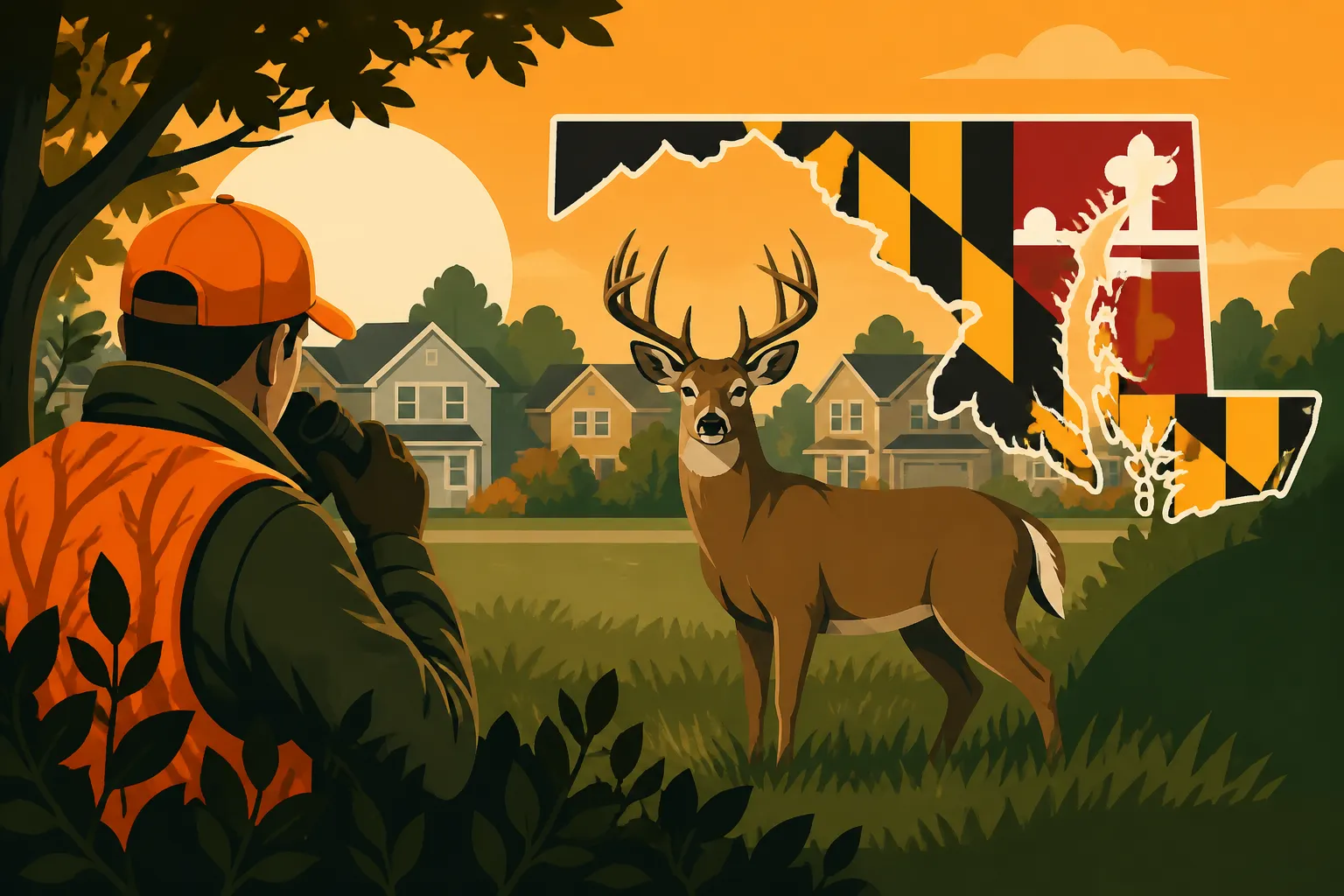
Guided Suburban Deer Management Hunts
It's a familiar sight for many Marylanders: deer grazing in backyards, crossing busy roads, and generally making themselves right at home in places we traditionally think of as "human territory." While beautiful, this growing deer population in suburban areas creates a real headache, from vehicle collisions to landscape damage, and sometimes even the spread of disease. This guide will walk you through what guided suburban deer management hunts entail, offering a practical solution to these challenges while ensuring a safe and effective hunting experience.
Understanding Suburban Deer Management in Maryland
The increasing interface between human development and natural habitats has led to an explosion in deer populations in many of Maryland's suburban and exurban areas. Traditional hunting methods often aren't suitable for these densely populated zones, which creates a conundrum: how do you manage a thriving deer herd when you can't just send hunters into the woods with rifles? This is where specialized suburban deer management hunts come into play, offering a targeted approach to balance deer numbers with human safety and property concerns.
Why Suburban Deer Hunts Are Necessary
The reasons behind the necessity of suburban deer hunts are numerous and often quite personal for affected residents. Imagine a homeowner who consistently loses their prize azaleas or an entire vegetable garden to hungry deer, year after year. Or consider the commuter who has had multiple close calls, or even actual collisions, with deer on their way to work. These aren't isolated incidents; they're widespread issues in places like Montgomery County, Anne Arundel County, and Howard County, where deer have adapted incredibly well to living alongside people. The environmental impact is also significant, as overbrowsing by deer can decimate forest understories, harming biodiversity and preventing forest regeneration. Local governments and landowners often turn to controlled hunting as the most effective, economical, and often the only viable long-term solution.
Furthermore, the public safety aspect cannot be overstated. Deer-vehicle collisions are not just an inconvenience; they can result in serious injuries or fatalities for drivers and passengers, not to mention substantial property damage. In areas where Maryland Deer in Suburban Neighborhoods are abundant, the risk skyrockets, especially during peak deer activity times like dusk and dawn. Deer also play a role in the lifecycle of ticks that carry Lyme disease, so reducing deer density can contribute to public health initiatives. These hunts aren't just about bagging a deer; they're about maintaining a healthier, safer ecosystem for both wildlife and people.
The Unique Challenges of Suburban Hunting
Hunting in suburban environments presents a completely different set of challenges compared to sprawling wilderness areas. Safety is paramount, with strict regulations governing weapon types, shooting directions, and minimum distances from dwellings or roads. Noise concerns are also a major factor, which often dictates the use of archery equipment or suppressed firearms in certain situations. You can't just set up a treestand anywhere you please; permission must be secured from multiple landowners, often involving complex boundary lines and varying regulations between adjacent properties. It's a logistical puzzle that can overwhelm even experienced hunters.
Another significant hurdle is public perception. While many residents understand the need for deer management, some may have strong feelings against hunting, making it crucial for operations to be discreet, professional, and respectful of community concerns. Access can be fragmented, with small pockets of huntable land surrounded by development, necessitating careful planning for entry, exit, and game recovery. This isn't your grandfather's deer camp; it requires a specialized skill set and a deep understanding of local ordinances and community dynamics to execute successfully and ethically. Bowhunting Maryland Suburbs Where Rifles Are Banned is a common reality, highlighting the need for specific equipment and hunting strategies.
What a Guided Suburban Deer Hunt Offers
Given the complexities, many landowners and even some municipalities opt to work with professional guides or outfitters who specialize in suburban deer management. These experts navigate the intricate web of regulations, gain access to properties, and conduct hunts with utmost safety and discretion. They essentially provide a turnkey solution for a problem that most people simply don't have the time or expertise to tackle themselves.
Access to Restricted Areas
One of the biggest advantages of hiring a guide for suburban deer hunts is their established access to properties that would otherwise be off-limits to individual hunters. Many guides cultivate relationships with homeowners associations, private landowners, and even local government entities that control parcels of land needing deer population reduction. They often have long-standing agreements and permits in place, allowing them to hunt areas that are part of managed programs. This means hunters who sign up with these guides gain access to prime hunting spots where deer are abundant and less pressured by traditional hunting methods, increasing the chances of a successful harvest.
Furthermore, these guides often secure permission across multiple contiguous properties, creating larger, more effective hunting zones that mimic traditional wilderness areas. This "land aggregation" is crucial for effective deer management, as deer don't respect property lines. A guide's ability to create these larger, safe hunting corridors is invaluable. If you've ever tried Knocking on Doors in Maryland Farm Country for permission, you know how challenging it can be; imagine that challenge amplified in a suburban setting. Guides have often spent years building the trust and relationships necessary to open these doors.
Navigating Regulations and Permits
The rules for hunting in Maryland's suburban corridors can be bewildering, varying not only by county but sometimes by specific municipality or even individual property management plans. This includes everything from legal hunting hours and weapon restrictions to specific zones where certain activities are permitted or prohibited. Professional guides are intimately familiar with these localized regulations. They handle all the necessary permitting, ensure compliance with setback rules (distances from homes, schools, roads), and advise hunters on the specific legal weapons allowed for that particular area. For instance, in many suburban areas, bowhunting is the primary method due to noise and safety concerns, and guides will ensure you understand and adhere to these requirements.
Beyond the hunting regulations, guides also manage the administrative burden. This might include coordinating with local law enforcement, informing neighbors of planned hunting activity, and ensuring all required paperwork for special management programs is filed correctly. They are the go-between, making sure the hunt is conducted ethically, legally, and without incident, taking the stress off both the hunter and the landowner. Understanding nuances like Maryland's Legal Weapons by County or Maryland Shooting Hours and Legal Light for specific parcels is part of their daily bread and butter.
What to Expect on a Suburban Guided Hunt
When you book a guided suburban deer management hunt, you're not just getting access; you're getting an experience tailored to the unique environment. These aren't typical big woods hunts, and understanding what to expect helps you prepare mentally and physically for a successful outing. Discretion, safety, and efficiency are often the guiding principles.
Typical Hunt Scenarios and Techniques
Suburban guided hunts often utilize techniques optimized for smaller, fragmented parcels of land and close proximity to human activity. Bowhunting from elevated stands is extremely common, offering excellent visibility and a downward shot angle for safety. You might find yourself Hunting a Suburban Woodlot in Montgomery County from a ladder stand overlooking a green space, or perhaps in a ground blind tucked into a fencerow behind a housing development. The shots are typically close-range, emphasizing precision and ethical harvesting. Guides will scout these areas extensively, identifying natural deer travel corridors, bedding areas in thickets, and preferred food sources like residential plantings or small overgrown fields.
Still-hunting or quiet ambushes near pinch points are also employed, especially when trying to intercept deer moving between properties or coming out of dense cover at dawn or dusk. Drives are less common in tightly controlled suburban environments due to safety concerns and noise, but quiet push techniques can be used to nudge deer towards strategically placed standers. Your guide will often have trail cameras deployed, giving you a real-time understanding of deer movement and patterns, making the hunt highly efficient. These hunts are often about patience and stealth, waiting for a deer to present a clean, safe shot within the urban landscape. When Hunting Deer Behind a Maryland Housing Development, you learn quickly how adaptable deer truly are.
Gear and Safety Considerations
Safety is always the number one priority on any guided hunt, but it takes on an even greater significance in suburban settings. Guides will enforce strict safety protocols, including mandatory use of safety harnesses in treestands, clear shooting lanes, and absolute certainty of your target and what lies beyond it. Blaze orange requirements will be adhered to where applicable, though often archery hunts in discreet settings allow for camouflage. You'll need reliable, accurate archery equipment or, where allowed, a quiet firearm like a crossbow or airgun suitable for deer. Broadheads must be razor-sharp for quick, ethical kills.
Your guide will likely provide a detailed list of recommended gear, including warm, scent-free clothing, sturdy waterproof boots, and binoculars. They'll also ensure you have the proper licenses and stamps, such as the Archery Stamp Cost and Who Needs One if bowhunting. It's not uncommon for guides to provide stands or blinds already set up, minimizing disturbance and ensuring optimal placement. Communication with your guide, often via two-way radio or discreet hand signals, is critical for safety and coordinating movements. These hunts demand a high level of responsibility from the hunter, given the unique environment.
Finding and Vetting a Suburban Deer Guide
Choosing the right guide is paramount to a successful and safe suburban deer management hunt. You need someone with a proven track record, excellent references, and a deep understanding of the unique challenges this type of hunting presents. Don't just pick the first name you see; do your homework.
Where to Look for Reputable Outfitters
Start your search by looking at online platforms that specialize in connecting hunters with outfitters. Sites like BookYourHunt and GoHunt are excellent resources where you can filter by location, species, and type of hunt, often finding guides specifically advertising suburban deer management services in Maryland. These platforms often feature reviews from past clients, which can give you valuable insight into a guide's professionalism, success rates, and safety practices. Don't hesitate to check multiple platforms, as some guides might be listed on one but not another.
Beyond online marketplaces, local hunting forums, outdoor expos in Maryland, and even word-of-mouth recommendations can be invaluable. Sometimes, local parks and recreation departments or county land managers might have a list of approved or vetted outfitters they work with for deer management programs. A guide who is well-connected within the community often signals trustworthiness and experience. Don't overlook the importance of finding a guide who is genuinely passionate about ethical deer management, not just chasing a trophy, especially in these sensitive environments.
Questions to Ask Before Booking
Once you've identified a few potential guides, it's time to engage them with a thorough list of questions. Don't be shy; a reputable guide will appreciate your diligence. Start by asking about their experience specifically with suburban deer management hunts: how long have they been doing it, what counties do they operate in, and what kind of success rate do their clients typically see? Ask about the specific properties they hunt – are they private lands, public lands under special permit, or a mix? For example, are they involved with Hunting a Maryland Suburban Managed Park Hunt?
Next, dive into the specifics of the hunt:
- What weapons are permitted on their managed properties?
- What are the typical shot distances?
- What kind of stands or blinds do they use?
- How do they handle game recovery in a suburban setting?
- What is their policy for unexpected encounters with residents or pets?
It's also crucial to inquire about safety protocols, insurance, and what's included in the price (e.g., stand setup, game retrieval, field dressing). Always ask for references from past clients, especially those who have participated in suburban hunts. A good guide, like those often found on BookYourHunt or GoHunt, will be transparent and eager to answer all your questions, providing a sense of confidence and trust before you commit.
Considerations for a Successful Guided Suburban Deer Hunt
Going on a guided hunt, especially one as specialized as suburban deer management, requires a bit of homework on your part too. Your preparation, attitude, and understanding of the unique environment will contribute significantly to the overall success and enjoyment of the experience.
Pre-Hunt Preparation and Practice
Don't underestimate the need for practice, particularly if you're primarily a rifle hunter transitioning to archery for suburban hunts. Ethical shots in close quarters demand precision. Spend ample time at the range, ensuring you can consistently hit a tight grouping with your broadheads from various distances and angles, including elevated shots if you'll be hunting from a treestand. It's not enough to just be accurate; you need to be proficient under pressure, which means practicing often.
Your physical fitness also plays a role, even if the walks to stands aren't as long as in remote wilderness. Carrying your gear, climbing into a stand, and potentially assisting with game recovery in challenging terrain (like thick backyard brush or overgrown ditches) all require a reasonable level of stamina. Discuss with your guide any specific physical demands of the hunt. Ensuring your equipment is in top working order and that you're mentally prepared for the nuances of hunting near human activity will set you up for success.
Ethical Considerations and Community Impact
Participating in a suburban deer management hunt carries an added layer of ethical responsibility. You are not just a hunter; you are an ambassador for the sport in a highly visible and often scrutinized environment. This means adhering strictly to all regulations, making ethical shot choices that ensure quick, humane kills, and maintaining a respectful, discreet demeanor throughout the hunt. Your actions reflect on all hunters, especially when the public might already have reservations about hunting.
Understanding the objective of these hunts—which is typically population control for public safety and ecological balance—can help frame your mindset. It's about being a part of a necessary solution for the community. Respect for the land, wildlife, and the residents sharing the landscape is paramount. A guide will typically cover these points extensively, but it's important for you, as the hunter, to internalize them. Your positive contribution ensures these valuable management programs can continue.
Summary of Key Takeaways
Suburban deer management hunts in Maryland offer a vital service, addressing the real challenges of overabundant deer populations in developed areas. While the unique environment presents its own set of complexities, a guided hunt streamlines the process, providing access to prime locations and expert navigation of intricate regulations. Hunters benefit from a safe, effective, and ethically sound way to contribute to wildlife management.
| Aspect of Hunt | Self-Guided Suburban Hunt (Challenging) | Guided Suburban Hunt (Recommended) |
|---|---|---|
| Land Access | Requires extensive personal networking, often limited to small parcels | Guides have established relationships with multiple landowners, broader access |
| Regulation Compliance | Hunter must research and understand complex, localized rules | Guide handles all permits, ensures adherence to county/local ordinances |
| Safety Management | Hunter responsible for all safety protocols, often alone | Guide implements strict safety measures, monitors hunt, assists with recovery |
| Hunt Planning/Scouting | Hunter must extensively scout, set stands discreetly | Guide has pre-scouted, strategically placed stands/blinds, intel on deer movement |
| Equipment & Techniques | Hunter provides all gear, adapts techniques to suburban limits | Guide advises on best gear, employs proven techniques for suburban success |
| Time Investment | Very high for research, access, setup, and execution | Significantly reduced, allowing more focus on the actual hunt |
| Community Relations | Hunter alone manages public perception if encountered | Guide often acts as liaison, minimizing negative interactions |
Remember, whether you're using resources like BookYourHunt or GoHunt to find an outfitter, always prioritize clear communication and thorough vetting. By partnering with a knowledgeable guide and embracing the unique aspects of suburban hunting, you can have a rewarding experience while making a meaningful contribution to Maryland's wildlife management efforts.
Disclaimer
This article is for general informational purposes only and does not constitute professional advice. Laws, prices and regulations vary by location and change over time. Consult a qualified professional for guidance on your specific situation.