Setting a Goose Spread in Cut Corn
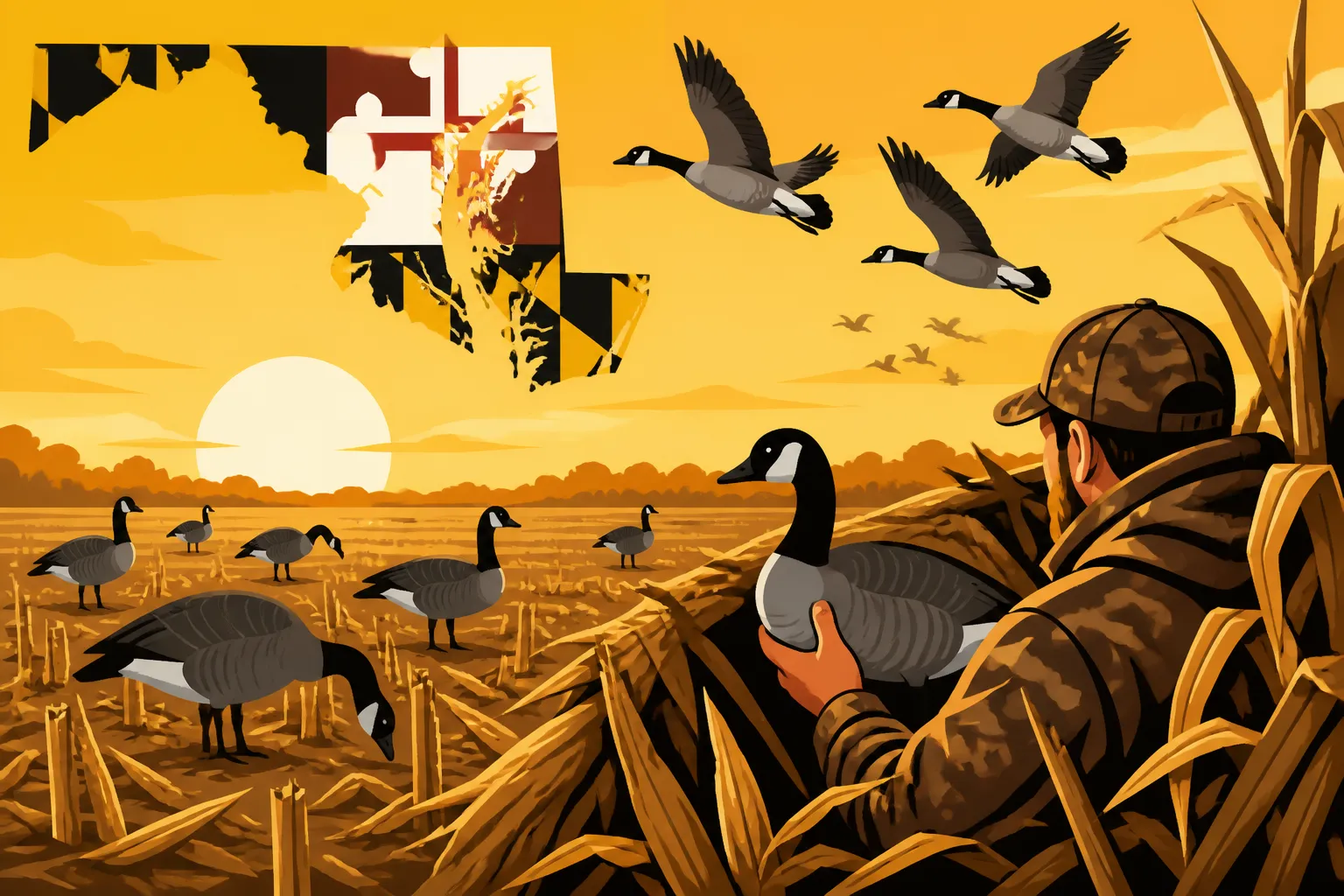
There's nothing quite like the anticipation of a crisp fall morning, settled into a field blind, waiting for the first geese to cup their wings and commit. But let's be honest, getting those wary Canada geese to finish right in front of you, especially in a wide-open cut cornfield, can feel like an impossible puzzle. This guide is here to break down the art and science of setting an effective goose spread in Maryland's cut corn, helping you understand their behavior and place every decoy with purpose.
Understanding Goose Behavior in Cut Corn Fields
Geese aren't just flying stomachs; they're incredibly intelligent and social birds, and their behavior in a cut cornfield is a complex dance of feeding, resting, and safety. You can't just toss out a bunch of decoys and expect them to dive in. Successful goose hunting in these environments starts long before you ever place your first decoy; it begins with a deep understanding of what makes them tick.
Why Geese Choose Cut Corn
Cut cornfields are absolute magnets for Canada geese, and for good reason. After the combines have rolled through, leaving behind a stubble field, there's often plenty of waste grain scattered on the ground. This provides a high-energy, readily available food source that helps them fuel up for migration or simply sustain themselves through colder weather. They'll often pick through these fields for hours, especially after a frost when other food sources might be harder to come by or less palatable. Beyond the food, these open fields offer excellent visibility, making them feel safer from predators like foxes or coyotes. They can see for hundreds of yards in every direction, which is why your concealment strategy is just as important as your decoy setup. Understanding this natural inclination is the first step in drawing them into your spread.
Think about a typical Maryland Eastern Shore farm. Those vast fields of corn, once green and tall, are now barren golden stubble. Geese, whether the migratory Atlantic Population or the burgeoning resident flocks, learn these patterns. They know which fields have been harvested and are likely to hold a feast. Scouting these fields ahead of time, perhaps using an app like GoHunt to mark active feeding areas, is crucial for identifying where the geese actually want to be. It's not just about finding a cut cornfield; it's about finding the cut cornfield they've been using.
Reading the Wind and Sun for Optimal Setup
The wind and sun are two of the most critical, yet often overlooked, factors when setting a goose spread. Geese, like all birds, prefer to land into the wind. This gives them better control for braking and a softer touchdown. Ignoring the wind direction is like trying to drive a car with flat tires – you might get somewhere, but it won't be pretty. When setting your spread, your landing zone should always be directly into the prevailing wind. This means your blind needs to be positioned downwind of your primary landing hole, allowing the geese to fly directly over you on their final approach.
The sun's position also plays a huge role. Geese have excellent eyesight, and if they're flying directly into a low morning or late afternoon sun, it can hinder their ability to see your spread clearly or, worse, make them flare from a glare off your decoys or blind. Conversely, if the sun is at your back, it can illuminate your concealment, casting long shadows or revealing inconsistencies in your setup. The ideal scenario is to have the sun at your back, low enough not to shine directly into their eyes as they approach, but high enough not to create harsh shadows from your blind. This also means the birds will be looking into the sun, which can help hide minor flaws in your setup and make them less likely to pick out your face in the blind. This strategic placement of your spread relative to the wind and sun is a hallmark of experienced goose hunters, whether they're setting up for a flock of wary migrants or those tougher-to-decoy resident birds.
Essential Decoy Selection and Setup
Once you've done your scouting and understand the prevailing conditions, it's time to talk decoys. The sheer variety of goose decoys on the market can be overwhelming, from full-bodied shells to ultra-realistic full-bodies, and even simple silhouettes. Making the right choices and understanding how to deploy them effectively is paramount to drawing geese into shotgun range.
Choosing the Right Decoy Types
Not all decoys are created equal, and a mix of different types can often be more effective than a monolithic spread of just one kind. Here’s a breakdown of popular choices and their best uses:
- Full-Body Decoys: These are the gold standard for realism. They accurately replicate the three-dimensional form of a goose, even from a distance. Their natural postures (feeders, sentries, resters) add to the illusion of a relaxed, feeding flock. The downside? They're bulky, heavy, and expensive. When you're out there hunting a Chesapeake Bay blind at first light, you might be limited by boat space, but in a cut cornfield with truck access, they're often worth the effort.
- Shell Decoys: These are half-shells that sit directly on the ground. They're lighter and more compact than full-bodies, making them easier to transport and deploy in larger numbers. While they lack the full 3D realism, they still offer a convincing silhouette, especially when viewed from above. Many hunters mix shells with full-bodies to add bulk to their spread without breaking the bank or their back.
- Silhouette Decoys: These are flat, two-dimensional decoys that are incredibly lightweight and easy to carry. They excel at adding mass to a spread, making it appear much larger than it actually is. While they don't offer much realism up close, they're highly effective at drawing the attention of distant flocks. They're particularly good for filling out the fringes of a large spread.
- Motion Decoys: Flapping wing decoys or those that sway in the wind can add crucial realism and movement to an otherwise static spread. Geese are highly attuned to movement, and a subtle flap or head bob can be the final piece of the puzzle that convinces them to commit. Be careful not to overdo it, though; unnatural or erratic motion can spook birds just as easily. Adding a couple of these can make your spread come alive, simulating a happy, content flock on the ground.
The best approach often involves a combination. Start with a core of full-bodies for realism near your landing zone, then use shells and silhouettes to expand the perceived size of your flock. Remember, the goal isn't just to mimic geese, but to create an inviting, realistic scene that makes approaching birds feel safe and eager to join.
Quantity and Quality of Decoys
When it comes to goose hunting, more often than not, more is better. Geese are social creatures, and a large flock signals safety and an abundant food source. While a small spread of ultra-realistic full-bodies can certainly fool a few birds, a larger spread, even with a mix of decoy types, can attract more attention from distant geese and build confidence in incoming flocks. For a typical cut cornfield hunt, most serious hunters aim for at least three to four dozen decoys, with many running spreads of 100 or more.
However, quality shouldn't be sacrificed for quantity. A large spread of beat-up, unrealistic, or unkempt decoys can do more harm than good. Faded paint, broken heads, or unnatural postures will stand out to sharp-eyed geese. Invest in good quality decoys and maintain them. Touch up paint, clean off mud and dust, and ensure they're stored properly to prevent damage. Think about the details, right down to how the decoys are flocked. A non-flocked decoy in sunlight can glare, signaling an unnatural presence. Brands like GoHunt often review high-quality decoy options, providing insights into which brands offer the best durability and realism. When you're hunting the late November firearms split, geese have seen a lot of spreads, so realism and numbers truly matter.
Mastering the Spread Patterns for Success
The way you arrange your decoys is just as important as the decoys themselves. There are several classic spread patterns that goose hunters employ, each with its own advantages, but the key is to adapt them to the specific field, wind, and the behavior of the geese you're targeting.
Common Goose Spread Formations
Understanding basic formations is your starting point, but don't be afraid to deviate and get creative based on what the birds are telling you.
- The "U" or "J" Hook: This is arguably the most popular and effective spread pattern. The main body of the decoys forms a "U" or "J" shape, with the open end of the "U" facing directly into the wind. Your shooting blind is placed at the bottom of the "U," with a clear landing zone (the "kill hole") in front of you. Geese, wanting to land into the wind, will naturally fly down the "U" and settle into that open space. The "J" hook is similar but has one arm longer than the other, often mimicking a natural string of geese landing or moving through a field. This pattern creates a natural funnel, guiding the birds exactly where you want them.
- The "X" or "Cross" Pattern: Less common for geese but still effective, this involves two lines of decoys crossing to create a "plus sign" or "X." The intersection point or the area slightly downwind of it becomes your landing zone. This pattern can work well when you're trying to cover a wider approach angle or when geese are circling cautiously. Your blinds are usually positioned at one or more of the "arms" or slightly off the intersection.
- The Family Group Scatter: This isn't a rigid pattern but an organic approach. Instead of strict lines or shapes, you're placing small clusters of decoys, mimicking natural family groups of geese feeding together. Geese often land in small pods within a larger flock, and this scattered, natural look can be highly convincing, especially for heavily pressured birds. Place a few full-body sentries or sentries on tall stakes around the perimeter of these clusters to simulate birds on watch.
Each pattern has its time and place. A deep "U" or "J" is fantastic for drawing birds right into a specific landing zone, while a more scattered approach might be better for attracting larger, more wary flocks that are circling high. When you're pass-shooting geese over cut corn, the spread is designed to bring them down, not just draw them in.
Creating a Realistic Landing Zone
The landing zone, often called the "kill hole," is the heart of your spread. This is the spot where you want the geese to ultimately commit and land. It needs to be clear of decoys, relatively close to your blinds (typically 20-30 yards), and perfectly aligned with the wind direction.
Key elements for a convincing landing zone:
- Open Space: This is crucial. Geese will not land on top of other geese (your decoys). They need open ground to touch down safely. Make sure this area is genuinely clear and looks inviting.
- Downwind of Decoys: The main body of your spread should be upwind of your landing zone. This makes it look like the "first wave" of geese has already landed and is feeding, encouraging new arrivals to join them in the most natural way possible – by landing downwind and walking upwind to feed.
- Near Your Blinds: While you want the landing zone clear of decoys, it shouldn't be so far from your blinds that it puts incoming birds out of range. That 20-30 yard sweet spot is ideal for clean, ethical shots.
- Realism within the "Hole": While the space itself is clear, you can enhance realism by adding a few scattered "feeder" decoys slightly upwind of the hole, as if they've already moved into position. Sometimes, hunters will even lightly scuff the ground in the landing zone to simulate disturbance from feeding geese. This gives them a visual cue that this is indeed a spot where geese are comfortably feeding.
- Motion nearby: A couple of subtle motion decoys on the edge of the landing zone can help draw attention and make the area seem active, further enticing incoming birds to drop in.
When geese are working your spread, they're scrutinizing every detail. A well-defined, inviting landing zone tells them, "This is the spot, come on down, the food is good, and it's safe here." If they hesitate or keep circling, it's often because something about your landing zone or concealment isn't convincing them. This is where a detailed scouting Maryland public land before season can pay off, letting you observe where natural flocks actually prefer to land and gather.
Concealment and Calling for Final Decoy Commitment
Even the most meticulously set spread won't seal the deal if the geese see you. Superior concealment and effective calling are the final, critical pieces of the puzzle that bridge the gap between working birds and birds in your face.
Hiding in Plain Sight with Layout Blinds
In an open cut cornfield, good concealment is arguably the most challenging aspect of goose hunting. Geese have incredible eyesight, often described as 8-10 times better than a human's, and they've learned to associate anything out of place in a field with danger. This is where quality layout blinds shine.
- Matching the Environment: A layout blind's most important feature is its ability to blend seamlessly with the surrounding environment. In cut corn, this means using blinds with stubble straps that allow you to weave in actual cornstalks, dried grass, and whatever other natural vegetation is present in the field. Don't just throw a few stalks on top; take the time to truly brush it in, making it look like a natural clump of cover. If you're layout hunting Canada geese on the Upper Shore, you'll quickly learn that a poorly brushed blind is an automatic flare for those keen-eyed birds.
- Eliminating Obstacles: Ensure there are no shiny spots, unnatural shapes, or objects around your blind that could catch a goose's eye. This includes gun barrels, decoy bags, or anything that doesn't belong. Even a small patch of exposed black fabric can make them shy away.
- Sun and Shadow Play: As mentioned earlier, consider the sun's position. While having the sun at your back is ideal for the geese, it can also cast a hard shadow from your blind if it's too low. Position your blinds so that shadows fall away from the landing zone and don't create sharp, unnatural outlines.
- Hunter Discipline: Once those birds are working, remain absolutely still. No peeking, no fidgeting, no talking. Any movement, even slight, can send them packing. Only rise when the birds are fully committed and within shooting range, and typically, on the call of the designated shooter or caller. This discipline is often what separates a successful hunt from a frustrating one.
Remember, the goal is to make your blind disappear completely, becoming just another part of the field. Take the extra 10-15 minutes to brush it in perfectly; it will pay dividends.
Effective Calling Techniques
Goose calling is an art form, but even beginners can master a few basic calls that make a huge difference. The key is to sound natural and respond to what the geese are doing.
- The Honk (Greeting Call): This is your primary call for grabbing attention. A series of loud, drawn-out honks, often in sets of two or three, tells distant birds, "Hey, over here! Come join us!" Use it when geese are far off or approaching.
- The Cluck and Moan (Feeding Chatter): Once birds are closer and circling, switch to softer, more realistic feeding sounds. A series of short, sharp "clucks" and longer, rolling "moans" mimics a contented flock on the ground. This reassures incoming birds that everything is safe.
- The Layout Call (Comeback Call): If birds are starting to drift away or lose interest, a louder, more urgent series of honks and clucks can be used to try and "pull" them back into the spread. Be careful not to overdo it, though; excessive calling can sound unnatural.
- Calling Etiquette: Don't call constantly. Listen to the geese. If they're honking back, keep calling. If they go silent, you should too, or switch to softer feeding calls. Let them work, and only call enough to keep their interest or bring them back. A well-timed call when they're making their final swing can be the difference between them committing and flaring. Many hunters find that a good quality call, like those from Zink Calls or RNT Calls, can greatly enhance their ability to mimic geese convincingly. Practicing regularly, especially before Maryland Canada Goose season dates arrive, is key to becoming a more effective caller.
| Decoy Type | Pros | Cons | Best Use |
|---|---|---|---|
| Full-Body | Most realistic, 3D | Bulky, heavy, expensive | Core of spread, landing zone edges |
| Shell | Lighter, easier to transport in bulk | Less realistic than full-body | Adding volume, mixing with full-bodies |
| Silhouette | Very lightweight, compact, cheap | 2D, little realism up close | Expanding spread size, distant visibility |
| Motion | Adds realism and movement | Can be expensive, mechanical issues | Key attraction, near landing zone |
Mastering the spread in cut corn is a continuous learning process. Every hunt is a new lesson, as geese respond differently to weather, pressure, and even the time of year. But by understanding their behavior, selecting the right gear, setting it up thoughtfully, and executing flawless concealment and calling, you'll dramatically increase your chances of having geese cup their wings over your Maryland cut corn spread. And that, my friends, is one of the most rewarding sights in the hunting world.
Disclaimer
Hunting is an activity that carries inherent risks. Always prioritize safety, adhere to all Maryland Department of Natural Resources regulations, and ensure you have all required licenses and permits before heading afield. This guide provides general information and should not replace professional instruction or local regulations.