Maryland Wild Turkey Population Trends
For anyone who loves chasing a gobbler through the spring woods or even just hearing their distant calls in the fall, the health of Maryland's wild turkey population is a big deal. We've all heard the stories, good and bad, about how turkey numbers are doing, and it can be frustrating to try and figure out what's really happening on the ground when every year feels a little different. This comprehensive guide will dive deep into the current status of Maryland's wild turkey population, explore the historical journey they've taken, and look at the key factors influencing their future across the state.
The Remarkable Comeback of Maryland's Wild Turkeys
It's easy to take wild turkeys for granted now, hearing their booming gobblers echo through the spring woods, but it wasn't always this way. Maryland, like many states, saw its wild turkey population plummet to near non-existence just over a century ago. Understanding where we've been helps us appreciate the efforts that have brought these magnificent birds back to prominence.
The Near Extinction and Reintroduction Efforts
By the early 1900s, Maryland's wild turkeys were on the brink. Unregulated market hunting, combined with massive deforestation for agriculture and timber, had wiped them out of most of their native range. Picture a landscape drastically different from today, where sprawling forests were replaced by open fields and small woodlots, leaving turkeys with little suitable habitat or protection. It was a bleak time for many wildlife species, and the wild turkey was certainly no exception. There were only a few isolated, remnant populations clinging to existence in the most remote pockets of Western Maryland.
Thankfully, conservationists and state wildlife agencies recognized the dire situation. Starting in the mid-20th century, particularly from the 1960s onwards, Maryland embarked on an ambitious reintroduction program. This wasn't just about releasing pen-raised birds; experience had taught wildlife managers that pen-raised turkeys rarely survived or reproduced effectively in the wild. Instead, the focus was on trapping wild turkeys from robust populations in other states, like Virginia, West Virginia, and Pennsylvania, and relocating them to suitable habitats within Maryland. This strategic approach, utilizing wild-trapped birds, proved to be the game-changer. These birds were genetically robust and already knew how to survive in a natural setting, giving them a much higher chance of establishing new flocks.
Early Successes and Statewide Expansion
The reintroduction efforts were nothing short of a monumental success. From those initial releases in strategic locations, often on large tracts of public land in the western counties, the turkeys began to thrive and expand their range. By the 1980s and 1990s, turkey populations were flourishing, not just in Western Maryland, but also spreading into the central, southern, and eventually, the Eastern Shore regions. It was truly a golden age for turkey hunters, as new areas opened up for hunting, and opportunities abounded.
This expansion was a testament to improved land management, the re-growth of forests, and the dedicated efforts of the Maryland Department of Natural Resources (DNR). As forests matured and land use diversified, creating the mosaic of timber, fields, and edges that turkeys favor, the birds found ample food and cover. This period saw steadily increasing harvest numbers and a growing number of passionate turkey hunters across the state. It set the stage for the vibrant turkey hunting culture we know today.
Current Population Status and Regional Differences
While the comeback story is inspiring, like any wildlife population, wild turkeys in Maryland face ongoing challenges. Their numbers aren't static; they ebb and flow based on a complex interplay of environmental factors. Understanding these trends and recognizing the differences across the state is crucial for both hunters and conservationists.
Statewide Trends and Fluctuations
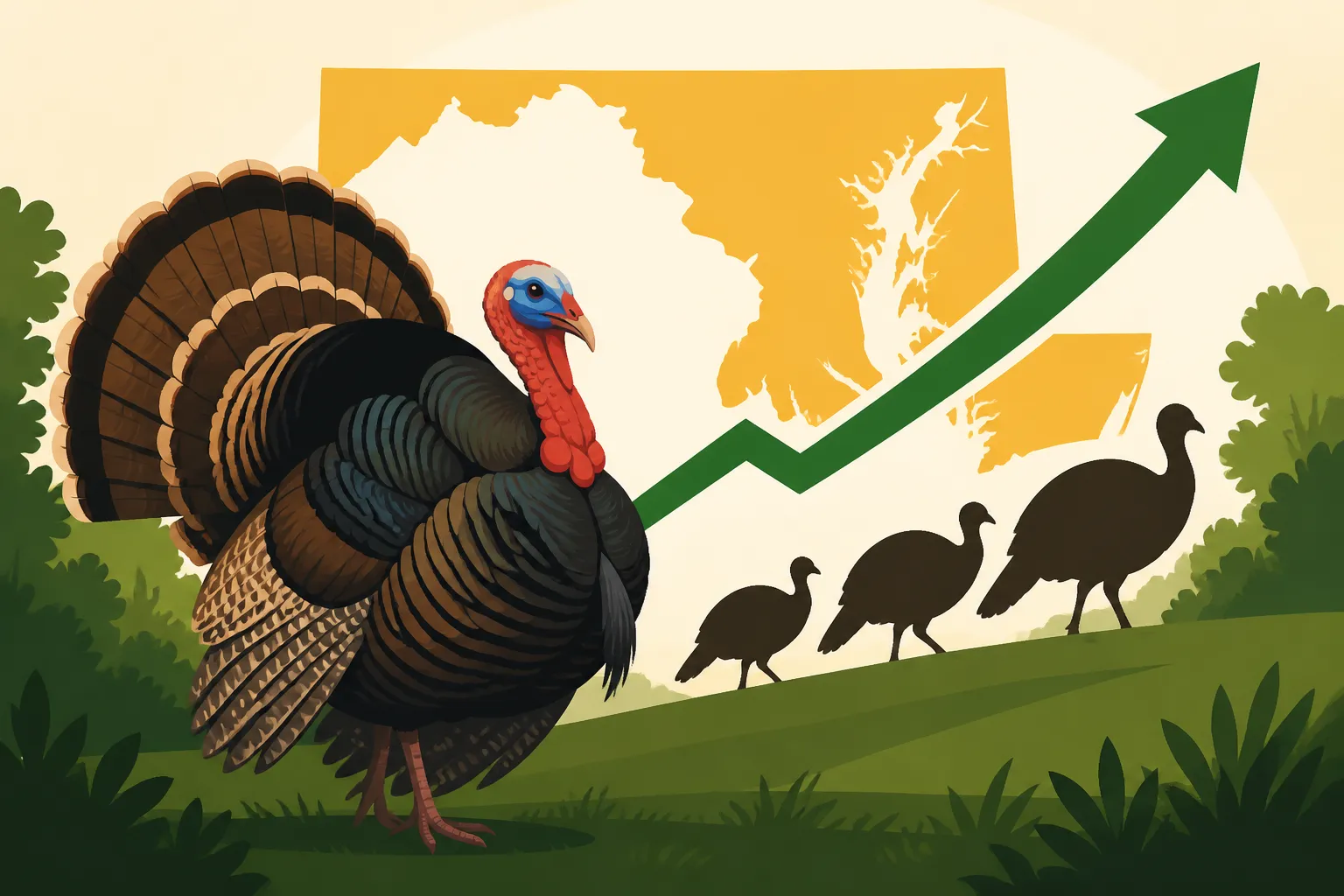
Looking at the statewide picture, Maryland's wild turkey population has generally seen strong numbers since its re-establishment. However, in recent years, many hunters and wildlife biologists have observed a plateau or even slight declines in certain areas after decades of consistent growth. This isn't unique to Maryland; many states across the Eastern U.S. are reporting similar trends. Factors like reduced poult (young turkey) survival rates, changing habitat conditions, and predation pressures are often cited.
For instance, the Maryland DNR uses brood surveys, which involve volunteers reporting turkey sightings, to gauge annual reproduction success. Years with cold, wet springs during the crucial nesting and brooding period often correlate with lower poult numbers, as young turkeys are highly susceptible to hypothermia and a lack of insect protein. When you're out there hunting in spring, or even just driving around, paying attention to the number of hens with poults in late summer can give you a pretty good feel for the local population's health. The annual harvest data, which you can often find detailed on the Maryland DNR website or through platforms like GoHunt, also provides a valuable snapshot, though it reflects hunter effort and success as much as pure population size.
| Year | Spring Harvest (Gobblers) | Fall/Winter Harvest (Either-Sex) | Total Annual Harvest |
|---|---|---|---|
| 2021 | 4,200 | 550 | 4,750 |
| 2022 | 4,100 | 600 | 4,700 |
| 2023 | 3,950 | 570 | 4,520 |
Note: These numbers are illustrative and based on general trends, not exact real-time data for Maryland, which would fluctuate annually. Always consult current MD DNR reports for precise figures.
This table, illustrating potential harvest trends, shows a slight dip. These kinds of fluctuations are normal, but a consistent downward trend over several years would signal a need for deeper investigation and potential management changes.
Regional Hotbeds and Sparse Areas
Maryland isn't uniform when it comes to wild turkeys. Some regions are historical strongholds, while others present more challenging conditions for the birds to thrive.
-
Western Maryland (Region A): Counties like Garrett, Allegany, and Washington are often considered the heart of Maryland's turkey country. With vast tracts of contiguous forest in the Appalachian Mountains, including areas like Savage River State Forest and Green Ridge State Forest, these areas provide ideal habitat for turkeys. Mature hardwoods offer abundant mast crops (acorns, beechnuts) for food, and the varied terrain provides excellent roosting and nesting cover. Hunters in these areas often experience robust populations, though hunting pressure can be higher on public lands. If you're looking for where Maryland Turkeys Live Best, this region is often the answer.
-
Central and Southern Maryland: Counties such as Frederick, Carroll, Howard, Montgomery, Anne Arundel, Charles, St. Mary's, and Calvert also hold healthy turkey populations. Here, the landscape is a mix of agricultural fields, suburban woodlots, and larger forest blocks. Turkeys adapt well to these areas, utilizing farm fields for foraging and adjacent woods for cover. However, increased development and habitat fragmentation can pose challenges in some localities. Hunters often find success seeking permission on private farms, but there are also public land opportunities.
-
Eastern Shore (Region B): While the Eastern Shore has traditionally had lower turkey numbers due to less contiguous forest, reintroduction efforts have been successful, particularly in counties like Kent, Queen Anne's, Caroline, Dorchester, Wicomico, Somerset, and Worcester. Here, turkeys rely heavily on the remaining timber blocks, especially loblolly pine plantations and mature hardwoods along rivers and creeks, interspersed with extensive agricultural fields. Access can be more challenging here, as much of the land is privately owned. However, dedicated scouting, possibly aided by tools like GoHunt, can reveal pockets of birds even in seemingly less-than-ideal turkey habitat. Public lands like Chesapeake Forest Lands offer good opportunities in certain areas.
It's clear that hunters need to understand these regional nuances. A strategy that works for Still-Hunting Western Maryland Mountain Timber might be very different from what's required when Setting Up on a Maryland Grain Field Edge in an Eastern Shore county.
Factors Influencing Turkey Population Dynamics
Wild turkey populations are incredibly sensitive to a range of environmental and ecological factors. It's not just about how many birds are out there, but how well they're surviving, reproducing, and evading threats. Understanding these dynamics helps us appreciate the complexity of wildlife management.
Habitat Loss and Fragmentation
Habitat is, without a doubt, the single most critical factor for any wildlife species, and wild turkeys are no exception. Turkeys require a diverse habitat mosaic: mature forests for roosting and hard mast production (like acorns), open fields or forest clearings for foraging, strutting, and bugging (especially for poults), and dense understory for nesting hens and escape cover.
Unfortunately, Maryland, being a relatively small and densely populated state, faces ongoing pressures from development. As forests are cleared for housing, commercial properties, or roads, and as agricultural practices sometimes lead to larger, monoculture fields with fewer hedgerows, suitable turkey habitat shrinks and becomes fragmented. When habitat is fragmented, turkeys might have to cross larger, more dangerous open areas to get from roosting sites to feeding grounds or nesting areas, exposing them to predators and vehicles. This also isolates populations, reducing genetic diversity and making them more vulnerable to localized disease outbreaks. The ongoing encroachment into traditional wild spaces is a constant battle for conservationists.
Predation and Disease Challenges
Predation is a natural part of any ecosystem, but its impact on turkey populations can be significant, especially during critical life stages. Nest predation is particularly high, with common culprits including raccoons, opossums, skunks, foxes, and even snakes and crows. These animals can wipe out an entire clutch of eggs, drastically reducing reproductive success for a given year. Poult predation also takes a heavy toll, as young turkeys are highly vulnerable to coyotes, bobcats, foxes, and various raptors. The increase in certain predator populations, like coyotes, across Maryland could be contributing to higher predation rates on turkeys, although the overall impact is debated among wildlife biologists.
Diseases can also play a role, though they typically cause localized, rather than statewide, population crashes. Avian pox, though often not fatal, can cause lesions that make feeding difficult. Lymphoproliferative Disease Virus (LPDV) is another concern, a viral disease that can cause tumors and weaken turkeys, making them more susceptible to other illnesses or predation. While the Maryland DNR monitors for these diseases, managing them in wild populations is incredibly challenging. Healthy habitat and robust populations are often the best defense against widespread disease impacts.
Weather Patterns and Reproduction Success
Perhaps one of the most unpredictable, yet critical, factors influencing turkey numbers year-to-year is the weather. Wild turkeys, particularly young poults, are very vulnerable to adverse weather conditions.
-
Cold, Wet Springs: A prolonged period of cold, rainy weather during nesting and the first few weeks after poults hatch can be devastating. Poults lack fully developed feathers to regulate their body temperature, and they can quickly succumb to hypothermia if they get wet and cold. Additionally, wet conditions can reduce the availability of insects, which are a vital protein source for growing poults. A series of poor hatch years can lead to noticeable dips in the overall population a few seasons later. This is often cited as a primary reason for Why Maryland Turkey Numbers Dipped in certain periods.
-
Droughts: While less immediately impactful than wet springs, severe droughts can also stress turkey populations by reducing insect availability and impacting mast crop production in the fall, leading to poorer body condition going into winter.
-
Mild Winters: On the flip side, mild winters can sometimes benefit turkeys by reducing energy expenditure and increasing overwinter survival rates, allowing more hens to enter the spring breeding season in good condition. However, a mild winter doesn't negate the need for good brood-rearing conditions in the spring.
It's a delicate balance, and Mother Nature ultimately has a huge say in how many new turkeys are added to the population each year. Hunters often observe these shifts firsthand. If you see very few jakes in the woods one year, it's often a sign of a tough hatch two springs prior.
Maryland's Management Strategies for Wild Turkeys
The Maryland Department of Natural Resources (DNR) plays a pivotal role in ensuring the long-term health and sustainability of the state's wild turkey population. Their approach is multi-faceted, combining scientific research with practical, on-the-ground action.
Monitoring and Research Efforts
Effective wildlife management begins with good data. The MD DNR employs various methods to monitor wild turkey populations:
- Brood Surveys: As mentioned earlier, volunteer-based brood surveys in late summer are a key tool. Participants record sightings of hens and their poults, providing an index of reproductive success (hens per poult ratio). This data helps biologists gauge the health of the upcoming year classes.
- Hunter Harvest Data: Every turkey harvested in Maryland must be registered through the COMPASS portal or phone system. This mandatory registration provides crucial data on the number of birds taken, their location, and the sex (gobbler, hen, jake). Analyzing these trends over time helps the DNR understand population fluctuations, hunting pressure, and the impact of regulations. Knowing the Turkey Registration Requirements After the Kill is not just a legal obligation but also a vital contribution to management efforts.
- Banding Studies: In some instances, turkeys are trapped, banded, and released. This allows biologists to track individual bird movements, survival rates, and harvest rates, providing invaluable insights into population dynamics.
- Habitat Assessments: Biologists regularly assess habitat quality and availability across the state, identifying areas that need improvement or are under threat.
This ongoing research helps the DNR make informed decisions about season dates, bag limits, and other management actions, aiming to maintain a healthy balance between turkey numbers and hunter opportunity.
Habitat Enhancement Programs
Recognizing the critical role of habitat, the DNR actively engages in and supports habitat enhancement initiatives across both public and private lands.
- Forest Management: On state forests and wildlife management areas, the DNR implements forest management practices that benefit turkeys. This can include selective timber harvests to create early successional habitat (young forests with dense cover, excellent for nesting and poults) interspersed with mature stands. Prescribed burning is also used in some areas to improve understory growth and promote native forage.
- Food Plot Programs: On many public lands, and often in cooperation with private landowners, small food plots are planted with crops like clover, chufa, or various grains that provide supplemental food sources for turkeys, especially during lean times.
- Technical Assistance to Landowners: The DNR provides technical guidance to private landowners who are interested in improving turkey habitat on their property. This can range from advice on planting native grasses and forbs to managing forest stands for mast production. Such efforts can lead to increased localized turkey numbers and improve overall population resilience.
These habitat programs are vital because robust habitat can often buffer populations against other stressors like predation or adverse weather.
Hunting Regulations and Season Adjustments
Hunting regulations are a primary tool for managing wild turkey populations, balancing recreational opportunity with conservation. The MD DNR carefully crafts season dates and bag limits based on current population data.
- Spring Gobbler Season: The spring season, focused on adult gobblers, is designed to have minimal impact on overall population numbers because gobblers play no direct role in nesting or raising poults. The longer spring season in Maryland, allowing hunters ample opportunity to pursue gobblers, is a testament to the healthy population. Understanding Maryland Spring Turkey Season Dates is crucial for planning your hunt. The bag limit in Maryland typically allows for two bearded turkeys during the spring season, with specific rules about timing, for example, only one bird in the first week. This allows hunters to participate without over-harvesting the breeding population.
- Fall and Winter Seasons: Maryland also offers limited fall and winter turkey seasons in certain counties. These seasons typically have more conservative bag limits and shorter durations, and in some areas, harvest is restricted to either-sex birds. The rules for Fall Turkey Hunting Maryland's Western Counties, for example, are designed to allow for some harvest while protecting the breeding hens that are essential for future turkey recruitment. These seasons are adjusted based on regional population health and reproductive success.
These regulations are not static; they are reviewed annually and can be adjusted based on the latest scientific data and population trends, ensuring that hunting remains sustainable.
What Hunters Can Do to Support Turkey Populations
As hunters, we're more than just participants; we're also critical stewards of the resource. Our actions, both in the field and beyond, can significantly contribute to the health and future of Maryland's wild turkey populations.
Ethical Hunting Practices and Reporting
Responsible hunting is paramount to maintaining healthy turkey populations and a positive public image for our sport.
- Respecting Regulations: This might sound obvious, but strictly adhering to bag limits, season dates, and shooting hours is non-negotiable. Knowing whether you're allowed to harvest a hen in the fall or understanding the specific dates for Maryland Spring Turkey Season Dates ensures that we're not inadvertently over-harvesting vulnerable segments of the population.
- Accurate Registration: Every harvested turkey must be registered with the Maryland DNR. This isn't just a formality; it's how biologists gather the critical data needed to make informed management decisions. Without accurate harvest numbers, the DNR can't get a true picture of population trends. So, when you bag a bird, make sure you complete that Turkey Registration Requirements After the Kill promptly and accurately.
- Reporting Violations: If you witness poaching or other wildlife violations, it's our responsibility to report it to the DNR. Poaching undermines conservation efforts and steals opportunities from ethical hunters.
- Ethical Shooting: While it's part of hunting, always striving for a clean, humane shot is essential. This minimizes suffering and reduces the chance of wounding a bird that might later die unrecovered. Taking a little extra time to identify if you're Telling a Jake From a Longbeard can also help ensure you're harvesting within your season's intentions.
Habitat Improvement on Private Land
Many wild turkeys in Maryland live on private land. If you own land, or even if you have permission to hunt on private property, you have a unique opportunity to directly impact turkey habitat.
- Timber Stand Improvement: Work with foresters to manage your woodlands for turkey benefits. This might involve selective cutting to promote new growth and create openings, or thinning to encourage mast production from oaks and other hardwoods.
- Creating Openings: Small clearings or food plots can be incredibly beneficial. Planting native grasses and wildflowers provides insect forage for poults and nesting cover for hens. Even a small clover plot can make a big difference for turkeys and deer alike.
- Hedgerow and Edge Management: Maintaining diverse hedgerows and field edges provides travel corridors, nesting sites, and escape cover. Avoid "clean farming" practices that remove all natural cover around fields.
- Water Sources: Ensure access to reliable water sources, especially during dry periods.
Even small-scale improvements can add up, creating a healthier, more connected landscape for turkeys.
Supporting Conservation Initiatives
Beyond direct action, hunters can support turkey conservation through their engagement with broader efforts.
- Financial Contributions: A portion of every Maryland hunting license and specific stamps, like the Archery Stamp Cost and Who Needs One, goes directly to supporting wildlife management and habitat conservation programs. Additionally, organizations like the National Wild Turkey Federation (NWTF) play a massive role in funding research, habitat projects, and educational initiatives specifically for wild turkeys. Becoming a member or donating to such organizations directly contributes to the cause.
- Advocacy: Staying informed about proposed legislation or land-use changes that could impact turkey habitat and advocating for wildlife-friendly policies is crucial. Your voice, as a concerned hunter, carries weight with elected officials and land managers.
- Mentoring New Hunters: Sharing your passion and knowledge with new hunters helps ensure the future of hunting and, by extension, conservation funding. Taking a youth out on Hunting Maryland's Junior Turkey Day not only creates memories but instills a conservation ethic in the next generation.
- Utilizing Technology: Tools like GoHunt can help you stay informed about regulations, public land access, and even track harvest data in different regions, making you a more knowledgeable and effective conservation partner. Understanding land ownership and habitat types through mapping apps, for instance, helps you make better decisions whether you're scouting or actively hunting.
Future Outlook for Maryland's Turkey Hunting
Predicting the future for any wildlife population is challenging, but by understanding the current trends and ongoing efforts, we can get a clearer picture of what lies ahead for Maryland's wild turkeys and the hunters who pursue them.
Challenges Ahead for Turkey Management
Despite past successes, the path forward for wild turkeys in Maryland is not without its hurdles.
- Continued Habitat Pressure: Development and land-use changes remain a persistent threat, especially in the more populated central and southern regions of the state. As Maryland's population grows, the demand for land increases, inevitably putting pressure on existing wildlife habitats. Proactive land acquisition and conservation easements will be essential to preserve critical turkey habitat.
- Climate Change Impacts: Shifting weather patterns, potentially leading to more erratic spring rainfall or prolonged droughts, could impact poult survival and mast crop production. Wildlife managers will need to consider these long-term climate trends when developing future management strategies.
- Predator Management: While it's a complex and often controversial topic, ongoing research into predator-prey dynamics may reveal further needs for specific predator management strategies in localized areas where turkey populations are particularly struggling due to high predation rates.
- Disease Monitoring: Vigilance against existing and emerging diseases will remain crucial. As wildlife populations interact more with domestic animals and human activity, the risk of disease transmission can sometimes increase.
These challenges highlight the continuous need for adaptive management strategies, based on sound science and ongoing monitoring.
Opportunities for Growth and Hunter Participation
Even with the challenges, there are significant opportunities to ensure a bright future for wild turkeys in Maryland.
- Public Land Expansion and Access: While challenging, efforts to expand public hunting opportunities, or enhance existing ones, are always on the table. For instance, better management of existing state forests and wildlife management areas can create more productive turkey habitat. Maryland's Wildlife Management Areas are crucial for public access and are often centers for habitat work.
- Private Land Partnerships: A considerable amount of quality turkey habitat exists on private lands. Fostering strong partnerships with private landowners, providing incentives and technical assistance for habitat improvement, can unlock massive potential for turkey conservation. Landowners enrolling in programs that benefit wildlife are key players.
- Hunter Engagement and Recruitment: The future of turkey hunting, and indeed all hunting, depends on recruiting and retaining new hunters. Programs like Maryland's Apprentice and Mentored Hunting opportunities allow seasoned hunters to introduce newcomers to the sport, passing on the ethics, skills, and conservation values. Events that focus on Taking a Youth Out on Junior Turkey Day are invaluable in this regard. Educating the public about the ecological benefits of wild turkeys and the positive impact of hunting for conservation can also garner broader support.
- Technological Advancements: New technologies, from advanced mapping tools to genetic research, offer increasingly sophisticated ways to monitor populations, understand their needs, and implement more precise management strategies. Hunters leveraging tools like GoHunt to deepen their understanding of local trends and regulations are also contributing to this informed approach.
Ultimately, the future of wild turkeys in Maryland is a shared responsibility. Through sound scientific management, dedicated conservation efforts, and the continued passion of ethical hunters, these magnificent birds will hopefully continue to gobble in Maryland's woods for generations to come.
Disclaimer
Please remember that hunting regulations, season dates, and specific license requirements in Maryland can change. Always consult the most current Maryland Department of Natural Resources (DNR) official publications, website, or contact their offices directly before planning any hunting trip to ensure you have the most up-to-date and accurate information. This guide provides general informational content and should not be used as a substitute for official DNR resources.