Diving Ducks of the Chesapeake
For many hunters, the image of waterfowl hunting on the Chesapeake Bay immediately conjures up visions of Canada geese over a stubble field or mallards cupped into a marsh blind. But there's another, equally thrilling world waiting on the open waters of the Bay: the realm of diving ducks. These birds present a unique challenge, often requiring different tactics, gear, and an intimate understanding of their behavior compared to their puddle duck cousins. This guide will dive deep into the fascinating lives of the Chesapeake's diving ducks, helping you understand their habits, identify key species, and develop effective strategies for pursuing them safely and responsibly.
The Unique World of Chesapeake Diving Ducks
Diving ducks are a distinct group of waterfowl, perfectly adapted for life on larger, open bodies of water. Unlike puddle ducks, which tip-up to feed in shallow water, divers plunge completely underwater to forage for food. This fundamental difference shapes their anatomy, behavior, and the way we approach hunting them.
What Makes a Diver Different from a Puddle Duck?
From a hunter's perspective, the differences between divers and puddle ducks go far beyond their feeding habits. Physiologically, diving ducks typically have larger, heavier bodies and smaller wings relative to their size, making them excellent underwater swimmers but requiring a more labored, rapid wingbeat to take flight. Their legs are set further back on their bodies, which is ideal for propulsion underwater but gives them an awkward, upright gait on land. Puddle ducks, on the other hand, have legs more centrally located, allowing them to walk and even run with relative ease.
When it comes to flight, a diving duck will almost always run along the water's surface, flapping vigorously, before it can become airborne. This characteristic splash-off is a dead giveaway when trying to identify them from a distance. Puddle ducks, conversely, can spring vertically into the air, especially when startled, a maneuver that allows for quick escapes from predators in dense cover. Their diets also differ significantly. While puddle ducks often feed on seeds, grains, and insects in shallow margins, divers specialize in submerged aquatic vegetation (SAV), mollusks, crustaceans, and small fish found in deeper water. Understanding these basic distinctions is crucial when scouting and setting up your hunting spread.
Why the Chesapeake Bay is a Diver Magnet
The Chesapeake Bay isn't just a national treasure; it's a critical wintering ground and migration corridor for a vast array of waterfowl, and diving ducks, in particular, flock here in incredible numbers. The Bay's immense size, ranging from broad, shallow flats to deep channels, provides a diverse tapestry of habitats that cater perfectly to their needs. From the expansive Susquehanna Flats in the upper Bay to the intricate networks of tidal creeks and estuaries further south, divers find abundant food sources and secure resting areas.
The most significant draw for diving ducks, especially species like canvasbacks and redheads, are the extensive beds of submerged aquatic vegetation, or SAV. These underwater grasses, such as wild celery and widgeon grass, provide a veritable smorgasbord of high-energy foods that fuel their migration and help them build fat reserves for the winter months. Even in areas where SAV has declined, divers adapt by feeding on a variety of benthic organisms—the small invertebrates living in the bottom sediments. The Bay’s relatively mild winters, compared to more northern latitudes, also mean that large areas remain ice-free, providing continuous access to these crucial food sources. This makes the Chesapeake a globally important stopover and wintering destination for these magnificent birds.
Common Behaviors: What to Look For
Observing diving duck behavior is key to a successful hunt. Unlike puddle ducks that often dabble and tip in the shallows, divers are constantly on the move, both above and below the surface. They typically gather in large rafts on open water, often miles from shore, where they feel secure from predators. These rafts can number in the hundreds or even thousands, creating an impressive spectacle. From these resting areas, smaller groups will break off to fly to feeding grounds, often following predictable flight paths along shorelines, over points, or across open stretches of water.
When feeding, divers will disappear underwater for anywhere from a few seconds to a minute or more, resurfacing often in a slightly different spot. This constant movement makes them a challenge to decoy effectively, as they rarely "lock up" and glide in like a mallard. Instead, they tend to make a low, fast pass over a spread, often committing only after several circles, or sometimes not at all. You’ll also notice that divers are typically less vocal than puddle ducks; their calls are generally softer grunts, croaks, or whistles, rather than the loud quacking of a mallard hen. Paying attention to these subtle cues—their flight patterns, feeding habits, and interactions within a raft—will give you a significant advantage in understanding where and how to intercept them.
Identifying Key Diving Duck Species
The Chesapeake Bay hosts a variety of diving duck species, each with its own unique characteristics and appeal. Being able to identify them on the wing or in your decoy spread is not just a matter of pride; it's crucial for adhering to bag limits and understanding their specific behaviors.
The Majestic Canvasback: King of the Bay
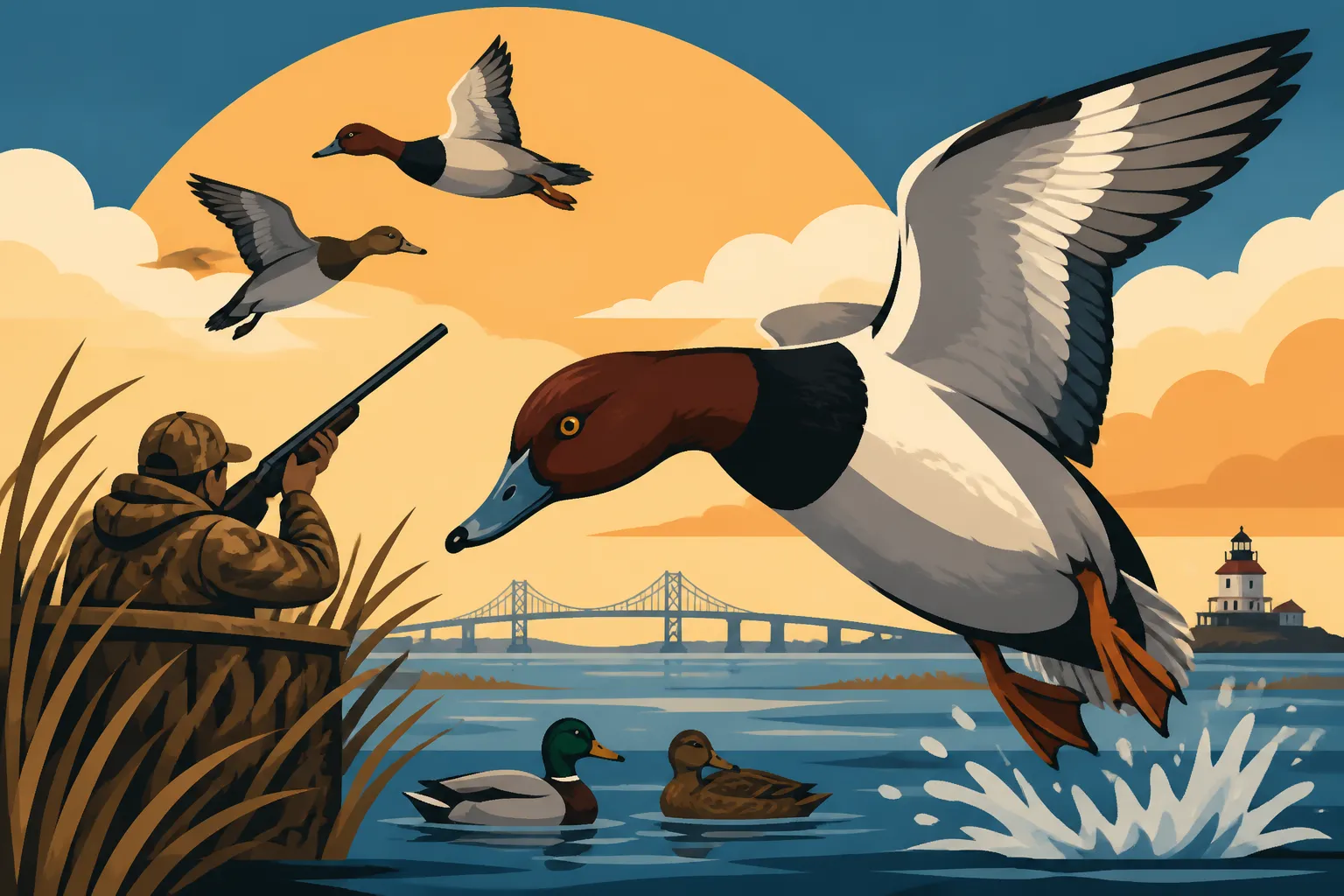
The canvasback, often hailed as the "king of ducks," is perhaps the most iconic diving duck of the Chesapeake. Its regal appearance, with a long, sloping bill that flows seamlessly into its reddish-brown head, and a brilliant white back, makes it unmistakable. Males boast that distinctive rusty red head and neck, a black chest, and strikingly white flanks and back. Females are a duller reddish-brown head and neck with a gray body. These birds are large, powerful flyers, often seen moving in long, undulating lines or V-formations across the Bay.
Canvasbacks are primarily herbivorous, with a strong preference for submerged aquatic vegetation, particularly wild celery (Vallisneria americana). This preference means you'll often find them concentrated in areas with healthy SAV beds, such as the Susquehanna Flats in the upper Bay or certain protected coves and rivers on the Eastern Shore. They are known to be quite wary, often circling decoy spreads multiple times before committing, if they commit at all. Hunting these intelligent birds successfully requires patience, excellent concealment, and a realistic spread. Many Maryland waterfowlers will spend their entire season hoping for just one opportunity to bag a majestic canvasback. For more in-depth information on their preferred wintering grounds, check out our article on Why Canvasbacks Winter on the Susquehanna Flats.
Redheads and Scaup Bluebills: Common and Challenging
Redheads and scaup (often called bluebills) are two other prominent diving duck species on the Chesapeake, offering both abundant opportunities and unique hunting challenges.
- Redheads: Male redheads are easily identifiable with their bright reddish-orange heads, grayish-blue bills, black chests, and pale gray bodies. Females are a more subdued brownish-gray with a distinct dark eye patch. Redheads are slightly smaller than canvasbacks but are also powerful flyers, often forming dense flocks. While they do feed on SAV, they also consume a significant amount of mollusks and crustaceans, giving them a broader habitat range across the Bay. They can be found in shallower bay waters, tidal creeks, and even larger freshwater impoundments connected to the Bay. They are generally less wary than canvasbacks but still require good decoying and concealment.
- Scaup (Greater and Lesser Bluebills): The term "bluebill" commonly refers to both Greater Scaup and Lesser Scaup, which are notoriously difficult to distinguish in the field, especially at a distance. Both species have distinctive blue-gray bills, hence the nickname. Male Greater Scaup have a glossy purplish-black head, a black chest, and white flanks. Male Lesser Scaup are similar but have a more purplish-green sheen to their head and often a peak at the back of the head. Females of both species are brown with a white patch at the base of the bill. Scaup are highly gregarious, often forming massive rafts of thousands of birds on the open Bay. They are omnivorous, consuming a wide range of aquatic invertebrates, small fish, and some vegetation. Their tendency to raft far offshore and move in tight, fast-flying flocks makes them a thrilling target but also a challenge to bring into a close spread.
To succeed with redheads and scaup, you'll need large decoy spreads that mimic the huge rafts they prefer, and the ability to operate safely in the open Bay environment. Consider using a mapping tool like GoHunt to identify expansive open water areas and historical resting zones where these species congregate.
Buffleheads, Goldeneyes, and Ring-necks: Smaller but Abundant Divers
While canvasbacks and redheads often grab the headlines, the Chesapeake is also home to several smaller, but no less exciting, diving duck species. These birds are often more accessible in tidal creeks and protected waters, making them excellent targets for hunters without large open-water rigs.
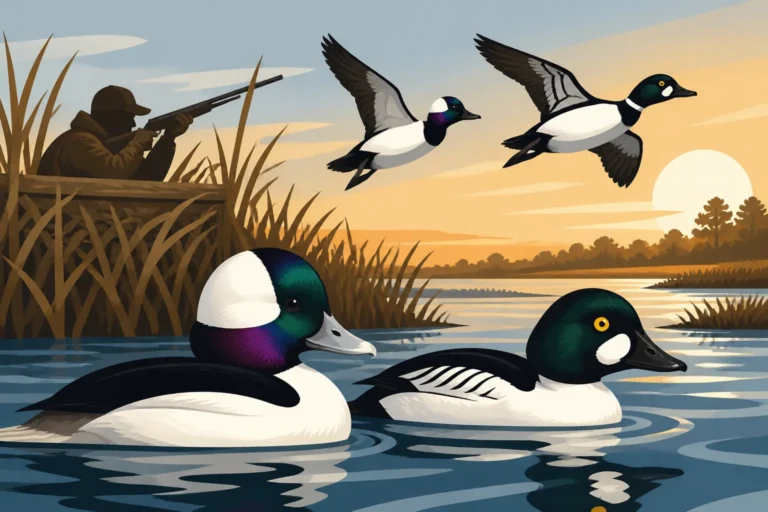
- Buffleheads: These tiny, chunky divers are unmistakable. Males have a striking black and white pattern: a dark, iridescent green-purple head with a large white triangular patch behind the eye, a pure white body, and black back. Females are a dusky gray-brown with a distinct white cheek patch. Buffleheads are incredibly agile in the air and are prodigious divers, often disappearing and reappearing quickly. They prefer smaller tidal creeks, coves, and sheltered bay waters where they feed on aquatic insects and small crustaceans. Their small size makes them fast, challenging targets, and their tendency to pop up unexpectedly can be thrilling. Our guide on Buffleheads and Goldeneyes in Tidal Creeks offers more specific tactics for these agile birds.
- Common Goldeneyes: Males are strikingly handsome with an iridescent green head, a bright white spot near the bill, a black back, and white flanks. Females have a chocolate-brown head and a gray body. Goldeneyes are larger than buffleheads but share a similar preference for sheltered waters, though they will also use open bay areas. They are highly migratory and often arrive later in the season when the weather turns colder. They feed on insects, crustaceans, and small fish, using their keen eyesight to spot prey.
- Ring-necked Ducks: Often confused with scaup, ring-necks are characterized by a distinct peaked head. Males have a black head, chest, and back, a white ring around the base of their black bill (though often not visible in the field), and strikingly white flanks with a vertical white bar in front of the wing. Females are dusky brown with a white eye ring and a duller bill. While technically a diver, ring-necks often feed in shallower waters than other divers, sometimes even in puddles or small ponds, giving them habits that bridge the gap between divers and puddle ducks. They are commonly found in freshwater or brackish impoundments and the upper reaches of tidal rivers, feeding on seeds and tubers as well as invertebrates. They are a common and enjoyable species to pursue, especially in less exposed areas.
These smaller divers provide fantastic opportunities, often when the weather is too rough for open-water hunts. They fly fast and unpredictably, making for exciting pass shooting and decoy interactions.
| Species | Key Male ID Features | Preferred Habitat (Chesapeake) | Primary Diet | Average Size (Weight) |
|---|---|---|---|---|
| Canvasback | Rusty red head, black chest, white back, long sloping bill | Large open bay, Susquehanna Flats, SAV beds | Wild celery, aquatic vegetation | Large (2.5-3.5 lbs) |
| Redhead | Reddish-orange head, gray body, black chest, blue-gray bill | Open bay, tidal creeks, shallower SAV beds, larger impoundments | SAV, mollusks, crustaceans | Medium (2-3 lbs) |
| Greater Scaup | Purplish-black head, black chest, white flanks, blue bill | Large open bay, deep channels, massive rafts | Aquatic invertebrates, small fish, some SAV | Medium (2-2.5 lbs) |
| Lesser Scaup | Similar to Greater, often peaked head, more purplish sheen | Open bay, tidal rivers, closer to shore than Greater Scaup | Aquatic invertebrates, small fish, some SAV | Medium (1.5-2 lbs) |
| Bufflehead | Iridescent green/purple head, white triangle, white body | Small tidal creeks, sheltered coves, estuaries | Aquatic insects, small crustaceans | Small (0.75-1 lb) |
| Common Goldeneye | Iridescent green head, white spot by bill, white flanks | Sheltered bay waters, tidal creeks, deep rivers | Aquatic insects, crustaceans, small fish | Medium (1.5-2.5 lbs) |
| Ring-necked Duck | Black back/chest, white flanks, peaked head, subtle bill ring | Freshwater/brackish impoundments, upper tidal rivers, shallow coves | Seeds, tubers, aquatic invertebrates | Medium (1.5-2 lbs) |
Preferred Habitats and Prime Locations for Divers
Understanding where diving ducks prefer to spend their time is the foundation of successful hunting. Unlike puddle ducks that might hide in a reedy marsh, divers are drawn to specific features of the Chesapeake Bay's expansive waters.
Submerged Aquatic Vegetation SAV Beds: The Underwater Buffet
For many diving duck species, especially canvasbacks and redheads, Submerged Aquatic Vegetation (SAV) beds are nothing short of an underwater buffet. These underwater grasses, such as wild celery, sago pondweed, and widgeon grass, provide crucial food sources that are rich in carbohydrates and nutrients, essential for these birds to survive the cold winter months and fuel their long migrations. The historical declines in SAV across the Chesapeake have significantly impacted diver populations in the past, but ongoing restoration efforts have seen some beds rebound, especially in clearer waters.
Prime locations for these vital SAV beds often include shallower, protected flats in the upper Bay, like the famous Susquehanna Flats, where acres of wild celery can still be found. Further south, certain protected coves and river mouths along both the Eastern and Western Shores might hold smaller but significant patches of widgeon grass. When scouting, look for signs of feeding, such as areas where the grasses appear thinned or disturbed, or where large numbers of divers are consistently rafting. Modern mapping tools, like GoHunt, can often provide satellite imagery that helps identify potential SAV beds, though underwater conditions can change rapidly. Understanding the health and location of these SAV beds is paramount to finding concentrated populations of divers.
Open Water Shoals and Flats: Resting and Roosting Zones
While SAV beds are crucial for feeding, diving ducks also require vast, open water areas for resting, preening, and roosting. These open water shoals and flats provide a sense of security from land-based predators and allow large rafts of birds to gather without disturbance. Often, these resting areas are located some distance from shore, in water too deep for easy human access without a robust boat.
Good examples of such areas include large, relatively shallow expanses of the central and lower Bay, as well as wide river mouths like the Choptank or Potomac. Divers will move between these resting areas and their feeding grounds throughout the day, often flying low over the water in distinctive lines or V-formations. Understanding these daily movements and the specific flight lines they use between resting and feeding areas can be incredibly beneficial. For instance, if you can identify a pinch point, a narrow section of water, or a prominent point that birds consistently fly over on their way to or from a major rafting area, that could be a prime spot for setting up a decoy spread. These shoals are also where you'll often see the truly massive rafts of scaup, sometimes thousands strong, that characterize the Chesapeake diver experience.
Understanding Tidal Influence on Diver Movements
The Chesapeake Bay is a tidal estuary, and the rise and fall of the tides profoundly influence diving duck behavior and accessibility to food. Unlike freshwater systems, where water levels are relatively constant, the tides on the Bay can expose or cover vast areas of prime feeding habitat within a few hours. This means a spot that is excellent at high tide might be completely dry or too shallow at low tide, and vice-versa.
For divers, falling tides can sometimes concentrate food sources into smaller areas, making them easier to access. Conversely, a rising tide might allow them to spread out over newly inundated feeding grounds. Strong tidal currents can also impact decoy spreads, requiring heavier weights or specialized rigging to keep them in place. Hunters need to be acutely aware of tide charts and how local currents will affect their hunt. For example, a strong outgoing current might push birds faster or make it harder for them to work into a headwind over your spread. Learning to read tide charts before a hunt and understanding how they interact with specific hunting locations is a skill that takes time but pays off immensely in the dynamic environment of the Chesapeake Bay. You might find our article on Reading Tide Charts Before a Marsh Hunt helpful, even for open water.
Essential Gear and Setup for Diver Hunting
Hunting diving ducks on the Chesapeake Bay isn't your typical marsh walk-in hunt. It demands specialized gear, a robust understanding of boat safety, and thoughtful decoy spreads tailored to open water conditions.
Decoy Spreads: Making Your Layout Irresistible
Decoy spreads for diving ducks differ significantly from those used for puddle ducks. Divers are generally gregarious, preferring to gather in large numbers. To effectively mimic this, you often need a larger spread, sometimes 50 to 100 decoys or more, especially for species like scaup or redheads that raft in the thousands. These spreads are typically set in open water, often off a prominent point or a shallow bar, where divers naturally travel and feed.
The classic diver spread often involves a "long-line" or "gang-rig" setup, where multiple decoys (often 6-12) are attached to a single mainline, which is then anchored at both ends. This allows for quick deployment and retrieval, crucial in cold, rough open water. You'll want to create a sense of realism with a mix of species if you're targeting multiple types of divers, but remember to prioritize realism. Canvasbacks, for instance, are very sensitive to unnatural-looking spreads. Position your decoys in a loose, natural-looking raft, leaving a landing zone for incoming birds. Motion decoys, such as Jerk Rigs or even spinning wing decoys if conditions allow, can add lifelike movement, especially on calm days when the water is flat and lifeless. Keep an eye on how the wind and current affect your spread; decoys that are bunched up or facing the wrong direction can deter wary birds. Our guide on Decoying Divers on Maryland's Open Bay offers detailed strategies for these setups.
Boats, Blinds, and Safety Gear: Operating in Open Water
Hunting divers often means venturing into the expansive, sometimes treacherous, waters of the Chesapeake Bay. This makes your boat and safety gear absolutely paramount. You need a stable, seaworthy boat capable of handling choppy conditions, strong currents, and potentially long runs to hunting spots. A well-maintained engine (or two) is essential, as breakdowns far from shore can be dangerous, especially in freezing temperatures.
Blinds for diver hunting vary widely. Many hunters use permanent stake blinds or island blinds on prominent points, or natural shore blinds where available. For more mobile hunting, layout boats are incredibly effective. These low-profile boats allow a hunter to lie flat, almost at water level, in the middle of their decoy spread, offering unparalleled concealment. Tender boats are then used to ferry hunters and gear, retrieve birds, and act as a safety vessel. Regardless of your setup, a comprehensive safety kit is non-negotiable. This includes personal flotation devices (PFDs) for everyone, a marine radio or satellite communicator, a first-aid kit, spare props, tools, and plenty of warm, waterproof clothing. Always file a float plan, check marine forecasts meticulously, and understand the specific rules for Boat Safety on the Chesapeake in December. The Bay can be unforgiving, and preparedness is the key to both success and survival.
Shotguns, Chokes, and Ammo: The Right Tools for the Job
Diving ducks, with their heavy bodies and fast, direct flight, can be tough birds to bring down. This means selecting the right shotgun, choke, and ammunition is crucial. Most diver hunters opt for 12-gauge shotguns, capable of handling heavier loads. A 3-inch or even 3.5-inch shell packed with steel shot is the standard. Remember, lead shot is illegal for all waterfowl hunting in Maryland.
When it comes to shot size, you'll want something with good knockdown power and pattern density at longer ranges. Steel shot sizes like BB, 1, or 2 are popular choices for larger divers like canvasbacks and redheads, while 2s, 3s, or 4s might suffice for smaller buffleheads and goldeneyes. For better performance, particularly at longer ranges often associated with diver hunting, consider bismuth or tungsten-alloy alternatives, which offer greater density than steel. Choke selection is also vital. While a modified choke is a good all-around choice, many diver hunters prefer improved modified or even full chokes to ensure tight patterns at extended distances, as divers often decoy at the edge of comfortable shooting range. Always pattern your shotgun with your chosen ammunition and choke combination before the season to understand its effective range. This practice ensures that when those fast-flying divers finally commit, you're ready to make a clean, ethical shot.
Strategies for Successful Chesapeake Diver Hunts
Hunting diving ducks successfully on the Chesapeake Bay is a unique blend of scouting, strategy, and pure grit. It's about more than just showing up; it's about understanding the dynamic environment and the specific behaviors of these incredible birds.
Mastering the Layout: Optimizing Position and Concealment
The core of diver hunting often revolves around the concept of a "layout"—being incredibly well-concealed in the heart of the birds' preferred habitat. Whether you're in a specialized layout boat or a well-brushed shoreline blind, the goal is to disappear into your surroundings. For layout boats, this means being as low to the water as possible, painted or camouflaged to match the open water, and often surrounded by your decoy spread to break up your outline. The decoys aren't just for attracting birds; they're also part of your concealment strategy.
When choosing a position, consider prevailing winds and currents. Divers, like most waterfowl, prefer to land and take off into the wind. Setting your spread so that incoming birds have to work into the wind to get to your decoys will give you the best shot opportunities. Look for prominent points, shallow bars, or underwater structures where birds naturally congregate or funnel through. A successful layout involves meticulous attention to detail – from the subtle arrangement of decoys creating a natural landing zone, to ensuring no reflective surfaces are exposed. Even minor glints from a call lanyard or eyeglasses can flare wary birds. Remember that while some areas are public, like certain WMAs, many prime points are licensed blind sites. Understanding the rules for Maryland Waterfowl Blind Site Licensing is essential for legal hunting.
Reading Weather and Water Conditions
Weather and water conditions are perhaps even more critical for diver hunting than for other forms of waterfowl hunting. Divers thrive in rougher conditions that keep puddle ducks in the sheltered marshes. A stiff wind can be your best friend, creating whitecaps that add realism to your decoy spread and make incoming birds less likely to spot your concealment. Overcast, blustery days often produce the best diver flights, as birds are more apt to be moving between feeding and resting areas.
However, rough weather also presents significant safety challenges. High winds can make open water extremely dangerous, and freezing temperatures coupled with spray can quickly lead to hypothermia. Always prioritize safety over the hunt. Before heading out, meticulously check marine forecasts, paying close attention to wind speed, wave height, and air temperature. Consider how the wind direction will affect your chosen hunting spot – a strong crosswind might push decoys out of position or make shooting difficult. A mapping tool like GoHunt can help you assess how wind direction interacts with various points and shorelines, allowing you to choose the best accessible location for the given conditions. Understanding how to adapt your setup to changing conditions, or knowing when to simply stay home, is a hallmark of an experienced Chesapeake diver hunter. For hunters operating in protected areas, our article on Hunting a Chesapeake Bay Blind at First Light provides insights relevant to any shoreline setup.
Responsible Hunting and Conservation of Diver Species
As with all hunting, responsible practices and a commitment to conservation are paramount, especially for species that face environmental pressures. Diving ducks, in particular, can be sensitive to habitat changes, especially the health of SAV beds. Maryland has a rich tradition of waterfowl hunting, and it's our collective responsibility to ensure these opportunities continue for future generations.
This means adhering strictly to all hunting regulations, including season dates, bag limits, and legal shooting hours. Always identify your target before shooting to avoid accidentally shooting protected species or exceeding species-specific bag limits. Be mindful of ethical shooting distances; don't take Hail Mary shots at birds far out, as this often leads to wounded birds that are difficult to recover. A good retriever is invaluable for diver hunting, especially on open water where downed birds can drift quickly or dive to evade recovery. Minimize disturbance to large rafts of resting birds, especially outside of hunting hours. Support conservation efforts, whether through purchasing your Federal Duck Stamp Rules for Bird Hunters or contributing to organizations dedicated to waterfowl habitat restoration on the Chesapeake Bay. By practicing ethical hunting and being stewards of the Bay's resources, we can ensure the majestic diving ducks continue to grace its waters for years to come.
Disclaimer
Please remember that hunting regulations and conditions can change rapidly. Always consult the latest Maryland Department of Natural Resources (DNR) official regulations before planning any hunt. Safety should always be your top priority.