How Old a Three-Point Buck Usually Is
It's a common question, and one that causes a lot of head-scratching among deer hunters here in Maryland: just how old is that three-point buck you're looking at through your binoculars? With our specific antler restrictions, understanding a buck's age becomes even more critical for ethical hunting and herd management. This guide will help you decipher the typical age of a three-point buck and provide insights into antler development in our diverse Maryland landscapes.
Maryland's Antler Restrictions and the "Three-Point" Buck
Maryland's deer hunting regulations, particularly the antler restrictions, are designed with a specific goal in mind: to allow younger bucks to survive, mature, and contribute to a healthier, more balanced deer herd. This approach has certainly changed how many of us think about what constitutes a "good" buck in the field.
Understanding the Rule's Intent
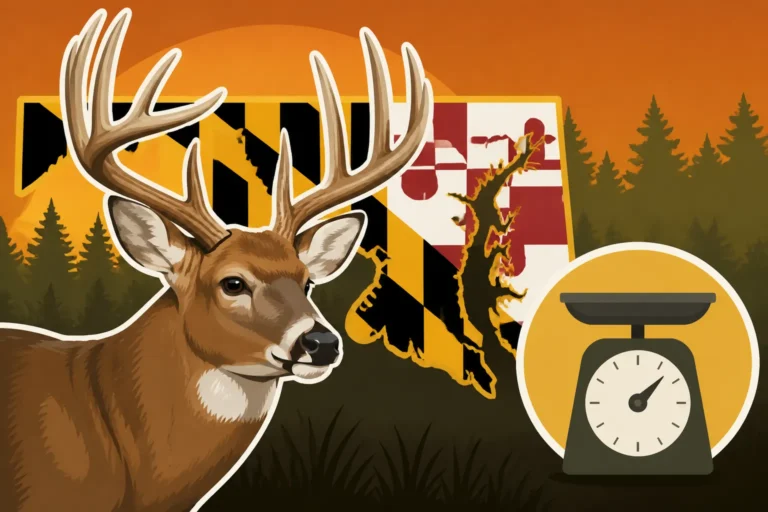
The intent behind Maryland's three-point antler rule is fairly straightforward, though sometimes a point of contention among hunters. Essentially, by requiring a buck to have at least three points on one antler (or a 15-inch outside spread for certain areas), the aim is to protect most yearling bucks (those 1.5 years old) from harvest. In theory, this allows these young bucks another year or two to grow, not just bigger antlers, but also larger, more robust bodies. This contributes to better genetics throughout the herd and, ideally, more mature deer for hunters to pursue in subsequent seasons. It forces us to be more selective, which can be tough when you've got buck fever! The nuances of these rules can vary, so it's always smart to review specifics, especially regarding Region A and Region B Deer Rules if you hunt in the western counties.
Defining a "Three-Point" Buck in Maryland
Now, let's get down to the nitty-gritty of what a "three-point" buck actually is in the eyes of Maryland's regulations. It's not about three points total on both antlers. No, sir. It means three points on at least one antler. This is a crucial distinction that often trips up new hunters or those accustomed to different regulations in other states. A point, for the record, must be at least one inch long, and longer than it is wide at its base.
So, if you see a buck with two points on one side and a single point on the other, that's a "forked horn" and a spike, but not a legal three-point buck if that single point is the only one qualifying it. You're looking for at least three distinct points sticking up from one main beam. This often leads to careful, sometimes agonizing, observation through binoculars before making a decision. It’s important to know Counting Antler Points Before You Shoot to avoid any costly mistakes in the field. Those quick glances often miss a small brow tine or a burr point that counts!
Factors Influencing a Buck's Antler Growth and Age
Antler development is a fascinating process, but it's not simply tied to a buck's age. While age is undoubtedly a primary factor, it interacts with several other critical elements that can make a huge difference in what kind of rack a buck carries, regardless of how many seasons he's seen.
Nutrition and Habitat Quality
Just like a young athlete needs good food to grow, a buck needs optimal nutrition to develop impressive antlers. Antlers are bone, and bone requires specific minerals like calcium and phosphorus, along with protein. If a buck lives in an area with poor soil, limited browse, or high deer density that has depleted the food sources, his antler growth will suffer, even if he's an older animal.
Think about the difference between a buck living in the rich agricultural fields of the Eastern Shore, with abundant soybeans and corn, compared to one scraping by in a less fertile, over-browsed suburban woodlot. The Eastern Shore buck is likely to have significantly better antler growth at any given age due to consistent access to high-quality forage. Even within the marsh, what sika deer eat will directly impact their antler growth. A healthy diet from spring green-up through summer is vital for bucks to reach their genetic potential. When there's a good acorn crop in the fall, you'll often see deer looking healthier overall, which reflects past nutritional intake, though it primarily impacts their winter conditioning and breeding success.
Genetics and Herd Health
While a buck can't outgrow his genetic potential, good nutrition allows him to reach that potential. Genetics play a huge role in antler size, mass, and the number of points. Some bucks are simply predisposed to grow larger racks with more points, while others, even with perfect nutrition, may never develop a massive set of antlers. This is part of the challenge and excitement of deer hunting; you never truly know what genetics are at play until you see the buck.
Herd health is another piece of this puzzle. In areas with a high deer population and limited food, individual deer might be stressed, more prone to disease, and generally smaller in body and antler size. Conversely, a healthy, well-managed herd, even if it's in a more remote region, can produce impressive bucks because there's less competition for resources and overall stress. For instance, sometimes a particularly dry summer can impact the entire deer population, making antler growth stunted for all age classes. This can be seen in situations like Why Maryland Deer Die After a Dry Summer, which stresses the importance of water and forage.
Regional Differences in Maryland
Maryland is a diverse state, stretching from the Allegheny Mountains in the west to the flat, tidal marshes of the Eastern Shore. This geographical variety means significant differences in habitat, climate, and deer populations, all of which influence antler development.
- Western Maryland: In counties like Garrett and Allegany, where vast tracts of forest dominate, deer often rely more on hard mast (acorns, hickory nuts) and natural browse. A three-point buck here might be 2.5 years old, or even older, simply because the forage isn't as rich as agricultural areas. These bucks often have compact, dense antlers. Still-hunting the timber in Savage River State Forest or Green Ridge State Forest will reveal different deer than you'd find on the shore.
- Eastern Shore: Here, the landscape is a mix of agricultural fields, pine plantations, and expansive marshes. Bucks in farm country tend to have access to highly nutritious crops, often leading to better antler growth at younger ages. A 1.5-year-old buck here might already be a legal three-point, whereas a 2.5-year-old is more likely to be a 4- or 5-point. The unique habitat, particularly in Dorchester and Somerset counties, also supports the smaller-bodied Sika deer, which have their own antler characteristics, often requiring knowledge of Hunting Sika Deer in Maryland's Loblolly Pine Edges to find them.
- Central and Southern Maryland: These areas often present a mix of suburban influence, smaller farms, and managed woodlands. Deer here can be somewhat of a wild card. They might benefit from suburban landscaping (if they can access it) or suffer from increased pressure and fragmentation of habitat. You can find robust bucks and smaller ones, often reflecting specific local conditions like population density and food plots.
Given these regional variations, a "three-point buck" is not a uniform animal across the state. What passes for a legal three-point in one area might be a buck you'd pass up in another, depending on your management goals and personal hunting ethics.
Estimating Age: Beyond Antler Points
While Maryland's antler point restriction focuses on the rack, a truly informed hunter learns to look beyond the headgear to determine a buck's age. Antlers can be deceiving; a young buck with great genetics and nutrition might sport an impressive rack, while an older buck in poor health could have a rather small one.
Body Characteristics as Age Indicators
When you're trying to figure out if that legal three-point buck is a young deer or an older one that simply isn't growing a big rack, look at its body. This is where the real clues lie.
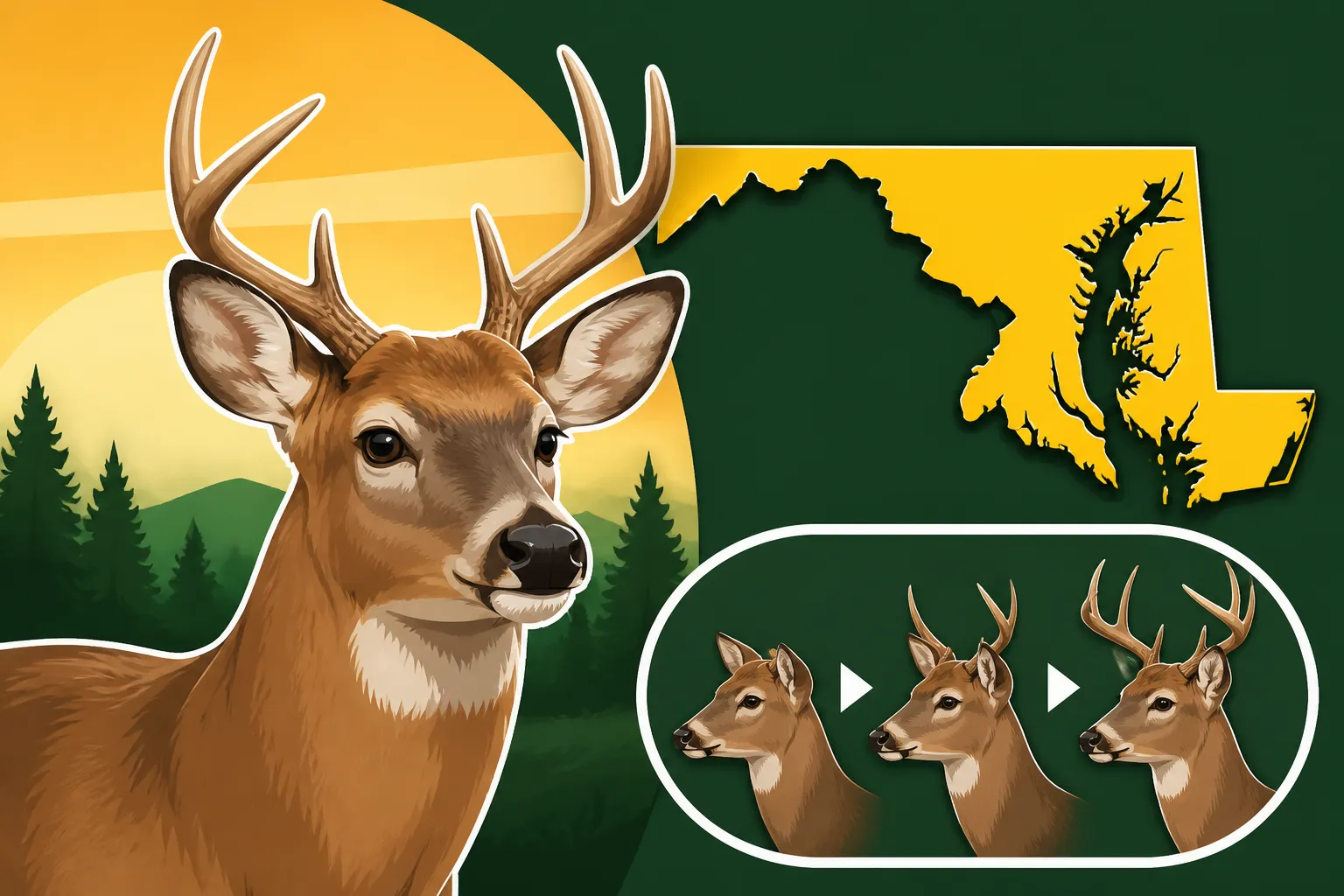
- Yearling (1.5 years old): A yearling buck, often called a "fork-horn" or "spike," will typically have a relatively slender body, long legs that look a bit disproportionate to its body, and a thin neck that blends smoothly into its shoulders. Its face will appear long and lean, and you'll notice a general "gangly" appearance, much like a teenager. Many of Maryland's three-point bucks, especially in prime habitat, are yearlings that have already met the minimum requirement.
- Two-and-a-half years old: At this age, a buck starts to fill out. His legs still look long, but his body is gaining mass, particularly in the shoulders. The neck will begin to show more muscle definition, especially during the rut, but it still won't be as thick as an older buck's. His stomach line will still be fairly tight and athletic looking. A three-point buck at this age might be one that's still developing or has genetics that limit antler growth.
- Three-and-a-half years old: This is where you really start to see a difference. The neck and shoulders become much more muscled, making the legs appear shorter in proportion to the body. His belly might begin to show a slight sag, but he's still a very athletic-looking animal. His face might start to look shorter and broader.
- Four-and-a-half years old and older: These are the mature bucks. They will have a very thick, muscular neck that blends seamlessly into deep, heavy shoulders. Their chest will appear deep, and their belly will often have a noticeable sag, especially later in the season. Their legs look short and stout compared to their massive body. Their face will be short and blocky. These bucks move with a different swagger, often holding their heads low and moving more deliberately. While Aging a Deer by Its Teeth is the most accurate way post-harvest, these visual cues are what we rely on in the field.
Behavioral Cues and Observation
Beyond physical appearance, a buck's behavior can also hint at its age. Younger bucks are often more curious, less cautious, and tend to move earlier and later in daylight. They might chase does haphazardly or spar with other young bucks with less intensity.
Older, mature bucks, on the other hand, are often ghosts of the woods. They're more secretive, moving with purpose, and are highly attuned to their surroundings. During the rut, they exhibit more dominant behavior, often keeping younger bucks away from receptive does. They might scent-check areas more thoroughly or hang back on a ridge, observing an area before entering. Observing these nuanced behaviors takes time and patience, but it's an incredibly rewarding part of the hunt. Tools like GoHunt's mapping layers can help you pinpoint bedding areas, travel corridors, and feeding zones where you might observe deer patterns over time, helping you correlate behavior with body type. You can learn a lot about their habits by focusing on areas like Scrape Lines Along a Maryland Field Edge or Working a Ridge Saddle for Rutting Bucks.
The "Typical" Age of a Maryland Three-Point Buck
So, to directly answer the burning question: How old is a three-point buck in Maryland?
Most often, a legal three-point buck in Maryland is a yearling (1.5 years old). Given good nutrition and genetics, many yearling bucks in Maryland will grow at least three points on one side. This is precisely what the antler restriction is designed to protect in many cases, hoping they survive another year.
However, it's also quite common for a three-point buck to be a 2.5-year-old buck that is still developing, or perhaps has genetics that predispose it to a smaller rack. Less commonly, but certainly possible, an older buck (3.5+ years old) in an area with very poor nutrition or a buck recovering from injury might also only carry a three-point rack. This variability is why focusing solely on antler points can be misleading for age.
Here’s a quick overview of what antler points often mean for age, with the understanding that these are general guidelines and exceptions exist:
| Antler Points (on one side) | Typical Age (in Maryland, with good nutrition) | Key Body Characteristics |
|---|---|---|
| Spike/Forked Horn | 1.5 years old (Yearling) | Slender body, long legs, thin neck. |
| 3-Point (Legal) | 1.5 to 2.5 years old | 1.5-yr-olds are lean; 2.5-yr-olds start to fill out, but still athletic. |
| 4-Point | 2.5 to 3.5 years old | Body filling out, shoulders developing, neck thickening slightly. |
| 5-Point + | 3.5 years old and older | Thick neck, deep chest, heavy shoulders, saggy belly, shorter legs. |
Remember, this table provides averages. A young buck in a nutrient-rich agricultural area might grow a 4-point rack as a yearling, while an older buck in harsh mountain terrain might only manage a 3-point. It's all about the interplay of factors.
Making Ethical Harvest Decisions
Understanding a buck's age and the factors influencing its antlers is crucial for ethical hunting. We all want to make good decisions in the field, not just to stay within the law, but to contribute to healthy deer populations and truly appreciate the animal we're pursuing.
Balancing Management Goals with Personal Preference
Maryland's antler restrictions are a management tool designed to shift the age structure of the buck herd towards older animals. As hunters, we play a direct role in this. By knowing that many three-point bucks are actually yearlings, we can choose to pass on these younger legal bucks, allowing them another year or two of growth. This aligns with the state's goal of fostering a more mature buck population.
Of course, hunting is also a personal endeavor. For some, filling the freezer is the priority, and a legal three-point buck is a welcome harvest. For others, the challenge lies in pursuing older, more mature animals. There's no single "right" way, as long as you're hunting legally and ethically. However, being informed about the typical age of a buck with a certain rack size allows you to make a more conscious choice that reflects your own hunting philosophy. This selective approach is encouraged by rules like Maryland's Three-Point Antler Restriction.
Using Technology for Informed Decisions
In today's hunting world, technology can be a huge asset in making informed decisions about deer, including age estimation. Mobile mapping applications, for instance, are invaluable for scouting and understanding the lay of the land, helping you identify areas where mature deer might hold out. You can use aerial photos to identify bedding areas, food sources, and travel corridors, which can lead you to areas frequented by older bucks. This kind of advanced scouting, whether it's through Scouting Maryland Public Land With Aerial Photos or placing trail cameras strategically, offers a significant advantage.
By regularly scouting and using tools like GoHunt, you can track deer movement patterns in specific areas, helping you to identify individual bucks over time and get a better sense of their body size and development. Seeing a buck repeatedly over several weeks or even seasons can give you an incredible understanding of its growth and behavior, enabling you to make a more confident assessment of its age. Moreover, by pinpointing critical areas like Late Season Food Sources for Maryland Deer, you can optimize your chances of encountering healthier, more mature bucks.
The Learning Curve for Hunters
Let's be honest: judging a deer's age in the field, especially under low light conditions or when your heart is pounding, is tough. It takes practice, patience, and a keen eye. Even seasoned hunters can misjudge. Don't get discouraged if you're new to this!
The best way to get better is to spend more time observing deer, both in season and out. Use your binoculars and spotting scope to study their body language and physical characteristics. Watch videos, read articles, and learn from experienced mentors who have spent years in the woods. Every deer you see, even from a distance, is an opportunity to practice your aging skills. It's a continuous learning curve, and the more you learn, the more rewarding your Maryland hunting experiences will become.
Disclaimer
This article is for general informational purposes only and does not constitute professional advice. Laws, prices and regulations vary by location and change over time. Consult a qualified professional for guidance on your specific situation.