Why Deer Numbers Rose in Montgomery County
If you've spent any time driving through Montgomery County, especially around dusk or dawn, you've likely had that heart-stopping moment: a deer suddenly appears by the road, or worse, dashes right in front of your vehicle. It's no secret that deer numbers have seemed to explode in this area, leaving homeowners frustrated with eaten landscaping and drivers on edge. This guide dives deep into why Montgomery County has seen such a significant rise in its deer population, exploring the unique combination of factors that have created this thriving, sometimes problematic, environment for whitetails right in our suburban backyards.
The Shifting Landscape: How Montgomery County Became Deer Heaven
It’s easy to point fingers at the deer, but truly understanding their booming numbers in places like Montgomery County means looking at ourselves and how we've shaped the landscape. What was once a mix of small farms and dense woodlands has transformed dramatically, and this transformation has, perhaps unintentionally, created an almost perfect environment for white-tailed deer to flourish.
From Farmland to Suburbia: Habitat Changes
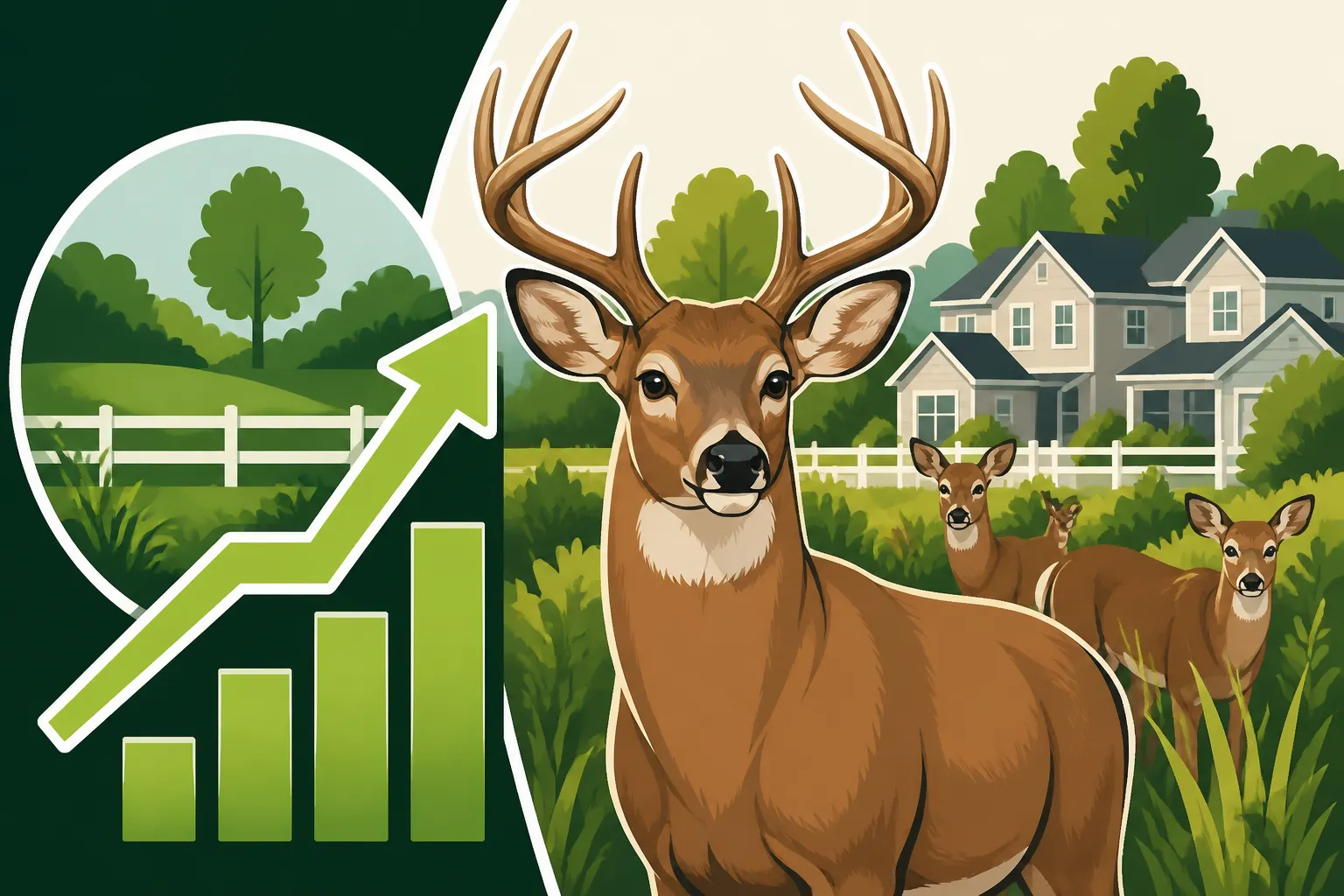
Think about what Montgomery County looked like a few decades ago, or even further back. You had vast stretches of corn and soybean fields, dairy farms, and then larger, contiguous blocks of forest. While deer certainly lived there, their populations were naturally more spread out and perhaps faced different challenges. Fast forward to today, and you see a patchwork quilt of residential neighborhoods, commercial centers, roads, and then, nestled in between, these smaller, fragmented woodlots, stream valleys, and green spaces.
This mosaic is precisely what deer thrive on. They are "edge" animals, meaning they prefer the transition zones between different habitat types. A forest edge bordering a lush suburban lawn or a thicket next to a community garden offers both security cover and an immediate, rich food source. They don't have to venture far from safety to find a meal, unlike deer in vast, unbroken forests. These suburban "islands" of habitat become incredibly attractive. When you're trying to scout for deer, using tools like GoHunt to visualize these fragmented parcels and understand property lines really highlights how much usable deer habitat is actually woven into the suburban fabric.
The concept of "habitat fragmentation" might sound complex, but for deer, it's quite simple: instead of having to move miles for food or cover, everything they need is often within a few hundred yards. A small woodlot might not seem like much to us, but to a deer, it’s a perfect bedding area during the day, offering concealment from human activity. At night, they simply step out into the surrounding yards or parks for an easy meal. This efficiency in daily movement allows more deer to survive and reproduce in a smaller area, leading to higher population densities. These smaller, seemingly insignificant patches of woods are critical for Hunting a Suburban Woodlot in Montgomery County, illustrating how even small pockets can hold resident deer.
The Feast in Our Backyards: Abundant Food Sources
Let's be honest, we've inadvertently rolled out the red carpet for deer, transforming our suburban landscapes into an all-you-can-eat buffet. Our carefully cultivated gardens, ornamental shrubs, and even the fertilizer-enhanced grass become incredibly attractive food sources, often more nutritious and easier to access than natural forage in a deep forest.
Deer are browsers, meaning they prefer to nibble on leaves, twigs, and buds rather than graze on grass. And what do we plant in our yards? Hostas, azaleas, rhododendrons, daylilies, young fruit trees, and a myriad of other tender, succulent plants that are essentially gourmet treats for a deer. They learn very quickly that a homeowner’s garden offers a much higher calorie and nutrient return than foraging for wild browse in the woods. This isn't just a minor snack; it's a significant portion of their diet, especially in times when natural food sources might be scarcer, like late winter or during a dry summer.
Beyond deliberate plantings, unintended food sources are everywhere. Bird feeders spill seeds onto the ground, fruit trees drop their bounty, and even the clippings from our perfectly manicured lawns offer a palatable, if not ideal, snack. This consistent and abundant food supply means that deer are well-fed year-round. Well-fed does are healthier, they can support twins or even triplets more regularly, and their fawns have a higher survival rate. This direct link between readily available food and reproductive success is a huge driver of population growth in an area like Montgomery County, making it a critical factor in understanding Why Deer Numbers Rose in Montgomery County.
A Sanctuary Effect: Reduced Pressure on Deer
Deer, like most wildlife, respond to pressure. In their natural, historical habitats, this pressure came from predators and human hunters alike. However, in the rapidly developing suburban sprawl of Montgomery County, that pressure has significantly diminished, creating what wildlife managers often refer to as a "sanctuary effect."
Limited Hunting Pressure and Predator Absence
One of the most significant reasons for the deer boom is the drastic reduction in effective hunting pressure. While Maryland does have a robust hunting season, the realities of hunting in a densely populated suburban county are very different from those in rural areas. Many areas of Montgomery County have strict ordinances regarding firearms discharge, or simply lack the large tracts of undeveloped land where traditional hunting methods are practical or safe. This often means that Bowhunting Maryland Suburbs Where Rifles Are Banned becomes the primary method, which, while effective, still faces limitations due to property size, safety zones, and hunter access.
Furthermore, the natural predators that once kept deer populations in check are largely absent. While coyotes have made a comeback in many parts of Maryland, their impact on healthy adult deer populations is generally minimal. They primarily prey on fawns or sick/injured deer. Large predators like wolves or mountain lions, which would historically exert significant pressure on deer herds, have been extirpated from the state for a long time. Without these natural checks and balances, and with limited human hunting pressure in many areas, deer populations can grow unchecked. This lack of significant predation means more fawns survive to adulthood, contributing to the exponential growth we observe.
This creates a scenario where deer can live out their lives with minimal threats. They become accustomed to human activity, and the fear response that might drive deer into deep cover in rural areas is dulled. Imagine a deer in a deep woods constantly on alert for a hunter or a predator, compared to a deer casually browsing a rose bush next to a busy street. This reduced stress and constant vigilance further contributes to their health and reproductive success.
Deer Adaptation and Human Tolerance (or lack thereof)
Deer are remarkably adaptable creatures. In Montgomery County, they have learned to live alongside humans with an impressive degree of nonchalance. They navigate busy roads, browse in lit yards, and even bed down mere yards from homes, seemingly unperturbed by the constant hum of suburban life. This adaptation is a double-edged sword: it allows them to thrive, but it also means they become bolder, leading to more frequent human-deer encounters.
This adaptation is often fueled by a complex mix of human responses. Some residents, out of compassion or simply enjoying the sight of deer, might put out feed or leave fallen fruit for them. While well-intentioned, this only reinforces the deer's reliance on human-provided food and further habituates them to our presence. It essentially tells them, "This is a safe place with easy food." Other residents, while frustrated by the damage, may be hesitant to support lethal management options, creating a societal hurdle for effective population control. Finding the right approach for Hunting Deer Behind a Maryland Housing Development requires not only understanding deer behavior but also navigating community sentiment.
The societal conversation around deer management is often challenging. On one hand, you have homeowners fed up with damaged property and the safety risks. On the other, you have those who prefer non-lethal methods or simply want to coexist with wildlife. This range of opinions makes it difficult for local authorities to implement comprehensive and effective deer management strategies that can truly impact population numbers. Understanding your local regulations and potential management programs is key, and resources like GoHunt can help you understand the boundaries and permissions for various types of hunting access and methods.
The Consequences of a Booming Population
The dramatic increase in deer numbers in Montgomery County isn't just an observation; it comes with tangible and often frustrating consequences for both humans and the environment. What might seem like a charming sight of wildlife can quickly turn into a significant safety hazard and a persistent drain on resources.
Safety Concerns: Vehicle Collisions
For many residents, the most immediate and terrifying consequence of high deer populations is the increased risk of vehicle collisions. Driving through Montgomery County, especially during the peak hours of dawn and dusk, or during the breeding season (the rut) in early to mid-November, becomes a game of constant vigilance. A deer appearing suddenly from the roadside can lead to serious accidents, causing extensive property damage, significant injuries, and even fatalities.
These collisions represent a substantial economic burden, from insurance claims and vehicle repair costs to medical expenses. But beyond the financial impact, there's the psychological toll on drivers involved in such accidents. It’s a jarring, often traumatic experience. The problem is exacerbated by the fact that many major roads cut directly through prime deer habitat—the very edges and fragmented woodlots we discussed earlier. The deer are simply moving from one food source to another, or seeking cover, and our roadways happen to be in their path. This is a critical factor for understanding the impact of White-Tailed Deer in Maryland in suburban settings.
Public awareness campaigns about deer-vehicle collisions are common, but the sheer density of deer in some areas means that even the most cautious drivers can be caught off guard. It's a stark reminder that when wildlife populations grow beyond the carrying capacity of their habitat, even in a suburban context, there are direct and dangerous implications for human safety.
Property and Environmental Damage
Beyond the roads, the impact of a burgeoning deer population is most evident in our yards, gardens, and local natural areas. Homeowners in Montgomery County regularly grapple with the destruction of their landscaping. Those expensive shrubs, prized rose bushes, and vegetable gardens become irresistible targets for hungry deer, leading to significant financial loss and emotional frustration.
Imagine carefully cultivating a garden, investing time, money, and effort, only to wake up one morning and find your prized plants stripped bare overnight. This isn’t just a nuisance; it’s a disheartening experience that many Montgomery County residents face repeatedly. Efforts to deter deer, such as fencing, repellents, or even motion-activated sprinklers, often prove to be costly, temporary, and less than 100% effective against a determined and hungry herd. When deer become accustomed to an area, they will find ways around many deterrents.
| Factor | Rural Deer Habitat | Suburban Deer Habitat (Montgomery Co.) |
|---|---|---|
| Food Sources | Natural browse, agricultural crops (seasonal) | Gardens, ornamental plants, fertilized lawns, fruit trees, natural browse (year-round abundance) |
| Cover | Large, contiguous forests | Fragmented woodlots, stream valleys, dense shrubbery, residential yards |
| Predation | Limited natural predators; significant hunting pressure (various weapons) | Very limited natural predators; significantly reduced hunting pressure (often bow-only or managed hunts) |
| Human Tolerance | Generally higher acceptance of hunting as a management tool | Mixed views; significant opposition to lethal methods in some communities |
| Vehicle Collisions | Present, but often less frequent per capita | High frequency due to intersecting human and deer activity |
| Disease Concerns | Present, often managed through herd health initiatives | Potentially higher risk of localized transmission due to density |
Environmentally, the impact extends beyond our manicured lawns. In local parks, nature preserves, and unmanaged woodlots, heavy deer browsing can significantly alter forest ecosystems. Deer act as "ecological engineers," selectively eating certain plant species and allowing others to proliferate. This can lead to a decline in native plant diversity, as preferred species are browsed into oblivion, hindering forest regeneration. Over time, the forest understory can become sparse and dominated by undesirable, non-native plants that deer avoid. This is a real concern even in smaller patches of woods, and something to consider when you look into Maryland's Deer Bag Limits and Antler Rule or Deer Management Permits for Farm Damage which exist to help manage these populations and their impacts.
Disease Transmission and Wildlife Health
While less visible than damaged shrubs or car accidents, the implications of high deer density for disease transmission are a significant concern. When deer populations become overly concentrated, the risk of disease spreading among the herd increases substantially. Diseases like Epizootic Hemorrhagic Disease (EHD) can decimate localized deer populations, particularly during dry, hot summers, though it doesn't typically affect humans. However, the more deer in close proximity, the easier it is for pathogens to transmit.
Perhaps more concerning for humans is the indirect health risk related to tick-borne illnesses. Deer are significant hosts for ticks, particularly the black-legged tick, which is responsible for transmitting Lyme disease. A higher density of deer means more ticks in the environment, increasing the likelihood of ticks encountering humans and transmitting diseases. This is a serious public health issue that goes hand-in-hand with burgeoning suburban deer numbers. Even when scouting potential hunting areas or simply enjoying the outdoors, understanding these risks and checking for ticks is crucial.
Management efforts often consider these factors. While Maryland continues to monitor for diseases like Chronic Wasting Disease (CWD)—and areas like Maryland's CWD Management Area Rules are in place to control its spread—high local deer densities, even outside of CWD zones, create conditions ripe for other health challenges for both wildlife and humans. Understanding the overall health of Maryland Deer in Suburban Neighborhoods is a complex challenge, one that requires balancing ecological needs with human concerns and even considering options like Hunting Maryland's Suburban Deer Management Hunts to keep populations at a manageable level.
Disclaimer
This article is for general informational purposes only and does not constitute professional advice. Laws, prices and regulations vary by location and change over time. Consult a qualified professional for guidance on your specific situation.