What Maryland Turkeys Eat in Spring
When spring finally graces Maryland, shaking off the winter chill and painting the landscape in vibrant greens, turkey hunters' minds turn to one thing: gobblers. But for the birds themselves, it's all about food. Understanding what Maryland turkeys eat in spring isn't just a biological curiosity; it's the key to unlocking their patterns and, ultimately, your hunting success. It’s frustrating to scout for weeks, only for the birds to vanish come opening day, and often, that disappearance is tied directly to a shift in their primary food sources. This guide will dive deep into the diverse spring diet of Maryland's wild turkeys, helping you decipher their menu and pinpoint their dinner table.
The Spring Feast: A Buffet of Greens and Protein
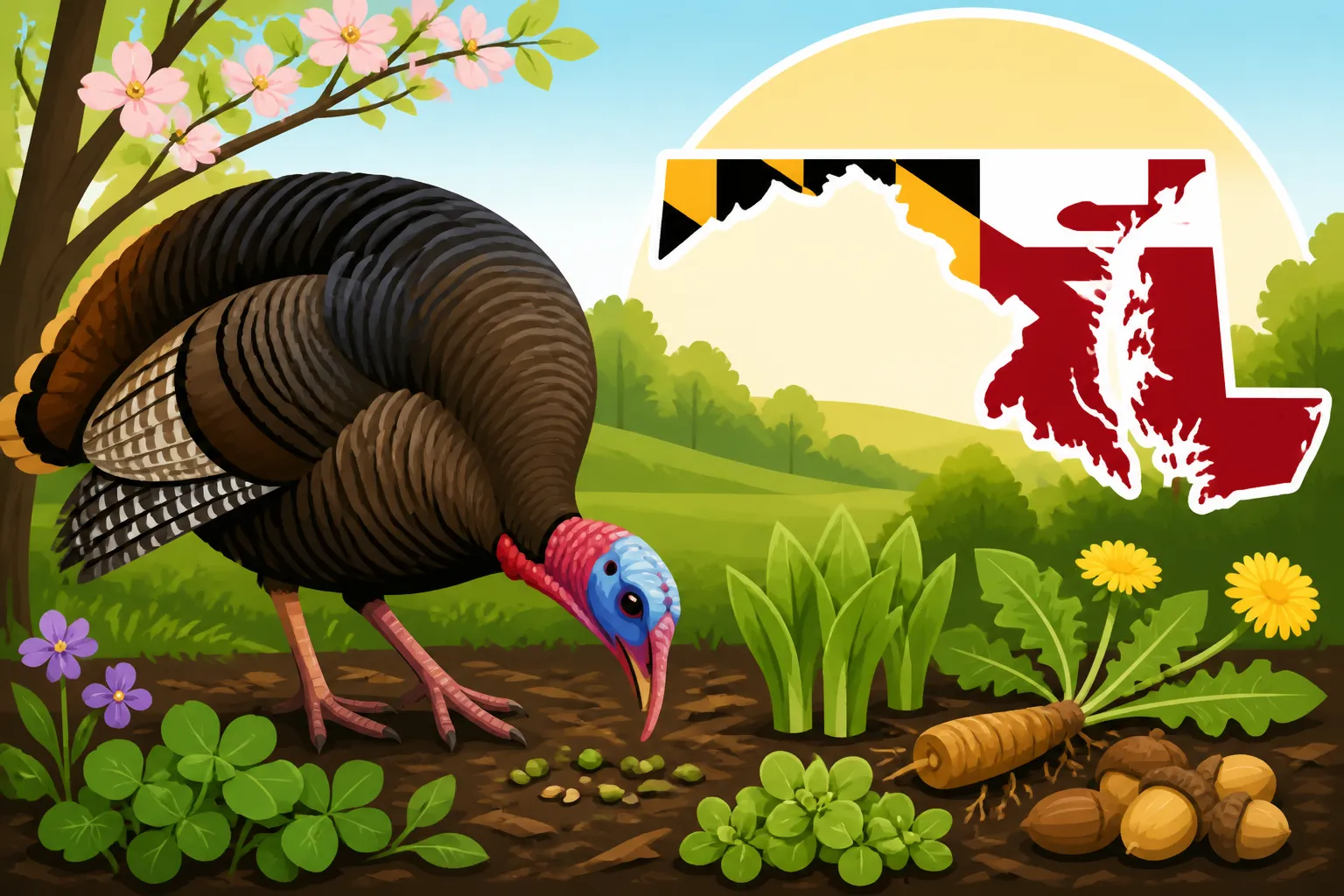
As the snow melts and temperatures rise, Maryland's wild turkeys transition from a winter diet dominated by nuts and seeds to a vibrant spring spread. This shift is critical, not just for their survival but for their breeding success and overall health after the lean months. It’s a dynamic menu that changes subtly with the progression of the season, from early sprouts to an explosion of insect life. Understanding this progression is vital, especially when you consider factors like Maryland's Spring Turkey Season Dates.
Early Season Foragers: Emerging Greens, Leftover Acorns, and Persistent Grains
In the nascent days of spring, particularly through March and early April before the main turkey season kicks off in mid-April, turkeys are often still gleaning what they can from the previous fall and winter. Acorns, especially white oaks, which are less prone to spoilage, remain a crucial energy source if a good mast crop was present. Turkeys will spend hours scratching through leaf litter in oak flats, working diligently to unearth any remaining nuts. This can be especially true in western Maryland's mountain timber, where hardwoods dominate. Even if the nuts are a bit old, they still provide a dense caloric punch that the birds need to rebuild reserves.
However, the real excitement for turkeys in early spring comes with the first green shoots. Tender new grasses, clover, dandelions, and other herbaceous plants are incredibly appealing. These emerging greens are packed with vitamins and minerals, acting like a natural tonic after a winter of drier, more concentrated foods. You'll often see entire flocks, hens and gobblers alike, fanning out across fields, pastures, or even open woodlots, heads down, systematically mowing through the tender vegetation. This early flush of green is particularly important for hens, who need to start building up the energy reserves required for egg production and nesting.
Beyond wild greenery, agricultural fields that hosted winter wheat or rye cover crops are absolute magnets. These crops, planted in the fall, start to green up rapidly in the spring, offering an easy and abundant food source. Turkeys will also frequent fields that were harvested for corn or soybeans last fall, scratching diligently for any overlooked kernels or beans. Even in cut hay fields, they'll find tender clover or alfalfa. If you're Roost Hunting Gobblers on Maryland Farmland, observing which fields they fly down into at first light can give you a direct clue about their preferred breakfast spot.
Insect Protein: The Essential Boost for Reproduction, Growth, and Energy
As spring progresses and the ground warms up, Maryland's turkey diet shifts significantly towards protein-rich insects. This change isn't just a preference; it's a biological necessity. Hens require a massive protein intake to develop eggs and sustain themselves through the nesting period, while poults, once hatched, rely almost exclusively on insects for their rapid growth. Gobblers, too, need protein to maintain their energy levels for constant strutting, gobbling, and chasing hens, all demanding activities that burn through calories quickly.
Turkeys are incredibly efficient insectivores. They use their strong legs and feet to scratch vigorously through leaf litter, disturbed soil, and decaying wood, unearthing a smorgasbord of invertebrates. Beetles, grubs, ants, spiders, grasshoppers, crickets, and even small snails and slugs are all on the menu. After a warm spring rain, when the soil softens, you'll often find turkeys working areas where the ground has been tilled or recently disturbed, making it easier to expose their buggy meals. Look for fresh scratchings in soft dirt around field edges or along logging roads.
Areas with a high insect population are prime turkey territory. These often include forest edges, old logging roads, powerline cuts, and brushy clearings. These diverse habitats provide a mosaic of conditions that support various insect species. For a hunter, understanding this means paying attention to habitat edges and transition zones, which not only offer cover and travel routes but also concentrated feeding opportunities. This is also where you might find turkeys taking advantage of what's described in Maryland Wild Turkey Population Trends – healthier birds will be more active and noticeable in these food-rich areas.
Beyond the Basics: Agricultural Influences and Diverse Habitats
While the general principles of spring foraging hold true, Maryland's diverse landscape means turkey diets can vary significantly from one region to another. A turkey in the agricultural heartland of the Eastern Shore might have a different seasonal menu than one in the dense forests of western Maryland. Hunters need to consider these local variations to effectively Scouting Maryland Public Land Before Season or even private land.
Farm Fields and Food Plots: Irresistible Draws
For turkeys living in Maryland's vast agricultural regions, especially across the Eastern Shore and parts of central Maryland, farm fields are an absolute magnet throughout the spring. Winter wheat, rye, and emerging clover planted in fall are gold mines of nutrition. Turkeys will graze these fields like cattle, often just after flying down from the roost or in the late afternoon before heading back to the roost. The young, tender shoots provide easily digestible energy, and the open nature of the fields allows them to feed with a sense of security, able to spot predators from a distance.
Beyond the green growth, overlooked grains from last year's corn and soybean harvests remain a consistent draw. Turkeys have an uncanny ability to find these remnants, scratching away dirt and debris to uncover a hidden kernel or bean. These dense calorie sources are especially valuable in cooler stretches of spring when insect activity might be lower. This means scouting the edges of these fields, looking for fresh tracks and droppings, becomes a critical part of your pre-season strategy. A mapping tool like GoHunt can be invaluable here, allowing you to identify standing grain fields, cut fields, and even cover crops from an aerial perspective before you ever set foot on the ground.
Don't forget smaller, dedicated food plots, particularly on private land. Many landowners plant specific blends of clover, chicory, or small grains specifically for wildlife. These plots are essentially gourmet restaurants for turkeys, offering concentrated, high-quality forage. If you're fortunate enough to have access to such ground, these plots can be incredibly productive, especially if positioned near good roosting timber or natural travel corridors. Even on public lands, certain management areas might have small, maintained clearings that offer similar benefits, acting as prime feeding hubs.
Forest Floor Delights: Fungi, Berries, and Woody Browse
While farm fields are a major draw, many Maryland turkeys, particularly in more heavily wooded areas like those found in Hunting Maryland's Western Mountain Forests or the state forests of Southern Maryland, rely heavily on the natural bounty of the forest floor. As spring progresses, the forest awakens with more than just green shoots. Fungi, like various wild mushrooms, can be an attractive food source, especially after rains when they proliferate. Turkeys will peck at these, seeking out their unique nutritional profile.
As the season matures into late spring and early summer, the earliest wild berries begin to appear. While more prevalent in summer, some early ripening species or lingering berries from the previous year might still be found. More significantly, tender buds and catkins from various woody plants become available. Turkeys will browse on these, finding nutrients in the soft new growth of trees and shrubs. They're not deer, so they won't be heavily browsing twigs, but tender buds on fallen branches or low-hanging brush can supplement their diet.
The forest understory also hosts a continuous supply of insect life, often more diverse and protected than in open fields. Turkeys will spend considerable time scratching in rich, damp soils beneath the canopy, seeking out worms, larvae, and other ground-dwelling invertebrates. Areas with a good mix of deciduous and coniferous trees, or those with significant leaf litter and downed timber, create ideal conditions for this type of foraging. Using a resource like GoHunt can help you differentiate between various timber types and locate potential feeding areas based on tree species and forest density, providing an advantage in finding those hidden forest floor delights.
Water, Grit, and the Unexpected: Completing the Turkey Diet
A turkey's diet isn't solely about solid food; other elements are crucial for their health and digestion. Just like humans, they need water, and they require grit to help process their food. Plus, these birds are surprisingly opportunistic, sometimes adding unusual items to their menu.
The Critical Role of Hydration and Mineral Intake
Water is, of course, essential for all living creatures, and turkeys are no exception. While they can get some moisture from the plants and insects they eat, they actively seek out water sources, especially during the warmer parts of spring. Creeks, streams, puddles, seeps, and even dew on vegetation provide necessary hydration. Areas with reliable water sources often concentrate turkey activity, making them excellent spots to consider for Setting Up Against a Big Oak for Turkeys or simply observing their travel routes.
Beyond just quenching their thirst, turkeys also need grit. Their gizzards, powerful muscular organs, use small stones and coarse sand to grind up tough food items like seeds, nuts, and even hard-shelled insects. Without sufficient grit, their digestive system can't efficiently break down food and absorb nutrients. This means turkeys will actively seek out sandy patches, gravel roads, exposed creek beds, or even bare dirt areas to swallow small pebbles. When you find these "grit stations," you've often found a spot turkeys frequent, sometimes daily.
These grit sources are often found in conjunction with water, where streams expose sand and gravel, or along the edges of agricultural fields where farmers' machinery has disturbed the soil. Keeping an eye out for these dual-purpose areas can give you a significant advantage in patterning birds. A mapping tool like GoHunt or other detailed aerial imagery can help you pinpoint potential water features and gravel roads or clearings that might serve as grit sources.
Opportunistic Finds: Reptiles, Amphibians, and Other Treats
Turkeys are not strictly vegetarian or insectivorous; they are quite opportunistic eaters. While not a primary food source, they won't pass up an easy meal. This can include small reptiles like snakes and lizards, or amphibians such as frogs and salamanders, especially in damp areas or after a spring rain. These cold-blooded creatures often become slower and more vulnerable in cooler temperatures or when emerging from dormancy, making them easy pickings for a foraging turkey.
Occasionally, turkeys might even consume very small rodents or carrion, though this is much less common. The key here is "opportunistic" – if it's small enough, easy to catch, and provides a quick energy boost, a turkey will likely consider it. This demonstrates the adaptability of Maryland's wild turkeys – they can thrive by utilizing whatever food sources are readily available in their immediate environment. Their ability to switch between diets, from hard mast to insects to tender greens and even small vertebrates, makes them incredibly resilient and capable of exploiting a wide range of habitats.
Translating Diet into Hunting Strategy
Knowing what Maryland turkeys eat in spring is only half the battle; the real skill lies in translating that knowledge into actionable hunting strategies. This means actively scouting, understanding movement patterns, and leveraging available tools to find where the birds are actually feeding. It's not about guessing; it's about connecting the dots between food sources and turkey behavior.
Scouting for Sustenance: Pinpointing Feeding Patterns
Effective turkey hunting begins long before opening day, with diligent scouting. Your goal is to identify active feeding areas based on the food sources discussed above. Start by looking for turkey sign: tracks in soft dirt, fresh droppings, and, most importantly, scratchings in leaf litter or bare ground. Fresh scratchings, where the leaves are turned over and the soil exposed, tell you birds have been there recently, likely looking for insects or leftover seeds. On farm fields, look for signs of grazing on young greens or systematic pecking where corn or soybeans might have been.
Consider the time of day. Turkeys will often feed heavily in the early morning after flying down from the roost, and again in the late afternoon before heading back to roost. Mid-day feeding can be more sporadic, but often occurs around water sources or in shaded, insect-rich areas. Weather also plays a role; after a spring rain, insect activity increases, and the ground softens, making scratching easier. Conversely, during a cold snap, birds might revert to seeking out more concentrated, high-calorie foods like leftover corn or acorns.
Don't forget to factor in the hens' role. While gobblers are the target, hens are the key to where gobblers will be. If you find an area where hens are consistently feeding, particularly later in the morning or mid-day, there's a very good chance a gobbler will eventually come through looking for them. This is especially true as the season progresses and hens start to leave gobblers to sit on nests, as discussed in When Maryland Gobblers Start Strutting.
Using Technology and Local Knowledge to Find the Dinner Table
In today's hunting world, we have access to incredible tools that can significantly aid in identifying turkey feeding areas. Satellite imagery and topographic maps, often found in apps like GoHunt, allow you to study landscapes from above. You can pinpoint agricultural fields, identify different timber types (oak flats vs. pine plantations), locate water sources, and even pick out logging roads or powerline cuts that might offer prime insect habitat. Before you ever step foot on a property, you can use these tools to build a comprehensive scouting plan, marking potential feeding zones and travel corridors.
Local knowledge is equally invaluable. Talking to farmers, landowners, or even other seasoned hunters can provide insights into historical turkey patterns or recent changes in food availability. They might know which specific fields are planted with winter wheat, where a reliable seep exists, or which wooded draws consistently hold insect populations. Combining this on-the-ground intelligence with your digital scouting can create a powerful strategy.
Finally, remember that turkeys are creatures of habit but also opportunists. While they'll stick to reliable food sources, they'll also exploit new opportunities. Being flexible and adaptable in your hunting approach is key. If your initial spots aren't producing, re-evaluate. Have the crops grown taller? Has a new clearcut opened up? Did a recent rain wash out some grit areas? Every piece of the puzzle, especially their ever-changing menu, contributes to a successful spring turkey hunt in Maryland. The more you understand what they're eating, the better equipped you'll be to put yourself in their path.
| Spring Food Category | Examples | Typical Habitat / Location | Hunter Implications |
|---|---|---|---|
| Emerging Greens | Clover, Grasses, Dandelions | Pastures, agricultural fields, open woodlots | Focus on open areas, field edges, recently mowed spots |
| Leftover Grains | Corn, Soybeans, Wheat, Rye | Cut agricultural fields, winter cover crops | Scout field edges, look for scratchings in stubble |
| Acorns/Nuts | White Oak Acorns | Oak flats, hardwood ridges | Check mature timber for residual mast, fresh scratchings |
| Insects/Grubs | Beetles, Ants, Spiders, Worms | Leaf litter, disturbed soil, logging roads | Look in clearings, powerline cuts, damp forest floors |
| Fungi | Wild Mushrooms | Damp forest floor, decaying wood | Less predictable, but worth noting in wet conditions |
| Water | Creeks, Seeps, Puddles, Dew | Near water bodies, low-lying areas | Identify water sources, likely travel corridors |
| Grit | Small stones, Sand, Gravel | Gravel roads, creek beds, bare soil | Look for exposed soil patches, stream banks |
Disclaimer
This article is for general informational purposes only and does not constitute professional advice. Laws, prices and regulations vary by location and change over time. Consult a qualified professional for guidance on your specific situation.