Where Snow Geese Feed on the Upper Shore
Finding those elusive snow geese on Maryland's sprawling Upper Eastern Shore can feel like searching for a needle in a haystack, especially when you know they're around but just can't pinpoint their daily feeding spots. It's a huge commitment of time and fuel to drive around hoping to stumble upon them, and that's precisely why understanding their habits and preferred habitats is so crucial. This guide is here to help you unravel the mysteries of snow goose feeding patterns, giving you the practical insights you need to narrow down your search and boost your chances of finding these incredible birds.
Understanding Snow Goose Behavior and Habitat Preferences
Snow geese are creatures of habit, yet their habits are constantly influenced by factors like food availability, weather, and hunting pressure. To consistently find them, you need to think like a snow goose. They prioritize two main things: abundant, easy-to-access food, and a sense of security. The Upper Shore offers both in spades, with its vast agricultural fields and proximity to the open waters of the Chesapeake Bay and its major tributaries.
Dietary Habits and Field Preferences
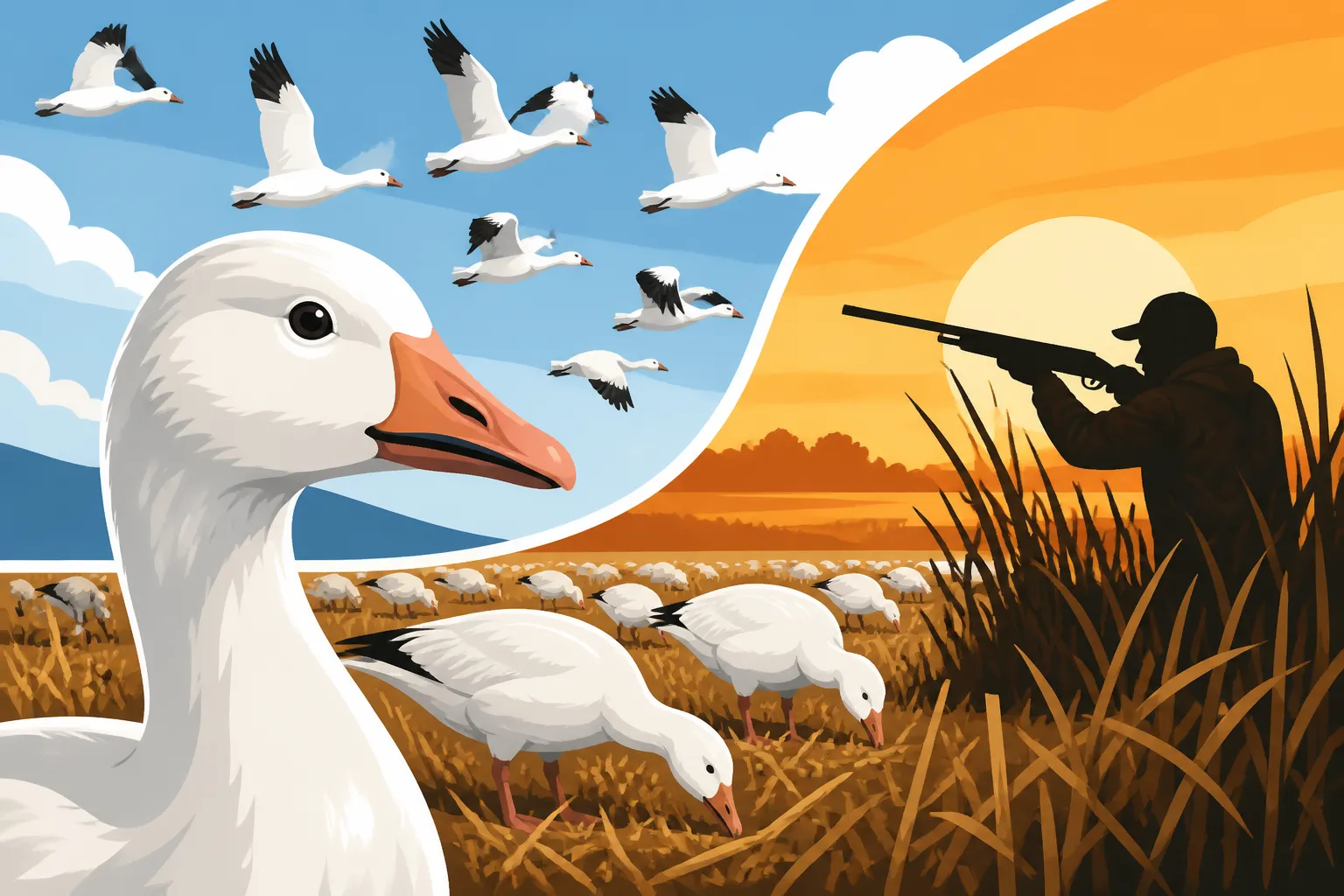
Snow geese are primarily grazers, but their diet on the Upper Shore heavily revolves around waste grain left in agricultural fields after harvest. This means corn and soybean fields are absolute magnets for them, particularly after combines have gone through. Imagine thousands of birds descending on a field, diligently picking up every last kernel or bean. It's an all-you-can-eat buffet, and they'll exploit it until the food source is depleted or heavy rains make it inaccessible. These birds aren't just looking for a snack; they're trying to pack on calories for their long migrations and to survive the cold winter months.
Beyond corn and soybeans, don't overlook winter wheat fields. Early in the season, after the wheat has been planted and is just sprouting, these tender green shoots are incredibly attractive. It's like fresh salad bar for them, easy to digest and full of nutrients. As the season progresses, they'll often cycle back to fields that have seen some regrowth or where fresh snow has melted, revealing hidden stubble. The key is understanding the agricultural cycle of the region. A good year for corn harvest means plenty of waste grain. A wet fall might mean more corn left on the ground. These are all factors that influence where the geese will choose to settle down for their meals.
Flocking Dynamics and Field Selection
Snow geese are highly social birds, traveling and feeding in massive flocks that can number in the tens of thousands. This sheer volume plays a huge role in their field selection. A field that might seem unremarkable to a single duck can become an irresistible feeding ground for a giant flock. When one goose spots a potential food source, others quickly follow, creating a swirling vortex of white birds descending from the sky. This group behavior provides a measure of safety; with so many eyes, it's harder for a predator to sneak up unnoticed.
They also prefer large, open fields that offer unobstructed views. This allows them to spot danger from a distance, giving them ample time to take flight. Tree lines, thick hedgerows, and uneven terrain can make a field less desirable, even if it has food. Think of it from their perspective: they want a wide-open panorama to feel secure. The flat, expansive agricultural lands of the Upper Shore fit this bill perfectly. Furthermore, they're often found in fields that are relatively close to their major roosting areas on the bay or large rivers. They'll fly out to feed in the morning, spend most of the day gorging themselves, and then return to the safety of the open water as dusk approaches. This daily commute dictates a lot of their patterns.
Key Feeding Grounds on Maryland's Upper Eastern Shore
The Upper Shore of Maryland, encompassing counties like Kent, Queen Anne's, and Cecil, is a renowned wintering ground for snow geese. These areas boast the perfect combination of extensive agriculture and critical water bodies, creating an ideal ecosystem for these migratory birds.
Major Agricultural Zones
When you're looking for snow geese, you're essentially looking for the heart of the agricultural operations on the Upper Shore. Kent County, for instance, is absolutely blanketed in corn and soybean fields. Drive the back roads between Chestertown and Kennedyville, or around Fairlee and Rock Hall, and you'll see endless tracts of farmland. This is prime territory. Queen Anne's County, particularly the areas around Centreville, Church Hill, and Sudlersville, offers a similar landscape of vast fields. These expansive areas are often where the largest flocks can be found.
Cecil County, particularly its southern and western portions closer to the Elk River and Sassafras River, also holds significant agricultural land that attracts geese. The key is recognizing the types of crops that were planted and harvested. You can often see remnants of corn stalks or soybean stubble. A freshly cut field of winter wheat can be a magnet, too. It's not just about any field, but the right field at the right time. The birds will utilize these areas repeatedly until the food source is depleted or until excessive hunting pressure pushes them elsewhere.
Proximity to Water Roosts
Snow geese don't just pick any field; they often choose fields that are within a reasonable flight path of their primary roosting sites. These roosts are almost exclusively large, open bodies of water where they feel secure from ground predators. On the Upper Shore, this means the Chesapeake Bay itself, as well as the broad stretches of the Chester River, Sassafras River, and Elk River. Think of a field near the mouth of the Chester River versus one deep inland. While geese will travel, they prefer to minimize flight time to conserve energy, especially in cold weather.
Many of the prime feeding fields are within 5-10 miles of these major waterways. They'll lift off the water at first light, fly to a feeding field, and often return to the water multiple times during the day, or at least for the night. Identifying these roosting areas, even if you can't hunt them, is crucial for predicting flight paths and narrowing down potential feeding grounds. It creates a sort of "radius of appeal" around the major water bodies. If you're Hunting a Chesapeake Bay Blind at First Light, you might see flocks peeling off towards these inland fields.
Specific County Hotspots
While generalizations are useful, pinpointing specific areas where geese concentrate can be a game-changer. In Kent County, focus your efforts around the Chestertown, Rock Hall, and Kennedyville areas. These regions have a high density of agricultural fields, often bordering large creek systems that lead to the bay. Fields close to the Eastern Neck National Wildlife Refuge, while often off-limits to hunting, act as major staging and roosting areas, pushing birds out into the surrounding private farmlands to feed.
Queen Anne's County is another stronghold. Areas north of Centreville, particularly towards Sudlersville and Church Hill, are historically excellent for geese. The sheer scale of farming here provides ample food. Look for fields with visible waste grain.
Cecil County, especially the farmlands between Warwick and Cecilton, and extending down towards Galena, can be incredibly productive. These areas are slightly further north and often see some of the earliest arrivals of migratory snow geese. The terrain here can be a bit more varied, but the large, open fields remain key. Using tools like GoHunt can help you visualize these areas, showing crop types, and potential public land access points that might border private feeding grounds. It's not uncommon to see several thousand birds in a single field in these productive zones.
Scouting and Identifying Active Feeding Fields
You can't just drive around aimlessly and expect to find the motherlode every time. Effective scouting is the backbone of successful snow goose hunting on the Upper Shore. It's a combination of pre-season planning and in-season reconnaissance.
Pre-Season Aerial Reconnaissance
Before the season even opens, or at least before the birds fully arrive, you can do a lot of homework. Utilize online mapping tools to study the agricultural landscape of Kent, Queen Anne's, and Cecil counties. Look for large, open fields, especially those that appear to be prime for corn or soybeans. Pay attention to fields that have minimal tree cover and easy access from the road. Think about where you've seen flocks in previous years – often, they'll use similar areas if conditions are right.
Apps like GoHunt, with their detailed satellite imagery and property line overlays, are invaluable here. You can identify potential fields, mark them, and even see who owns the surrounding parcels. This allows you to plan your scouting routes and identify potential landowners to approach for permission. You're looking for patterns: where are the biggest fields? Which ones are close to major waterways? Where are the major travel corridors between known roosts and feeding areas? Scouting Maryland Public Land With Aerial Photos can give you an edge, even if you're targeting private land, by helping you understand the broader landscape.
In-Season Ground Scouting Techniques
Once the birds are in Maryland, it's time for boots-on-the-ground (or wheels-on-the-road) scouting. This is often done at dawn or dusk when birds are most active in their flight to and from roosts. Drive the back roads of your target areas. Keep your binoculars handy. You're not looking for a needle in a haystack; you're looking for massive white clouds moving across the sky or feeding in fields. Snow geese are loud, so often you'll hear them long before you see them, especially on calm mornings.
When you spot a large flock feeding in a field, make note of the exact location. Pay attention to the crop type, the specific part of the field they're using, and their flight path. Try to observe for an extended period if possible. Are they there for the long haul, or just a quick stop? Are there smaller, satellite flocks in nearby fields? The challenge, of course, is that these are often private lands. This is where Knocking on Doors in Maryland Farm Country comes into play. Having specific fields identified makes that conversation much easier. Remember, fields can change daily, so recent intel is critical.
Using Technology for Scouting and Planning
In today's hunting world, technology can really be your friend, especially when it comes to locating migratory birds like snow geese. As mentioned, the mapping capabilities of platforms like GoHunt are a game-changer. You can virtually "fly over" the landscape, identify agricultural fields, and even see the contours of the land. More importantly, these apps often overlay property lines, which is absolutely critical for understanding land ownership and knowing who to contact for permission. It's one thing to see geese in a field; it's another to know if you can actually hunt it.
Beyond mapping, don't underestimate the power of social media groups or local hunting forums. Many local hunters share real-time (or near real-time) observations about bird movements, though you'll need to discern reliable information from chatter. Weather apps are also essential for predicting flight patterns, as geese are heavily influenced by wind and precipitation. Combining these tools allows you to gather a comprehensive picture, moving beyond pure luck to a more calculated approach for finding active feeding fields.
Impact of Agriculture and Weather on Snow Goose Feeding
Snow geese don't just appear in a field randomly; their choices are heavily influenced by the agricultural calendar and Mother Nature's moods. Understanding these dynamics is key to staying ahead of their movements.
Crop Rotation and Availability
The types of crops planted and harvested on the Upper Shore directly dictate the snow geese's menu. Early in the fall, after the corn and soybeans are taken off, the waste grain is their primary target. These fields, often referred to as "stubble fields" or "cut corn" and "cut bean" fields, are where the earliest and largest concentrations of birds will appear. They'll systematically work these fields, often in rotating sections, until the readily available food is gone. When you are Setting a Goose Spread in Cut Corn, understanding the remaining food sources can influence your decoy placement.
As winter progresses and those waste grain fields become picked over, or perhaps covered by snow or made inaccessible by heavy rains, the geese will shift their focus. This is when winter wheat fields become much more attractive. The young, green shoots offer a fresh source of forage. Farmers often rotate their crops, so a field that was corn one year might be wheat the next, completely changing its appeal to geese. Keeping tabs on local farming practices and what's being planted where can give you a significant advantage in predicting their movements. A successful hunt often starts with understanding the farmer's schedule.
Weather Patterns and Their Influence
Weather is a monumental factor in where and when snow geese feed. Cold fronts, for example, often bring a fresh wave of migratory birds down from the north, increasing the overall goose population on the Upper Shore. Sustained cold weather also increases their caloric needs, pushing them to feed more aggressively and for longer periods. On bitter cold days, they might fly out to feed earlier and stay later, trying to maximize their intake.
Snowfall can be a double-edged sword. A light dusting might temporarily obscure food, but as it melts, it can reveal previously hidden waste grain, making a field suddenly attractive again. Heavy snow, however, can make fields completely inaccessible, forcing birds to find different feeding areas or even pushing them further south. Wind also plays a crucial role; geese prefer to take off and land into the wind, and on very windy days, they might stick to more sheltered fields or delay their flights. Observing Hunting After a Maryland Cold Front can show you how dramatic these changes can be.
Hunting Pressure and Displacement
Perhaps one of the most frustrating aspects of hunting snow geese on the Upper Shore is dealing with hunting pressure. These birds are incredibly wary, and consistent pressure in a particular field or area will quickly push them elsewhere. A field that was full of geese one day might be completely empty the next if it received heavy hunting activity. This is why scouting isn't a one-and-done deal; it's an ongoing process throughout the season.
Snow geese learn quickly. If they are shot at repeatedly in a specific field, they will mark it as unsafe and seek out new, undisturbed feeding grounds. This often means moving to fields deeper within private property where access is more restricted, or even changing their daily flight patterns entirely. They might start flying higher, circling more, and becoming much more difficult to decoy. This constant cat-and-mouse game means hunters must be adaptable, always scouting for fresh birds and considering their options for finding Maryland ground others walk past. It's a testament to their intelligence and survival instincts.
Here's a quick reference on popular Upper Shore crops and their appeal to snow geese:
| Crop Type | Typical Harvest Time | Snow Goose Appeal | Peak Usage Period |
|---|---|---|---|
| Corn | Late Summer/Fall | Waste kernels, easy calories after harvest. | Early to Mid-Winter |
| Soybeans | Fall | Leftover beans, high protein after harvest. | Early to Mid-Winter |
| Winter Wheat | Fall Planting | Tender green shoots when sprouting. | Late Fall, Early Spring |
| Alfalfa/Clover | Year-round | Grazing green forage, especially when other options low. | Less common, but used if available. |
| Cover Crops | Fall Planting | Young green shoots (e.g., rye, barley). | Late Fall, Early Spring, depending on type. |
This table shows a general pattern, but local conditions, farmer practices, and specific field history will always influence what the geese are eating. The key is to look for fields with the most readily available and palatable food sources that also offer the security these large flocks crave.
Disclaimer
This article is for general informational purposes only and does not constitute professional advice. Laws, prices and regulations vary by location and change over time. Consult a qualified professional for guidance on your specific situation.