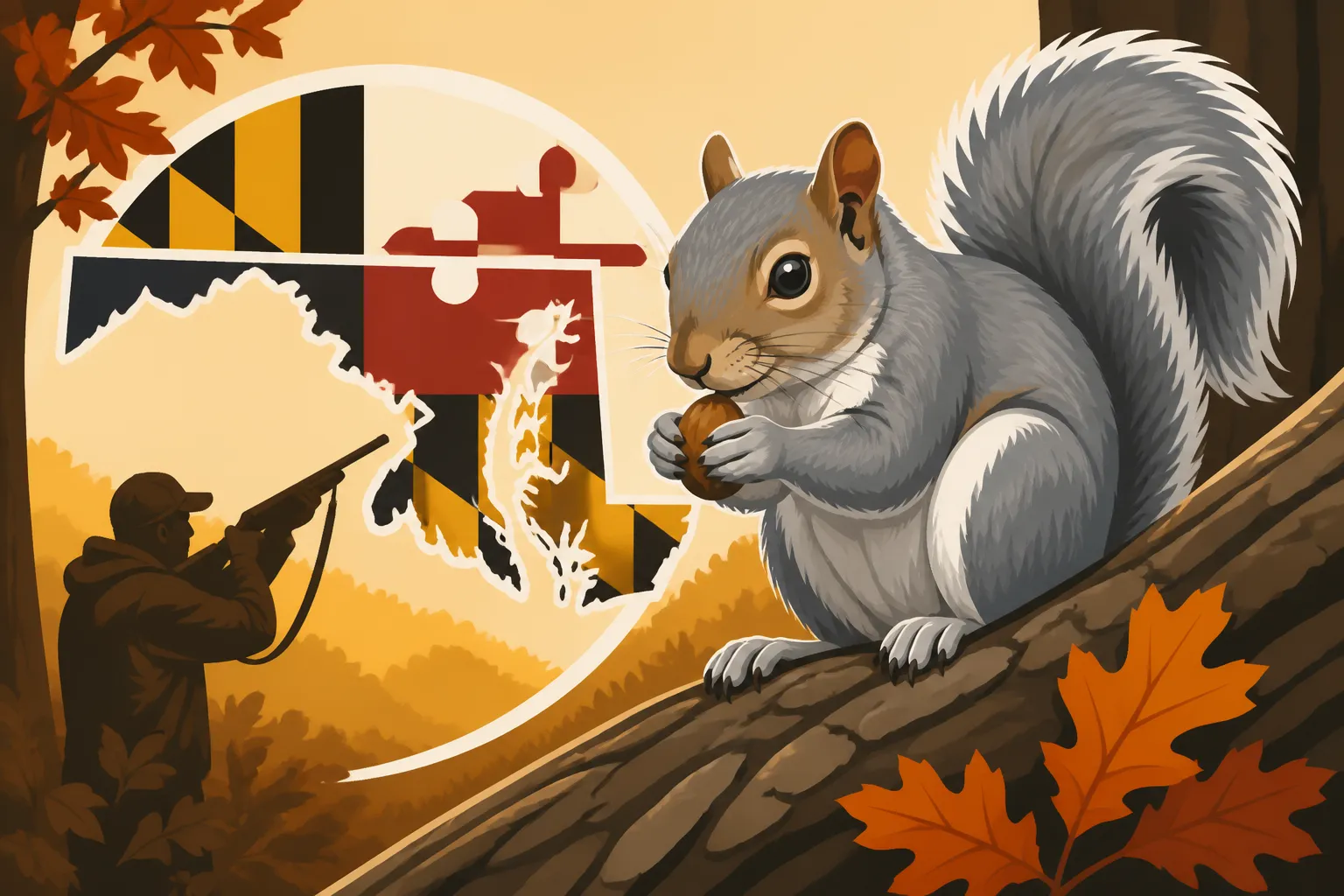
Gray Squirrels in Maryland Hardwoods
There's something wonderfully classic about chasing gray squirrels through Maryland's hardwood forests. It's a hunt that demands patience, keen observation, and a certain quiet respect for the woods. However, anyone who's spent time pursuing these quick, chattering creatures knows they can be incredibly frustratingly elusive, constantly seeming to be one step ahead, or more accurately, one tree ahead. If you're looking to consistently fill your game bag with delicious squirrel, understanding their habits and habitats in the Old Line State's timber is absolutely essential. This guide is here to break down the ins and outs of finding and successfully hunting gray squirrels in Maryland's diverse hardwood environments.
Understanding Maryland's Gray Squirrel Habitat
Gray squirrels, often simply called "bushytails" by many hunters, are a quintessential part of Maryland's woodland ecosystems. While they can adapt to urban and suburban settings, their true home, and where they thrive in numbers, is within our hardwood forests. These areas provide everything a squirrel needs to survive and, more importantly, to get fat and healthy for your table.
The Ideal Hardwood Forest
When you're trying to locate gray squirrels, don't just look for any trees; look for the right trees. The ideal habitat for gray squirrels in Maryland is a mature, diverse hardwood forest, often characterized by a mix of oak, hickory, and beech trees. These aren't just pretty trees; they are the grocery store, the nursery, and the bomb shelter all rolled into one for a squirrel. Think about the big, old growth timber you might find in some of our state forests or mature private woodlots. The canopy should be relatively closed, offering plenty of arboreal highways for them to travel unseen by predators below.
A diverse understory, with younger saplings and shrubs, also provides additional cover and secondary food sources. While squirrels are known for their tree-dwelling antics, they spend a good portion of their day on the forest floor, foraging and burying nuts. The density of the woods matters too; while too thick can make shooting difficult, a forest with good, mature timber and some younger patches allows for both feeding and quick escape. Using scouting tools like GoHunt can help you identify areas with dense hardwood concentrations, allowing you to prioritize your efforts before you even step foot in the woods.
Food Sources Throughout the Seasons
A squirrel's life revolves around food, and understanding their seasonal diet is your biggest key to finding them. Their primary diet, especially during the crucial fall and winter hunting seasons, consists of what we call "mast" – the nuts and seeds produced by hardwood trees.
- Acorns: Oaks, whether red or white, are squirrel magnets. White oak acorns, which mature in one season and are less tannic, are often preferred and consumed first. Red oak acorns mature over two seasons and have more tannins, but squirrels will readily turn to them once the white oak supply dwindles. A strong acorn crop can mean fat, healthy squirrels and concentrated activity.
- Hickory Nuts: These hard-shelled nuts are another favorite. While tougher to crack, the reward inside is worth the effort for a squirrel. Look for evidence of them gnawing on these.
- Beechnuts: Often overlooked, beechnuts are small but incredibly nutritious. If you have beech trees, especially a good mast year for them, you'll find squirrels there.
Beyond these primary mast crops, squirrels are opportunistic feeders. In spring and summer, they'll feast on buds, berries, wild fruits, and even fungi. During a poor mast year, they might rely more heavily on these alternative food sources. This seasonal shift in diet means that where you find squirrels in September might be different from where you find them in December. For instance, early in the season, they might be frequenting black walnut or persimmon trees, while later they'll be glued to the oaks and hickories. Late Season Food Sources for Maryland Deer also shares some overlap in understanding how other game utilizes the same resources.
Nesting and Cover Preferences
Gray squirrels aren't just eating machines; they need safe places to live and escape danger. You'll typically find two main types of squirrel dwellings in the hardwoods:
- Tree Cavities: These are nature's condominiums. Old trees with hollows, usually formed by broken limbs or decay, offer excellent, predator-proof shelter. These are especially important during the colder months, providing insulation and protection from the elements. A mature forest with plenty of large, older trees is more likely to have these crucial den sites.
- Leaf Nests (Dreys): These are the more visible, often messier, ball-shaped nests high up in the tree canopy, typically made of leaves, twigs, and bark. While they offer good cover from aerial predators and some protection from wind and rain, they aren't as secure or warm as a tree cavity. You'll see more leaf nests in areas where natural cavities are scarce.
When scouting, look for both types of nests, but pay particular attention to trees with obvious cavities. These are often indicators of consistent squirrel activity over many seasons. Squirrels will also use dense tangles of vines, thickets, and even brush piles on the ground as quick escape routes or temporary cover, especially when startled. Knowing where they'll dart for safety can help you anticipate their movements and set up for a shot.
Hunting Gray Squirrels in Hardwoods
Hunting gray squirrels is a fantastic way to sharpen your woodsmanship, practice stealth, and put some delicious meat on the table. It's often where many hunters get their start, and for good reason—it teaches fundamental skills that transfer to bigger game.
Scouting for Squirrel Sign
Before you even carry a rifle into the woods, scouting is paramount. You're looking for evidence of squirrel activity. One of the clearest signs is "cut nuts." Squirrels are messy eaters, and they'll leave behind fragments of acorn caps, hickory shells, or beech casings where they've been feeding. Find an area with a lot of these fragments on the forest floor, especially under productive mast trees, and you've found a squirrel hotspot.
Beyond cut nuts, look for:
- Gnaw Marks: On branches, fallen logs, or even saplings.
- Tracks: Though small and often obscured by leaves, fresh tracks in mud or light snow can indicate travel routes.
- Droppings: Small, cylindrical pellets that can be found near feeding areas or den trees.
- Active Nests: Observe leaf nests (dreys) for movement, or watch tree cavities at dawn or dusk to see if squirrels are entering or exiting.
A good pair of binoculars is indispensable for spotting squirrels and their nests from a distance without disturbing them. You can use mapping apps like GoHunt to mark potential feeding areas or den trees you find during your scouting trips. This allows you to build a comprehensive map of squirrel activity over time. Remember, the best time to scout for fall squirrel hunting is often a few weeks before the season opens, when you can assess the mast crop without hunting pressure. Scouting Maryland Public Land Before Season offers broader advice that applies directly to squirrel scouting.
Effective Hunting Methods
There are two primary methods for hunting gray squirrels in Maryland's hardwoods, and mastering both will increase your success.
Still-Hunting
This is a deliberate, slow, and quiet approach where you actively move through the woods, pausing frequently to listen and observe. Think of it as stalking, but at a much slower pace.
- Move Slowly: Take a few steps, then stop. Stand motionless for several minutes, scanning the trees and forest floor with your eyes and ears.
- Listen: Squirrels are noisy. Listen for the rustle of leaves, the chatter of their calls, or the distinct "thump-thump" of a nut falling or being carried along a branch.
- Scan: Use your binoculars to scrutinize every branch, tree trunk, and patch of leaves. Squirrels are masters of camouflage. Look for unnatural bumps, flicking tails, or movement against the bark.
- Cover Ground: Still-hunting allows you to cover more ground than sitting, increasing your chances of encountering squirrels. It's particularly effective when they are actively foraging on the ground or traveling between trees.
The key to still-hunting is stealth. Wear soft clothing that won't rustle, and try to walk against the wind to mask your approach. It’s an incredibly rewarding way to hunt, connecting you deeply with the forest.
Sit-and-Wait (Ambush Hunting)
This method involves finding a promising location, settling in, and waiting for the squirrels to come to you.
- Identify Hotspots: Based on your scouting, choose an area with abundant cut nuts, active den trees, or heavily used mast trees. A funnel area between two food sources or a well-used travel corridor can also be productive.
- Find a Good Seat: Position yourself where you have a clear line of sight, ideally with your back against a large tree for concealment and stability. Choose a spot that allows you to observe a wide area without having to move your body much.
- Be Patient: Squirrels are creatures of habit and will eventually return to productive feeding areas. The longer you sit still and quietly, the more likely they are to forget you're there and resume their activity.
- Call: Sometimes a simple "bark" or "chatter" call can get a squirrel to reveal its position, especially if it thinks another squirrel is nearby. However, don't overdo it.
This method is ideal for hunters who prefer a less active approach or are hunting in areas with high visibility where stealthy movement is difficult. It’s also great for focusing on a particularly rich patch of mast.
Essential Gear and Firearms
Success in squirrel hunting isn't just about skill; it's also about having the right tools for the job.
Firearms and Ammunition
- .22 Caliber Rimfire Rifle: This is arguably the most popular and effective choice for gray squirrels. A .22LR with solid-point or hollow-point ammunition offers excellent accuracy, a quiet report, and minimal meat damage. Target small, vital areas like the head or shoulder to preserve the meat. Many hunters prefer a bolt-action or semi-automatic .22 with a low-power scope (e.g., 2-7x or 3-9x) for precision shots.
- Shotgun: For hunters who prefer shotguns or are hunting in dense cover where precise rifle shots are difficult, a .410, 20-gauge, or even 12-gauge with small shot (e.g., #4, #5, or #6 shot) can be effective. A shotgun offers a wider pattern, making it easier to hit a moving target, but can cause more meat damage if not used carefully or at longer ranges.
- Air Rifle: Increasingly popular, modern high-powered air rifles (.177, .22, or .25 caliber) are remarkably quiet and accurate, making them excellent choices for squirrel hunting, especially in areas where firearm discharge might be restricted or noise is a concern. Many air rifle hunters swear by their precision and the challenge they offer.
Other Essential Gear
- Binoculars: As mentioned, a good pair of binoculars (e.g., 8×32 or 10×42) is crucial for spotting squirrels hidden in the canopy or identifying subtle movements.
- Camo or Earth-Toned Clothing: Blend into your surroundings. Soft fabrics are key to minimize noise when moving.
- Comfortable Boots: You'll be doing a lot of walking or sitting, so comfortable, supportive, and waterproof boots are a must.
- Small Game Vest or Pouch: For carrying your squirrels, extra ammo, and any other small essentials.
- Hunter Orange: Check Maryland's regulations for specific blaze orange requirements, especially if hunting during firearms seasons for other game. Safety first!
- Water and Snacks: Depending on how long you plan to be out.
Regardless of your chosen weapon, practice is key. Get familiar with your firearm or air rifle, understand its ballistics, and know your effective range.
Timing Your Hunt for Success
Just like deer or turkeys, squirrel activity varies throughout the day and year. Understanding these patterns, combined with knowing Maryland's regulations, will significantly boost your chances of success.
Best Times of Day
Gray squirrels are most active during specific windows, making timing crucial for a productive hunt.
- Early Morning: This is often the prime time. Squirrels emerge from their den trees shortly after first light, eager to feed after a night of rest. They'll be on the move, foraging on the ground and climbing trees. This activity usually peaks for a few hours after sunrise before they may take a mid-day siesta.
- Late Afternoon: As evening approaches, squirrels become active again, feeding heavily to stock up before settling into their dens for the night. This activity typically picks up a couple of hours before sunset and continues until legal shooting hours close.
Mid-day activity tends to be sporadic, especially on warm, sunny days. During cold snaps, however, squirrels might forage more consistently throughout the day to meet their caloric needs. Planning your hunts around these peak activity periods will yield the best results.
Impact of Weather and Season
Weather plays a significant role in squirrel behavior. Knowing how they react to different conditions can help you predict their movements.
- Crisp, Cool Fall Days: These are often perfect. The cooler temperatures encourage foraging, and the dry, fallen leaves make it easier to hear their movements, both on the ground and in the trees. A light breeze can also be your friend, masking your sounds while you still-hunt.
- Cold Winter Days: During colder months, squirrels will focus intensely on finding high-energy foods. Look for them around remaining mast trees or any persistent food sources. On very cold days, they might spend more time in their den trees, venturing out only during the warmest parts of the day.
- Rainy or Windy Conditions: Squirrels generally hunker down during heavy rain or strong winds. The rain makes them less active, and strong winds make it harder for them to move safely through the trees, not to mention making it harder for you to hear them. Hunting immediately after a heavy rain, once the woods quiet down and scents are washed away, can be productive.
Maryland's squirrel season typically opens in September, offering fantastic opportunities to hunt before the leaves fall, often coinciding with Squirrel Hunting Maryland's September Opener. As the season progresses into late fall and winter, the leaves drop, improving visibility but also making every step louder. This is where patience and still-hunting skills really shine. You'll often find yourself hunting gray squirrels right alongside other small game species, like rabbits, on the same ground. Small Game Species in Maryland gives you a broader picture of what other opportunities exist.
Navigating Hunting Regulations
Before heading out, always consult the current Maryland hunting regulations. Seasons and bag limits can change, and you need to be aware of the specifics for gray squirrels.
- Season Dates: Pay close attention to the opening and closing dates for gray squirrel season. It often runs for an extended period, allowing for many hunting opportunities.
- Bag Limits: There will be a daily bag limit for gray squirrels, meaning the maximum number you can harvest in one day.
- Shooting Hours: Maryland has legal shooting hours (often half an hour before sunrise to half an hour after sunset), which apply to small game as well as deer. Always be aware of these times.
- License Requirements: You'll need a valid Maryland hunting license, and possibly a Furbearer and Small Game Stamp. Make sure you have all necessary permits. Information like Maryland Resident Hunting License Cost or What a Maryland Hunting License Year Covers can guide you on purchasing and understanding your license.
Being a responsible hunter means knowing and adhering to all regulations. Not only does it keep you legal, but it ensures the sustainability of our game populations for future generations.
Beyond the Hunt: Processing and Enjoying Your Harvest
Bringing a squirrel to hand is a satisfying accomplishment, but the journey isn't over yet. Proper field dressing and preparation are key to enjoying the fruits of your labor.
Field Dressing and Care
Squirrels are relatively easy to field dress. Once harvested, the sooner you can get them cooled, the better, especially in warmer weather.
- Bleed Out (Optional but Recommended): A quick cut to the jugular ensures a clean kill and aids in meat quality.
- Skinning: There are many techniques, but a common one involves making a cut across the back, stepping on the tail, and pulling the hide off like a jacket. Many online videos demonstrate this process effectively. You can also make a cut around the belly and pull the hide from there.
- Evisceration: Open the body cavity and remove the entrails.
- Cooling: Once skinned and gutted, get the carcass cooled down quickly. A cooler with ice is ideal. If you're out for a long hunt, keep them in a game bag or vest where they can air out.
Proper field care prevents spoilage and ensures the meat tastes its best. It’s an integral part of the hunting experience.
Culinary Delights
Squirrel meat is lean, flavorful, and incredibly versatile in the kitchen. Don't let anyone tell you it's "tough" – that's usually a sign of improper cooking.
Here are a few popular ways to prepare gray squirrel:
- Fried Squirrel: A classic! Cut the squirrel into pieces, dredge in seasoned flour, and fry until golden brown and tender. Delicious with gravy.
- Squirrel Stew or Chili: The meat benefits greatly from slow cooking. Simmered in a stew with vegetables or added to a hearty chili, it becomes incredibly tender and absorbs flavors beautifully.
- BBQ Squirrel: Slow cook or braise the squirrel until it's falling off the bone, then shred it and mix with your favorite BBQ sauce for sandwiches.
Squirrel meat is a true delicacy, a lean and healthy protein that connects you directly to the land.
| Method of Hunting | Ideal Conditions | Primary Gear | Pros | Cons |
|---|---|---|---|---|
| Still-Hunting | Dry leaves, light breeze, active squirrels | .22 rifle/air rifle, binoculars, soft clothing | Covers more ground, engages woodsmanship | Requires extreme stealth and patience, easy to spook game |
| Sit-and-Wait | Near known food sources/dens, calm weather | .22 rifle/shotgun, binoculars, comfortable seat | Less physical, good for multiple squirrels, patient | Limited coverage, can be boring if squirrels aren't active |
Hunting gray squirrels in Maryland's hardwoods offers a unique blend of challenge and reward. It hones your senses, sharpens your marksmanship, and provides a delicious meal. With a solid understanding of their habitat, effective hunting methods, and careful timing, you’ll be well on your way to success in the squirrel woods. Good luck out there!
Disclaimer
This article is for general informational purposes only and does not constitute professional advice. Laws, prices and regulations vary by location and change over time. Consult a qualified professional for guidance on your specific situation.