Telling a Red Fox From a Gray Fox
It's incredibly common to spot a flash of russet or gray in the Maryland woods and wonder, "Was that a red fox or a gray fox?" These clever canids share our landscapes, but they're distinct creatures with different habits and appearances that can make identification tricky, especially at a distance or in fleeting glimpses. This guide will walk you through the key differences, from their physical traits to their unique behaviors, helping you confidently distinguish between these two fascinating Maryland predators.
Unpacking the Visual Cues: Physical Characteristics
When you first lay eyes on a fox, its color is often the most striking feature, but it's not the only thing to look for. Both red and gray foxes have variations in their coats, and a young red fox might look quite dull, while an older gray fox can have some reddish highlights. It’s about looking at the whole package, not just one characteristic.
The Classic Red Fox ( Vulpes vulpes )
When most folks think of a fox, they picture the red fox. They are truly iconic, known for their fiery coats and bushy tails. But there’s more to them than just being red.
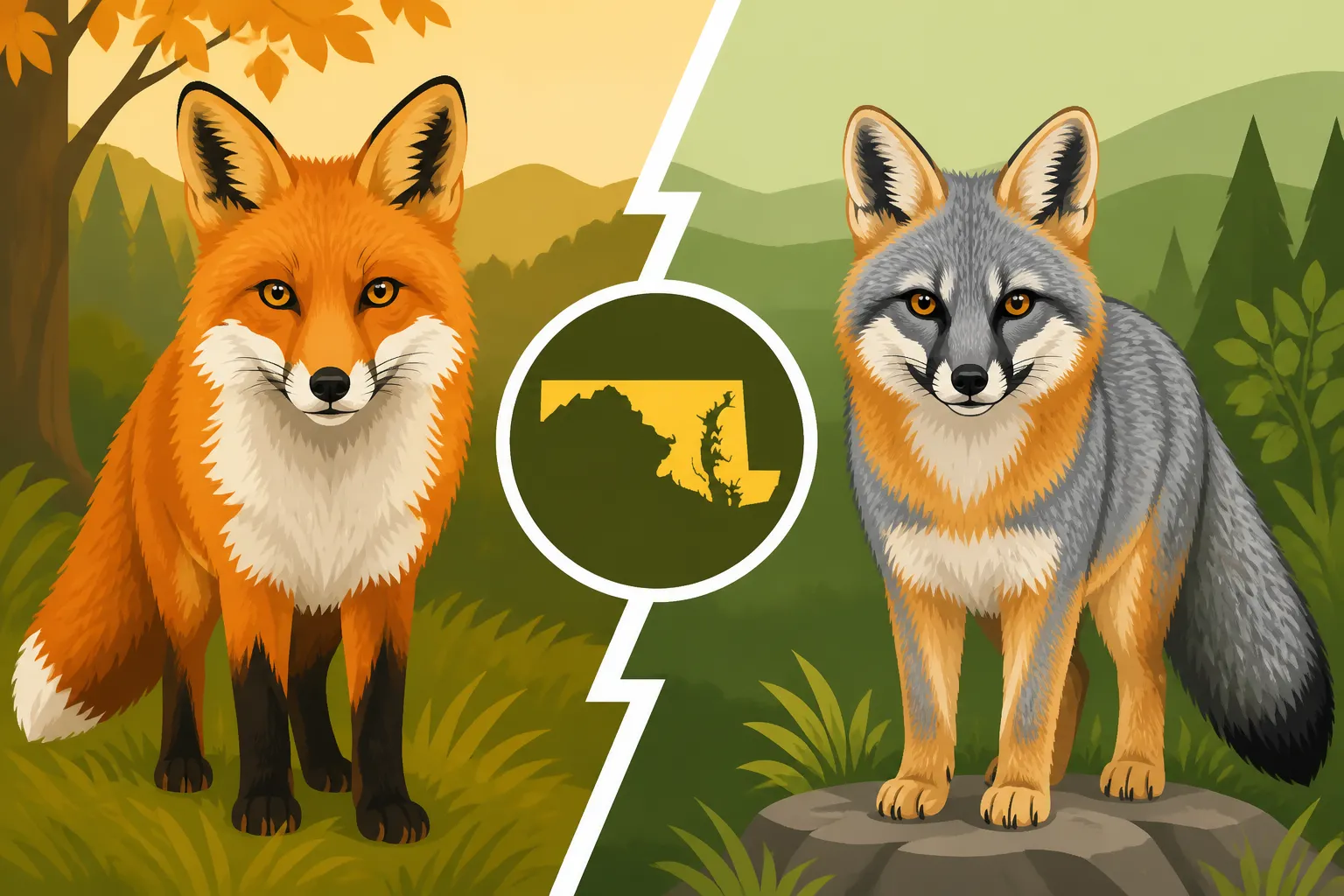
Red foxes are generally larger and lankier than their gray cousins. An adult red fox typically weighs between 8 to 15 pounds, sometimes a bit more for a large male, and stands about 15-16 inches at the shoulder. Their bodies are streamlined, built for speed and agility across open fields and woodlands. You'll notice their legs appear quite long in proportion to their body, giving them a rather elegant, almost aristocratic bearing.
The most defining feature, of course, is that rich, reddish-orange fur, especially along their back and sides. However, don't let the name fool you entirely; red foxes aren't always uniformly red. Many have coats that range from a deep auburn to a lighter, more yellowish-red. What's absolutely consistent, though, is the contrasting coloration. They almost always have black "stockings" or lower legs, often extending up their forelegs. Their ear tips are also black, giving them a sharp, defined look. Their chests, throats, and belly are typically white or light gray, providing a stark contrast to their fiery backs. And then there's the tail. The red fox boasts a magnificent, very long, and incredibly bushy tail, often two-thirds the length of its body, that almost always ends with a prominent white tip. This white tail tip is perhaps the single most reliable field mark for a red fox, even more so than the "red" color itself, as some red foxes can be melanistic (black) or silver-phase, but still usually retain that white tip.
The Elusive Gray Fox ( Urocyon cinereoargenteus )
Gray foxes are often described as "miniature canids" due to their slightly more compact build compared to red foxes. They are generally smaller, weighing in at around 7 to 14 pounds, and stand a bit shorter, usually 12-14 inches at the shoulder.
Their overall coloration is, as their name suggests, predominantly gray. This gray typically runs along their back, head, and upper sides, often a salt-and-pepper mix of black and white hairs, giving it a grizzled appearance. But here's where it can get tricky: gray foxes also have patches of reddish or cinnamon-colored fur. You’ll usually see this rusty coloration on their neck, behind their ears, and along their flanks. Their undersides, throat, and chest are white, similar to the red fox. What truly sets the gray fox apart, visually, is its tail. While still bushy, it's not quite as long or as full as a red fox's, and crucially, it almost always has a distinct black stripe running down the top length of it, ending in a black tip. This black stripe and black tail tip are the gray fox’s equivalent of the red fox's white tip – a consistent and reliable identifier. Their ears are often a reddish-brown on the back. Telling a Red Fox From a Gray Fox means paying close attention to these subtle but consistent patterns.
Habitat and Behavioral Differences
Beyond their looks, red and gray foxes exhibit fascinating differences in where they choose to live and how they go about their daily lives. Understanding these distinctions can often help you identify them even if you only catch a fleeting glimpse.
Where Red Foxes Roam
Red foxes are incredibly adaptable and thrive in a wide array of habitats across Maryland. They're often found in mixed landscapes that offer both dense cover and open areas. Think about agricultural lands with patches of woodland, old fields growing back up, suburban fringes, and even urban parks. They love areas where they can hunt small rodents in open fields, then retreat to the safety of a woodline or dense hedgerow. Coyote Calling in Maryland Farm Country might yield a red fox encounter, as they frequent similar open habitats.
Their denning habits reflect this versatility. Red foxes often take over abandoned groundhog burrows, though they will dig their own if necessary. These dens are typically found on brushy hillsides, under sheds, or within dense thickets, always with multiple escape routes. If you're scouting new hunting ground or simply exploring, look for signs of digging near field edges or along stream banks.
Behaviorally, red foxes are often more active at dawn and dusk, but it's not uncommon to see them out and about during daylight hours, especially if food is plentiful or they have young kits to feed. They are generally bolder than gray foxes and often less wary of human presence, especially in suburban settings. I've personally watched red foxes trot across busy farm roads in broad daylight, seemingly unconcerned, though always with a keen eye on their surroundings. Their hunting strategy relies on keen hearing and a pounce, often leaping high into the air to dive onto unsuspecting voles or mice hidden beneath the snow or grass. This distinctive pounce is a classic red fox hunting move.
The Gray Fox's Arborial Advantage
The gray fox, on the other hand, shows a strong preference for dense, brushy woodlands and forests. They are particularly fond of areas with rocky outcrops, dense undergrowth, and significant tree cover. While they might occasionally venture into open fields, they're much less comfortable in exposed areas than red foxes. In fact, if you're Hunting a Maryland Hedgerow for Rabbits, you might find gray fox sign tucked deep within the thickest parts of the cover.
What truly sets the gray fox apart behaviorally is its unique ability to climb trees. Yes, you read that right – gray foxes are the only canids in North America that can actively climb trees, using their semi-retractable claws and strong forelegs to ascend trunks and branches with surprising agility. They'll often climb trees to escape predators (like coyotes or larger dogs), to forage for fruit or birds, or even to sunbathe on a high branch. This arboreal skill also plays a role in their denning habits; while they'll use ground dens like red foxes, they're also known to den in hollow logs, rock crevices, or even hollow trees high above the ground. If you spot a fox perched on a low branch, there’s your gray fox!
Gray foxes tend to be more nocturnal and secretive than red foxes. You're less likely to see them out in the open during the day unless they're undisturbed in dense cover. This secretive nature makes them a bit more challenging to observe, requiring patience and a good understanding of their preferred habitats. When using tools like GoHunt to analyze satellite imagery or habitat maps, look for dense, unbroken woodland tracts, especially those with rocky or diverse undergrowth, to identify potential gray fox strongholds.
Identifying Fox Sign: Tracks, Scat, and Sounds
Even if you don't get a clear visual of the fox itself, these clever creatures leave behind a wealth of clues that can help you identify their presence and sometimes even distinguish between the two species. Learning to read these signs is a skill that comes with practice and keen observation.
Decoding Tracks in the Dirt and Snow
Fox tracks can be tricky because they're part of the canid family, meaning they share similarities with dog tracks. However, there are some key differences that can help you distinguish them, and further, tell apart red from gray foxes.
| Feature | Red Fox Tracks | Gray Fox Tracks | Domestic Dog Tracks |
|---|---|---|---|
| Overall Shape | More oval, elongated | Rounder, more compact | Variable, often wider and less defined |
| Claw Marks | Usually visible, sharp | Usually visible, slightly blunter | Usually visible, varies by breed |
| Toe Pads | 4 clear toe pads, often arranged tighter | 4 clear toe pads, often splayed a bit more | 4 clear toe pads, wider splay, sometimes "h" shaped |
| Heel Pad | Single, triangular, often smaller | Single, wider, more pronounced | Variable, often larger and less defined |
| Stride | Straight, purposeful, often a "direct register" | More meandering, can be wobbly or criss-crossing | Variable, often erratic |
| Size (Length) | Approx. 2 – 2.5 inches (5-6.5 cm) | Approx. 1.5 – 2 inches (4-5 cm) | Highly variable, often larger |
When examining tracks, look at the overall shape. Red fox tracks tend to be more elongated and oval, with a somewhat tighter arrangement of the four toe pads around the central heel pad. The stride of a red fox is typically very straight and purposeful; they often "direct register," meaning their hind foot steps directly into the print left by their front foot, creating a single, clean line of tracks.
Gray fox tracks, on the other hand, are generally rounder and slightly smaller than a red fox's. Their toe pads often appear a bit more splayed out, giving the track a less compact feel. The gray fox's gait can also be a bit more meandering or wobbly compared to the red fox's straight-line trot. This difference in track shape and gait can be a subtle but consistent clue. When you’re using tools like GoHunt to scout, imagine how a straighter-moving red fox might traverse an open field versus a gray fox sticking to the edges of cover, and then look for tracks accordingly.
Always remember that factors like substrate (mud, snow, sand) and the animal's speed can affect how tracks look, so try to find several prints to get a consistent picture.
Scat and Other Ground Signs
Fox scat (droppings) can also provide clues, though it's often harder to distinguish between species with certainty just from scat alone. Generally, fox scat is tubular, segmented, and often twisted at the ends. It typically contains visible evidence of their diet – fur, bones, seeds, or insect fragments. Both red and gray foxes often deposit their scat in prominent locations, like on rocks, logs, or at trail intersections, likely as a form of territorial marking. Red fox scat might sometimes be slightly larger or contain more fur/bone from rodents, while gray fox scat might show more evidence of fruits or insects, reflecting their slightly more omnivorous diet. But honestly, without a DNA test, it's a tough call.
Beyond tracks and scat, you might find other subtle signs. Look for cached food, often shallowly buried, which both species do. Hair caught on barbed wire fences or low branches can also be examined. Red fox hair will be distinctly reddish-orange, black on the lower legs, and white-tipped on the tail. Gray fox hair will be predominantly grizzled gray, with rusty patches, and a black-tipped tail. Knowing Maryland's Furbearers and Where They Live can give you an idea of what other animal signs you might be encountering.
Sounds of the Night (and Day)
Both red and gray foxes are vocal animals, and their calls can be quite distinctive. Red foxes are perhaps best known for their eerie, high-pitched screams or "vixens' screams," especially during mating season in late winter. These sounds can be startling and often get mistaken for a human in distress. They also have a variety of barks, yips, and growls. Their typical bark is a short, sharp "woof-woof-woof."
Gray foxes are generally less vocal than red foxes, but they do have their own repertoire. They often emit a short, sharp bark or a series of yips, which can sound somewhat dog-like. They also have a distinctive "hoo-hoo-hoo" call that's lower in pitch and less piercing than a red fox's scream. If you're out late in the evening listening for Coyote Calling in Maryland Farm Country, keep an ear open for these unique fox sounds. Understanding these calls can be a fantastic way to confirm a fox's presence, even when you can't see them.
Why Fox Identification Matters for Maryland Hunters
Knowing the difference between a red fox and a gray fox isn't just about satisfying your curiosity; it has practical implications for anyone who spends time in Maryland's outdoors, especially hunters, trappers, and wildlife observers.
Understanding Species-Specific Management
While both are legal furbearers in Maryland, understanding which fox species you're observing or targeting can influence your approach. Maryland manages its wildlife populations based on species, and local populations of one fox might be healthier or more widespread than the other. For instance, if you're primarily hunting in dense, unbroken forest, knowing that gray foxes are more likely to be present might lead you to alter your scouting routes or calling techniques. Conversely, in more open, agricultural settings, you'd be wise to focus on areas where red foxes typically thrive.
Furthermore, being able to accurately identify species contributes to better general wildlife knowledge and helps you appreciate the biodiversity of your hunting grounds. If you're a trapper, for example, knowing which fox you're seeing can inform your trap placement and lure choices, as their preferred habitats and diets differ. Trapping Maryland Furbearers Through Winter requires a deep understanding of each species' habits.
Habitat Assessment and Scouting Strategies
When you're scouting new ground, perhaps using an app like GoHunt to study aerial imagery, identifying the type of fox sign present can tell you a lot about the overall habitat quality and what other species might be using the area. If you find abundant red fox tracks and scat in open fields bordered by thickets, it suggests a healthy population of small rodents and rabbits – prime food sources that also attract other predators like coyotes or even bobcats (though bobcats are not typically hunted in Maryland). This knowledge can help you predict deer movement, as deer will often avoid areas with high predator activity or use different escape routes.
On the other hand, finding gray fox signs, particularly in heavily wooded areas with dense underbrush or even indications of climbing, reinforces the idea that you're in a more mature or rugged forest habitat. This might suggest different prey species are present, perhaps more squirrels, birds, or even wild turkeys, influencing your broader hunting strategy for other game. Scouting Maryland Public Land Before Season benefits greatly from recognizing these subtle ecological cues.
Ethical Hunting and Trapping Practices
For hunters and trappers, accurate identification is a cornerstone of ethical practice. While both species are legal to harvest in Maryland during their respective seasons, understanding their distinct characteristics ensures you're correctly identifying your target. There's a certain satisfaction in knowing exactly what animal you've observed or harvested. It deepens your connection to the landscape and the wildlife within it.
Moreover, being able to articulate the differences between red and gray foxes enhances your credibility as a responsible outdoors person. You can educate others, share your knowledge, and contribute to a more informed hunting community. It’s about being a student of the wild, always learning and always respecting the intricate balance of nature.
Table: Red Fox vs. Gray Fox – At a Glance
To quickly summarize the key differences we've discussed, here's a handy table you can refer to in the field. Remember, these are general guidelines, and individual variations can occur, but these points represent the most consistent distinctions.
| Feature | Red Fox | Gray Fox |
|---|---|---|
| Color | Reddish-orange with black legs/ears | Grizzled gray with rusty patches on neck/flanks |
| Tail Tip | White (almost always) | Black (almost always) |
| Tail Stripe | Absent | Distinct black stripe down the top length |
| Size | Larger, lankier (8-15 lbs) | Smaller, more compact (7-14 lbs) |
| Build | Longer legs, streamlined | Shorter legs, stockier |
| Habitat Preference | Mixed habitats, open fields, farm country | Dense woodlands, rocky areas, thickets |
| Climbing Ability | Cannot climb trees | Can climb trees |
| Den Locations | Ground burrows (often abandoned groundhog) | Ground burrows, hollow logs, tree cavities |
| Activity Pattern | Crepuscular, often seen daylight | More nocturnal, secretive |
| Typical Sounds | High-pitched scream, sharp "woof-woof-woof" | Short bark, yips, low "hoo-hoo-hoo" |
| Tracks | More oval, elongated, straight gait | Rounder, more compact, sometimes splayed toes |
Remember, these creatures are incredibly intelligent and resilient, adapting to the diverse landscapes Maryland offers. Observing them, whether in person or through their sign, is a truly rewarding experience for any outdoors enthusiast.
Disclaimer
This article is for general informational purposes only and does not constitute professional advice. Laws, prices and regulations vary by location and change over time. Consult a qualified professional for guidance on your specific situation.