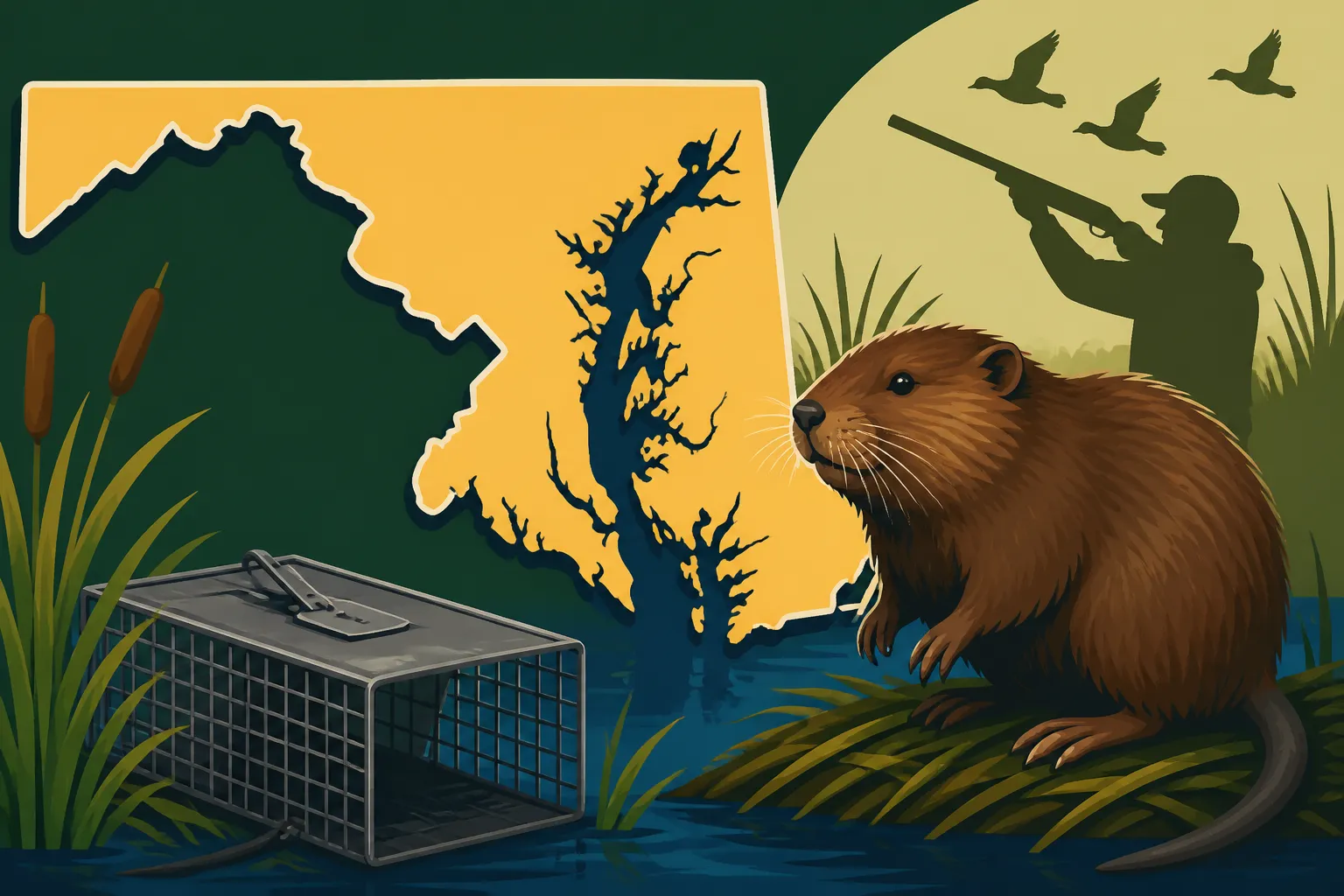
Where Maryland Muskrats Are Trapped
For many Maryland trappers, the humble muskrat represents a challenging yet rewarding pursuit, particularly in our state's vast and intricate wetlands. You know they're out there, those industrious little furbearers, but pinpointing exactly where to set your traps can feel like searching for a needle in a haystack of marsh grass and muddy banks. This guide will help you understand the prime habitats and key locations across Maryland where muskrats thrive, giving you the insights needed to make your next trapping season a success.
Understanding Muskrat Habitat in Maryland
Muskrats are incredibly adaptable, but they have a distinct preference for aquatic environments. They aren't just found in one type of waterbody; instead, they colonize a wide range of wetlands, each offering unique challenges and opportunities for the trapper. Knowing these different habitats is the first step to successful trapping.
Tidal Marshes and Brackish Water Ecosystems
Maryland's Eastern Shore, particularly the lower counties, is legendary for its expansive tidal marshes, and these are absolutely prime muskrat territory. Think about places like Dorchester and Somerset counties, where vast stretches of marsh grasses, phragmites, and cattails line the brackish waters of the Chesapeake Bay's tributaries. Muskrats thrive here, building their characteristic conical houses from vegetation, or burrowing into the banks of ditches and guts. The constant ebb and flow of the tide creates an ever-changing landscape, influencing where muskrats feed and travel. This dynamic environment means that understanding tide charts is crucial for successful trapping. Trappers often find their greatest success focusing on the edges where marsh meets open water, or along the deeper ditches and creeks that cut through these areas. Trapping Muskrat in a Dorchester Marsh is a fantastic read for those looking to explore this specific rich environment.
These tidal zones offer an abundance of food sources, from various aquatic plants like pickerelweed and cattail roots to occasional shellfish, making them highly attractive to muskrats. The brackish water, a mix of fresh and saltwater, is perfect for the vegetation they rely on. The challenge here is access; often, these areas are best reached by boat, navigating shallow guts and channels that crisscross the marsh. Utilizing a good mapping application, such as features available on GoHunt, can help you identify deeper channels and potential trapping hotspots that might otherwise go unnoticed from land. It’s not just about setting traps; it’s about reading the landscape and understanding the flow of water and wildlife within it.
Freshwater Wetlands and Stream Banks
Beyond the tidal influence, Maryland boasts numerous freshwater wetlands, ponds, lakes, and slow-moving streams that are equally appealing to muskrats. In areas like the upper Eastern Shore, central Maryland, and even parts of our western counties, you'll find muskrats making their homes along the banks of creeks, rivers, and in beaver ponds. These freshwater environments often have stable water levels compared to tidal marshes, which can make locating their activity a bit more predictable. They'll burrow into the banks of streams, creating intricate tunnel systems with underwater entrances that are tough to spot without careful observation.
Look for areas with dense aquatic vegetation along the edges, such as lily pads, rushes, and sedges. These plants not only provide food but also cover from predators like mink, foxes, and raptors. Small, quiet ponds on private farmland, or secluded stretches of a meandering creek, can be goldmines. Even relatively small drainage ditches and farm ponds that seem insignificant can hold a surprising number of muskrats if they have good cover and a consistent food supply. Scouting these areas thoroughly before setting traps is essential to identifying active dens and feeding areas.
Agricultural Ditches and Drainage Systems
Maryland’s agricultural landscapes, particularly on the Eastern Shore, are crisscrossed with a labyrinth of ditches and canals designed for drainage. While these might seem purely utilitarian, they often represent fantastic muskrat habitat. These ditches are typically shallow, rich in aquatic vegetation, and provide excellent cover along their banks. Muskrats will readily colonize these systems, burrowing into the ditch banks and creating "runs" along the edges where they travel between feeding areas and their dens.
Farmers often consider muskrats a nuisance due to the damage their burrowing can cause to ditch banks, leading to erosion and compromised drainage. This can sometimes open up opportunities for trappers to gain permission on private land. These ditches act as linear highways for muskrats, making it easier to pinpoint their travel routes and set traps strategically. Understanding the property lines and land ownership, perhaps with the aid of a digital mapping platform like GoHunt, is vital before approaching landowners. Always remember, permission is paramount when trapping on private ground. Knocking on Doors in Maryland Farm Country can offer valuable tips for securing access.
Prime Trapping Locations by Region
While muskrats are widely distributed across Maryland, certain regions stand out as perennial hotspots due to their specific hydrological and ecological characteristics. Knowing these regional tendencies can significantly narrow down your search and increase your chances of finding productive trapping grounds.
The Lower Eastern Shore: Dorchester and Somerset Counties
When most trappers think of muskrats in Maryland, their minds immediately go to the Lower Eastern Shore, and for good reason. Counties like Dorchester and Somerset are home to some of the most extensive tidal marsh systems on the entire Atlantic coast. The sheer volume of marshland here, from the vast expanses of the Blackwater National Wildlife Refuge (though trapping within refuges has specific, often limited, regulations) to the private tracts and state-managed areas like Deal Island Wildlife Management Area, creates an ideal environment for muskrats. The intricate network of tidal guts, ponds, and open marsh provides endless opportunities for these furbearers to thrive.
Trapping here requires specialized skills, including navigating by boat or canoe through shallow water, reading currents, and understanding how tides influence muskrat movement. Many trappers in this region focus on setting traps near muskrat push-ups (small piles of vegetation they use as feeding platforms) or along the edges of larger muskrat houses. The sheer density of muskrats in these areas makes them incredibly productive, but the challenges of access and navigating the dynamic environment mean that those who succeed often have years of local experience. It's a truly unique trapping experience, deeply rooted in the history of the Chesapeake Bay. Hunting Fishing Bay's Marsh Guts by Boat provides a glimpse into the logistics of navigating these waterways.
Upper Eastern Shore and Western Shore Tidal Creeks
While perhaps not as famous for muskrats as the lower Eastern Shore, the upper Eastern Shore counties like Kent, Queen Anne's, and Talbot, along with the tidal creeks and rivers of the Western Shore in counties like Anne Arundel, Calvert, and St. Mary's, still offer excellent trapping opportunities. Here, the marsh systems might be smaller and more interspersed with farmland or residential development, but they often hold healthy populations of muskrats. These areas tend to be a mix of brackish and freshwater habitats, particularly as you move further up the tidal rivers away from the main Bay.
Trappers in these regions often focus on smaller tidal creeks, drainage ditches flowing into the Bay, and isolated marsh pockets. Access might be easier for foot trappers or those with small canoes, as the scale of the marsh isn't as daunting. Look for areas where farm fields meet the marsh edge, as these can provide a consistent food source and concentrated muskrat activity. These areas might also see less trapping pressure than the highly renowned lower Eastern Shore, which can be an advantage. A diligent trapper using mapping tools like those offered by GoHunt can uncover overlooked pockets of excellent muskrat habitat even in more developed regions.
Western Maryland's Freshwater Systems
Don't assume muskrats are exclusively an Eastern Shore species! Western Maryland, with its cooler climate and mountainous terrain, still offers plenty of freshwater habitat for muskrats. While you won't find tidal marshes, you will find slow-moving streams, beaver ponds, and numerous small wetlands in counties like Garrett, Allegany, and Washington. Muskrats here often burrow into stream banks or construct houses in the still waters of ponds.
The key to trapping muskrats in Western Maryland is often finding these quieter, less disturbed water bodies. Look for areas with dense bankside vegetation, and particularly around beaver activity, as beaver ponds create ideal, stable water conditions and abundant food sources for muskrats. Small tributary streams of larger rivers like the Potomac or Youghiogheny can also be productive, especially where they widen into slow-moving sections or oxbows. The challenges here are often identifying these smaller, dispersed habitats and gaining access to private land. Trapping Maryland Furbearers Through Winter would be a helpful resource for anyone planning to trap in these colder regions.
Identifying Active Muskrat Sign for Trapping Success
Finding the right habitat is one thing, but pinpointing active muskrat sign within that habitat is the real key to successful trapping. Muskrats leave distinct clues that, once you learn to read them, can tell you exactly where to set your traps for maximum efficiency.
Locating Runs, Feed Beds, and Push-ups
Muskrats are creatures of habit, often traveling the same routes between their dens and feeding grounds. These pathways, known as "runs," are typically found in shallow water along the edge of banks or through dense vegetation. They'll look like distinct trails underwater or depressions in the mud. Identifying these runs is crucial for setting effective body-grip or foothold traps. Follow these runs, and you'll often lead directly to their feeding areas.
"Feed beds" are areas where muskrats regularly forage, often characterized by chewed vegetation and plant cuttings. In marshes, these might be floating rafts of eaten plants, while in ditches, they could be piles of plant debris along the bank. "Push-ups" are small, dome-shaped piles of vegetation built in shallow water, usually about a foot or two in diameter, that muskrats use as temporary feeding platforms or resting spots. They push up mud and vegetation from the bottom to create these structures. If you find a fresh push-up with recent cuttings, you've found a prime location for a set. These signs tell you not just that muskrats are present, but where they are actively working.
Recognizing Muskrat Houses and Bank Dens
Muskrats build two primary types of shelters: houses and bank dens. Muskrat houses are iconic structures, often resembling small, conical haystacks protruding from the water, built from mud and aquatic vegetation. These can range from a foot or two in height to several feet tall, depending on the age and size of the colony. A fresh, actively maintained house will look robust and have fresh plant material visible. These houses typically have underwater entrances and serve as living and nesting chambers. Setting traps near the underwater entrances or along prominent runs leading to a house can be very effective.
Bank dens, on the other hand, are burrows dug directly into the banks of streams, ponds, or ditches. Their entrances are always underwater, making them harder to spot. However, you can often identify a bank den by looking for smooth, worn areas on the bank just above the waterline where muskrats regularly climb out, or by spotting tracks in the mud. Sometimes, you'll see "toilet areas" or small piles of muskrat scat on logs or rocks near a bank den. These dens are particularly common in freshwater systems where suitable banks are available. Both houses and dens are clear indicators of muskrat presence and provide excellent locations for trap placement.
Understanding Water Levels and Their Impact
Water levels play a monumental role in muskrat activity and, consequently, in trapping success, especially in tidal areas. In a marsh, fluctuating tides can dramatically change access to food and travel routes. During high tide, muskrats might disperse more widely, accessing areas that are dry at low tide. As the tide recedes, they often concentrate their activity in deeper guts and channels, or along the receding waterline, making them more predictable. A trapper needs to consult tide charts and understand the daily and seasonal patterns of their chosen area. Reading Tide Charts Before a Marsh Hunt is essential learning for any serious marsh trapper.
In freshwater systems, heavy rains can cause streams and rivers to swell, flooding bank dens and forcing muskrats to move to higher ground or find new shelter. Conversely, droughts can lead to dangerously low water levels, exposing underwater entrances and forcing muskrats to relocate or dig deeper. Smart trappers pay close attention to recent weather patterns and historical water level data. A good understanding of how water levels impact muskrat behavior will allow you to adjust your trap locations and increase your catch rate.
Ethical and Legal Considerations for Muskrat Trapping
Successful trapping isn't just about knowing where to go and what sign to look for; it's also about understanding and adhering to the ethical and legal framework that governs furbearer management in Maryland. Respecting the law and practicing ethical trapping ensures a sustainable future for the resource and maintains the good reputation of trappers.
Public Versus Private Land Access
One of the most critical considerations for any trapper is land access. Maryland has public lands open to trapping, primarily Wildlife Management Areas (WMAs) and certain state forests. However, many prime muskrat habitats are on private land, especially the agricultural ditches and marsh edges. Trapping on private property without explicit permission is illegal and considered trespassing. It's not enough to simply assume; you must obtain clear, verifiable permission from the landowner. This often involves personal visits, explaining your intentions, and building a relationship.
When trapping on public lands, always check the specific regulations for that area, as rules can vary. Some WMAs might require specific permits or have restrictions on trap types or locations. A mapping application like GoHunt can be invaluable for identifying property boundaries and determining whether land is public or private, helping you avoid accidental trespass. Always be a good ambassador for trapping; leave no trash, respect property, and share your catch with landowners if appropriate. Maryland Public Land Hunting Permits and Getting Private Land Permission in Maryland are both great resources for navigating land access rules.
Season Dates and Trap Type Regulations
Maryland has specific trapping seasons for muskrats, which are set annually to ensure sustainable populations. It's absolutely crucial to know and adhere to these dates. Trapping outside of season is illegal and carries significant penalties. You can find the current season dates on the Maryland Department of Natural Resources (DNR) website or in their annual hunting and trapping guide. Trapping Season Dates by Species provides a good overview of what to look for.
Furthermore, Maryland has regulations regarding the types of traps that can be used, their size, and how they must be set. For muskrats, common traps include Conibear-style body-grip traps (often in sizes like 110 or 120), foothold traps, and sometimes snares (with specific restrictions). There are also rules about trap tagging, requiring trappers to place their name and address or DNR identification number on each trap. Understanding and complying with these regulations is non-negotiable. It's not just about avoiding fines; it's about responsible trapping practices that minimize harm to non-target species and ensure humane dispatch. Always ensure your equipment is in good working order and that you are proficient in setting your chosen trap types safely and effectively.
Disclaimer
This article is for general informational purposes only and does not constitute professional advice. Laws, prices and regulations vary by location and change over time. Consult a qualified professional for guidance on your specific situation.