Mink Along Maryland Creeks and Marsh Edges
It's easy to overlook some of Maryland's smaller, more elusive creatures, especially those that keep to the secretive corners of our waterways. Many folks might think of deer, turkey, or waterfowl when they picture Maryland's wildlife, but there's a whole world thriving quietly along our creeks and marsh edges. If you've ever wondered about those quick, dark flashes near the water or found a mysterious set of tracks by a tidal ditch, chances are you've had a brush with a mink. This guide is all about shedding some light on these fascinating, yet often misunderstood, furbearers and helping you understand where and how they live in Maryland.
The Secret Life of Maryland Mink: Understanding a Water-Loving Weasel
Mink are undeniably one of Maryland's most interesting, and perhaps most underappreciated, furbearers. They're part of the Mustelid family, which includes other familiar faces like weasels, otters, and even badgers. What truly defines a mink is its deep connection to water. Unlike some of their terrestrial cousins, mink are semi-aquatic, meaning they've adapted to life both on land and in the water, perfectly suited for the rich, diverse habitats Maryland offers along its vast network of creeks and marsh edges.
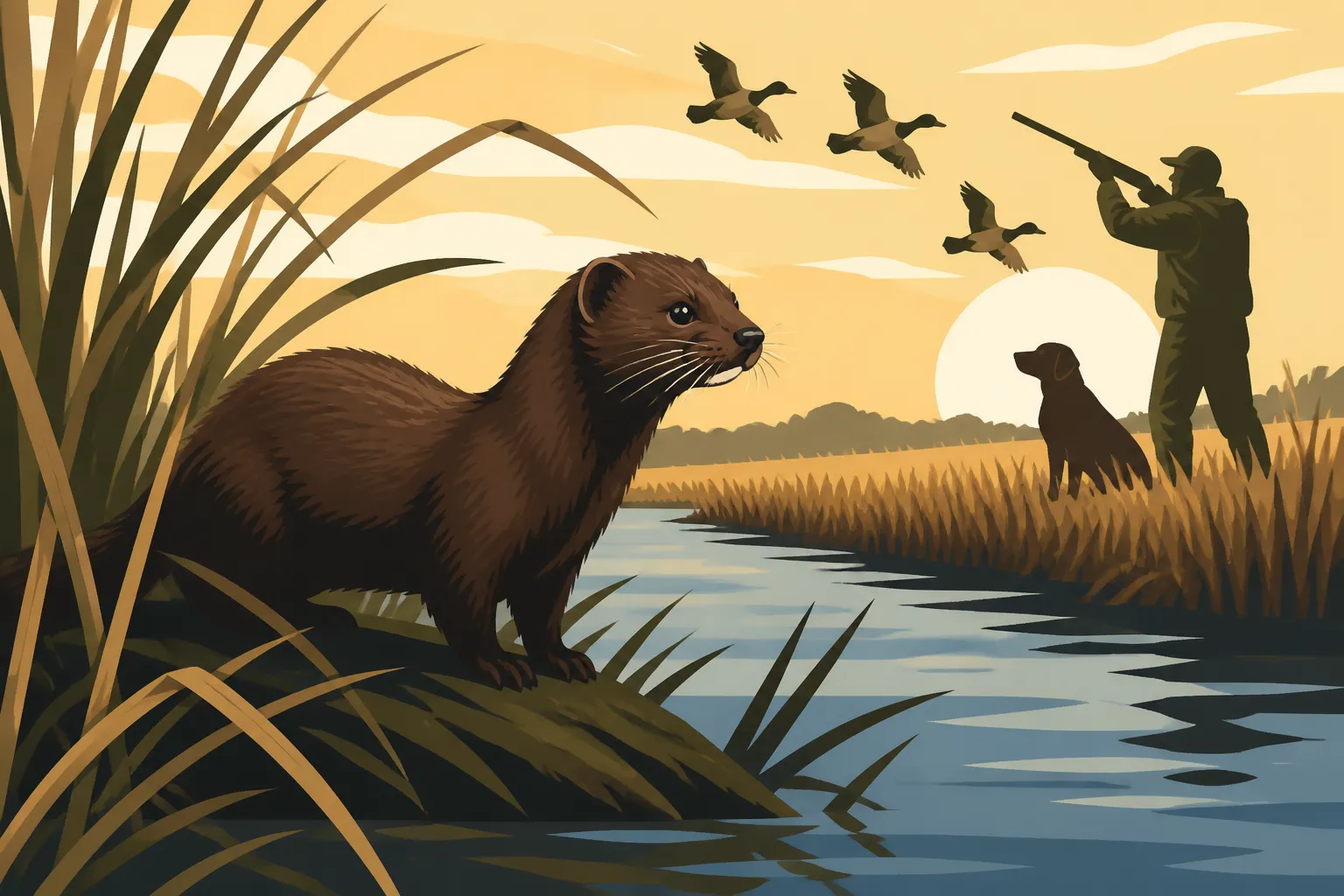
These sleek, muscular predators are built for their lifestyle. Their bodies are long and slender, allowing them to navigate dense underbrush and tight spaces with incredible agility. They have short legs, a bushy tail, and a rich, dark brown fur coat that's almost black in some individuals. This coat isn't just beautiful; it's incredibly dense and water-repellent, providing insulation in cold water and allowing them to dive and swim with ease. Their webbed feet are another tell-tale sign of their aquatic prowess, making them efficient hunters in the water. For anyone trying to get a better handle on the movements of various game species, understanding these aquatic furbearers is an important piece of the puzzle, and platforms like GoHunt can be incredibly useful for mapping out these diverse habitats.
What Makes Maryland So Appealing to Mink?
Maryland's landscape is a mosaic of habitats, but it's our incredible abundance of freshwater creeks, tidal rivers, and vast marsh systems that truly makes it prime mink country. Think about it: mink thrive where land and water meet, and Maryland has thousands of miles of just that. From the fast-flowing mountain streams of Western Maryland to the brackish tidal guts of the Eastern Shore, mink find endless opportunities for food and shelter.
These areas provide everything a mink needs to survive. The dense vegetation along creek banks—think cattails, phragmites, brushy thickets, and downed timber—offers ideal cover from predators like owls and coyotes, as well as protection from harsh weather. The water itself is a bountiful pantry, teeming with their preferred prey. And the irregular, often muddy banks of these waterways offer plenty of nooks, crannies, and old burrows for them to set up dens. It's a perfect storm of resources that supports a healthy mink population across the state.
Diet and Hunting Habits: A Fierce Small Predator
Don't let their relatively small size fool you; mink are formidable predators. Their diet is incredibly varied, reflecting the diverse bounty of their aquatic and riparian homes. They are opportunistic hunters, always on the lookout for an easy meal, and their keen senses and stealth allow them to capitalize on whatever is available.
Their primary diet consists of small mammals like muskrats, voles, and mice, which are abundant in marshy areas and along creek banks. They're also excellent at catching fish, frogs, and crayfish, showcasing their impressive aquatic hunting skills. When opportunities arise, they won't hesitate to take advantage of nesting birds, their eggs, or even young waterfowl. This adaptability in their diet is a key reason for their success in various Maryland environments. Watching a mink hunt is a masterclass in efficiency—a silent, calculated stalk followed by a lightning-fast strike. They truly are a testament to nature's design for effective predation, and understanding these behaviors can provide insights into other species' movements. Hunters looking to understand the full picture of local wildlife interactions can benefit from tools that map animal densities and movements, where the presence of a predator like a mink can indicate a healthy prey base.
Where to Spot Them: Creeks and Marsh Edges Defined
When we talk about "creeks and marsh edges" as mink habitat in Maryland, we're really talking about a wide spectrum of environments. It’s not just one specific type of landscape, but rather a collection of interconnected ecosystems where these animals thrive. To truly understand where to find a mink, you need to break down these habitats further.
Think about a small, winding stream that cuts through a hardwood forest in Frederick County, or a slow-moving tidal ditch on the Eastern Shore, lined with dense reeds. Both are prime mink habitat, but they present very different challenges and opportunities for the animal. It’s these subtle differences, and the consistent presence of water, that define their preferred homes. Knowing these details can also be helpful for those Trapping Maryland Furbearers Through Winter.
Inland Creeks and Their Banks
Inland creeks, especially those with good tree cover and rocky banks, are fantastic places to look for mink. These are typically smaller, non-tidal waterways that might flow through forests, farmlands, or even suburban green spaces. The key features here are the presence of permanent water, ample cover along the banks, and a consistent food source.
Mink often utilize brush piles, hollow logs, rock crevices, or old burrows of other animals (like muskrats or groundhogs) for their dens and resting spots. When you're near one of these creeks, especially if it's got a healthy population of small rodents, amphibians, or fish, keep an eye out for signs. Look for tracks in the soft mud or sand along the water's edge. Their tracks are typically five-toed, and you might see paired tracks where they bound along. Sometimes, you'll find scat (droppings) on prominent rocks or logs, often containing fish scales, fur, or bones, which is a clear indicator of their presence. These creeks provide important corridors, and understanding the movement patterns of these furbearers can be aided by detailed mapping solutions such as GoHunt, which can help pinpoint potential travel routes and pinch points.
Tidal Marshes and Their Edges
Maryland's vast tidal marshes, particularly on the Eastern Shore, are perhaps the quintessential mink habitat. These sprawling wetlands, with their intricate networks of guts, ditches, and open water, offer an unparalleled environment for mink to flourish. The dynamic nature of the tides constantly reshapes these areas, creating new hunting grounds and revealing abundant prey.
In these marshes, mink are often found along the edges of the main marsh, where it meets higher ground or dense stands of phragmites and cattails. They use these dense vegetated areas for cover and travel, moving stealthily through the thick growth. The exposed mudflats at low tide are critical hunting grounds where they can pounce on unsuspecting frogs, fish, and even small crabs. Areas where marsh gives way to a wooded island or a slightly elevated hummock are also prime spots, offering denning sites above the high tide line. Hunting or observing in these areas, you might find yourself Wading Into a Dorchester Marsh Before Daylight to understand these habitats better. The marsh provides an almost endless larder for a mink, and they navigate it with incredible efficiency, often following established runways through the dense vegetation.
The Mink's Role in the Ecosystem and Human Interactions
Mink, like all predators, play a crucial role in maintaining the health and balance of their ecosystems. By preying on small mammals, fish, and birds, they help regulate populations and prevent overgrazing or disease outbreaks among their prey species. They are a natural part of Maryland's biodiversity, contributing to the rich tapestry of wildlife we cherish. Their presence is often an indicator of a healthy, vibrant aquatic environment.
However, mink sometimes come into conflict with human interests, particularly when they prey on domestic fowl or fish in aquaculture settings. While this is less common than issues with larger predators, it's a realistic concern for some landowners. For trappers, mink are a valuable furbearer, known for their high-quality pelts, and understanding their habits is key to successful and ethical trapping practices.
Mink and Other Furbearers: Competition and Coexistence
In Maryland, mink share their aquatic territories with a variety of other furbearers, notably muskrats and River Otters in Maryland Waters. While they all thrive in similar environments, they often occupy slightly different niches or exhibit different behaviors that allow them to coexist without excessive competition.
Mink are smaller and more agile than otters, often hunting smaller prey and utilizing narrower channels and denser cover. Muskrats, while also semi-aquatic, are primarily vegetarians, though mink are known to prey on them. This dynamic creates a complex food web where mink act as a key predator for muskrats, helping to keep their numbers in check. Understanding these interspecies relationships is vital for anyone interested in the broader ecology of Maryland's waterways. A detailed look at these interactions can be found in information about Maryland's Furbearers and Where They Live, which emphasizes the intricate balance of these aquatic ecosystems.
| Furbearer | Primary Diet | Preferred Habitat Nuance | Activity Pattern |
|---|---|---|---|
| Mink | Carnivore (small mammals, fish, frogs) | Creek banks, marsh edges, dense cover | Crepuscular/Nocturnal |
| Muskrat | Herbivore (aquatic vegetation) | Open marsh, slow-moving water, lodges | Crepuscular/Nocturnal |
| River Otter | Carnivore (fish, crayfish, amphibians) | Larger rivers, open water, den in banks | Diurnal/Crepuscular |
Conservation and Management of Mink Populations
Maryland's mink populations are generally stable and healthy, thanks to the state's abundant wetlands and responsible wildlife management practices. Like other furbearers, mink are managed through regulated trapping seasons, which ensure sustainable populations while providing opportunities for trappers.
The Maryland Department of Natural Resources (DNR) monitors furbearer populations and sets seasons and bag limits to maintain ecological balance. For those interested in trapping, obtaining the proper licenses and understanding the regulations is paramount. This includes completing hunter education requirements and adhering to specific season dates and methods. Programs often focus on habitat preservation, which benefits not only mink but countless other species that rely on healthy wetland and riparian environments. Anyone looking to participate in trapping needs to ensure they have What a Maryland Hunting License Year Covers and all necessary stamps and permits.
Practical Considerations for Observing or Managing Mink
Whether you're an avid wildlife observer, a photographer, a trapper, or simply someone who spends time near Maryland's waterways, understanding how to interact with mink—or at least coexist with them—is valuable. They are elusive creatures, but with patience and the right approach, you can certainly catch a glimpse or at least find evidence of their presence.
Remember, these are wild animals, and while generally shy, they are predators. Maintaining a respectful distance and understanding their habits is key to any interaction. Their very nature of being constantly on the move along the water’s edge makes them challenging to spot, but also incredibly rewarding when you do. For those keen on scouting or tracking, tools that provide detailed topographical maps and habitat layers can be extremely beneficial in predicting where these animals might be active, and GoHunt is an example of such a resource that can assist in identifying potential mink habitat.
Tips for Observing Mink in the Wild
Observing mink requires patience and stealth. They are most active during dawn and dusk (crepuscular) and often throughout the night, making daytime sightings a bit rarer, though not impossible. Here are a few tips if you're hoping to catch a glimpse:
- Look for prime habitat: Focus on narrow creeks with good cover, marsh edges, and areas with plenty of downed logs or rock piles. If you're Hunting a Marsh Ditch Bank at Sunrise, you're in a prime spot for mink.
- Be still and quiet: Mink are incredibly wary. Find a good vantage point, perhaps camouflaged, and remain motionless.
- Use binoculars: This allows you to observe from a distance without disturbing the animal.
- Look for signs: If you can't spot a mink directly, look for tracks in soft mud, scat on prominent logs, or even partially eaten prey near the water's edge.
- Time it right: Early morning and late evening are your best bets. After a fresh rain can also be good for finding tracks.
- Consider a trail camera: Placing a motion-activated camera along a suspected mink runway or near a den site can offer incredible insights into their secret lives without disturbing them.
Best Practices for Trapping and Nuisance Control
For those involved in trapping, ethical and responsible practices are paramount. This means understanding and adhering to all state regulations, using appropriate traps and techniques, and regularly checking trap lines. Mink trapping is an art and a science, requiring knowledge of their travel routes, denning habits, and preferred baits. Trappers often target mink in conjunction with other semi-aquatic furbearers, such as Trapping Muskrat in a Dorchester Marsh.
When it comes to nuisance control, prevention is often the best strategy. Securing chicken coops, fish ponds, or other vulnerable areas with sturdy, buried fencing can deter mink from becoming a problem. If a mink is causing issues, contacting your local Maryland DNR office or a licensed wildlife control operator is advisable. They can provide guidance on legal and effective methods for managing nuisance wildlife, ensuring that any actions taken are humane and compliant with state laws. Always remember that wildlife regulations are in place to protect both the animals and the public, and knowing them thoroughly is essential for responsible interaction.
Disclaimer
This article is for general informational purposes only and does not constitute professional advice. Laws, prices and regulations vary by location and change over time. Consult a qualified professional for guidance on your specific situation.