How Sea Level Rise Affects Sika Habitat
If you've spent any time hunting the unique tidal marshes of Maryland, particularly for sika deer, you’ve likely felt the ground literally shifting beneath your boots. The landscape, once predictable, now seems more vulnerable, with familiar patches of high ground eroding or becoming inundated more frequently. This isn't just your perception; sea level rise is an undeniable force reshaping these vital ecosystems, directly impacting sika deer habitat and, consequently, how we approach hunting these elusive "marsh elk." This guide will delve into the specific ways sea level rise is transforming Maryland's sika country and what it means for hunters.
Understanding Sea Level Rise in Maryland's Sika Country
Maryland's Chesapeake Bay region, especially the low-lying Eastern Shore where sika deer thrive, is on the front lines of sea level rise. This isn't just about global sea levels; local factors significantly amplify the issue. The land itself is slowly subsiding, or sinking, a process that has been ongoing for thousands of years since the last ice age. When you combine this natural subsidence with rising global ocean levels, the effect on our coastal marshes is profound and accelerated. It’s like standing on a slowly deflating raft in a steadily filling bathtub.
What does this look like on the ground? It means that areas once reliably dry are now experiencing more frequent flooding, especially during high tides or storm events. Navigable guts and channels become wider and sometimes shallower due to increased sediment load, or they become deeper in areas as marsh peat erodes. Shorelines that held firm for decades are retreating, sometimes quite rapidly. This dynamic environment is the backdrop for all sika activity, and understanding it is the first step in adapting your hunting strategy. This relentless change is why many of us who hunt these areas feel like the marsh is literally melting away, and in some places, it truly is. The delicate balance of freshwater and saltwater is constantly being re-written, creating a very real challenge for marsh-dwelling species like the sika deer.
Direct Impacts on Sika Habitat and Behavior
The primary concern for sika deer in a rising sea environment is the direct alteration of their habitat. These hardy animals are intrinsically linked to the unique marsh ecosystem, relying on its specific vegetation and topography for survival. When that ecosystem shifts, so too must the sika.
Eroding Cover and Changing Vegetation Patterns
Sika deer are masters of concealment, disappearing into seemingly sparse vegetation in the vastness of the marsh. Their primary cover, especially in the thickest areas, is often dense stands of common reed, or Phragmites australis. While Phragmites is an invasive species, it has ironically become a crucial component of sika habitat, providing thermal cover, bedding areas, and escape routes. However, as saltwater intrusion increases and water levels rise, even Phragmites begins to struggle. Prolonged inundation can stress the plants, leading to thinning stands or outright die-offs in areas that become permanently flooded. This directly impacts How Sika Deer Use Phragmites for Cover. As the dense cover recedes, sika become more exposed, potentially altering their movement patterns and increasing their vulnerability to predators and hunters alike.
Beyond Phragmites, native marsh grasses, sedges, and shrubs that provide important browse and security are also affected. Less salt-tolerant species are pushed out, replaced by those that can withstand higher salinity, or the land becomes open water entirely. This loss of diverse vegetative structure means less quality cover across the marsh and fewer options for sika to move undetected. Hunters accustomed to tracking sika through specific, thick patches might find those areas gone, necessitating a complete re-evaluation of how they navigate and hunt the marsh. Using detailed mapping tools, like those found on GoHunt, can help you identify remaining pockets of dense cover and plan your approach.
Altered Food Sources and Availability
Sika deer are primarily browsers, munching on a variety of marsh vegetation, including tender shoots, leaves, and aquatic plants. The specific diet of a sika deer is deeply tied to the health and composition of the marsh. As water levels rise and salinity changes, the types of plants available for them to eat also change dramatically. Saltwater intrusion can kill off freshwater or brackish plant species that were once a staple of their diet, forcing sika to adapt to new food sources or travel further to find suitable forage. This can lead to a reduction in the overall nutritional quality of their diet, potentially impacting herd health and antler development.
Consider the impacts on submerged aquatic vegetation (SAV), which sika are known to graze on, especially during certain times of the year. If these underwater grass beds are negatively affected by changes in water clarity, salinity, or water depth, a significant food source is diminished. On the terrestrial side, areas where sika historically browsed on shrubs and marsh plants during low tide might now be frequently submerged, making that food inaccessible for longer periods. This necessitates sika seeking higher ground or moving further inland to find suitable forage, which changes What Sika Deer Eat in a Tidal Marsh and their daily routines. Hunting routes based on traditional feeding grounds might need to be adjusted as these areas become less reliable.
Loss of High Ground and Bedding Areas
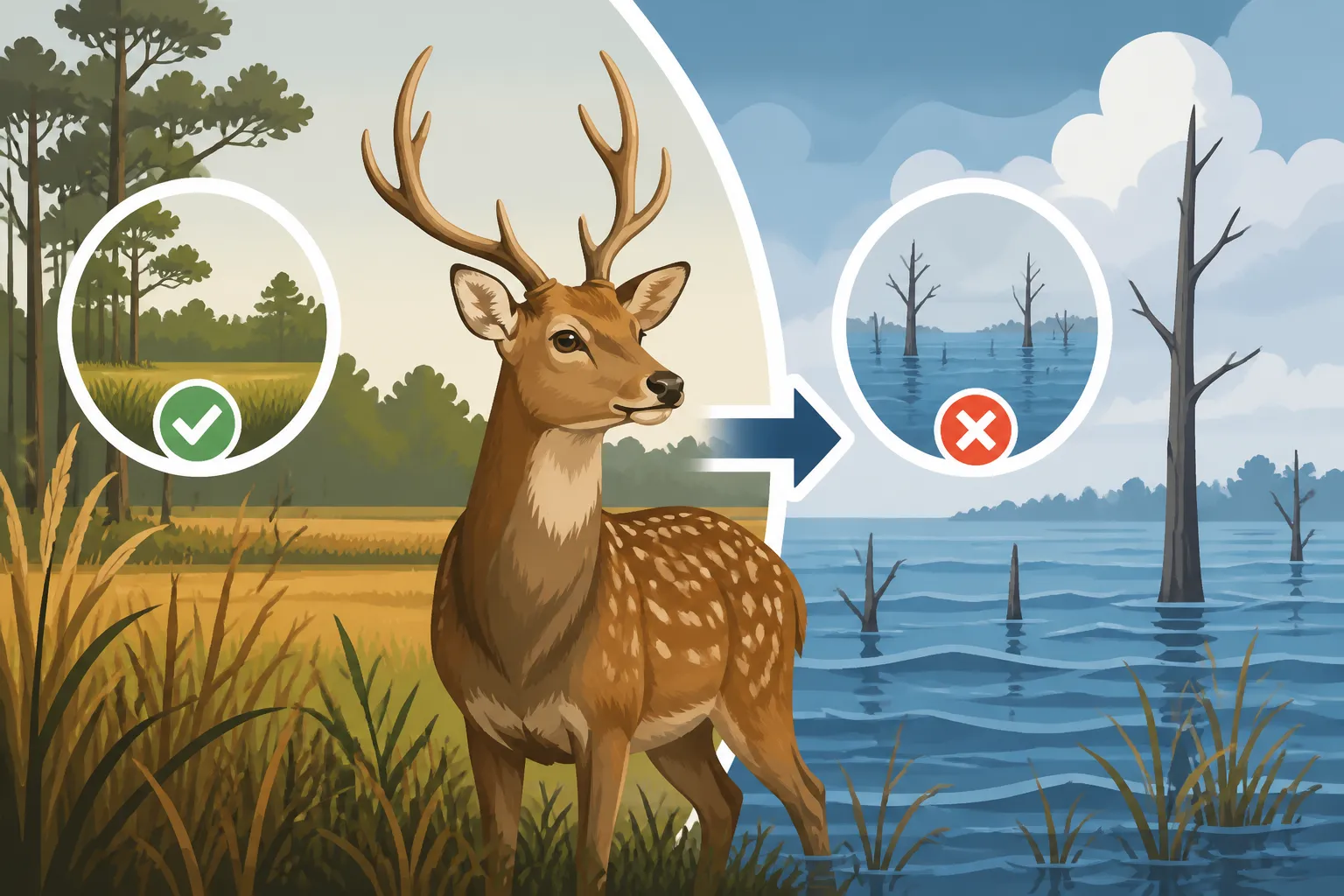
Perhaps one of the most critical impacts of sea level rise is the gradual disappearance of accessible high ground within the marsh. Sika deer, while adapted to wet environments, still need dry spots for bedding, fawning, and escaping extreme high tides or storm surges. These small islands, hummocks, or subtle ridges are vital refuges. As the sea encroaches, these elevated areas shrink, become more prone to inundation, or are eroded away entirely. This leads to a concentration of deer in fewer, smaller dry zones, increasing competition and making them potentially more visible to predators, including hunters.
For hunters, identifying these critical high ground areas has always been key to success, as sika often bed there. Now, scouting for these ever-diminishing dry patches becomes even more important. A small rise that used to provide a perfect bedding site might now be a shallow pool during an average high tide. When planning a hunt, checking tide charts and using mapping layers on platforms like GoHunt that show elevation can become absolutely critical, especially when contemplating Wading Into a Dorchester Marsh Before Daylight. The deer are constantly having to re-evaluate their safe havens, and hunters must do the same.
Adapting Your Hunting Strategy to a Changing Marsh
The challenges presented by sea level rise in sika habitat require hunters to be more adaptable, observant, and thoughtful than ever before. Traditional methods might need significant tweaking, and new approaches will emerge as the landscape continues its transformation.
Enhanced Scouting and Understanding Dynamic Conditions
Effective scouting has always been the cornerstone of successful sika hunting, but in a changing marsh, it becomes paramount. What was true last season, or even last month, might not hold true today. Hunters need to spend more time observing the current conditions of the marsh, rather than relying solely on past experience.
- Utilize Modern Mapping Tools: Platforms like GoHunt offer detailed satellite imagery, topographic maps, and often public land boundaries, which can be invaluable. Look for subtle elevation changes, areas of dense vegetation, and patterns of open water that may have changed since the last time you were there. Use the historical imagery features if available to see how shorelines and marsh guts have evolved over time.
- On-the-Ground Reconnaissance: Nothing beats walking the ground, even during the off-season. Pay close attention to newly eroded areas, signs of saltwater intrusion (like dying trees or changed vegetation), and where sika sign is concentrated. Remember, Reading a Marsh Trail for Sika Sign is still fundamental, but the trails themselves might be shifting.
- Tide Charts and Weather: With more frequent inundation, understanding the tides is no longer just about access; it's about predicting sika movement. High tides push sika to remaining high ground; low tides expose new feeding opportunities. Combine this with weather patterns, especially strong winds that can create "mini-tides" in certain areas, pushing water further inland than predicted by astronomical tides alone.
Access Challenges and Gear Considerations
Hunting a dynamic marsh means your access points and travel routes are constantly in flux. What was once a shallow wade might now require a boat, and vice-versa.
- Boat Access: As channels widen and certain areas become permanently flooded, a small marsh skiff or kayak might become indispensable for reaching previously walkable areas. Understanding How Tides Move Marsh Game Around affects boat access is crucial. Ensure your boat is suited for shallow water and equipped with a reliable motor.
- Wading and Waders: The depth of water encountered while wading will likely increase. This means chest waders are becoming more of a necessity, and in some spots, they might not even be enough. Be prepared for deeper crossings and always exercise extreme caution. Consider using a wading staff for stability and to gauge depth.
- Footwear and Flotation: Beyond waders, consider specialized footwear that offers good traction in mud and submerged vegetation. If you're venturing into truly questionable terrain, a personal flotation device (PFD) is never a bad idea, especially if hunting alone or in unfamiliar areas.
Shifting Sika Patterns and Hunt Timing
As their habitat changes, sika deer's patterns of movement, feeding, and bedding will also adapt. Hunters must anticipate these shifts.
- Concentrated Deer: With less high ground available, sika might become more concentrated in the remaining elevated patches, especially during extreme tides. This can make them easier to locate, but also more pressured. Learning to navigate and hunt Hunting a Sinking Maryland Marsh Edge will be key.
- Earlier Movement: If traditional feeding areas are consistently flooded, sika might move earlier in the day to access new forage further inland or in less affected areas. Likewise, they might bed down later if optimal bedding sites are limited. Adjusting your "peak hunt times" based on current conditions, rather than general lore, can make a huge difference.
- Pressure Adaptation: As sika are forced into smaller, more confined areas, they will likely become warier. Silent entry and exit, wind awareness, and precise stand placement become even more critical. Consider investing in a good quality rangefinder and practice shooting from various positions to be ready for limited shot windows in thick cover.
Table: Marsh Conditions and Sika Habitat Adaptation
| Feature | Traditional Sika Marsh Conditions | Sea Level Rise Impacted Marsh Conditions | Sika Deer Adaptation / Hunter Implication |
|---|---|---|---|
| High Ground | Numerous subtle hummocks, dry islands | Fewer, smaller, more frequently inundated high ground areas | Deer concentrate in remaining dry spots; hunters must find these limited refuges. Increased pressure on these spots. |
| Phragmites Cover | Dense, extensive stands providing consistent security | Thinner, stressed stands, or conversion to open water in heavily impacted areas | Reduced hiding spots for deer; forced to move more or use less optimal cover. Hunters need to adjust scouting. |
| Food Sources | Diverse mix of brackish marsh plants, some SAV | Loss of less salt-tolerant plants, potential SAV degradation | Deer shift diet or travel further to find forage; scouting for new food sources is critical. |
| Water Depth | Predictable wading depths, clear guts and channels | Increased overall water depth, changing channel morphology, more frequent flooding | More challenging wading, increased reliance on boats. Gear choice (chest waders) more important. |
| Shoreline Stability | Relatively stable, well-defined shorelines | Rapid erosion, retreating shorelines, merging of water and land | Fewer distinct edge habitats; deer movement patterns along edges change. Use updated maps like GoHunt. |
Looking Ahead: Preserving Sika Hunting in a Changing Environment
The reality of sea level rise means that the sika marshes of Maryland are not static. They are dynamic, constantly evolving landscapes. For hunters, this isn't a reason for despair, but a call for heightened awareness, adaptability, and a deeper connection to the ecosystems we cherish. By understanding the forces at play and adjusting our strategies accordingly, we can continue to pursue these magnificent animals.
Conservation efforts aimed at marsh restoration, living shorelines, and managing invasive species can play a role in mitigating some of these impacts, but the fundamental shifts will continue. For us as hunters, it means becoming even more proficient in our craft, more detail-oriented in our scouting, and more respectful of the resilient sika deer that call these shifting landscapes home. Staying informed through resources like those covering Maryland's Sika Deer, an Imported Herd and utilizing advanced mapping applications such as GoHunt, can give you an edge in navigating these evolving challenges. It’s a commitment to learning, adapting, and cherishing every moment spent in these irreplaceable wetlands.
Disclaimer
This article is for general informational purposes only and does not constitute professional advice. Laws, prices and regulations vary by location and change over time. Consult a qualified professional for guidance on your specific situation.