Finding a Maryland WMA Near You
Finding quality hunting land in Maryland can feel like a daunting task, especially if you're not lucky enough to have private property access. Many hunters struggle to pinpoint exactly where they can go, what to expect once they get there, and how to navigate the specific rules of public access. This comprehensive guide is designed to cut through that confusion, helping you easily locate Maryland's Wildlife Management Areas (WMAs) and understand how to make the most of these invaluable public resources.
What Are Maryland Wildlife Management Areas?
Maryland's Wildlife Management Areas, or WMAs, are parcels of public land specifically acquired and managed by the Maryland Department of Natural Resources (DNR) with wildlife conservation and public recreation, including hunting, in mind. These aren't just random tracts of forest; they're strategically managed habitats designed to support diverse game populations while offering outdoor enthusiasts a place to pursue their passions. Many hunters rely heavily on WMAs for their season, and understanding their purpose is the first step to a successful hunt.
The DNR's Role in Management
The Maryland DNR is the steward of these WMAs, and their role is multifaceted. They don't just own the land; they actively manage it through a variety of conservation practices. This can include timber harvests to create early successional habitat, prescribed burns to regenerate native grasses, planting food plots to supplement forage, and even wetland restoration projects to benefit waterfowl. All these efforts are geared towards enhancing habitat quality, which in turn supports healthier wildlife populations. When you step onto a WMA, you're experiencing the direct result of dedicated wildlife biologists and land managers working to create prime conditions for everything from deer and turkey to rabbits and ducks. Their work ensures that these areas remain viable for generations of hunters.
Diverse Habitats Across the State
One of the most remarkable aspects of Maryland's WMA system is the sheer diversity of habitats it encompasses. You might imagine public land as dense forest, and while that's certainly a part of it, WMAs offer so much more. From the rugged mountain timber of Western Maryland to the vast tidal marshes of the Eastern Shore, and from the rolling agricultural fields of the Piedmont to the pine and hardwood mixes of Southern Maryland, there's a WMA offering almost any type of hunting experience you could desire. This habitat diversity means a wide range of game species can be found across the state, and a hunter willing to travel can find entirely different challenges and opportunities. Understanding these different environments is key to knowing which WMA might be right for your next adventure. How Maryland WMAs Are Managed provides further insight into these efforts.
Common Misconceptions About Public Land
It's easy to fall prey to misconceptions about public hunting land, often fueled by tales of overcrowded woods or barren landscapes. Many new hunters, or even seasoned ones moving to a new area, assume that WMAs are "hunted out" or that success is impossible due to pressure. While it's true that public lands often see more hunting pressure than private tracts, especially during opening weekends or peak rut, this doesn't mean they're devoid of game. Often, the key is simply understanding how to hunt these areas effectively, which usually involves walking farther, hunting smarter, and adapting to the behavior of pressured animals. Another misconception is that rules are universally consistent, but in reality, WMA-specific regulations often exist beyond statewide hunting laws, requiring careful attention to detail before you even set foot in the woods.
Why Hunt a Maryland WMA?
Hunting a Wildlife Management Area offers a unique set of advantages and challenges that can make for incredibly rewarding experiences. For many, it's the only access they have to significant hunting grounds, while for others, it's a preferred environment for its wildness and the satisfaction of earning a hard-won harvest. It's a different beast than private land, but one that can teach you an immense amount about hunting.
Accessibility for All Hunters
The most significant benefit of WMAs is their accessibility. They are public lands, open to anyone with the proper licenses and permits, regardless of whether you own land or have connections to private landowners. This democratizes hunting, ensuring that the tradition remains open to a broader segment of the population. For those who live in suburban or urban areas, WMAs often represent their closest and most reliable option for getting into the field. This accessibility fosters a vibrant hunting community, allowing new hunters to gain experience and seasoned veterans to explore new grounds. It's a vital component of Maryland's hunting landscape, offering opportunities where otherwise there might be none. You can find more details on how to get started with Public Hunting Land in Maryland.
The Challenge of Hunting Pressure
Let's be realistic: WMAs often experience more hunting pressure than private land. This isn't necessarily a bad thing, but it's a reality every WMA hunter needs to acknowledge and adapt to. You might encounter other hunters, see more vehicle traffic on access roads, or find that popular spots are already occupied. However, this pressure isn't evenly distributed. Most hunters stick close to parking areas or easily accessible trails. This means that a willingness to walk an extra half-mile, cross a creek, or push into a thick, less-desirable cover can often put you into untouched pockets of habitat where game animals have sought refuge. Understanding and anticipating human pressure is a critical skill for WMA hunting, turning a potential deterrent into an opportunity for those willing to work a little harder. For strategies on navigating this, check out Hunting Pressure on Maryland Public Land.
Variety of Game Species Available
Maryland's WMAs are managed for a wide array of game, meaning you're not just limited to one type of pursuit. Depending on the WMA and its habitat, you could be chasing white-tailed deer, stalking sika deer in a marsh, calling wild turkeys in the spring, jumping ducks on a beaver pond, or flushing pheasants during a stocked hunt. This diversity allows hunters to hone different skills, extend their seasons, and experience the full breadth of Maryland's hunting opportunities. Whether you're interested in big game, small game, or migratory birds, there's likely a WMA suited to your interests. It's truly a treasure trove for the multi-species hunter. You might even discover new passions, like Sika Deer Hunting in Maryland's Tidal Marshes or Spring Turkey Hunting in Maryland.
How to Find a Maryland WMA
Knowing that WMAs exist is one thing; actually finding them and understanding their boundaries is another. Thankfully, with modern tools and a bit of research, locating the perfect WMA for your next hunt is more accessible than ever before.
Online Resources and Official Maps
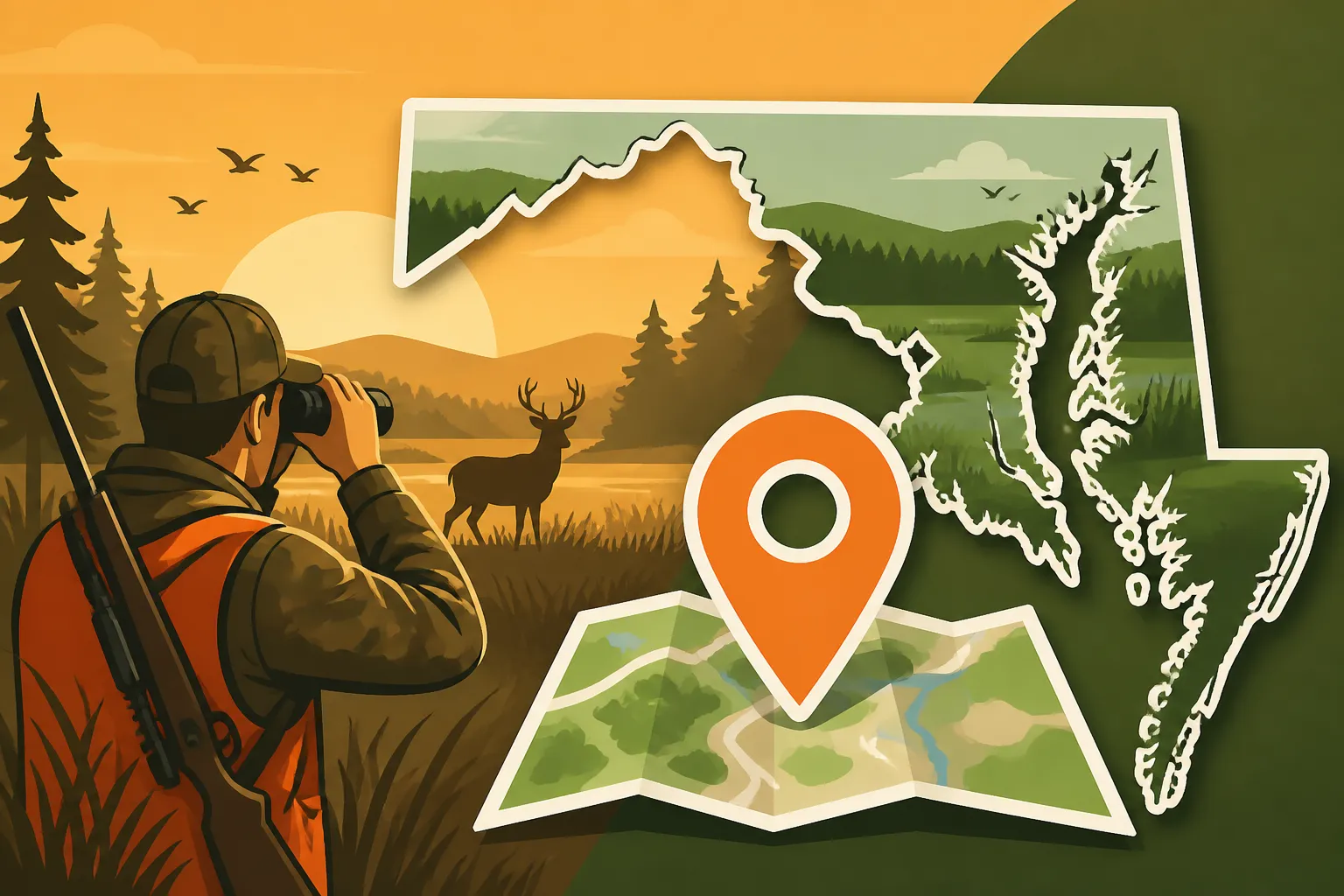
The first and most reliable place to start your WMA search is the Maryland DNR website. Their dedicated pages for Wildlife Management Areas often include interactive maps, downloadable PDFs, and specific regulations for each area. This is your authoritative source for boundaries, access points, and special restrictions. While a general statewide map can give you an overview, always dig into the specific WMA you plan to visit. Printing out or saving the official map to your phone before you go is a smart move, especially in areas with spotty cell service. These official resources are updated regularly, so make it a habit to check them before each season or before visiting a new area.
Utilizing Digital Mapping Tools
In today's hunting world, digital mapping applications like onX Hunt and GoHunt have become indispensable tools for public land hunters. These apps overlay property lines onto satellite imagery, allowing you to clearly distinguish between public and private land, identify WMA boundaries, and even pinpoint public access easements. Beyond just showing you where to go, these tools let you mark potential stand sites, scout remotely for funnels and bedding areas, measure distances, and track your movements in the field. They are invaluable for navigating complex public land systems, helping you avoid trespass and find those less-pressured pockets of habitat. A premium subscription to a service like onX Hunt can quickly pay for itself by preventing accidental boundary crossings and helping you discover new hunting spots you might otherwise overlook. For scouting ideas, consider Scouting Maryland Public Land Before Season.
Local Knowledge and Community Forums
While digital tools are powerful, don't underestimate the value of old-fashioned local knowledge. Strike up conversations at local tackle shops, feed stores, or even community events. Hunters are often eager to share general information, even if they won't reveal their secret spots. Online hunting forums and social media groups dedicated to Maryland hunting can also be great resources. Here, you can ask general questions, learn about specific WMA characteristics, or even find hunting partners. Just be sure to filter information with a critical eye, as not everything you read online will be accurate or up-to-date. Combining these community insights with official DNR information and digital maps creates the most comprehensive understanding of any given WMA.
Preparing for Your WMA Hunt
Successfully hunting a WMA isn't just about finding the land; it's about preparing properly for the unique environment and challenges you might face. A little foresight goes a long way in ensuring a safe, legal, and productive hunt.
Understanding WMA-Specific Regulations
This cannot be stressed enough: always check the specific regulations for the WMA you intend to hunt. While general statewide hunting laws apply, many WMAs have additional rules that can significantly impact your hunt. These might include limitations on weapon types, specific hunting hours, restrictions on baiting or permanent stands, special permit requirements, or even closures during certain times of the year. For instance, some WMAs might be archery-only, while others may require you to register your vehicle at a kiosk upon entry. Ignoring these WMA-specific rules can lead to fines, loss of privileges, or even criminal charges. The Maryland DNR website is the best place to find these details, often listed directly on the individual WMA's page. Pay close attention to rules regarding Maryland Public Land Registration Requirements or Treestand Rules on Maryland Public Land.
Pre-Season Scouting and Observation
Just like hunting private land, effective WMA hunting starts long before opening day with thorough scouting. Digital maps are a fantastic starting point for identifying potential access points, topography, water sources, and pinch points. You can mark potential bedding areas and food sources from your couch using GoHunt or onX Hunt. However, boots-on-the-ground scouting is essential. Visit the WMA during the off-season to walk potential routes, look for game trails, rub lines, and scrapes, and identify natural funnels. Observe how the terrain changes and how animals might move through it. Pay attention to signs of other human activity and try to identify areas that might receive less pressure. Scouting also allows you to familiarize yourself with the WMA boundaries in person, cementing what you saw on your digital maps.
Essential Gear for Public Land
Your gear choices can make or break a public land hunt. Because you'll often be walking farther and potentially dealing with more rugged conditions, comfort and efficiency are paramount. Think layers of clothing to adapt to changing weather, a comfortable and supportive backpack for carrying your essentials and any harvested game, and sturdy, waterproof boots. A good quality headlamp is a must for early morning walks and late-night recoveries. Beyond the basics, consider specialized gear: a portable tree stand or ground blind for versatility, a quality pair of binoculars for spotting distant game, and a reliable GPS device (or your phone with a mapping app) to navigate. Don't forget safety essentials like a first-aid kit, whistle, and always carry enough water and snacks. Remember, you might be a long way from your vehicle, so be prepared for self-sufficiency. Also, review Maryland's Legal Weapons by County to ensure your chosen firearm or bow is legal for that specific area.
Regional WMA Spotlights
Maryland's landscape is incredibly diverse, and so are its WMAs. Let's take a quick tour of what you might find in different parts of the state.
Western Maryland Mountain WMAs
When you think of Western Maryland WMAs, picture rugged, heavily forested mountains, steep hollows, and dense timber. These areas, like Dan's Mountain WMA or Warrior Mountain WMA, offer a completely different hunting experience than the flatlands of the Eastern Shore. Here, the focus is often on white-tailed deer and wild turkeys, with black bears also present for those lucky enough to draw a permit. The hunting can be physically demanding, requiring good conditioning and a willingness to navigate challenging terrain. Still-hunting ridges, sitting saddles, or focusing on natural pinch points between drainages are common tactics. Success here often comes from covering ground and understanding how deer use elevation and cover to escape pressure. If you're looking for a physically challenging hunt in a wilder setting, these WMAs are calling your name. For more on this region, check out Hunting Maryland's Western Mountain Forests and Hunting Savage River's High Country.
Eastern Shore Marsh and Farm WMAs
Shift your gaze to the Eastern Shore, and the landscape transforms dramatically. Here, WMAs like Fishing Bay, Deal Island, or Millington blend vast tidal marshes with agricultural fields and scattered timber blocks. This region is renowned for waterfowl hunting, with abundant ducks and geese, but it also offers exceptional opportunities for white-tailed deer and the elusive sika deer, especially in the marshier areas. Hunting these WMAs often involves boats for access, chest waders, and an understanding of tide charts. While some WMAs here offer traditional woodland deer hunting, others are true marsh hunts, demanding specialized gear and tactics. Field hunting for geese or setting up along marsh edges for deer and sika are popular approaches. These WMAs are truly unique and offer some of Maryland's most iconic hunting experiences. A good resource for this type of hunting is Hunting Fishing Bay's Marsh Guts by Boat.
Central and Southern Maryland WMAs
Central and Southern Maryland WMAs often present a mix of mature hardwoods, pine plantations, and creek bottoms, sometimes interspersed with agricultural fields. Areas like Myrtle Grove WMA in Charles County or Cedarville State Forest in Prince George's County are popular for deer and turkey. These WMAs often sit closer to more populated areas, meaning hunting pressure can be a factor, particularly on weekends. However, many still offer excellent opportunities for hunters willing to explore deeper into the tracts or hunt during weekdays. Understanding food sources, natural funnels, and bedding areas within these mixed habitats is key. Hunters might focus on oak ridges for acorns in the fall, creek bottoms for travel corridors, or thicker pine stands for bedding cover. These areas offer a classic Eastern woodland hunting experience with a strong emphasis on deer. Hunting Myrtle Grove Wildlife Management Area offers specific advice for that area.
Maximizing Your WMA Success
Hunting public land successfully often requires a slightly different mindset and approach compared to hunting private ground. It's about outsmarting not just the animals, but sometimes, other hunters too.
Hunting Away From the Crowds
The easiest way to improve your success rate on a WMA is to simply get away from the crowds. Most hunters are creatures of habit and convenience, sticking close to parking lots, main trails, and easily accessible areas. Utilize your digital mapping apps, like onX Hunt, to identify areas that are a mile or more from any obvious access point. Look for natural barriers like swamps, steep ridges, or dense thickets that discourage casual hunters. Being willing to walk farther, even if it means a more difficult pack-out, often puts you into areas where deer and other game feel safer and are less pressured. Sometimes, a seemingly undesirable piece of cover, just a few hundred yards off a busy trail, can hold a mature buck that has learned to avoid human contact.
Adapting to Conditions and Pressure
Successful WMA hunting is all about adaptability. The conditions can change quickly – weather, recent timber cuts, or an influx of hunters can drastically alter game movement. Be prepared to change your plan on the fly. If you arrive at your planned spot and find another hunter's vehicle, don't just pack up and go home; have a backup plan. Utilize your mapping tools to quickly scout an alternative route into a different, less-pressured section of the WMA. Observe animal behavior. If deer are becoming nocturnal due to heavy pressure, adjust your setup to catch them moving at dawn or dusk, or focus on bedding areas they might slip into during daylight hours. Every hunt on public land is a learning experience, so pay attention to what the animals and the environment are telling you.
Post-Hunt Analysis and Learning
Every time you step out of a WMA, whether you punched a tag or not, you've gained valuable information. Take the time to analyze your hunt. What worked? What didn't? Did you see fresh sign? Did you see other hunters? How did the animals react to your presence or the pressure in the area? Use your mapping app to mark observations – where you saw deer, where you heard shots, where you found good cover. This post-hunt analysis helps build a mental map of the WMA and how game uses it. Over time, you'll develop a deeper understanding of the specific WMA, increasing your chances of success on future trips. This continuous learning process is what turns a casual hunter into a consistently successful public land hunter. To gain more knowledge, consider reading Hunting Maryland's Two Deer Management Regions or Best Maryland Public Ground for Deer.
Table of Common Maryland WMA Types and Their Characteristics
| WMA Type | Primary Habitat | Common Game Species | Typical Challenges | Key to Success |
|---|---|---|---|---|
| Mountain/Forest | Steep timber, dense woods | White-tailed Deer, Turkey, Bear | Rugged terrain, physical exertion | Deep woods, elevation changes, still-hunting |
| Marsh/Wetland | Tidal marsh, open water | Sika Deer, Waterfowl, Whitetail | Tides, mud, insects, boat access | Waders/boat, tide knowledge, patience |
| Agricultural/Mixed | Crop fields, woodlots, hedgerows | White-tailed Deer, Small Game, Turkey | Field edges, private land proximity | Scouting food sources, early/late hunting |
| Piedmont/Upland | Mixed hardwoods, pine, streams | White-tailed Deer, Turkey, Small Game | Moderate pressure, fragmented habitat | Walking farther, scouting funnels, adaptation |
This article is for general informational purposes only and does not constitute professional advice. Laws, prices and regulations vary by location and change over time. Consult a qualified professional for guidance on your specific situation.