Working a Ridge Saddle for Rutting Bucks
Ridge saddles serve as natural funnels for Maryland whitetails, helping hunters locate rutting bucks during the breeding season.
Close the distance.
Archery, muzzleloader, and firearm techniques — calling, stand placement, still-hunting, spot-and-stalk, and the weapon rules that change at the state line.
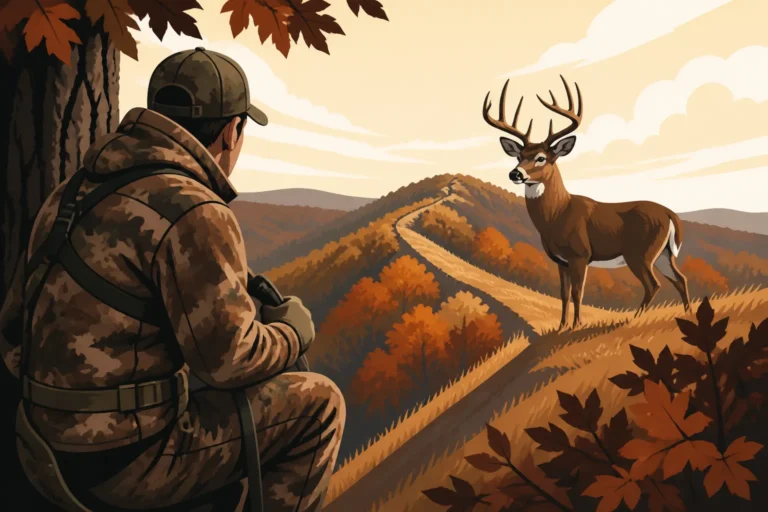
Ridge saddles serve as natural funnels for Maryland whitetails, helping hunters locate rutting bucks during the breeding season.

Chesapeake farm woodlot points act as deer magnets, combining timber cover with Maryland agricultural crops like soybeans and corn.
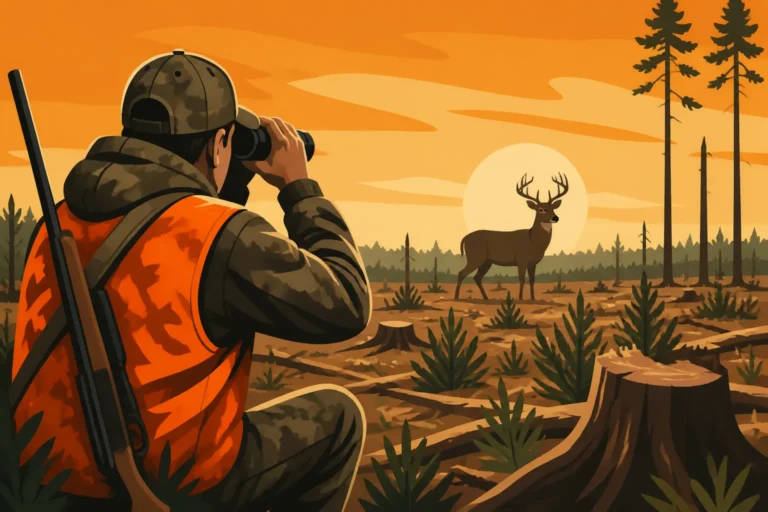
Hunting cutover pine stands on Maryland’s Lower Shore provides effective strategies for finding white-tailed deer and sika deer.
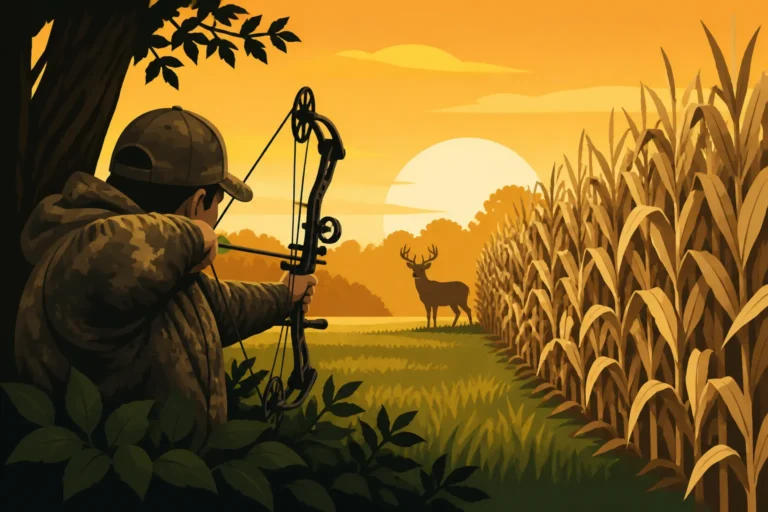
Hunting standing corn field edges in Maryland helps hunters intercept deer using high-energy food sources and dense security cover.
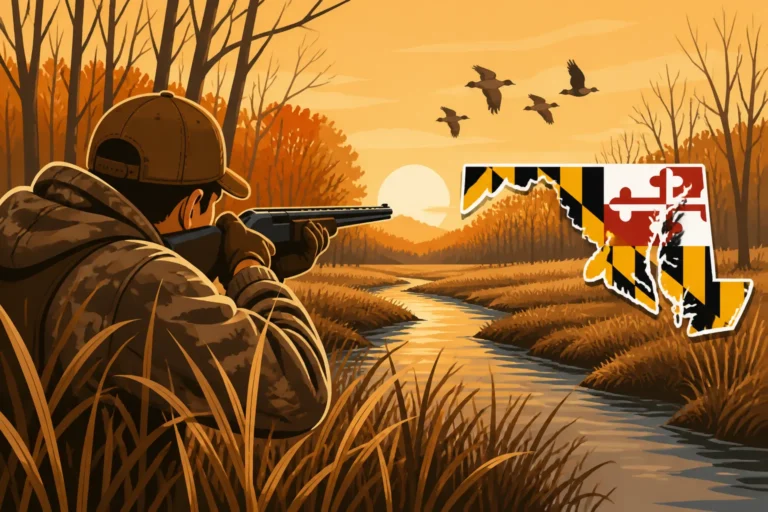
Late season Maryland creek bottoms offer deer thermal cover, water, and food near the Monocacy River and Patuxent River.
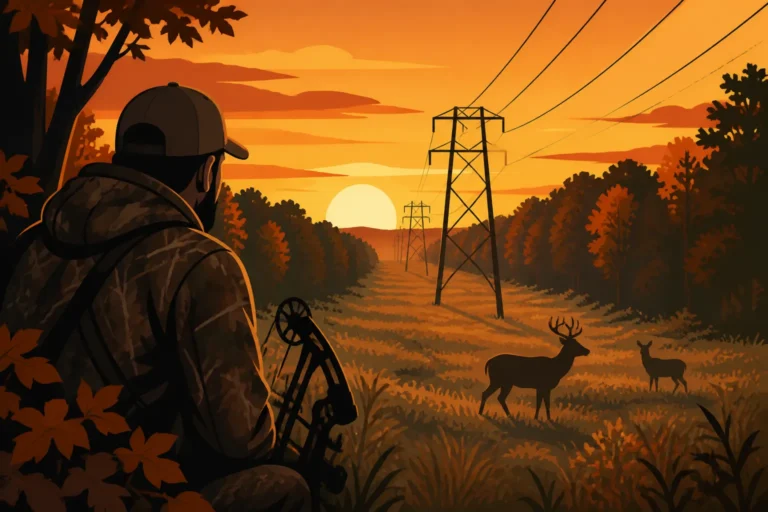
Maryland deer hunters learn stand positioning and wind current behavior to hunt powerline cuts during the final minutes of legal shooting light.
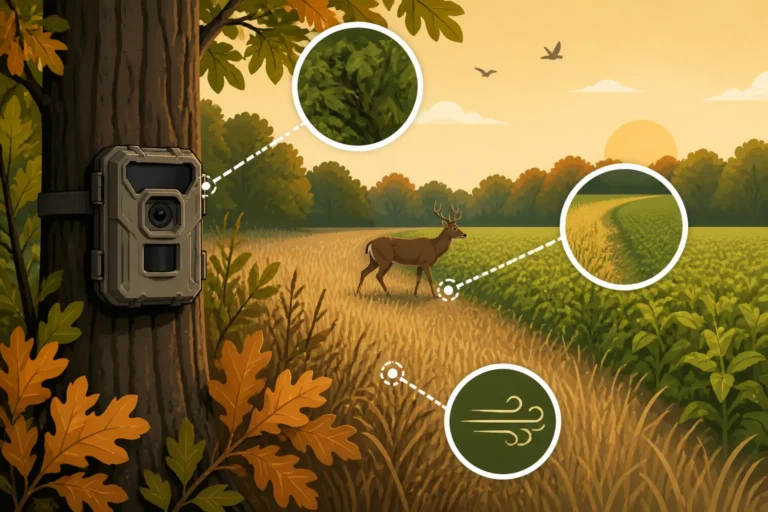
Maryland deer trail camera placement strategies for field edges, focusing on deer movement, travel routes, and entry points.
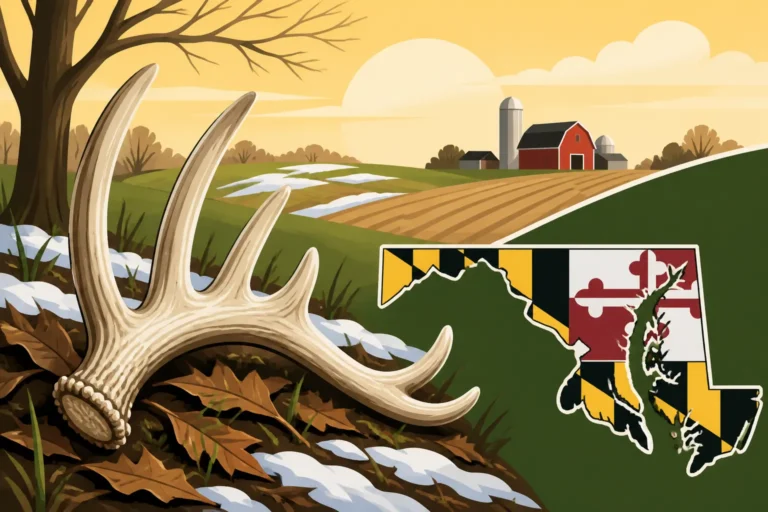
Maryland farm country in March provides prime conditions for finding fallen deer antlers in agricultural fields and woodlot edges.
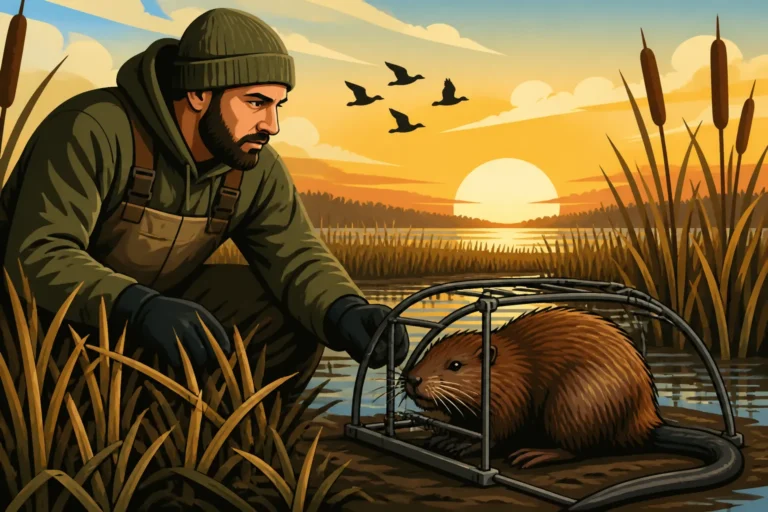
Dorchester County muskrat trapping techniques, tide charts, and marsh habitats explained for finding prime locations and pelts.
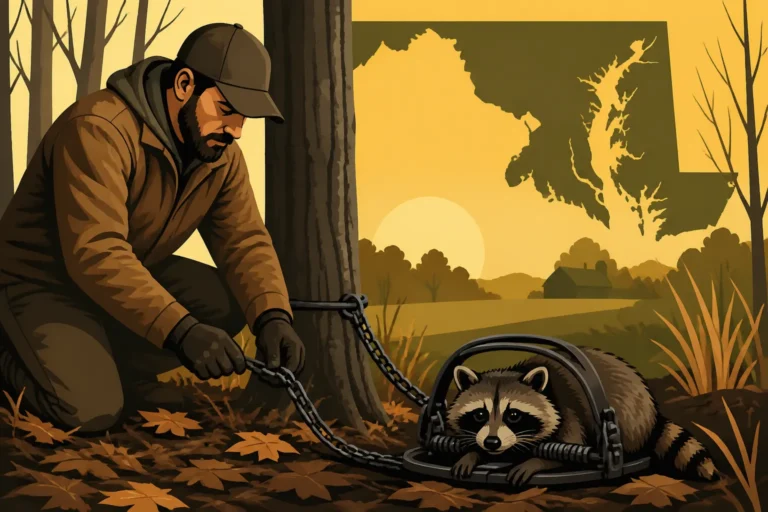
Maryland trapping licenses, Department of Natural Resources rules, legal trap types, and setback distances for furbearers.