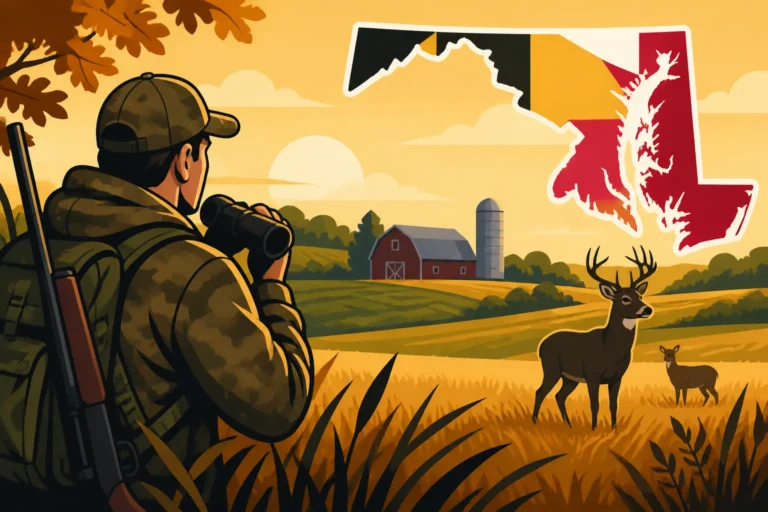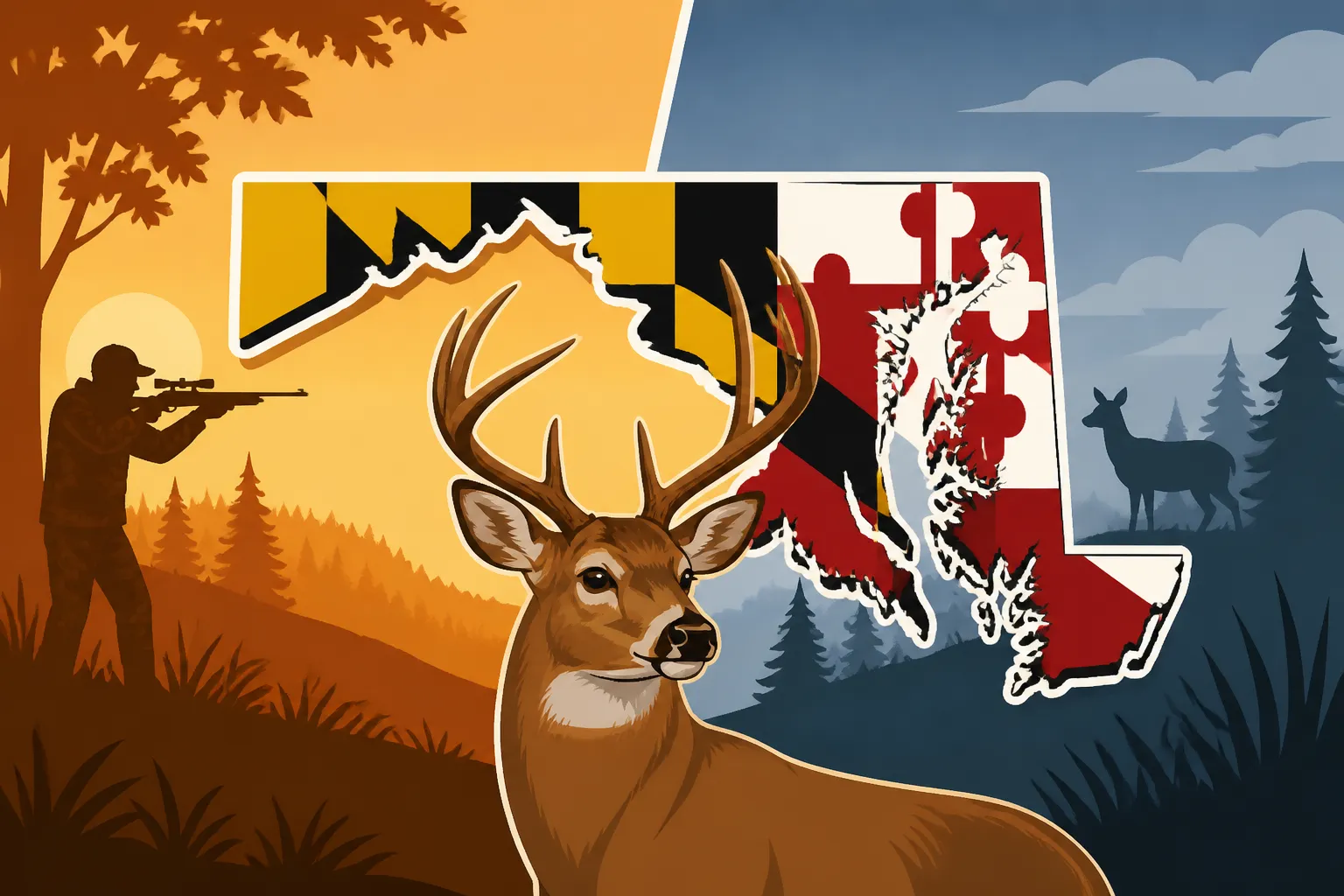
Maryland’s Split Firearms Deer Season
If you've ever felt like Maryland's deer hunting regulations are a constantly moving target, especially when it comes to firearms season, you're definitely not alone. It can be incredibly frustrating trying to keep up with the split dates, different rules for various regions, and the specific weapon types allowed. This comprehensive guide is here to untangle all that complexity, helping you confidently plan and execute your most successful Maryland firearms deer hunts, from the chilly late-November opener to the deep-winter January reopening.
Understanding the Maryland Firearms Deer Season Structure
Maryland's approach to firearms deer season isn't just one long stretch; it’s carefully split into distinct periods. This structure is designed to manage the deer population effectively across the state's diverse landscapes while also providing ample opportunity for hunters. It can feel a bit like a puzzle at first, but once you understand the pieces, it makes a lot more sense.
The Rationale Behind Split Seasons
The Maryland Department of Natural Resources (DNR) doesn't just split the firearms season on a whim. There's a lot of ecological data and management strategy that goes into these decisions. By creating separate windows, they can alleviate hunting pressure during peak times, allow for periods of undisturbed deer movement, and provide specific opportunities for antlered and antlerless deer harvest. Think about it: a continuous season could deplete local populations too quickly or make deer incredibly nocturnal, pushing them deep into cover.
The early firearms season, typically in late November, often coincides with or immediately follows the tail end of the rut in many areas, capitalizing on deer movement patterns. Then, the later January season helps target deer after the initial high-pressure hunts, often when deer are more concentrated around dwindling food sources. This dual approach helps maintain a healthier deer herd by allowing hunters to target different segments of the population when they are most accessible and when conditions are most favorable for specific management goals. It also spreads out the recreational impact, making for a better experience for everyone involved.
Key Dates and Regional Differences
The first step in planning your hunt is always knowing when you can actually go out. Maryland's firearms deer season generally kicks off in late November and runs for about a week. After a break for muzzleloader and some late archery, it then reopens for a shorter period in January. These dates are crucial and vary slightly year-to-year, so always double-check the official DNR hunting guide. You can learn more about the specific timeframe by checking out content like Hunting the Late November Firearms Split and Hunting the January Firearms Reopening.
But here's where it gets even more detailed: Maryland is divided into two primary deer management regions: Region A and Region B.
- Region A covers the westernmost counties, typically Garrett and Allegany, which are characterized by more mountainous terrain and denser forests. Bag limits and some specific regulations can differ here due to lower deer densities and different habitat types.
- Region B encompasses the rest of the state, including the Eastern Shore, central Maryland, and southern Maryland. This region has higher deer populations, more agricultural land, and a mix of suburban and rural environments.
These regional distinctions impact everything from bag limits to antler restrictions, so knowing which region you'll be hunting in is paramount. For example, the number of antlerless deer you can harvest in Region B is significantly higher than in Region A, reflecting the DNR's management goals to reduce overall deer numbers in areas with higher agricultural damage and vehicle collisions. Understanding Maryland's Deer Bag Limits and Antler Rule is vital before you head afield.
Weapon Restrictions and Legalities
Just because it's "firearms season" doesn't mean every firearm under the sun is legal everywhere. Maryland has very specific rules about what type of firearms can be used for deer hunting, and these rules can even vary by county, particularly in the more densely populated areas. Generally, shotguns, muzzleloaders, and certain straight-walled cartridge rifles are permitted. Rifles firing bottlenecked cartridges, which are common in many other states, have much stricter limitations in Maryland and are largely restricted to Region A.
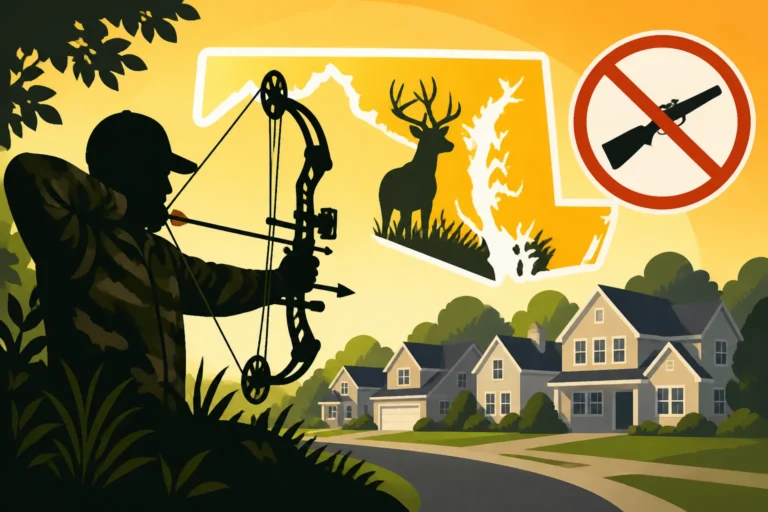
It's absolutely essential to consult Maryland's Legal Weapons by County before you pick up your rifle or shotgun. For instance, in many suburban counties surrounding Baltimore or Washington D.C., you might be limited to shotguns with slugs or even archery-only during the firearms season due to safety concerns related to proximity to homes and roads. Airguns are also becoming a more common option, but they have specific caliber requirements for deer. Never assume your trusty deer rifle from another state is legal here without checking; it's a quick way to end your hunt early and face penalties.
Navigating the Early Firearms Season Late November
The late November firearms season is a highly anticipated time for many Maryland deer hunters. It offers a unique set of challenges and opportunities, often coinciding with cooler weather and potentially the tail end of the whitetail rut. Understanding deer behavior and being prepared for hunting pressure are key to success.
Prime Hunting Conditions and Deer Behavior
When that late November opener rolls around, many hunters are optimistic, and for good reason. The weather is usually crisp, perfect for spending hours in a stand, and deer are often still somewhat active from the breeding season. While the peak of the rut, when bucks are actively chasing does, might be winding down in some areas, residual rut activity is still very much a factor. Younger bucks may just be hitting their stride, and older bucks are still cruising for any receptive does. This means deer are moving more during daylight hours than they might in early season, especially if the weather is favorable (think cold, cloudy days with light winds).
Food sources also play a critical role during this time. Acorns, if they had a good year, are still a major draw, but deer will also be hitting agricultural fields like standing corn or cut soybean fields. Scouting during this period, even if it's just observing from a distance or using trail cameras, can reveal crucial feeding patterns. Deer are constantly adapting, and what they preferred a week ago might have changed with weather patterns or crop harvests. Being observant and flexible will pay dividends.
Strategy for Pressure and Movement
Let's be real, the early firearms season can feel like a small war breaks out in the woods. Hunting pressure spikes, especially on public lands and smaller private parcels. This intense pressure changes deer behavior almost immediately. Mature deer, in particular, become much more nocturnal or seek out the thickest, nastiest cover they can find. If you hunt public land, you'll need to develop a strategy that accounts for other hunters. Places like Green Ridge State Forest or Savage River State Forest, while expansive, will see plenty of hunters. A tool like GoHunt's mapping features can be invaluable here, helping you identify areas that might see less pressure by being harder to access.
To counter this, consider these tactics:
- Go deeper: Many hunters stick close to roads and parking areas. If you're willing to walk an extra mile or two, you often find less disturbed deer.
- Hunt thick cover: Don't just look for open timber. Focus on areas with dense undergrowth, briar patches, or pine thickets where deer feel safe. These are often bedding areas during the day.
- Find pinch points and funnels: Deer will still need to move between bedding and feeding areas, even under pressure. Look for natural travel corridors like saddles between ridges, narrow strips of woods connecting larger blocks, or creek bottoms.
- Use stand placement wisely: Think about your entry and exit routes to avoid spooking deer as you go to and from your stand. Hunt the wind religiously.
Remember, deer are creatures of habit, but they're also highly adaptable. Anticipate how pressure will affect their movements and adjust your strategy accordingly.
Essential Gear and Preparations
Being prepared for the early firearms season means more than just having your rifle sighted in. The weather can be unpredictable, ranging from mild and rainy to frigid and snowy, sometimes all in the same week. Layering your clothing is paramount, starting with a good wicking base layer, an insulating mid-layer, and a waterproof/windproof outer shell. Don't forget quality insulated boots, gloves, and a hat – cold feet and hands can quickly ruin a hunt.
Beyond personal comfort, make sure your rifle or shotgun is in top shape. A thorough cleaning, scope check, and zero verification are non-negotiable. Carry enough ammunition, a quality knife, a headlamp, and flagging tape for tracking. For safety, adhere strictly to Maryland Blaze Orange Requirements; it's not just a law, it's common sense. You'll need to wear at least 500 square inches of daylight fluorescent orange above the waist, and a fluorescent orange hat during firearms season. For navigation, a reliable GPS or a hunting app like the one offered by GoHunt, paired with a physical map and compass as a backup, is essential, especially if you plan to venture into unfamiliar territory. Having a system to register your deer, whether through the COMPASS online portal or the mobile app, is also a key part of your preparation.
Strategies for the January Firearms Reopening
The January firearms reopening is often overlooked by some hunters, but it presents a fantastic opportunity for those willing to brave the colder temperatures and adjust their tactics. This late-season hunt can be incredibly rewarding if you understand the unique conditions and deer behavior.
Late Season Challenges and Opportunities
By January, the landscape has changed dramatically. Leaves are long gone, revealing the true contours of the land, and food sources are scarce. The deer have also been hunted for months, making them warier than ever. These are the challenges. However, these very challenges also create unique opportunities. Deer movement becomes highly predictable, centered almost exclusively around available food and thermal cover. The herd has also been thinned, especially the antlered deer, but those remaining are often desperate to feed and conserve energy.
The weather can be brutally cold, with snow and ice common, particularly in Western Maryland. This weather can either shut deer down or force them to move more to find calories. Pay close attention to weather forecasts: a cold snap followed by a slight warm-up can trigger increased activity. The lack of foliage means visibility can be excellent, but it also means deer can spot you more easily. This is a time for patience, stealth, and precise strategy.
Food Sources and Thermal Cover
In January, deer are almost solely focused on survival. Their primary drivers are finding energy-rich food and secure thermal cover to escape the cold winds and snow. Natural browse might be limited, but they'll hit evergreen thickets, briar patches, and woody stems. Agricultural fields become absolute magnets. If you can find standing corn, unharvested soybeans, or winter wheat fields, you've likely found deer. These fields offer both food and, surprisingly, cover from the elements. Deer will often bed right in standing corn rows to block the wind and access food.
Thermal cover is equally important. Look for thick stands of evergreens – especially pines, cedars, or hemlocks – that provide a canopy to block snow and wind. South-facing slopes that catch more sunlight can also be key bedding areas. Creeks and river bottoms often offer both dense cover and travel corridors. Understanding where deer bed in relation to food is critical. They want to minimize their travel distance in harsh conditions. For those hunting in western counties, understanding topography and how deer use thermal cover in different elevations is key, as discussed in detail in guides like Still-Hunting Western Maryland Mountain Timber.
Maximizing Success in Cold Weather
Hunting in January means preparing for the cold. Your layering system needs to be spot-on, and investing in high-quality insulated boots, gloves, and hand warmers is a must. Thermals, fleece, and a heavy outer shell are your best friends. Hot drinks in a thermos can make a huge difference in morale and core temperature.
Tactically, this is a prime time for still-hunting or slow-stalking, especially in thick cover or along field edges early in the morning or late in the afternoon. With no leaves, you can see further, but deer can too. Take small, deliberate steps, stopping frequently to glass and listen. Look for deer bedded in unexpected places, trying to catch the sun or hide from the wind. Using a mapping app like GoHunt to mark potential food sources, thickets, and travel routes can help you develop a focused plan for each day's hunt. Also, consider calling techniques. While the rut is over, deer are still social animals, and a well-placed doe bleat or fawn distress call can sometimes pique their curiosity, especially if they are feeling vulnerable. Remember, successful late-season hunting is about resilience, preparation, and understanding the deer's basic needs.
Regional Considerations for Firearms Deer Hunting
Maryland's varied landscape means that deer hunting strategies need to adapt significantly depending on whether you're in the mountains of the west, the farms of the Eastern Shore, or the suburban sprawl. Each region offers distinct challenges and rewards for firearms hunters.
Hunting Region A Western Maryland
Region A, comprising Garrett and Allegany counties, is a world apart from the rest of Maryland. Dominated by the Appalachian Mountains, dense timber, and rugged terrain, it offers a more traditional "big woods" hunting experience. Deer densities are generally lower here compared to Region B, meaning you might see fewer deer, but the opportunity to harvest a mature, heavy-bodied buck is very real. Public land is abundant, with vast tracts of Savage River State Forest and Green Ridge State Forest. Hunters who enjoy solitude and challenging terrain will appreciate Region A.
Strategies here often involve still-hunting or finding good vantage points to glass clear cuts or mountain benches. Deer will move along ridges and use saddles as travel corridors, especially during the rut. Understanding the topography and how deer use elevation to their advantage is crucial. Late season hunts might involve focusing on protected hemlock or pine thickets for thermal cover. Since deer numbers are lower, patience and persistence are key. Additionally, some specific legal weapon rules might be more permissive for certain rifles in Region A compared to Region B. For a deeper dive, read Hunting Maryland's Western Mountain Forests.
Hunting Region B Eastern, Central, Southern Maryland
Region B covers the vast majority of Maryland, encompassing a diverse mix of agricultural fields, suburban woodlots, sprawling farmlands, and tidal marshes. Deer populations are generally much higher here, leading to more generous antlerless bag limits and a greater focus on herd management. This region presents its own unique set of hunting dynamics, from dealing with fragmented habitat to navigating private land access.
- Eastern Shore: Characterized by flat, fertile farmland interspersed with loblolly pine plantations and extensive tidal marshes. Deer here often bed in thick pine blocks or marsh grass and feed heavily on agricultural crops like corn, soybeans, and winter wheat. This is also prime Sika deer territory in places like Dorchester County. Hunting along field edges, through pine cuts, or near marsh transitions can be very effective.
- Central Maryland: A mix of rolling hills, smaller farms, and significant suburban development. Hunting opportunities are often on smaller private parcels, managed public lands, or through special controlled hunts. Deer are highly adaptable to human presence and often become very nocturnal.
- Southern Maryland: Features a mix of agricultural land, hardwoods, and tidal creek systems. Similar to the Eastern Shore, deer utilize dense cover and agricultural food sources. Land access can be a challenge here, often requiring knocking on doors or joining hunting clubs.
In Region B, particularly in areas with a mix of agriculture and woodlands, focusing on natural funnels, pinch points, and transition zones between different habitat types is crucial. Deer will use creek bottoms, fencerows, and small woodlots to travel undetected between bedding and feeding areas. Understanding the dynamics of hunting a Chesapeake farm woodlot point can be especially valuable.
Suburban Hunting Opportunities
It might sound counterintuitive, but some of the best deer hunting in Maryland, particularly for filling antlerless tags, can be found in the suburban corridor. Counties like Montgomery, Howard, Anne Arundel, and Baltimore County often have incredibly high deer densities due to abundant food (landscaping, gardens) and reduced hunting pressure (weapon restrictions, limited access). These areas frequently have managed hunts on public parks or through special landowner permits.
Hunting in these environments demands extreme caution, strict adherence to local ordinances, and often requires specific permits. Weapon choices are often restricted to archery, crossbows, or shotguns with slugs, even during the firearms season, to ensure public safety. Hunters must be incredibly respectful of property lines and setback distances from dwellings. While it's not the "wilderness" hunt many dream of, it's a critical part of Maryland's deer management strategy and provides unique opportunities for dedicated hunters. If you're looking for opportunities like these, researching Hunting Maryland's Suburban Deer Management Hunts would be a good start.
Licenses, Tags, and Registration Requirements
Navigating the administrative side of hunting can sometimes feel more complex than the hunt itself. Maryland has specific requirements for licenses, stamps, bag limits, and deer registration that every hunter must understand and follow to avoid legal issues.
Obtaining Your Maryland Hunting License and Stamps
Before you even step foot in the woods, you need the right paperwork. All hunters in Maryland, with very few exceptions for landowners, must possess a valid Maryland hunting license. For residents, these are generally straightforward. Non-residents face higher fees, but the process is similar. You can purchase licenses and stamps online through the Maryland DNR's COMPASS system, or at various retail agents across the state. A good resource for understanding costs is Maryland Hunting Licenses and What They Cost.
Beyond the base hunting license, deer hunters typically need several stamps:
- Archery Stamp: Required if you plan to hunt deer with a bow or crossbow during any archery season.
- Muzzleloader Stamp: Required if you plan to hunt deer with a muzzleloader during any muzzleloader season.
- Firearms Stamp: Often bundled with the base hunting license or sometimes available as a separate purchase, confirming your privilege to hunt during firearms seasons.
- Maryland Sika Deer Stamp: If you plan to hunt Sika deer, which are increasingly popular on the Eastern Shore, you'll need this separate stamp.
- Bonus Antlered Deer Stamp: Allows for the harvest of an additional antlered deer beyond the statewide limit, but has specific rules tied to antlerless harvest.
It's crucial to understand which stamps you need based on your weapon choice and the species you intend to hunt. Always carry your physical license or have the digital version readily accessible on your phone while afield.
Understanding Deer Bag Limits and Antler Rules
Maryland's deer bag limits are designed to manage the herd effectively, especially given the state's high deer populations in Region B. The statewide antlered deer bag limit is two per year, but with the purchase of a bonus antlered deer stamp, you can potentially harvest an additional antlered deer after meeting certain antlerless harvest requirements.
Antlerless deer bag limits vary significantly by region and weapon:
- Region A (Western Maryland): Typically has more conservative antlerless bag limits due to lower deer densities.
- Region B (Eastern, Central, Southern Maryland): Generally has very liberal antlerless bag limits, often allowing for multiple antlerless deer per season to help control population growth. This is where you'll want to focus if your goal is to fill the freezer. For specifics on these limits, refer to How Many Antlerless Deer Region B Allows.
Then there's the famous Maryland's Three-Point Antler Restriction. In most of the state, an antlered deer must have at least three points on one antler (or be your one "exception" buck) to be legal for harvest. This rule is designed to protect younger bucks and allow them to mature, leading to an older age structure in the buck population. Understanding how to count antler points correctly in the field is vital. Take your time and be certain before you squeeze the trigger; it's easy to make a mistake in the heat of the moment.
The Critical Deer Registration Process
Perhaps one of the most important (and sometimes forgotten) steps after a successful hunt is registering your deer. In Maryland, all legally harvested deer must be registered within 24 hours of harvest. This isn't just a suggestion; it's a legal requirement, and it's how the DNR collects vital data on deer populations and harvest trends.
The most convenient ways to register your deer are:
- Online: Through the Maryland DNR's COMPASS portal on their website.
- Mobile App: Using the Maryland DNR's COMPASS mobile app on your smartphone.
You'll need specific information like the county of harvest, the weapon used, the sex of the deer, and whether it was antlered or antlerless. Once registered, you'll receive a confirmation number. This number must remain with the deer until it's processed and stored. It's proof that your deer was legally harvested and documented. Failing to register your deer can result in fines and loss of hunting privileges, so don't skip this crucial step!
| Deer Category | Region A (Western MD) Antlered Limit | Region B (Rest of MD) Antlered Limit | Region A (Western MD) Antlerless Limit | Region B (Rest of MD) Antlerless Limit | Antler Restriction |
|---|---|---|---|---|---|
| Firearms | 2 (one may bypass 3-pt rule) | 2 (one may bypass 3-pt rule) | Varies, often 1-2 | Generous, often 10+ | 3 points on one antler (1 exception) |
Note: Limits are subject to annual changes by MD DNR. Always check the current year's guide.
Ethical Considerations and Safety in Firearms Hunting
Hunting is a privilege, not a right, and with that privilege comes a significant responsibility to act ethically and safely. This is especially true when using firearms, where vigilance and adherence to rules are paramount for the safety of yourself, other hunters, and the general public.
Blaze Orange Requirements and Visibility
Safety should always be your top priority, and in Maryland, that means wearing blaze orange during firearms seasons. The law is clear: during any firearms deer season (including muzzleloader seasons), every hunter must wear a minimum of 500 square inches of daylight fluorescent orange above the waist, and a fluorescent orange hat. This isn't just a suggestion; it's a legal requirement and a critical safety measure.
Why is it so important? Because blaze orange makes you highly visible to other hunters, reducing the risk of accidental shootings. Even if you're certain you're alone in the woods, another hunter might be moving through, or a non-hunter could be recreating in the area. Don't take chances. Dress in bright orange, and make sure it's visible from all angles. This applies whether you're actively hunting, still-hunting, or walking to and from your stand. While GoHunt primarily focuses on digital tools, understanding the physical safety aspects like blaze orange is essential for any hunt plan.
Safe Firearm Handling and Shot Placement
Responsible firearm handling is the bedrock of safe hunting. The four fundamental rules of firearm safety are:
- Treat every firearm as if it's loaded.
- Always point the muzzle in a safe direction.
- Keep your finger off the trigger until your sights are on the target and you're ready to shoot.
- Be sure of your target and what is beyond it.
These aren't just slogans; they are principles to live by every time you pick up a gun. When hunting deer, responsible shot placement is also an ethical imperative. Aim for the vital organs (heart and lungs) to ensure a quick, humane kill. Avoid risky shots at running deer or shots that might only wound an animal. Practice at the range to ensure you can consistently place your shots accurately at various distances. Knowing your rifle and your own limitations is crucial. If you're unsure about a shot, don't take it. For those new to hunting or needing a refresher, Maryland Hunter Education Requirements courses cover these critical safety elements in detail.
Respecting Landowners and Public Land Rules
Whether you're hunting private land or public land, respect is key. For private land, always obtain explicit permission from the landowner before hunting. Maryland trespass laws are clear, and hunting without permission can lead to serious legal consequences. Be a good guest: don't litter, close gates, avoid damaging property, and consider sharing some of your harvest if the landowner is agreeable. Building good relationships with landowners is how we ensure future hunting opportunities.
On public lands, be mindful of other users. Hikers, birdwatchers, and other hunters may be in the same area. Understand and follow all specific rules for the Wildlife Management Area (WMA) or State Forest you are hunting. These can include rules about parking, vehicle access, tree stand placement, and trail camera use. Scouting helps reduce conflicts, and using a mapping application to check public land boundaries, like the features offered by GoHunt, is a smart move. Always pack out everything you pack in, and leave no trace. Hunting pressure on Maryland public land can be significant, especially during firearms season, so a courteous and respectful attitude goes a long way.
Post-Hunt Essentials: Field Dressing and Meat Care
Congratulations, you've successfully harvested a deer during Maryland's firearms season! The hunt isn't truly over until that deer is properly cared for. Mishandling your harvest can lead to spoiled meat, which is a tragedy after all your hard work. Proper field dressing, transportation, and processing are essential steps.
Proper Field Dressing Techniques
Field dressing, or gutting, your deer immediately after harvest is perhaps the most important step for preserving the quality of the meat. The goal is to remove the internal organs quickly to allow the carcass to cool down. This inhibits bacterial growth, especially critical during warmer early season days.
Here’s a basic overview:
- Position the deer: Lay the deer on its back, head uphill if possible.
- Make the cut: Carefully make a shallow cut through the hide and muscle from the breastbone to the pelvis, avoiding puncturing the intestines. Use the tip of your knife, pointing the blade upwards, or use a gut hook if your knife has one.
- Open the cavity: Spread the ribs and cut around the anus to free the rectum.
- Remove organs: Reach into the chest cavity, sever the windpipe and esophagus, and pull all internal organs out. Work from the front to the back, ensuring everything comes out cleanly.
- Clean: If you have access to water, a quick rinse of the cavity can help, but it's not strictly necessary if you've done a clean job. Wipe the cavity with clean cloths or paper towels.
During the late November season, temperatures might be cool enough to allow the deer to hang for a bit before processing, but always exercise caution. In January, cooling is less of an issue due to the cold, but proper technique is still vital.
Transporting and Processing Your Harvest
Once field dressed, you need to get your deer out of the woods and to a processor or your home for butchering.
- Transportation: For smaller deer, dragging might be an option, but a game cart can save your back and make extraction much easier, especially over rough terrain or long distances. Ensure the carcass is secured in your vehicle, ideally in a truck bed or on a hitch carrier, to allow for air circulation. Avoid putting a deer directly into the trunk of a car on a warm day; this will trap heat and spoil the meat rapidly. If the weather is warm, get it on ice as quickly as possible.
- Processing: You have two main options:
- Professional Processor: This is often the easiest route, especially for your first few deer. Maryland has many reputable deer processors, particularly on the Eastern Shore and in rural areas. They will cut, wrap, and often freeze your meat to your specifications. Be sure to call ahead for their hours and pricing.
- DIY Butchering: If you're handy with a knife and have the space, butchering your own deer can be very rewarding and cost-effective. You'll need sharp knives, a clean workspace, and knowledge of how to break down the carcass into various cuts. There are countless online tutorials and books available to guide you.
Proper meat care means keeping the meat clean and cool from the moment of harvest until it's in your freezer. Don't let your hard-earned venison go to waste!
Dealing with CWD Management Areas
Chronic Wasting Disease (CWD) is a serious neurological disease that affects deer, elk, and moose. While not known to be transmissible to humans, the DNR takes CWD very seriously to protect the health of the deer herd. Maryland has designated CWD Management Areas (CWDMA) in certain counties, primarily in Western Maryland.
If you harvest a deer in a CWDMA, there are special regulations you must follow regarding carcass transport and testing. You generally cannot transport certain parts of the deer (brain, spinal cord, etc.) out of the CWDMA unless they are going directly to a licensed taxidermist or processor within the CWDMA. Whole carcasses can be transported through a CWDMA on the way to a final destination, but they cannot be dropped off or processed within the zone unless it's done by a licensed facility. The DNR often provides voluntary CWD testing stations in these areas, and it's highly encouraged to submit your deer for testing if harvested in a CWDMA. Always consult Maryland's CWD Management Area Rules for the most up-to-date information, as these rules can change based on disease prevalence. Staying informed is crucial for protecting our deer population.
Disclaimer
The information provided in this guide is for general informational purposes only and is not intended as legal advice. Hunting regulations in Maryland, including season dates, bag limits, and weapon restrictions, can change annually. Hunters are solely responsible for knowing and complying with all current Maryland hunting laws and regulations. Always consult the official Maryland Department of Natural Resources (DNR) hunting guide and website for the most accurate and up-to-date information before participating in any hunting activity.