Hunting Meadow Mountain Timber
Hunting a vast timbered mountain like Meadow Mountain in Western Maryland can feel overwhelming, especially if you're accustomed to smaller woodlots or open farm country. It's easy to get lost in the endless trees, struggle to pinpoint deer, or feel like you're just wandering without a real plan. This guide is here to break down the unique challenges and opportunities of hunting Meadow Mountain's timber, giving you actionable strategies to increase your chances of success and make your time in the woods more productive and enjoyable.
Understanding Meadow Mountain's Unique Timber Habitat
Meadow Mountain, like much of Western Maryland's Appalachian chain, presents a distinctive blend of timber types that create a complex mosaic for deer, bear, and other game. It's not just "woods" out there; understanding the specific tree species and their growth patterns is key to unlocking hunting success.
Identifying Key Tree Species and Their Role
When you step into the timber of Meadow Mountain, you're going to encounter a variety of trees, and each type plays a different role in supporting wildlife. Hardwoods, particularly oaks, are often the primary draw for deer. Acorns are a critical food source, especially in the fall, and finding a consistent drop can be like hitting the jackpot. You'll also find stands of maples, cherry, and birch, which might offer browse or cover depending on the season. Look for areas with a good mix of these, as diverse habitats usually hold more game. Conifers, like pines and hemlocks, offer crucial thermal cover during colder months and can provide excellent bedding areas, especially on north-facing slopes or in thick pockets where sunlight struggles to penetrate. Deer will often seek out these dense areas to escape the wind and snow, or simply to feel secure. Hunting Maryland's Western Mountain Forests dives deeper into the broader characteristics of these areas.
Understanding Timber Management and Its Impact
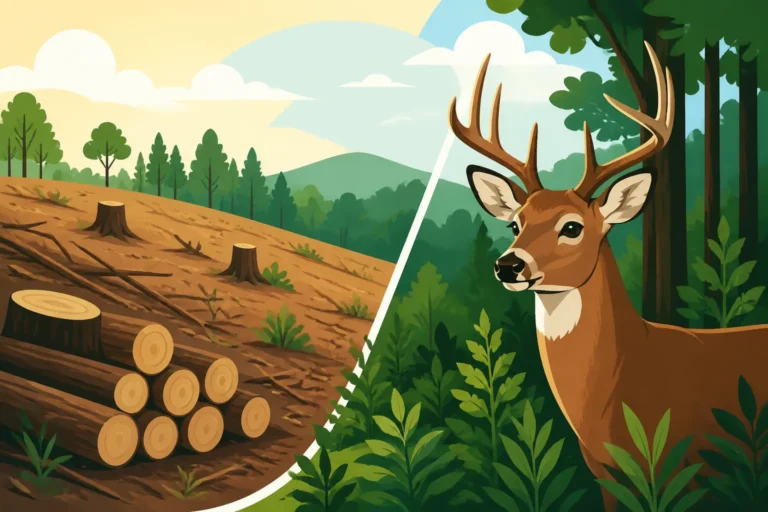
Timber in state forests like Meadow Mountain isn't just left to grow wild; it's often actively managed through practices like selective cutting, clear-cutting, and thinning. These activities, while sometimes jarring to see, create dynamic habitat changes that can be a boon for hunters. A recent clear-cut, for instance, might look barren at first, but it quickly regenerates with thick underbrush, providing dense cover and abundant new browse for deer. These areas can become de facto food plots and bedding sanctuaries within a few years of cutting. Older clear-cuts, perhaps 10-15 years post-harvest, can become incredibly difficult to penetrate due to the impenetrable tangle of young trees and briars, but they are also prime spots for bucks to hide. Similarly, selective logging opens up the canopy, allowing more sunlight to reach the forest floor, which promotes new growth and diversity. Always check with the Maryland Department of Natural Resources (DNR) for recent timber operations in the areas you plan to hunt; this information can give you a massive advantage in predicting game movement. Using a mapping app like onX Hunt can help you visualize these areas and plan your approach.
Scouting and Strategy for Timber Hunts on Meadow Mountain
Hunting big timber requires a different approach than hunting small woodlots. You can't just walk in and expect to bump into deer. Effective scouting, understanding game movement, and adapting your strategy are paramount.
Reading Sign in the Big Woods
In vast timber, deer sign can be subtle, but it's everywhere if you know what to look for. Start with the obvious: tracks, droppings, and rubs. On Meadow Mountain, pay close attention to benches, saddles, and ridge lines, which often act as natural travel corridors. Deer will often follow the path of least resistance, especially when moving between bedding and feeding areas. Look for well-worn trails, not just faint impressions, and try to discern the direction of frequent travel. During the rut, scrapes and rubs become more prominent, indicating areas where bucks are actively scent-checking and marking territory. Don't overlook subtle features like downed logs or rock outcroppings that might funnel deer movement. I like to use a good mapping application, such as onX Hunt, to mark every piece of sign I find. It helps me create a mental map of where deer are moving and why. Reading Sign in Maryland Mountain Timber offers more specific tips on deciphering these clues.
Developing Effective Stand Placement
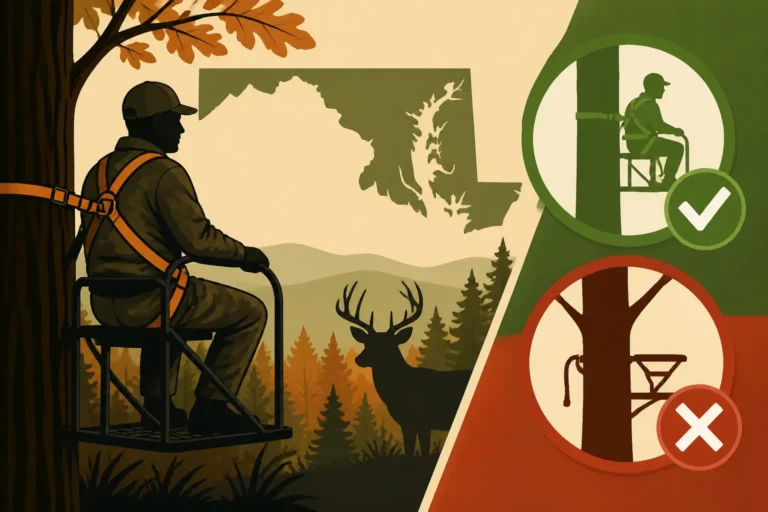
Once you've identified areas with good sign and potential travel corridors, the next step is strategically placing your stand or setting up a ground blind. In big timber, thermal currents and wind direction are your biggest adversaries and allies. Deer on Meadow Mountain are masters of using the terrain to their advantage, often bedding on leeward slopes or benches where they can smell danger below and see anything approaching from above. Your stand should ideally be placed to intercept deer moving along a ridge, crossing a saddle, or transitioning between different timber types. Consider how the wind will behave throughout the day – mountain winds can swirl unpredictably, especially in hollows and valleys. It's often better to hunt slightly below a ridge or saddle, letting your scent rise above the primary travel routes. Always have multiple stand locations planned based on different wind directions. For instance, if you're hunting a particular oak flat, you might have one stand for a prevailing northwest wind and another for a southeast wind, ensuring you can hunt that spot effectively without spooking game.
Still-Hunting and Driving Strategies
While stand hunting is popular, still-hunting can be incredibly effective in the expansive timber of Meadow Mountain, especially when conditions are right, like a light rain or a fresh snowfall to muffle your footsteps. The key to still-hunting is patience and deliberate movement. Take a few steps, then stop and glass thoroughly, looking not just for deer but for horizontal lines, flicking ears, or patches of color that don't belong. Focus on moving into the wind or with a crosswind, always being mindful of your scent. This method allows you to cover more ground and react to fresh sign as you encounter it. Still-Hunting Western Maryland Mountain Timber offers some excellent insights on this technique.
Alternatively, small-scale deer drives can be highly productive in sections of Meadow Mountain that are too thick to effectively stand hunt or still-hunt. This usually involves one or two "drivers" pushing through a thicket or bedding area towards standers positioned along natural escape routes, like the edge of a clear-cut, a bench, or a logging road. Communication is crucial for safety, and everyone needs to know their roles and boundaries. This isn't about running and yelling; it's about a slow, deliberate push designed to ease deer out of heavy cover.
Navigating the Terrain and Access Points
Meadow Mountain's rugged topography can be a challenge, but understanding how to navigate its hills, valleys, and designated access points is crucial for a successful and safe hunt.
Utilizing Forest Roads and Trails
The main arteries into Meadow Mountain's timber are often the network of forest roads and designated trails. While some roads are open to vehicle traffic, many are gated or restricted to foot traffic, mountain bikes, or horses beyond certain points. These gated roads are your friends. They allow you to get deeper into the woods away from road hunters and can serve as excellent avenues for quiet access or as places to push deer towards. Always check maps from the Maryland DNR or use a reliable mapping app like onX Hunt to identify these roads and understand their access restrictions. Parking areas can fill up quickly during peak season, so plan to arrive early or be prepared to walk a bit further. Remember, many hunters will only go a quarter-mile from their truck; the deeper you go, the less pressure you'll likely encounter. Hunting a Gated Forest Road Beyond the Lot provides more insights into using these pathways.
Conquering Elevation Changes and Topographical Features
Meadow Mountain is, well, a mountain! You're going to deal with elevation changes. Learning to use these features to your advantage, and how to safely navigate them, is part of the game.
- Ridges: These are prime travel corridors, especially during the rut. Bucks will often cruise ridges looking for does or checking for rivals. They also offer elevated vantage points for glassing.
- Saddles: A saddle is a low point on a ridge line, often forming a natural funnel where deer cross from one side of the mountain to the other. These are fantastic ambush points.
- Benches: These are flat or gently sloping areas on a hillside. Deer love to bed on benches, especially if there's good cover, as they offer both security and thermal advantages. Look for benches that connect two different elevation levels or lead into dense cover.
- Hollows/Drainages: These low-lying areas often contain water sources and provide cover, especially in thick timber. Deer will use these to move undetected between slopes.
Always carry a compass and a detailed topographical map (digital or paper, or both!). Know how to read contour lines to understand the steepness and direction of slopes. Going light with a daypack but packing enough water, snacks, and emergency gear is essential. Wind and Thermals in Western Maryland Terrain is a great resource for understanding how these features influence air currents and scent.
Respecting Boundaries and Public Land Ethics
Meadow Mountain State Forest is public land, but it often borders private property. It is absolutely vital to know where those lines are drawn. Use a GPS unit or a mapping app like GoHunt or onX Hunt that shows property boundaries. Straying onto private land without permission is trespassing and can lead to serious consequences, not to mention giving all hunters a bad name. Before you head out, familiarize yourself with the area and if there are any designated safety zones around residences or campgrounds where hunting is prohibited. Always pack out everything you pack in, and if you see litter, consider picking it up. Leave no trace, and ensure the next hunter can enjoy the same pristine experience.
Here's a quick look at how different timber types on Meadow Mountain might influence your hunting approach:
| Timber Type | Primary Game Species | Key Characteristics | Hunting Strategy Considerations |
|---|---|---|---|
| Mature Oak Hardwood | Deer, Bear, Turkey | Abundant acorns, open understory, large trees | Focus on acorn crops; still-hunt slowly, listen for falling acorns; good visibility for stand placement |
| Young Hardwood/Brush | Deer, Rabbit | Dense cover, browse, often regenerating clear-cuts | Excellent bedding and browse; difficult to navigate; focus on edges, funnels, and natural openings |
| Pine/Hemlock Stands | Deer, Bear, Squirrel | Dense thermal cover, often dark and quiet, needle beds | Prime bedding areas in cold weather; hunt edges and transitions; good for still-hunting in quiet conditions |
| Mixed Hardwood/Conifer | All | Diverse food/cover, transitions between types | Often highly productive; focus on where types meet; look for travel corridors through varied cover |
Essential Gear and Safety Considerations for Meadow Mountain
Hunting in mountainous timber demands specific gear and a strong emphasis on safety. Being prepared for anything will not only make your hunt more comfortable but could also be life-saving.
Footwear and Clothing for Mountain Terrain
Your feet are your most important asset when navigating Meadow Mountain. Invest in high-quality, waterproof hunting boots with excellent ankle support and aggressive traction. You'll be traversing steep, uneven terrain, wet leaves, and potentially rocky ground, so cushioning and stability are non-negotiable. Break them in well before your hunt!
Layering is also critical. Western Maryland weather can change rapidly, with cold mornings giving way to warm afternoons, or a sudden rain shower blowing in. Start with a moisture-wicking base layer, add insulating layers (fleece or down), and top it off with a waterproof and windproof outer shell. Bring a spare pair of socks, even if you think your boots are invincible. What to Pack for a Maryland Mountain Hunt will give you a comprehensive list.
Don't forget your blaze orange! Maryland requires specific amounts of visible blaze orange during certain hunting seasons, including firearms deer season. This isn't just a rule; it's a critical safety measure, especially on public land where other hunters are present. Always err on the side of more visibility. How Much Blaze Orange Maryland Requires can clarify the specific regulations.
Navigation and Communication Tools
In vast timber, getting disoriented is a real possibility, even for experienced hunters. A reliable GPS device or a robust smartphone mapping app (like onX Hunt or GoHunt) is absolutely essential. Download offline maps of the area before you lose cell service, which is common in many parts of Meadow Mountain. Familiarize yourself with how to mark waypoints for your truck, stand locations, and any significant sign you find.
Beyond GPS, always carry a physical compass and know how to use it. Batteries die, and electronics can fail. A whistle is also a small but critical piece of safety gear for signaling. Cell phone service can be spotty to non-existent in the deeper hollows and on certain slopes. Consider carrying a personal locator beacon (PLB) or satellite messenger for true emergencies, especially if hunting alone. Tell someone where you're going and when you expect to return.
Emergency Preparedness and First Aid
Accidents happen. A small, well-stocked first-aid kit is a must-have. Include items for cuts, blisters, sprains, and any personal medications. Beyond the first-aid kit, carry a few essentials:
- Water: More than you think you need. Dehydration can set in quickly on strenuous hikes.
- High-energy snacks: Nuts, jerky, energy bars.
- Headlamp or flashlight: Even if you plan to be out before dark, unexpected delays can occur.
- Fire starter: Waterproof matches, lighter, or a ferro rod.
- Knife: A good hunting knife is indispensable.
- Emergency blanket or bivy sack: For warmth if you get stuck overnight.
Familiarize yourself with basic wilderness first aid and know how to use your gear. Hunting big timber on Meadow Mountain is incredibly rewarding, but it demands respect for the terrain and a commitment to personal safety. Always hunt within your physical limits, especially if you're not accustomed to steep climbs and long walks.
Disclaimer
This article is for general informational purposes only and does not constitute professional advice. Laws, prices and regulations vary by location and change over time. Consult a qualified professional for guidance on your specific situation.