What a Guide Expects You to Shoot Well
It’s a common feeling, that knot in your stomach before a guided hunt: "Am I good enough? What if I miss?" You’ve invested time, money, and anticipation into this experience, and the last thing you want is to disappoint yourself or your guide. This comprehensive guide will walk you through what professional Maryland hunting guides truly expect from your shooting abilities and how you can prepare to confidently hit your mark when the moment of truth arrives.
The Unspoken Standard: Why Your Shooting Prowess Matters on a Guided Maryland Hunt
When you book a guided hunt in Maryland, whether it's for waterfowl on the Eastern Shore or deer in the western mountains, you’re entering into a partnership. Your guide isn't just there to show you where the game is; they're investing their knowledge, their scouting, and their equipment into your success. Your shooting ability directly impacts not just your experience, but their livelihood and reputation.
Ethical Imperatives and Respect for the Game
No ethical hunter wants to wound an animal without recovering it. This is perhaps the most fundamental reason why shooting proficiency is so critical on a guided hunt. Guides are passionate conservationists and want clean, quick kills. When a hunter takes a questionable shot and wounds an animal, it creates a stressful situation for everyone involved. The guide feels the pressure to track and recover that animal, often spending hours or even days on a difficult trail, sometimes without success. This reflects poorly on the hunter, and by extension, on the guide’s operation.
Imagine you're deep in a Dorchester County marsh, hunting Sika deer, and you take a shot that isn't quite right. Tracking a Sika Stag Into Thick Marsh Grass is an entirely different beast than trailing a whitetail in hardwoods. The dense phragmites and boggy ground make recovery incredibly challenging, and a wounded animal could suffer unnecessarily. A guide wants to see you make an ethical shot that ensures a swift harvest, respecting the animal and the privilege of hunting.
Maximizing Your Financial and Experiential Investment
Let’s be honest, guided hunts are an investment. You're paying for expertise, access to prime hunting ground, specialized equipment, and years of accumulated knowledge. Missing opportunities due to poor shooting is like leaving money on the table. You want to walk away feeling like you got your money’s worth, and that means putting an animal in the truck or ducks in the bag. Guides understand that not everyone is a crack shot, but they expect you to have practiced enough to be confident within reasonable ranges.
Think about a Maryland Goose Hunt Prices Per Gun outing on a cut cornfield near Chestertown. You're set up in layout blinds, decoys spread perfectly, and a flock of Canada geese commit, cupping their wings right in front of you. This is the moment you paid for! If you hesitate, flinch, or simply miss repeatedly, that incredible experience is diminished. A good guide wants you to connect, to feel the thrill of a successful hunt. They've done their part to put you in position; they need you to do yours when the birds are in range. This is where understanding what your chosen guide offers, perhaps through platforms like BookYourHunt, can help you align your expectations with their typical success rates for hunters of various skill levels.
Upholding Safety and the Guide's Reputation
Safety is paramount in any hunting scenario, but especially so on a guided trip where you're often with people you don't know well. A guide needs to trust that you can handle your firearm safely and that you understand your limitations. This isn't just about hitting the target, but about knowing when not to shoot. Taking risky shots that could endanger others, unleash an unsafe projectile trajectory, or simply wound an animal out of frustration is a guide's worst nightmare.
Guides also rely heavily on word-of-mouth and positive reviews. If a client consistently misses easy shots or, worse, takes unsafe shots, it impacts the guide's reputation and their ability to attract future clients. They want you to succeed, but more importantly, they want everyone to be safe and to operate ethically. Being able to safely handle your weapon, identify your target, and make a clean shot is a basic expectation that contributes to a smooth, enjoyable, and safe hunt for everyone in the party.
Tailored Expectations: What Guides Look For With Specific Maryland Species
Different game animals and hunting methods demand different shooting skills. A guide's expectations will naturally shift depending on what you're pursuing in Maryland.
Waterfowl Hunting: Mastering the Moving Target
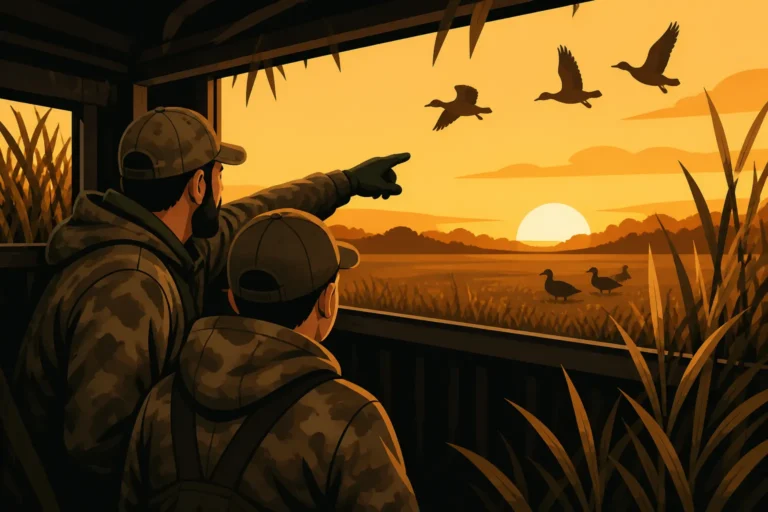
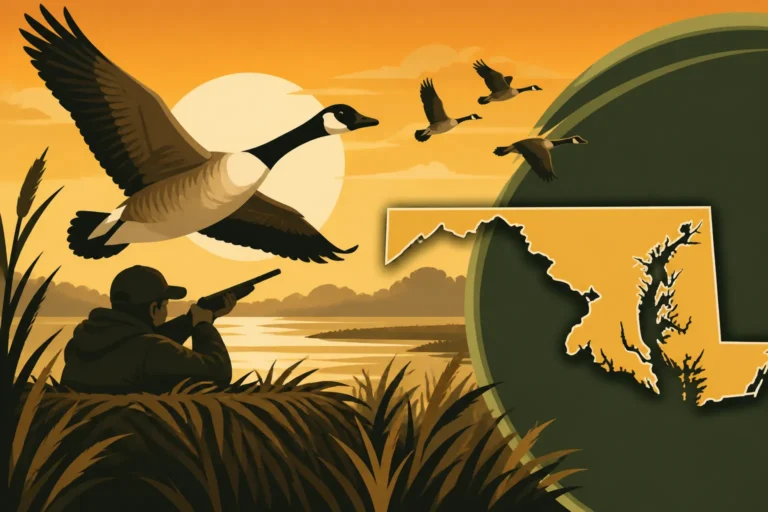
Waterfowl hunting is all about instinctive shooting and understanding lead. You're rarely shooting at a static target, and the birds are often moving at high speeds. Maryland’s Chesapeake Bay is famous for its duck and goose hunting, from Decoying Divers on Maryland's Open Bay to Layout Hunting Canada Geese on the Upper Shore. In these scenarios, guides expect you to:
- Lead Properly: This is the big one. Ducks and geese are fast, and you need to swing through them and fire where they will be, not where they are. Guides often call out lead instructions ("swing wide," "hold on his beak"), and they expect you to understand and apply them. Practicing your lead is critical, often by shooting clays or patterning your shotgun.
- Mount and Swing Smoothly: A jerky gun mount or stop-and-start swing leads to misses. Guides look for hunters who can fluidly bring the gun to their shoulder, track the bird, and maintain their swing after the shot.
- Know Your Effective Range: Just because a duck is flying overhead doesn't mean it's in range. Guides will typically instruct you on when to shoot, but they also expect you to know the capabilities of your shotgun and ammunition. Shooting at birds beyond 40-50 yards often leads to wounded birds, which is exactly what a guide wants to avoid. Don't be "sky-busting."
- Quick Target Acquisition: In a fast-paced scenario like a duck blind, birds often appear quickly. You need to be able to identify your target (e.g., distinguishing a legal mallard from a protected swan) and get on it rapidly.
If you're looking into booking a duck or goose hunt, browsing guide services on platforms like BookYourHunt or GoHunt often includes details on what kind of shooting experience they prefer or expect from their clients.
Deer and Sika Hunting: Precision in the Moment of Truth
Deer and Sika hunting in Maryland, particularly with a rifle or muzzleloader, is less about speed and more about precision. Whether you're hunting White-Tailed Deer in Maryland in a Western Maryland clear-cut or trying to spot-and-stalk Sika Deer Hunting in Maryland's Tidal Marshes, guides expect you to:
- Hit a Specific Kill Zone: Unlike a shotgun blast for birds, deer and Sika require a precise shot to the heart-lung area for a quick, ethical kill. A guide wants to see you calmly place that shot, aiming for a vital area, not just "at the deer."
- Hold Steady and Execute: Many deer shots come after a period of high adrenaline and excitement. Guides expect you to manage that excitement, control your breathing, and execute a steady shot from whatever position the situation demands – whether it's off a shooting stick, a tree stand rail, or even freehand.
- Know Your Rifle's Zero and Capabilities: You should arrive knowing your rifle is sighted in and understand its trajectory at various distances. If a guide tells you the deer is at 150 yards, you need to know how your rifle performs at that range. This means practicing at different distances, not just 100 yards from a bench rest.
- Patience and Discernment: A guide will appreciate a hunter who is patient enough to wait for the perfect broadside shot, rather than rushing a poor angle. This is especially true for Sika Deer Hunting in Maryland's Tidal Marshes where a clean shot can be hard to come by in dense cover. If you’re hunting in a county with specific antler restrictions, such as Maryland's Three-Point Antler Restriction, your guide will also expect you to accurately count points before pulling the trigger.
Wild Turkey Hunting: The Delicate Headshot
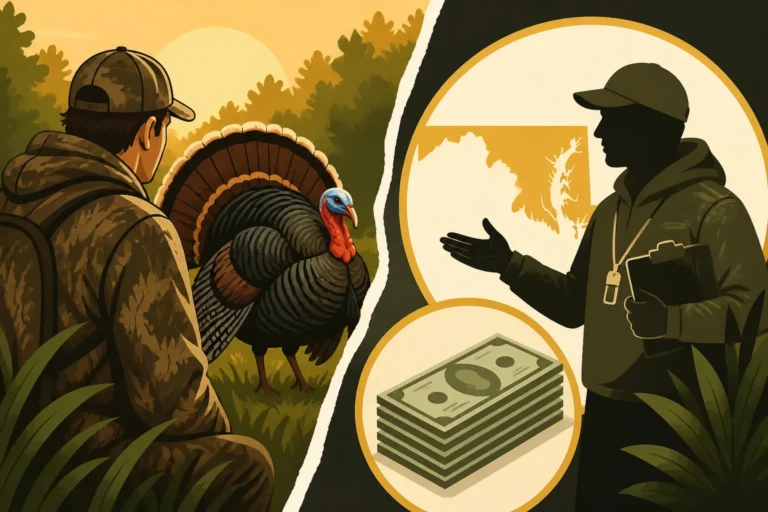
Turkey hunting, particularly in spring, requires a unique blend of patience, precise calling, and ultimately, a very specific shot. Maryland's Spring Turkey Hunting in Maryland offers thrilling close-range encounters, and your guide will expect you to:
- Aim for the Head and Neck: Unlike deer, the kill zone for a turkey is small and specific: the head and upper neck. Guides expect you to wait for the turkey to present its head clearly and take a clean shot, usually within 40 yards with a shotgun. A body shot often results in a wounded bird or a prolonged chase.
- Remain Still and Patient: Turkeys have incredible eyesight. Your guide will have worked hard to call that gobbler into range, and they expect you to remain absolutely still and quiet until the shot is called or presented. Fidgeting or moving too soon can spook the bird, ruining the setup.
- Control Your Excitement: Hearing a gobbler thunder at close range is exhilarating, but guides expect you to keep your composure. This means waiting for the opportune moment, taking a deep breath, and making that precise shot when the time is right. Setting Up Against a Big Oak for Turkeys requires stillness and focus, sometimes for extended periods.
Pre-Hunt Preparation: Sharpening Your Skills for Maryland Success
So, you’ve booked your hunt, maybe through a service like GoHunt, and you know what’s expected. Now what? The key is consistent, focused practice that goes beyond just sending lead downrange.
Beyond the Bench: Realistic Range Practice
While sighting in your rifle from a bench rest is essential, it rarely simulates real-world hunting conditions. To truly prepare for a guided Maryland hunt, you need to practice in ways that mimic what you might encounter in the field:
- Shoot from Various Positions: Practice shooting standing, kneeling, sitting, and prone. If you’ll be hunting from a ground blind or tree stand, practice shooting from those elevated or confined positions. This builds muscle memory and confidence. For shotgunners, get out and shoot clays (skeet, trap, or sporting clays) as much as possible. This is the absolute best way to practice leading moving targets.
- Practice with Your Hunting Gear: Wear your hunting clothes, use the same backpack, and shoot with the same optics you'll use in the field. This helps you get comfortable with the feel of your setup. If you plan on Rattling Antlers on an Eastern Shore Farm or using a call, practice those actions while also getting into shooting position.
- Simulate Adrenaline: It sounds silly, but try doing a few jumping jacks or running in place before taking a shot at the range. This raises your heart rate and breathing, simulating the adrenaline rush of a live animal encounter. It helps you practice controlling your breath and steadying your aim under pressure.
- Shoot Under Time Pressure: Practice acquiring your target and taking a shot within a realistic timeframe. Hunting opportunities often come and go quickly.
Understanding Your Gear: Firearms, Ammo, and Chokes
A guide expects you to be intimately familiar with your personal hunting equipment. This means more than just knowing how to load and unload it.
- Zero Your Rifle Accurately: This is non-negotiable. Your rifle needs to be sighted in for your chosen hunting ammunition. Practice shooting at different ranges (e.g., 50, 100, 200 yards) to understand your bullet's trajectory.
- Pattern Your Shotgun: For waterfowl and turkey, you absolutely must pattern your shotgun with your chosen hunting load and choke tube. This tells you how dense your pellet pattern is at various distances, revealing your maximum effective range. Don't assume. Many hunters are surprised to learn their shotgun doesn't pattern well with their preferred load or choke.
- Choose Appropriate Ammunition: Make sure you're using ammunition suitable for the game you're pursuing. For deer, use expanding bullets designed for clean kills. For waterfowl, use non-toxic shot like steel, bismuth, or tungsten, and choose shot size appropriate for ducks versus geese.
- Optics Check: Ensure your scope or red dot sight is clear, focused, and securely mounted. Practice quickly acquiring your target through your optics.
The Mental Game: Confidence Under Pressure
Hunting is as much a mental game as it is a physical one. Guides want to see a confident hunter, not one riddled with self-doubt.
- Visualization: Before your hunt, spend time visualizing successful scenarios. See yourself making a clean, ethical shot. This builds mental confidence.
- Breath Control: Practice controlled breathing techniques. When an animal appears, taking a deep breath and slowly exhaling can calm your nerves and steady your aim.
- Focus on the Process: Instead of focusing on the outcome (making the kill), focus on the steps of the shot process: steady hold, sight picture, breath control, smooth trigger squeeze.
- Don't Overthink It: Once you've practiced, trust your instincts and training. Sometimes, the best shot is the one you don't overanalyze. Guides understand that sometimes things don't go perfectly, but they want to see you make an honest effort. If you are exploring guides, GoHunt is a fantastic resource for reviews that often touch on how guides handle various skill levels, giving you insight into their approach.
Open Communication: Partnering With Your Guide for a Successful Trip
The best guided hunts are built on good communication. Your guide isn't a mind-reader, and being open about your abilities and needs will lead to a much more enjoyable and productive experience.
Honesty About Your Abilities
Don't exaggerate your shooting skills when talking to a prospective guide or when booking your trip. If you're new to a particular type of hunting or have limitations, be upfront. A good guide will appreciate your honesty and can tailor the hunt to your abilities, setting realistic expectations for both of you. For example, if you know you struggle with anything beyond 100 yards with a rifle, tell them. They can try to position you for closer shots or work with you on a strategy that plays to your strengths.
This honesty also helps when considering something like a Maryland Guided Bear Hunt Costs. Bear hunts can involve very specific shot opportunities, and if you’re not confident in tight timber shots, your guide needs to know that. They might adjust their approach to put you in a more comfortable scenario, within reason.
Asking for In-Field Guidance
Guides are there to help you succeed. Don't be afraid to ask for tips or clarification during the hunt. If you're unsure about the lead on a crossing duck, or where the precise kill zone is on a Sika deer from a quartering-away angle, ask! A good guide will gladly offer advice. They want you to make the shot as much as you do.
For example, when you're Hunting a Chesapeake Bay Blind at First Light, and the birds are working, a guide might tell you to "take the second bird on the left." If you're unsure if that bird is in range or which one specifically, ask immediately before raising your gun. Clear communication prevents mishaps and missed opportunities.
Knowing When to Pass on a Shot
This might be the most important expectation of all. A truly ethical hunter, and one respected by a guide, knows when to pass on a shot. If the animal isn't presenting an ethical shot, if it's too far, or if you simply don't feel confident, it's always better to let it walk. Your guide will respect that decision far more than a rushed shot that wounds an animal or results in a miss.
There's no shame in saying, "I just don't have a good angle," or "That's a bit too far for me." Guides often have multiple opportunities throughout the day or trip. They would much rather wait for a better shot than deal with the fallout of a bad one. This shows maturity and respect for the game and the guide's efforts. The ability to pass on a shot is a hallmark of a skilled and responsible hunter.
| Game Type | Key Shooting Skill Expected | Typical Shot Distance (Approx.) | Practice Focus | Guide's Priority |
|---|---|---|---|---|
| Waterfowl | Leading moving targets, smooth swing | 20-40 yards | Clay shooting, quick target acquisition | Clean kill, ethical range |
| White-tailed Deer | Precision shot placement, steady hold | 50-200 yards (rifle) / 20-50 (bow) | Field positions, calm trigger squeeze | Ethical kill zone, patience |
| Sika Deer | Precision shot placement in dense cover | 50-150 yards | Field positions, quick target identification | Ethical kill zone, shot opportunity |
| Wild Turkey | Head/neck shot, extreme stillness | 20-40 yards | Patterning shotgun, mental composure | Headshot only, no body shots |
| Small Game | Fast, accurate snap shots (squirrels, rabbits) | 10-30 yards (shotgun) | Moving targets, quick reflexes | Clean kill, target identification |
This article is for general informational purposes only and does not constitute professional advice. Laws, prices and regulations vary by location and change over time. Consult a qualified professional for guidance on your specific situation.