Coyote Calling in Maryland Farm Country
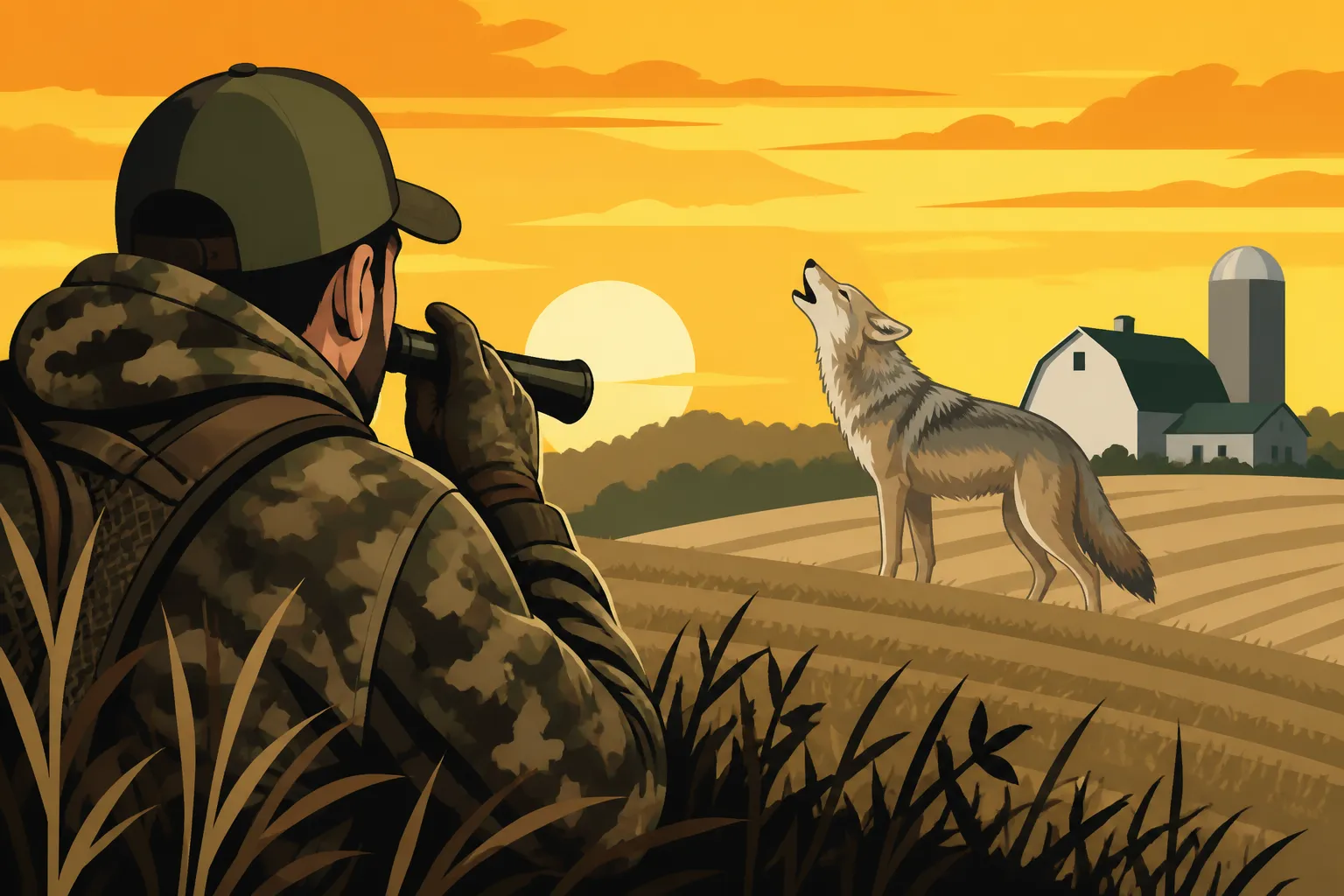
If you've spent any time in Maryland's beautiful farm country, you've likely seen them or, more often, heard them – the distinct, sometimes eerie, calls of coyotes echoing across the fields. These clever canids have become an undeniable presence, and for many landowners and hunters, their rising numbers present a real challenge, impacting local wildlife and sometimes even livestock. This guide is here to walk you through the ins and outs of coyote calling in Maryland's agricultural landscapes, helping you understand their behavior, choose the right gear, and implement effective strategies to manage their populations.
Understanding Maryland's Coyote Landscape
Coyotes weren't always a common sight in Maryland, but their presence has grown significantly over the last few decades. If you've noticed an increase in their activity, you're not imagining things. Understanding their history and preferred habitats in our state's farm country is the first step to successfully calling them in.
The Rise of Coyotes in Maryland
For a long time, Maryland was primarily a state for white-tailed deer, turkeys, and waterfowl, with few native large predators beyond bobcats in the western mountains. But starting in the latter half of the 20th century, coyotes began to expand their range eastward, naturally migrating from their strongholds in the western and midwestern states. They’re incredibly adaptable animals, capable of thriving in diverse environments, from arid deserts to dense forests and, yes, right here in the mix of farmlands and suburban fringes that define so much of Maryland. This natural dispersal, combined with their rapid breeding rates and generalist diet, allowed them to establish a firm foothold across nearly every county in Maryland.
Many farmers and deer hunters have felt the impact of this expansion firsthand. Coyotes are opportunistic predators, and while they primarily target small mammals like rabbits and rodents, they won't pass up an easy meal like a young fawn, a sick or injured adult deer, or even domestic livestock if the opportunity arises. This can be particularly frustrating for those trying to manage a healthy deer population or protect their cattle and poultry. Their presence can also put additional pressure on other ground-nesting birds and small game species, contributing to the complex ecological web we have here. If you’re interested in the broader picture, we've got an article that delves deeper into What Maryland Coyotes Actually Eat, which can give you some valuable insights into their behavior.
Coyote Habitat in Maryland Farm Country
When you picture "farm country" in Maryland, you're likely envisioning a patchwork of open fields, woodlots, hedgerows, and meandering creek bottoms. This mosaic landscape is absolutely prime real estate for coyotes, offering them everything they need to thrive. The large agricultural fields provide an abundant buffet of mice, voles, and rabbits, especially after crops have been harvested and these small critters are more exposed. The edges of these fields, where crops meet timber or thick brush, act as natural travel corridors and prime ambush points.
Beyond the open fields, the scattered woodlots and dense hedgerows that crisscross Maryland's farms offer crucial cover for coyotes. They'll use these areas for bedding down during the day, raising pups, and staging their hunts. A thick fencerow can hide a coyote perfectly as it stalks prey along a field edge, making them incredibly difficult to spot until they're right on top of you. Additionally, creek bottoms and drainages provide vital water sources, but also offer consistent travel routes and often denser cover, allowing coyotes to move undetected across larger expanses. Learning to "read" these landscape features like a seasoned tracker is key to successful coyote calling, helping you anticipate where they'll be and how they'll approach. You might find similar dynamics when Rabbit Hunting Maryland Farm Hedgerows, as rabbits often share these same escape routes and food sources.
Essential Gear for Coyote Calling
Alright, now that we've talked about where these wily critters hang out, let's get down to the brass tacks: what do you actually need to bring with you? Coyote calling isn't just about making noise; it's about being prepared with the right tools to bring them in close and make a clean, ethical shot. The gear you choose can make a significant difference between a successful outing and a frustrating silence.
Firearm and Ammunition Choices
When it comes to putting down a coyote, you want something that's accurate, offers good range, and has enough knockdown power to ensure a quick, humane kill. For Maryland farm country, where shots can sometimes stretch across open fields, a flat-shooting rifle is often the go-to choice. Common calibers like the .223 Remington, .243 Winchester, or .22-250 Remington are incredibly popular for a reason. They offer excellent ballistic performance, allowing for precise shot placement on a relatively small, fast-moving target even at extended distances. The .223 is probably one of the most versatile, readily available, and affordable options, and it’s effective out to several hundred yards with the right bullet. For those wanting a bit more punch for slightly longer shots or windier conditions, the .243 offers a bit more energy.
However, rifles aren't always the best choice, especially if you're hunting in thick brush, smaller woodlots, or areas where you anticipate closer engagements. In such scenarios, a shotgun loaded with buckshot can be surprisingly effective. A 12-gauge with 3-inch shells of #4 buckshot or even larger (like 00 buck) creates a dense pattern that's devastating at 40 yards or less. This is particularly useful in areas with limited visibility or where you might be Hunting a Suburban Woodlot in Montgomery County and need to keep shot distance tight. Just make sure you understand your shotgun's effective range with your chosen load by patterning it beforehand. It's also critical to choose ammunition designed for predators, usually a rapidly expanding bullet for rifles, to ensure maximum energy transfer and a quick dispatch.
Calls, Optics, and Camouflage
Beyond your firearm, your calling setup is where the magic happens. You essentially have two main categories of calls: mouth calls and electronic calls. Mouth calls, such as howler diaphragms, distress whistles, or open-reed calls, are fantastic for their versatility, portability, and the ability to finely tune the sound. They require practice, but a skilled caller can imitate a huge range of prey animals and coyote vocalizations, adding a realism that can be hard to beat. They're also relatively inexpensive and don't rely on batteries, making them reliable in any conditions.
Electronic calls, on the other hand, offer convenience and a vast library of high-fidelity sounds. Brands like Foxpro or Primos Alpha Dogg are often favorites among serious predator hunters. They allow you to switch instantly between different distress sounds, pup howls, or challenge barks with the push of a button, often from a distance using a remote control. This can be a huge advantage, letting you position the sound away from your setup, drawing the coyote's attention to the call rather than to you. GoHunt is a fantastic resource if you're looking to research and compare different electronic call models or even find mouth calls and other essential gear.
| Feature | Mouth Calls | Electronic Calls |
|---|---|---|
| Cost | Low (typically $10-$50) | High (typically $100-$800+) |
| Sound Quality | Can be highly realistic with practice | High fidelity, wide range of sounds |
| Versatility | Excellent, relies on user skill | Extensive sound library, remote control |
| Portability | Very high, lightweight, fits in pocket | Moderate, heavier, battery-dependent |
| Learning Curve | High, requires practice | Low, easy to use |
| Battery Life | N/A (no batteries) | Dependent on model, can be an issue in cold |
| Range | Limited by how loud you can blow | Can broadcast sounds over long distances |
| Concealment | Easy to use from a concealed position | Remote placement keeps attention off hunter |
No matter what call you use, good optics are non-negotiable. Quality binoculars (8×42 or 10×42) are essential for scanning the edges of fields and thickets, picking up subtle movements, and identifying your target before it commits. A good rifle scope with sufficient magnification (e.g., 3-9x or 4-12x) will ensure you can make a precise shot once the coyote appears. Finally, camouflage is paramount. Coyotes have excellent eyesight, and in the open landscapes of Maryland's farm country, you need to blend in perfectly. Full camo, including face masks and gloves, is a must. Break up your outline against a natural backdrop, whether that's a tree line, a hay bale, or a brush pile.
Mastering Coyote Calling Techniques
Bringing in a wary coyote is a true art form, requiring a blend of mimicking sounds, understanding animal behavior, and a good dose of patience. It’s not just about blowing on a call; it’s about telling a convincing story to a predator that's naturally skeptical and constantly on alert.
Types of Calls and When to Use Them
The bread and butter of most coyote calling endeavors are prey distress calls. Think rabbit in panic, a fawn bleating for its mother, or a bird squawking as it's caught. These sounds tap into a coyote's most basic instinct: finding an easy meal. Rabbit distress calls, like those mimicking a jackrabbit or cottontail, are consistently effective throughout the year, especially when coyotes are hungry. A variety of these sounds, often found on electronic callers, can keep a coyote guessing. Fawn distress calls, on the other hand, are particularly potent during spring and early summer when fawns are prevalent, but can also work later in the year as coyotes remember those easy meals. Imagine a lone fawn, vulnerable and crying out – that's a siren song for a hungry coyote. You might even find coyotes attracted to areas where deer are present, such as a Standing Corn Field Edge for Deer, as they know fawns might be nearby.
Beyond distress, howling and challenge calls play a critical role, especially when you're trying to locate coyotes or tap into their territorial instincts. A lone howl can elicit a response from other coyotes, letting you pinpoint their general location. Group howls can simulate a pack, potentially drawing in curious or territorial coyotes looking to either join or challenge the intruders. Challenge barks, often aggressive and short, are used to trigger a confrontation, especially with dominant males. These are best used when you suspect a coyote is close but hesitant, or when you’re responding to their own howls. Finally, don't underestimate pup distress calls. These high-pitched yelps can be incredibly effective during the late spring and summer months when coyotes are actively raising their young. An adult coyote, especially a female, will often charge in to investigate a distressed pup, making for a thrilling, fast-paced encounter.
Setting Up Your Calling Stand
Your setup is just as crucial as your calling technique. You can make the most convincing sounds in the world, but if your setup gives you away, it's all for naught. The golden rule is always to play the wind. Coyotes have an incredible sense of smell, and they will almost always try to circle downwind to scent-check the source of the sound. Position yourself so the prevailing wind blows from your target area to you, or ideally, quartering away. This way, if a coyote tries to circle, it'll have to expose itself or hit your scent cone before it gets a full bead on your location.
Visibility is also paramount, especially in open farm fields. You want to be able to see the coyote as it approaches from as far away as possible, giving you time to prepare for the shot. Look for natural high points, field edges, or even slightly elevated ditch banks that offer a panoramic view. However, never sacrifice back cover for visibility. Your silhouette against the sky is a dead giveaway. Use dense brush, a large tree, a hay bale, or even the edge of a standing crop field to break up your outline and keep you concealed. If you’re utilizing an electronic call, placing it 50-100 yards out in front of you, slightly to one side of your anticipated approach vector, can draw the coyote's attention away from your actual position.
Finally, think about your entry and exit routes. Just like deer, coyotes are incredibly aware of human presence. Try to approach your calling location quietly, using natural terrain features like ditches, fencerows, or field edges to stay out of sight. Avoid walking directly across open fields. The same goes for your exit; once you’re done calling, retreat stealthily to avoid leaving a lingering scent or silhouette that could educate local coyotes for future hunts. Sometimes, the most effective calling sequence is also the shortest, especially if you get an immediate response. Being patient and still is key once you start calling. If you're really looking for prime spots, a focused session of Coyote Calling Maryland Farm Fields at First Light can often yield results, as coyotes are actively hunting at dawn.
Timing and Strategy in Maryland Farm Fields
Calling coyotes isn't a "one size fits all" endeavor. Their behavior, responsiveness, and travel patterns change based on the time of day, the season, and even how much hunting pressure they've experienced. Adapting your timing and strategy to these variables is essential for consistent success in Maryland's diverse farm country.
Best Times to Call Coyotes
While coyotes can technically be called at any time of day, there are certainly periods when your odds are significantly higher. Early morning and late evening are often considered prime time. Just like many other predators, coyotes are most active during the low-light hours of dawn and dusk. This is when they're typically on the move, hunting, and most receptive to calls. Setting up well before first light, or staying until last light, can put you right in the window when coyotes are naturally searching for a meal or communicating with their pack. The stillness of these times also allows your calls to carry further and sounds more natural.
However, don't write off midday hunts, especially during the colder months or on overcast days. During winter, coyotes often need to hunt more frequently to maintain their energy levels, making them susceptible to distress calls even in the middle of the day. A cold front moving through, especially after a period of mild weather, can also trigger increased activity. Overcast conditions reduce visibility, making coyotes feel a bit bolder about moving during daylight hours. A good strategy is to hit multiple spots throughout the day, moving from field edge to field edge, and covering ground. You might also find success after a fresh snowfall, as the quiet conditions and visible tracks can make it easier to locate areas of activity and allow your calls to carry further. Sometimes, just as deer move into certain areas after a cold snap, coyotes will too, seeking out new food sources.
Adapting to Pressure and Terrain
One of the biggest challenges in coyote calling, especially in areas with consistent hunting activity, is dealing with call-shy coyotes. These are animals that have heard calls before, perhaps even been shot at, and have learned to associate those sounds with danger. For these educated coyotes, you'll need to be extra subtle and strategic. Instead of blaring a loud rabbit distress call, start with very soft, intermittent sounds, letting the coyote's curiosity slowly build. Varying your calls, using different types of distress, or incorporating more subtle howls can sometimes break through their wariness. Less is often more with pressured coyotes; a few convincing chirps can be more effective than a lengthy, repetitive sequence. You might also want to try calling from less obvious locations, deeper in the timber adjacent to fields, or from spots that offer different wind advantage points.
Maryland's farm country presents a variety of terrain features that require adaptation. Large, open fields demand longer-range visibility and often a more patient setup, watching for coyotes to emerge from distant woodlots. Here, electronic calls with powerful speakers shine, projecting sound across vast distances. In contrast, smaller woodlots, dense hedgerows, and creek bottoms require a different approach. Here, shorter calling sequences, more aggressive sounds, and careful attention to scent control become paramount. Shots will likely be closer, making shotguns or even crossbows a viable option in some areas. Consider how a coyote would naturally travel through a particular funnel or along a fencerow, and position yourself to intercept them. This might mean setting up where a Scrape Lines Along a Maryland Field Edge would attract deer, knowing that coyotes often patrol these same lines looking for easy prey or carcasses. If you’ve got permission to hunt private ground, that's often where you can find less pressured animals. Learning to navigate access to these areas is key, and an article on Knocking on Doors in Maryland Farm Country can offer some great tips.
Safety and Ethics in Coyote Calling
As with any form of hunting, safety should always be your number one priority when coyote calling in Maryland farm country. Ethical considerations also play a crucial role in maintaining a positive public image for hunters and ensuring responsible wildlife management. Hunting coyotes often happens at dawn, dusk, or even at night in certain legal scenarios, which adds layers of challenges to safe practices.
Identifying Your Target and Backstop
When you're out in the field, especially in low light conditions common for coyote hunting, positive identification of your target is absolutely non-negotiable. Coyotes can sometimes be confused with domestic dogs, especially at a distance or in fleeting glimpses. Always use your binoculars or rifle scope (safely, without pointing your firearm) to confirm beyond a shadow of a doubt that what you're seeing is indeed a coyote. Look for the distinct gait, brushy tail, pointed ears, and typical coloration. If there's any doubt, do not shoot. This rule is even more critical in Maryland's farm country, where homes, outbuildings, and domestic animals are often present.
Equally important is knowing your backstop. This means understanding exactly what lies beyond your target before you pull the trigger. In open farm fields, a bullet can travel for a mile or more. You need to be acutely aware of farmhouses, barns, roads, other hunters, or livestock that might be in the line of fire far beyond where your target coyote stands. Always shoot into a safe backstop, such as a hillside, a thick tree line, or the ground itself. Never shoot at an animal silhouetted on a ridge, or if you can't clearly identify what's behind it. The consequences of an errant shot are severe and entirely preventable with careful attention to your surroundings.
Respecting Landowners and Wildlife
Successful coyote calling in Maryland often hinges on gaining access to private land. This means always obtaining explicit permission from landowners before setting foot on their property. Trespassing is not only illegal but also damages the reputation of all hunters. A simple conversation can often secure access, especially if you explain your intent to help manage coyote populations that might be preying on deer or livestock. Be respectful of their property, follow any specific rules they might have, and always leave the area cleaner than you found it. A little courtesy goes a long way in building goodwill and securing future hunting opportunities. If you're wondering about the legalities, our guide on Maryland Trespass and Permission Law outlines what you need to know.
While managing coyote populations is often the goal, it's also important to understand their role in the ecosystem and hunt them ethically. Coyotes are a natural part of the environment, and they do contribute to controlling rodent populations. Ethical hunting practices mean taking clean, humane shots and making every effort to recover any animal you shoot. This demonstrates respect for the animal and ensures that your actions are consistent with responsible wildlife management. Avoid unethical practices like "sky-busting" or taking shots beyond your effective range, which can lead to wounded animals and damage hunting's image. Many hunters, including those who pursue Small Game and Predator Hunting in Maryland, understand the importance of respecting the land and the animals they pursue.
Post-Hunt Considerations and Regulations
Once the call is over and the shot is taken, your responsibilities as a hunter aren't finished. There are crucial steps to take for tracking, recovery, and ensuring you're compliant with all of Maryland's hunting regulations for coyotes. This final stage is just as important as the hunt itself.
Tracking and Recovery of Coyotes
Unlike deer, coyotes are notoriously tough animals, and even a well-placed shot doesn't always result in an immediate drop. They often bolt and can travel a surprising distance, especially in the thick cover often found in Maryland farm country. If the coyote doesn't drop in its tracks, start your tracking process immediately. Mark the spot where the coyote was standing when you shot and the direction it ran. Look for signs like blood, disturbed earth, or broken vegetation. Coyotes can bleed sparingly, so you'll need to be meticulous.
In areas of tall grass, dense briars, or thickets, tracking can be particularly challenging. Take your time, get on your hands and knees if necessary, and look for any clues. If you lose the trail, it's often best to back out for a bit, give the coyote some time if you suspect it's fatally wounded, and then return with a fresh perspective or even a tracking dog if legal and available. The goal is always a swift and respectful recovery. Be prepared for the possibility of a follow-up shot if the animal is still alive when you locate it. And remember, sometimes the best time to track is to follow up on a shot the next morning, as a wounded animal may not travel as far once the initial adrenaline wears off.
Maryland Coyote Hunting Regulations
One of the great advantages of coyote hunting in Maryland is its relatively open season. Unlike many other game species, coyotes can generally be hunted year-round in Maryland, and there are no bag limits. This provides ample opportunity for predator control and enjoyment. However, it’s crucial to be aware of specific regulations regarding legal hunting hours, particularly if you plan to hunt at night, which is a common and often effective strategy for coyotes. While some states have strict prohibitions, Maryland does allow for nighttime hunting of coyotes, provided certain conditions are met, such as specific lighting restrictions and ensuring you're hunting within legal hours, typically from one half-hour before sunrise to one half-hour after sunset for most game, but with allowances for night hunting of certain predators. Always double-check the current Maryland DNR hunting guide for the most up-to-date and county-specific rules.
Furthermore, pay close attention to regulations concerning calling devices and artificial lights. Electronic calls are widely accepted for coyote hunting in Maryland and are a very popular tool. However, the use of artificial lights, such as spotlights or weapon-mounted lights, may have specific rules that vary by county or by whether you are on public or private land. Generally, you cannot hunt most game species with the aid of artificial light, but coyotes often fall into a different category due to their classification as a nuisance or pest animal. Always verify these details with the Maryland Department of Natural Resources (DNR) to avoid any misunderstandings or violations. Understanding the nuances of these rules is paramount, and an excellent resource for all the specifics is the comprehensive guide on Maryland Coyote Hunting Rules. Being informed ensures you're hunting legally and responsibly every time you step into the field.
Disclaimer
Please note: Hunting regulations and seasons can change. Always consult the most current Maryland Department of Natural Resources (DNR) hunting guide and local regulations before planning any hunting trip. This guide is for informational purposes only and does not constitute legal advice.