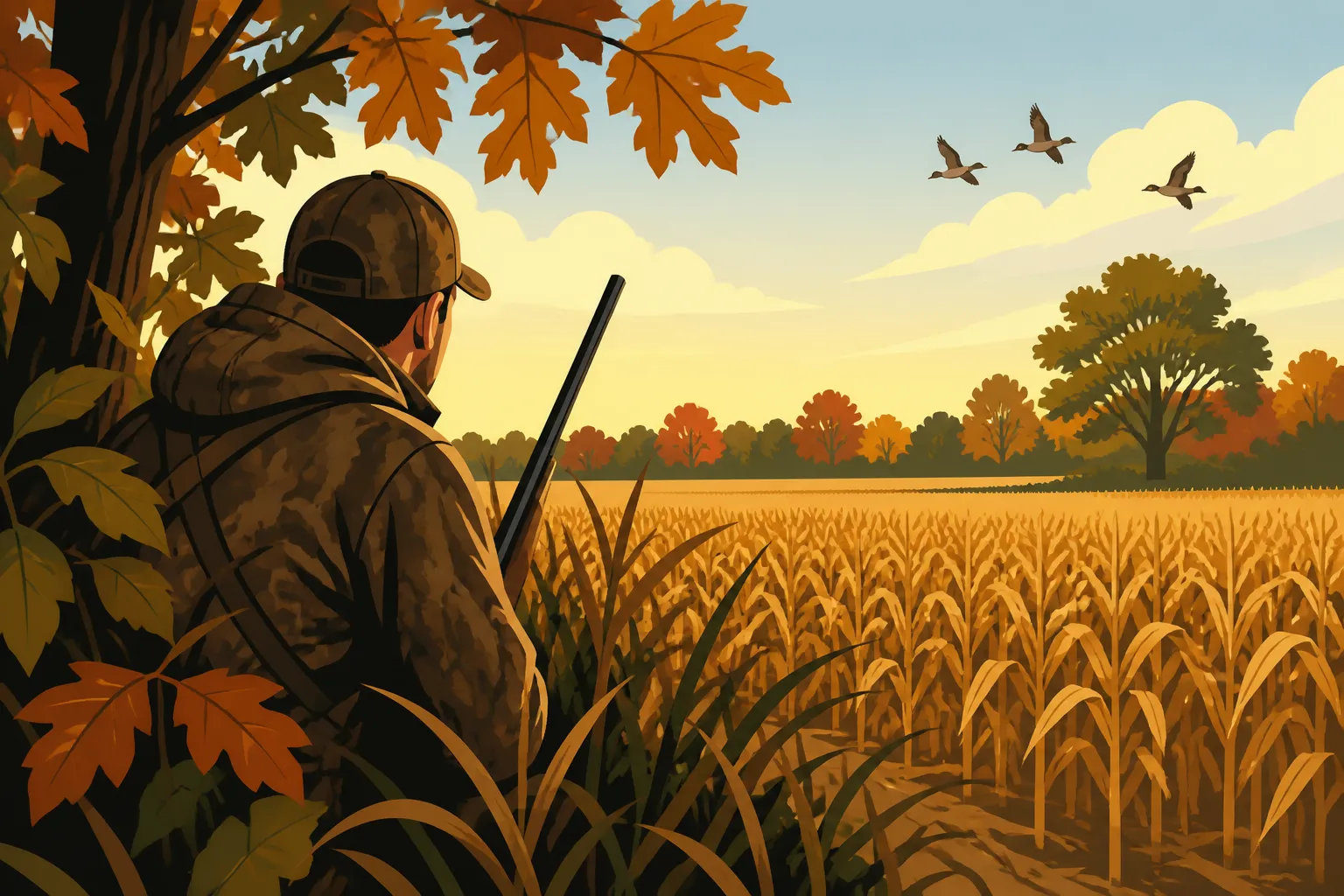
Setting Up on a Maryland Grain Field Edge
Many Maryland deer hunters find themselves staring at vast agricultural fields, wondering how to effectively hunt the edges where deer often appear, only to vanish into thick cover or disappear across open ground. It's a common frustration to see deer feeding in a distant field but never close enough for a shot, or to spook them on the way to your stand. This comprehensive guide will walk you through the precise strategies, scouting techniques, and stand placement tactics required to consistently harvest deer when setting up on a Maryland grain field edge, helping you capitalize on these prime locations throughout the hunting season.
Why Maryland Grain Field Edges Are Deer Magnets
Grain field edges in Maryland aren't just pretty scenery; they're bustling highways and dining rooms for deer, offering a perfect blend of food, cover, and travel routes. Understanding this inherent attraction is the first step to successfully hunting these vital areas.
The Allure of Abundant Food Sources
Deer, much like us, are constantly thinking about their next meal. Maryland's agricultural landscape provides an irresistible buffet of high-energy foods that sustain deer populations, especially through the colder months. Think about a sprawling cornfield in late summer or early fall, stalks tall and heavy with golden ears. Deer will frequently move from their bedding areas into these fields to browse on the green leaves, and later, to feast on the carbohydrate-rich kernels.
Soybean fields offer a similar draw, providing protein-packed forage throughout the growing season. Once beans begin to dry and turn yellow, deer will target them heavily, often moving into the fields well before dark. Even after these fields are harvested, residual grains scattered on the ground provide a crucial late-season food source when natural browse is scarce. This consistent availability of nutrient-dense food makes grain field edges a prime location for deer activity, attracting animals from surrounding timber and thickets.
Natural Travel Corridors and Edge Cover
Beyond just food, the edges of grain fields act as critical transition zones, offering deer a sense of security while they move between different areas. A deer doesn't want to walk out into the wide open of a vast field any more than a human would want to sprint across a football stadium during rush hour. Instead, they prefer to use the transition lines – the subtle changes in habitat – that offer concealment. The interface where the tall corn meets a dense woodline, or where a soybean field borders a brushy hedgerow, provides precisely this.
These edges are natural travel corridors. Deer will often skirt the perimeter, moving from bedding areas deeper in the woods to feeding areas, or simply using the edge to navigate their territory with maximum cover. These linear features provide a visual barrier and often some scent-blocking capabilities, making deer feel safer as they move. It’s not uncommon to find well-worn deer trails running parallel to a field edge, sometimes just a few yards inside the timber, sometimes right on the line where field meets woods. These are the highways you want to intercept.
Seasonal Attraction Shifts
The attractiveness of a grain field edge isn't static; it changes dramatically throughout the hunting season, mirroring the deer's evolving needs and behaviors. In the early archery season, typically in September, deer are often still on predictable summer patterns, hitting green soybeans or corn that's still standing and succulent. As the weather cools and crops mature, their focus shifts.
When the corn is cut in October or November, the remaining waste grain becomes a powerful draw. This period is also often when the rut kicks in, and bucks will cruise these edges, checking for does that are coming out to feed. You can learn more about Hunting the Rut in Early to Mid November to understand how these patterns intertwine. As winter truly sets in and temperatures drop, deer become even more dependent on these concentrated food sources. Understanding these seasonal shifts is paramount to timing your hunts effectively and anticipating where deer will be spending their time.
Deciphering Deer Movement Along Field Edges
To truly succeed when setting up on a Maryland grain field edge, you can't just pick a tree and hope. You need to become a detective, reading the subtle clues deer leave behind and understanding how environmental factors dictate their movements.
Understanding Entry and Exit Points
Deer don't just materialize randomly at a field edge; they have preferred entry and exit points, much like we use doors. Identifying these specific funnels and crossings is critical. Look for well-worn trails that dive directly into the field or emerge from the cover. These might be subtle paths through tall grass, gaps in a fencerow, or more obvious runways at the corner of a woodlot. These points are often dictated by the easiest path, dense cover, or proximity to bedding areas.
For example, a thick ditch or a narrow finger of woods extending into a larger field will almost certainly concentrate deer movement. Similarly, a low spot in a fence line or a place where a creek crosses a field edge can act as a natural crossing point. Deer will often follow the path of least resistance, especially when entering or exiting a field under cover of darkness or low light. Pay close attention to these high-traffic zones, as they offer the best opportunities to intercept deer moving between cover and food.
The Impact of Wind and Thermals
The wind is arguably the single most important factor when hunting a field edge. Deer rely heavily on their sense of smell for survival, and they will almost always approach a feeding area with the wind in their favor, allowing them to detect predators (like you!) downwind. Therefore, your stand placement must account for the prevailing wind direction. If the wind is blowing your scent directly into the field where deer are feeding or into their approach path, your hunt is likely over before it begins.
Thermals, which are rising or falling air currents, also play a significant role, especially in the mornings and evenings. As the sun rises, the air warms and begins to rise, carrying your scent upward. In the evenings, as the air cools, it sinks, often carrying your scent downhill or into low-lying areas. For instance, hunting an elevated stand on a field edge at dawn might be excellent if the thermal pulls your scent high above approaching deer. However, that same stand in the evening might be disastrous if cooling air causes your scent to sink into a funnel they're using. Always consider the wind and thermals together, planning your approach and stand location to keep your scent out of the deer's primary detection zone.
Reading Sign: Tracks, Scrapes, and Rubs
Deer leave behind a wealth of information if you know how to read it. Tracks are perhaps the most common indicator of recent deer activity. Look for fresh tracks along the field edge, especially after a rain or dew has softened the ground. Size and depth can give you clues about the animal. Larger, deeper tracks might indicate a mature buck, while smaller, lighter tracks usually mean does or fawns. A lone, heavy track often suggests a mature buck traveling alone.
Scrapes and rubs are even more definitive signposts, particularly during the rut. Scrapes are areas where a buck has pawed away leaves and debris, often urinating in the exposed soil and licking an overhead branch. They are essentially calling cards, communicating with other deer. You can find detailed information on Scrape Lines Along a Maryland Field Edge to understand their significance. Rubs are made when bucks rub their antlers against small trees and saplings, marking their territory and shedding velvet. Finding a line of fresh rubs leading to or along a field edge indicates a buck's travel route and can be an ideal place to set up. These signs are like breadcrumbs, leading you to where deer are most active.
Strategic Stand Placement for Field Edge Success
Once you've identified promising field edges and understood deer movement, the next crucial step is choosing and placing your stand or blind. This decision will directly impact your concealment, shot opportunity, and ability to get in and out undetected.
Elevated Stands: Tree Stands and Ladders
Elevated stands, whether they are hang-on tree stands, climbing stands, or ladder stands, offer several distinct advantages when hunting a grain field edge. First and foremost, they get you above the deer's primary line of sight and sense of smell. By being 15-25 feet up, you can often go undetected, even if a deer passes relatively close. This height also provides a wider field of view, allowing you to scan the field and surrounding cover more effectively.
When selecting a tree for an elevated stand, prioritize one that offers natural camouflage. Look for a tree with good limb structure to break up your silhouette, or one that's nestled amongst a cluster of other trees for added cover. Positioning your stand about 15-25 yards inside the timber, overlooking the field edge, is often ideal. This distance allows deer to feel comfortable feeding in the field without feeling pressured by your proximity, while still offering a clear shot. Always consider your entry and exit routes to the stand in both daylight and darkness. If you have to walk across open ground or through sparse cover, you risk spooking deer. Think about a dense hedgerow or a ditch line that allows you to sneak in and out without being seen or smelled. For those hunting larger properties, a reliable GPS mapping tool like GoHunt can be invaluable for identifying approach corridors and pinpointing stand locations relative to field edges and bedding areas.
Ground Blinds: Concealment and Comfort
While tree stands offer elevation, ground blinds provide unparalleled concealment and comfort, making them an excellent option for hunting field edges, especially if suitable trees are scarce or if you need to stay warm during late-season hunts. A well-placed ground blind can completely hide your movement, making it easier to draw a bow or shoulder a rifle without being detected.
The key to successful ground blind hunting on a field edge is proper placement and setup. First, place the blind several weeks, or even months, before you plan to hunt it if possible. This allows deer to acclimate to its presence. Position it strategically at a natural funnel or intersection along the field edge, but not so close that deer are looking directly at it as they approach. Again, 10-25 yards into the timber from the field edge often works well. Brush in your blind extensively with natural vegetation from the area to help it blend seamlessly with its surroundings. Think about how the sun will hit the blind throughout the day to avoid harsh shadows or glare that could give away your position. Ground blinds are also an excellent choice for hunting with youth or new hunters, offering more room for movement and warmth, ensuring a comfortable experience while Taking a Youth Out on Junior Turkey Day or for their first deer hunt.
Maximizing Your Shot Opportunity
Regardless of whether you choose an elevated stand or a ground blind, the ultimate goal is to maximize your shot opportunity. This means having clear shooting lanes and understanding the effective range of your weapon. Before you hunt, trim any branches or tall weeds that might obstruct your view or deflect an arrow or bullet. When bowhunting, consider potential shot angles and deer travel paths. You might need multiple shooting lanes to cover different scenarios.
For firearms hunters, understanding distances is crucial. Rangefinders are invaluable tools for accurately gauging distances to various points in the field and along the edge. Practice shooting from your stand or blind at different angles and ranges to build confidence. Always consider the backdrop for your shot; ensure there's a safe and clear background beyond your target. Finally, be mindful of the sun's position. Avoid setting up with the sun directly in your eyes during prime hunting hours, as it will hinder your ability to see and make an accurate shot. Conversely, positioning the sun at your back can often blind or at least obscure the vision of deer looking in your direction.
Timing Your Hunt: When to Hit the Edge
Successful field edge hunting isn't just about where you set up, but when. Deer activity around agricultural fields fluctuates significantly throughout the season, driven by food availability, breeding cycles, and weather.
Early Season: Summer Patterns and Green Food
When Maryland's archery season opens in September, deer are often still largely operating on summer patterns, making early season field edges incredibly productive. At this time, standing corn and green soybean fields are major attractants. Deer are focused on consuming high-quality forage to build fat reserves after the summer and prepare for the rigors of the rut and winter. They will often emerge into these fields in the late afternoons and evenings, sometimes staying well into the morning hours before retreating to their bedding areas.
Hunting these early season patterns requires precision. The weather can still be quite warm, so scent control is absolutely paramount. Consider hunting mornings when deer might still be lingering from an overnight feeding session, or evenings as they emerge. Look for trails leading directly from dense timber or swampy areas to the greenest parts of the field. A key strategy is to identify the specific section of the field deer are targeting – it's not always the entire edge. Sometimes, a specific corner or a "pocket" of green will be preferred. This early season phase offers predictable feeding patterns before hunting pressure really starts to shuffle the deck. For more on the early hunts, check out Hunting Maryland's September Archery Opener.
The Rut: Cruising Bucks and Scrape Lines
As October transitions into November, Maryland deer move into the peak of the rut, and grain field edges transform into prime cruising grounds for bucks. While does are still drawn to the fields for food, bucks are now actively searching for receptive does. This means a buck might not come out to feed but instead will scent-check the entire perimeter of a field, using the wind to locate does.
During this period, you'll see an increase in rub lines and active scrapes along the field edges. These serve as communication hubs, and bucks will repeatedly visit them. Setting up on a field edge that parallels a significant scrape line or a series of fresh rubs can be incredibly effective. Consider using calls like a grunt tube or rattling antlers on an Eastern Shore farm to pique a buck's curiosity as he cruises the edge. A buck might not commit to entering the field during daylight, but he might follow the edge, just inside the timber, checking for scent. Your stand placement should account for this behavior, giving you a shot opportunity along the timber line, not just out in the open. Understanding this distinct rut behavior is crucial for capitalizing on what many consider the best time to hunt.
Late Season: Remaining Grain and Thermal Cover
As November turns to December and January, the landscape dramatically changes. Most crops have been harvested, leaves have fallen, and temperatures plummet. During Maryland's late muzzleloader season or the January firearms reopening, deer prioritize two things: remaining food and thermal cover. Standing or cut corn fields that still hold waste grain become absolute magnets. Deer will often congregate in these areas, especially if they are adjacent to thick cover like dense pine thickets or marshy bottoms that offer refuge from the cold winds. You can find out more about Late Season Food Sources for Maryland Deer to refine your approach.
Hunting late season field edges often means focusing on the warmest parts of the day or the coldest days when deer are forced to feed. Deer might only move at midday to minimize energy expenditure, or they might make quick, hurried trips to feed before retreating to cover. Look for areas where fields are bordered by evergreen cover (like loblolly pines on the Eastern Shore) or south-facing slopes that catch the most sunlight. Sitting a field edge in Maryland's January firearms days requires patience and often a good ground blind for warmth. While early season might see deer in wide-open fields, late season often finds them picking at specific, sheltered corners or moving through narrow funnels to access what little food remains.
Overcoming Challenges: Pressure and Weather
Hunting field edges in Maryland can be incredibly rewarding, but it's not without its challenges. Dealing with hunting pressure and adapting to the ever-changing weather are two critical factors that can make or break your hunt.
Navigating Hunter Pressure on Public and Private Land
One of the most significant challenges when hunting any productive deer habitat, including grain field edges, is navigating hunter pressure. Deer are highly intelligent and quickly learn to avoid areas where they feel threatened. On public lands, especially those with easily accessible field edges, deer may become entirely nocturnal or retreat to the thickest, least-disturbed cover. This means the obvious, easy-to-reach field edges might not be your best bet, or they might only be productive during early morning hours before other hunters are out.
To counteract pressure, you need to think like a deer. Where would a deer go to escape the noise and intrusion? This often means venturing further from main roads and parking areas, into harder-to-reach sections of field edges, or focusing on pockets of cover adjacent to fields that other hunters overlook. Using aerial photos for Scouting Maryland Public Land With Aerial Photos can help identify these secluded spots or hidden funnels. On private land, hunter pressure might come from neighbors, or even from within the property itself if it's hunted too frequently. Strategic use of low-impact entry and exit routes, only hunting a stand when conditions are perfect, and even rotating stands can mitigate pressure. The key is to minimize your disturbance and make deer feel safe using the field edges during legal shooting hours.
Adapting to Changing Weather Conditions
Maryland weather can be notoriously fickle, and successful field edge hunting requires constant adaptation. A sudden cold front can ignite deer movement, sending them to feed heavily in preparation for dropping temperatures. Conversely, a warm spell in the middle of winter can slow activity to a crawl, as deer feel less urgency to pack on calories. Rain, snow, and strong winds all play a role.
Heavy rain can make deer move, but often subtly, sticking close to cover. After a rain, fresh tracks are easy to spot, providing invaluable scouting information. Snowfall can also be a blessing, highlighting deer trails and fresh activity. But strong winds are usually detrimental, making it difficult for deer to hear and increasing their sense of unease. On very windy days, deer may hold tight in thick cover or move to sheltered edges where they feel more secure. Always check the forecast and adjust your plans accordingly. If a major front is moving in, try to be in your stand before it hits, as deer often feed heavily in anticipation of a weather change. After a cold front, deer will often move more during daylight hours, making it an excellent time for Hunting After a Maryland Cold Front.
Mastering Entry and Exit Routes Through Cut Corn Before Daylight
One of the most critical, yet often overlooked, aspects of hunting grain field edges is mastering your entry and exit routes, especially when hunting a cut corn field before daylight. There's nothing more frustrating than spooking deer as you walk to your stand, ruining the hunt before it even begins. When corn is cut, the stalks often remain, creating a noisy, crunchy landscape that amplifies every step.
Your primary goal should be to move silently and without being detected by scent or sight. This means meticulously planning your approach well before the hunt. Walk the route in daylight to identify obstacles and the quietest path. Consider using existing ditches, fencerows, or the very edge of the standing timber for concealment. If you absolutely must walk through cut corn, move slowly and deliberately, pausing frequently to listen. Use the wind to your advantage, approaching from a direction that carries your scent away from where you expect deer to be. Wearing scent-eliminating clothing and spraying down your boots can help minimize your impact. The same care applies to your exit. If deer are still in the field at last light, wait until it’s completely dark, or until you're confident they've moved off, before climbing down and making your exit. Rushing out can educate deer and make them wary of that spot for future hunts.
Essential Gear and Tactics for Field Edge Hunters
Having the right gear and employing specific tactics can significantly improve your odds when hunting Maryland grain field edges. From concealment to calling, every detail counts in this often high-stakes environment.
Opting for the Right Concealment
Effective concealment is paramount when hunting field edges, as deer often approach these areas cautiously, using their keen eyesight to detect danger. Your choice of camouflage should match the specific habitat you're hunting. For timber edges, a pattern that blends with deciduous trees or general hardwoods is ideal. If you're hunting against a background of cut corn stalks or brush, a more open, broken pattern might be better.
Beyond clothing, scent control is non-negotiable. Deer have an incredible sense of smell, far surpassing a dog's. Use scent-eliminating sprays on your clothes, boots, and gear. Store your hunting clothes in airtight containers with natural elements like pine needles or earth. Avoid strong-smelling detergents, fabric softeners, or personal care products on hunt days. Even something as simple as a cup of coffee or gasoline fumes on your boots can alert deer. Consider a high-quality scent-eliminating system or even a portable ozone generator if you're serious about beating a deer's nose. Remember, it's not just about what they see, but what they smell.
Calls, Decoys, and Scents
Integrating calls, decoys, and scents into your field edge strategy can tip the odds in your favor, especially during the rut. Grunt calls can be highly effective for stopping a cruising buck or drawing him closer. A short, soft grunt can mimic a buck looking for a doe or passing through, and it often encourages a buck to investigate. Similarly, rattling antlers on an Eastern Shore farm can simulate a fight between two bucks, often attracting dominant bucks looking to assert their presence or younger bucks out of curiosity.
Doe bleats, especially estrous bleats, can draw in bucks specifically looking for a hot doe. However, use calls sparingly and subtly; over-calling can spook deer. Decoys can also be very effective. A single doe decoy placed about 20-30 yards out in the field can draw in a cruising buck or make a nervous deer feel more comfortable stepping out. Make sure your decoy is facing towards you so the approaching deer presents a quartering-away shot. Scent lures, particularly doe-in-estrous scents during the rut, can be placed on wicks or scent bombs downwind of your stand to attract bucks. Just be mindful of wind direction, as the scent needs to carry towards potential deer travel paths. GoHunt's extensive species-specific behavior guides can provide further insight into when and how to deploy these tactics most effectively based on the time of year and region.
Utilizing Technology for Scouting and Planning
Modern hunting technology has revolutionized how we approach field edge hunting. Aerial photos and digital mapping applications are indispensable for scouting without leaving your home. Tools like OnX Hunt, BaseMap, or even Google Earth allow you to study terrain, identify property lines, locate bedding areas, map potential funnels, and plan your entry and exit routes. You can pinpoint exactly where to hang a camera on a Maryland field edge, marking these spots on your digital map for later reference.
Trail cameras are another powerful tool. Placing them strategically along field edges, at pinch points, or near scrapes and rubs can provide invaluable intelligence on deer movement patterns, timing, and individual animals. They can tell you when deer are most active (day vs. night), how they're entering and exiting fields, and if specific bucks are using the area. This real-time data allows you to adjust your setup and hunt times accordingly, greatly increasing your chances of success. Using a mapping tool in conjunction with trail camera data creates a powerful scouting system that helps you make informed decisions about where and when to hunt.
Conclusion
Hunting Maryland grain field edges offers some of the most consistent and exciting opportunities for deer hunters, but it demands thoughtful preparation and adaptive strategies. By understanding the unique appeal these areas hold for deer, diligently deciphering their movement patterns, strategically placing your stand or blind, and timing your hunts with the seasons, you can significantly increase your chances of success. Overcoming challenges like hunting pressure and variable weather, while leveraging essential gear and modern technology, will further refine your approach. Remember, every field edge tells a story, and with careful observation and execution, you can write your own success story this season.
Disclaimer
Please ensure you are familiar with and adhere to all current Maryland hunting regulations, licensing requirements, and safety guidelines. Hunting laws can change, so always consult the Maryland Department of Natural Resources (DNR) official publications before heading into the field. This guide is for informational purposes only and does not substitute for proper hunter education or compliance with legal requirements.